
In the competitive landscape of cinematic universes, every new installment represents more than just a film; it’s a strategic brand extension, a narrative pillar, and a statement on corporate identity. Sony Pictures’ “Kraven the Hunter” is a prime example of this complex interplay, positioning a traditionally antagonist character into the spotlight of his own feature film. To understand “what the movie Kraven the Hunter is about” isn’t merely to grasp its plot points, but to decipher its role in Sony’s broader cinematic strategy, its contribution to the character’s brand identity, and the marketing narrative it aims to construct. This article delves into the film through a brand-centric lens, exploring how its story, character development, and strategic positioning serve to build and expand the Kraven brand within the larger entertainment ecosystem.

Establishing Kraven’s Brand Identity
The journey from comic book panel to cinematic protagonist requires a significant re-evaluation and careful crafting of a character’s brand identity. Kraven the Hunter, a long-standing adversary of Spider-Man, presents a unique challenge and opportunity for Sony: to elevate a villain into a relatable, compelling brand that can carry a standalone film.
From Comic Page to Silver Screen: Character Evolution
Sergei Kravinoff, or Kraven the Hunter, originates from the pages of Marvel Comics as a Russian big-game hunter obsessed with proving himself the world’s greatest predator by capturing Spider-Man. His comic book brand is one of primal strength, aristocratic arrogance, and a code of honor, albeit a twisted one. The movie’s brand identity builds upon this foundation, but with necessary cinematic adaptations. Reports and trailers suggest an origin story that delves into Kraven’s family dynamics, specifically his strained relationship with his father and half-brother, The Chameleon. This narrative choice is crucial for establishing an emotional core, transforming a two-dimensional antagonist into a complex, perhaps even sympathetic, anti-hero.
This evolution is a deliberate branding exercise. By providing a backstory rooted in trauma and ambition, the film aims to humanize Kraven, making him more accessible to a broader audience who might not be familiar with his comic book lore. The brand here shifts from a purely antagonistic force to a protagonist driven by his own moral compass and personal demons, a move popular in contemporary superhero cinema for characters like Venom and Morbius, also part of Sony’s Spider-Man Universe (SSU). This rebranding is about expanding market appeal beyond existing fanbases.
The Anti-Hero Archetype: A Marketing Play
The choice to frame Kraven as an anti-hero is a powerful marketing strategy. In an oversaturated superhero market, the anti-hero offers a compelling differentiator. Characters who blur the lines between good and evil resonate deeply with modern audiences, who often seek more nuanced and morally ambiguous narratives. Kraven’s brand in the film appears to lean into this archetype, reportedly portraying him as a protector of the animal kingdom, turning his predatory skills against those who harm wildlife. This reinterpretation isn’t just a plot device; it’s a strategic positioning of the Kraven brand.
It appeals to contemporary values, particularly environmentalism, giving Kraven a “purpose” that audiences can align with, even as he employs brutal methods. This marketing play aims to make Kraven not just a cool action figure, but a character whose motivations, however extreme, are understandable and perhaps even admirable within a specific context. It sets him apart from more traditional villains, making his brand distinct within the crowded superhero genre and within the SSU itself, which primarily focuses on villains/anti-heroes without Spider-Man himself. The “R” rating associated with the film further reinforces this brand by promising a grittier, more adult take, targeting a demographic that appreciates mature storytelling and intense action.
Visual Language and Design: Crafting the Brand Aesthetic
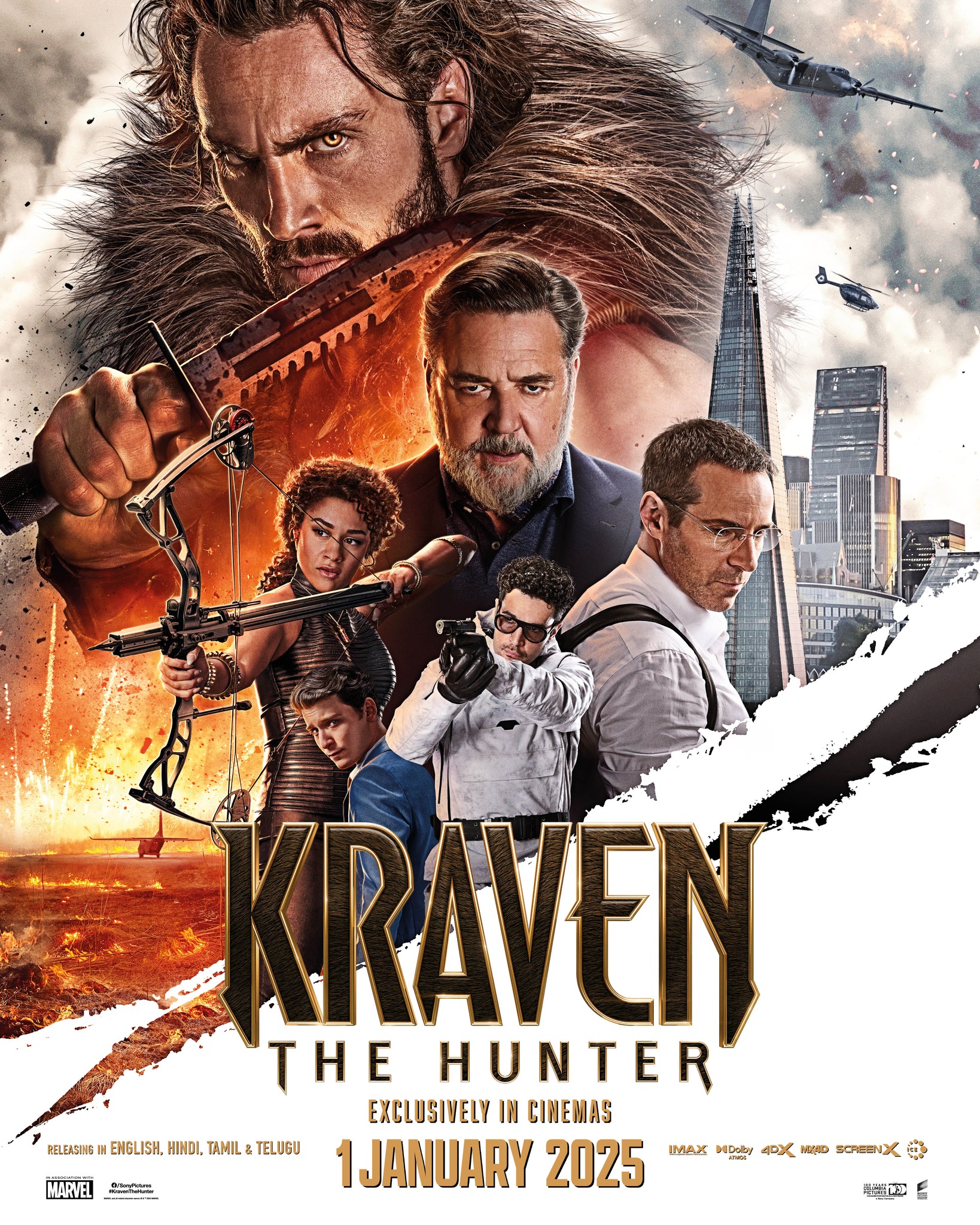
A significant component of any brand is its visual identity. For “Kraven the Hunter,” the aesthetic design plays a crucial role in cementing the character’s cinematic brand. The visual language, as seen in promotional materials, emphasizes raw, untamed nature juxtaposed with urban grit. Kraven’s attire, often depicting natural materials like fur and bone, reflects his connection to the wild, reinforcing his brand as a primal force. The use of practical effects and location shooting, as opposed to heavy CGI, can also contribute to a sense of visceral authenticity, aligning with the “R” rated, gritty brand promise.
The design of the film’s world and characters, including the depiction of his animal allies and formidable adversaries, communicates Kraven’s brand values: power, ruthlessness, and a deep, albeit violent, respect for the natural order. These visual cues are not merely stylistic choices; they are deliberate branding elements designed to evoke specific emotions and associations, creating a strong, recognizable brand identity for the character that transcends the narrative itself.
Kraven the Hunter within Sony’s Spider-Man Universe (SSU) Strategy
“Kraven the Hunter” is not an isolated film but a vital piece in Sony’s ambitious strategy to build a cohesive cinematic universe around Spider-Man’s rogues gallery. Its narrative and character development are intrinsically linked to this larger branding objective.
Expanding the Villain-Verse: A Differentiated Brand Approach
Sony’s SSU has carved out a unique niche by focusing on Spider-Man’s antagonists and anti-heroes, largely without the direct involvement of Spider-Man himself. This is a differentiated brand strategy. While other studios build multi-hero ensembles, Sony bets on the compelling nature of its villains. “Kraven the Hunter” serves as a critical expansion of this “villain-verse” brand. The movie’s narrative, by exploring Kraven’s origins and motivations, aims to deepen the SSU’s lore and provide additional brand pillars beyond Venom and Morbius.
The film’s very existence signals Sony’s confidence in these characters’ ability to carry their own franchises, diversifying the SSU brand beyond symbiotic creatures. It suggests a universe where characters, irrespective of their traditional heroic status, can have rich, independent stories, thereby attracting a broader range of audience preferences. This strategy is about brand diversification within the superhero genre, offering something distinct from the Marvel Cinematic Universe (MCU) or DC Extended Universe (DCEU).
Narrative Cohesion and Franchise Building
While Kraven’s story is standalone, its narrative must contribute to the overall cohesion of the SSU brand. Hints of connections to other SSU characters, or foreshadowing future interactions, are crucial for long-term franchise building. Even without direct cameos, thematic ties or subtle world-building elements can reinforce the idea that Kraven operates within the same brand universe as Venom and Morbius. The film’s narrative is therefore not just about Kraven’s journey but also about subtly weaving his story into the fabric of the SSU, making the entire universe feel more substantial and interconnected.
This brand strategy relies on the audience’s investment in the concept of a shared universe. Each film, including “Kraven the Hunter,” is expected to enhance the perceived value and scope of the SSU brand, encouraging audiences to invest in subsequent installments. The narrative is thus a tool for continuity, ensuring that while each film has its unique brand identity, it also contributes to the overarching SSU brand story.
Target Audience and Market Positioning
The decision to make Kraven an anti-hero with an “R” rating directly impacts the target audience and market positioning of the film. This isn’t a family-friendly superhero movie; it’s pitched towards an older demographic that appreciates darker themes, intense action, and moral ambiguity. This market positioning is a deliberate brand choice, differentiating “Kraven the Hunter” from more mainstream superhero offerings.
The narrative about Kraven’s brutal yet principled hunting, his fight against those who desecrate nature, and his internal struggles speaks to an audience seeking more mature and visceral storytelling. This precise targeting allows Sony to cater to a specific segment of the superhero fandom that might feel underserved by more conventional superhero narratives, thereby cultivating a loyal sub-brand within the SSU that values edge and intensity. The marketing messages, therefore, focus on the grit, the action, and the profound character journey, ensuring the film’s brand promise aligns perfectly with its intended market.

The Story as a Core Marketing Asset
The narrative of “Kraven the Hunter” is arguably its most potent marketing asset. The story is not just content; it’s the vehicle through which the film’s brand is communicated, consumed, and remembered.
Crafting the Promotional Narrative
Trailers, synopses, and interviews don’t just reveal plot points; they craft a promotional narrative that shapes audience expectations and perceptions of the Kraven brand. For “Kraven the Hunter,” the marketing narrative emphasizes themes of primal instinct, transformation, and a unique moral code. The “redemption” arc suggested by Kraven fighting poachers and criminals, rather than just hunting Spider-Man, becomes a central part of this promotional story.
This carefully constructed narrative aims to pique interest by presenting Kraven as a complex figure who is both terrifying and compelling. The marketing strategically highlights key emotional beats and action sequences that reinforce the brand promise of an intense, character-driven experience. The story, in essence, is packaged and presented as an irresistible hook, drawing audiences into the unique world and ethos of Kraven the Hunter.
Emotional Resonance and Audience Engagement
A strong brand fosters emotional connection. The narrative of “Kraven the Hunter” is designed to create emotional resonance by exploring universal themes of identity, belonging, and the struggle against one’s own nature. Kraven’s journey from an unfeeling killer to a “protector” of the innocent, or at least the non-threatening, aims to engage audiences on a deeper level than mere spectacle.
This emotional engagement is vital for building brand loyalty. If audiences connect with Kraven’s internal conflict and his brutal methods for a perceived greater good, they are more likely to champion the character and the film. The story becomes a shared experience, forging a bond between the audience and the Kraven brand, transforming viewers from passive consumers into active advocates.
Leveraging Source Material for Brand Authenticity
While adapting the source material for a new audience, the film’s narrative also leverages key elements from the comics to maintain brand authenticity for long-time fans. The “hunter” aspect, Kraven’s physical prowess, and his connection to the animal kingdom are faithfully adapted, providing touchstones that resonate with the established Kraven brand.
This careful balance between adaptation and homage is critical. It signals to existing fans that the cinematic interpretation respects the character’s legacy, while simultaneously offering a fresh perspective that can attract new viewers. By grounding the narrative in elements that define Kraven from the comics, the film reassures its core audience of its brand integrity, fostering trust and credibility which are invaluable brand assets.
Measuring Brand Impact and Future Trajectories
The true measure of a film’s brand success lies not just in its immediate box office performance, but in its ability to cultivate lasting impact and open avenues for future brand extensions.
Critical Reception and Audience Perception
The brand impact of “Kraven the Hunter” will be heavily influenced by critical reception and audience perception. Reviews will dissect not only the film’s artistic merit but also how effectively it establishes Kraven’s character and his place in the SSU. Positive reception will validate Sony’s brand strategy for its villain-centric universe, while negative feedback could necessitate a re-evaluation of its approach.
Audience perception, particularly through social media and word-of-mouth, will be crucial. If the film successfully delivers on its promise of a gritty, compelling anti-hero story, it will significantly bolster the Kraven brand and, by extension, the SSU. This perception directly informs the brand’s reputation and its potential for future growth.
Merchandise and Ancillary Brand Extensions
Beyond the film itself, the narrative of “Kraven the Hunter” opens doors for extensive ancillary brand extensions. Action figures, video games, comic book spin-offs, and other merchandise all serve to propagate the Kraven brand. The film’s unique character design, action sequences, and thematic elements provide rich material for these products, further embedding the brand into popular culture.
These extensions are not merely supplementary; they are integral to building a comprehensive and ubiquitous brand. Each piece of merchandise carrying Kraven’s image reinforces his brand identity and expands his reach beyond the cinematic experience, creating multiple touchpoints for audience engagement and revenue generation.
Sustaining the Brand Long-Term
The long-term success of the Kraven brand hinges on the film’s ability to create a memorable and impactful narrative that resonates beyond its initial theatrical run. Does the story leave an indelible mark? Does it inspire calls for sequels or spin-offs? The narrative’s strength determines whether Kraven can evolve from a single film character into a sustained franchise pillar.
Sony’s strategic objective is to create a universe of compelling characters. “Kraven the Hunter” is a test of whether this specific character’s brand can stand on its own and contribute significantly to that larger vision. The narrative’s ability to generate fan loyalty and ongoing discussion is key to sustaining the Kraven brand for years to come, securing its place within the broader SSU and beyond.
Conclusion
“What is the movie Kraven the Hunter about?” is a question that, when viewed through a branding lens, reveals layers of strategic intent. It’s about meticulously crafting an anti-hero brand from a traditional villain, positioning this brand within a unique cinematic universe, and leveraging its narrative as a potent marketing asset. The film’s story is not just a sequence of events; it’s a carefully constructed brand narrative designed to evolve a character, differentiate a franchise, engage a specific audience, and ultimately, secure a lasting place in the competitive entertainment landscape. Through its exploration of primal instincts, family dynamics, and a unique moral code, “Kraven the Hunter” endeavors to stamp its brand identity firmly on the superhero genre, proving that even a predator can become a brand worth hunting for.
aViewFromTheCave is a participant in the Amazon Services LLC Associates Program, an affiliate advertising program designed to provide a means for sites to earn advertising fees by advertising and linking to Amazon.com. Amazon, the Amazon logo, AmazonSupply, and the AmazonSupply logo are trademarks of Amazon.com, Inc. or its affiliates. As an Amazon Associate we earn affiliate commissions from qualifying purchases.