
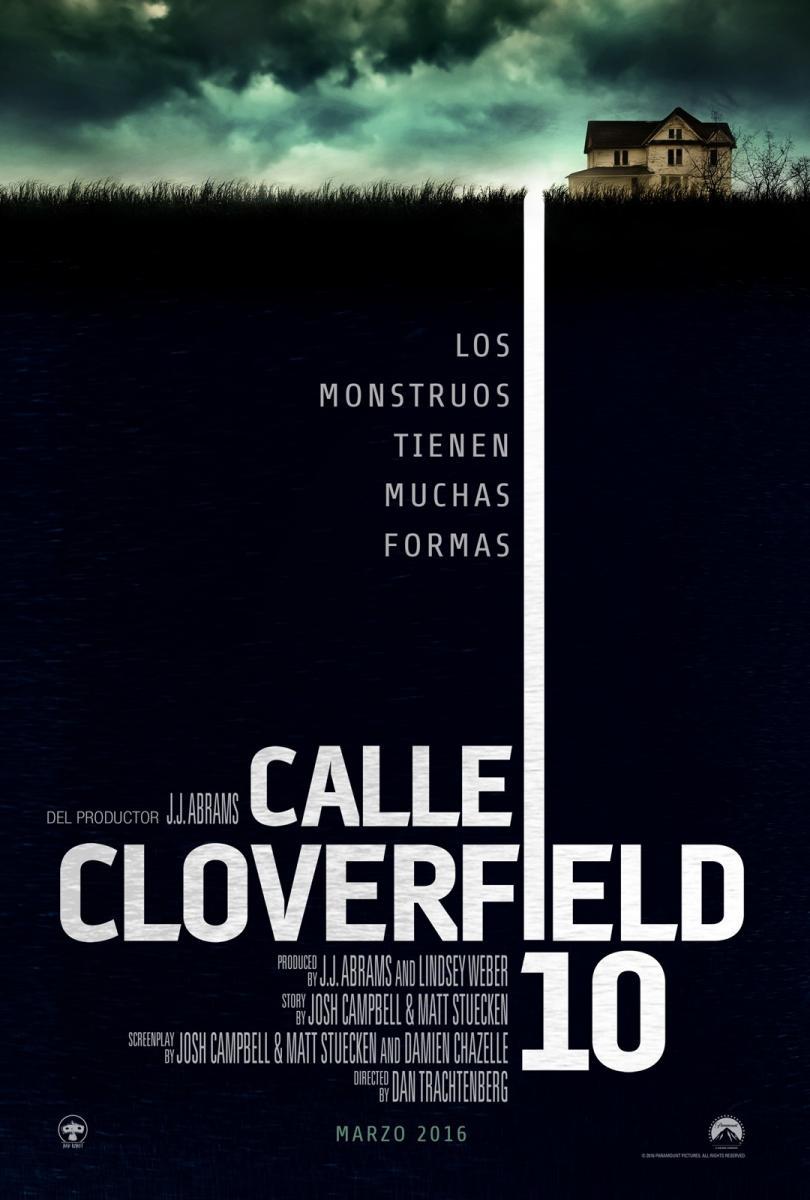
When audiences ask “what is the movie 10 Cloverfield Lane about,” they are often looking for a plot summary of a claustrophobic psychological thriller. However, from a professional branding and marketing perspective, the answer is far more complex. 10 Cloverfield Lane is not merely a film; it is a seminal case study in brand extension, narrative pivot, and the strategic use of intellectual property (IP) to mitigate market risk.
To understand what this film represents, one must look past the bunker and the tension between its three lead characters. At its core, 10 Cloverfield Lane is about the power of a brand name to transform a modest, independent-style project into a global event. It represents a shift in how studios view “cinematic universes,” moving away from linear sequels and toward an anthology-based brand identity.

The Alchemy of Branding: Converting Original Scripts into Franchise Assets
The history of 10 Cloverfield Lane begins not as a sequel, but as a standalone spec script titled The Cellar. Written by Josh Campbell and Matt Stuecken, the original story had no connection to the 2008 monster movie Cloverfield. It was a tight, low-budget thriller about a woman held captive in a bunker by a man who claimed the world had ended.
The decision by Paramount Pictures and Bad Robot to rebrand The Cellar as a Cloverfield film is one of the most significant branding maneuvers in recent cinematic history.
Rebranding a Standalone Story
In a crowded marketplace, original IP often struggles to find an audience. By attaching the “Cloverfield” name to a previously unrelated script, the producers engaged in a form of “brand masking.” This strategy allowed them to capitalize on the existing equity of the 2008 film while delivering a completely different genre experience. For the consumer, the brand name acted as a promise of quality and a specific “vibe”—mystery, tension, and high-concept sci-fi—rather than a promise of a direct narrative continuation.
The Power of Brand Associations
Brand association is the mental link a consumer makes between a brand and a concept, image, or emotion. The Cloverfield brand is associated with the “mystery box” philosophy of J.J. Abrams. By labeling the film 10 Cloverfield Lane, the studio signaled to the audience that they should expect hidden clues, a sense of dread, and a larger-than-life payoff. This association successfully converted a $15 million “niche” thriller into a $110 million box office success.
The “Mystery Box” Methodology: Strategic Secrecy as a Brand Pillar
One cannot discuss the brand identity of 10 Cloverfield Lane without addressing the “Mystery Box” marketing strategy employed by Bad Robot. This approach turns the product’s marketing into a game, creating a participatory experience for the consumer long before the product is actually released.
Alternate Reality Games (ARGs) as Brand Engagement
To build the brand world for 10 Cloverfield Lane, the marketing team utilized an elaborate Alternate Reality Game (ARG). This involved hidden websites, cryptic audio files, and even physical items buried in the desert. This wasn’t just marketing; it was brand immersion. It allowed the most loyal “brand advocates” to feel like they were part of an exclusive club, deep-diving into the lore of the fictional Bold Futura and Tagruato corporations.
From a brand strategy perspective, this is a masterstroke in building “brand community.” By making the audience work for information, the studio increased the perceived value of the film. The mystery itself became a brand asset.
Strategic Secrecy and Scarcity
In an era of over-saturation, where movie trailers often reveal the entire plot months in advance, 10 Cloverfield Lane took the opposite approach. The film was shot under the fake title Valencia and its true identity was only revealed via a surprise trailer attached to 13 Hours: The Secret Soldiers of Benghazi, just two months before its release.
This created a “scarcity of information” that triggered massive organic social media buzz. For a brand, this rapid-fire launch schedule prevents “marketing fatigue” and ensures that the peak of consumer interest coincides exactly with the product’s availability. It is a lean, high-impact branding model that many modern tech and luxury brands have since emulated.
Diversifying the Portfolio: The Anthology Brand Model

Usually, when a brand succeeds, the instinct is to replicate the exact formula. Cloverfield (2008) was a found-footage monster movie set in New York. 10 Cloverfield Lane (2016) was a tripod-shot psychological thriller set in a single room. This pivot represents the “Anthology Brand Model.”
Maintaining Core Values Across Different Formats
The “Cloverfield” brand is not defined by a specific character or a specific monster, but by a set of core brand values:
- Perspective: Focusing on the ground-level human experience of a massive event.
- Mystery: Leaving the audience with more questions than answers.
- Tension: Utilizing sound design and close-quarters cinematography to create unease.
By identifying these core values, the studio was able to diversify its product portfolio. Much like a brand like Apple can move from computers to watches to services while maintaining a consistent “feel,” Cloverfield proved that a movie franchise could move across genres while maintaining its brand integrity.
Building a “Cinematic Universe” Without Traditional Sequels
10 Cloverfield Lane challenged the traditional definition of a “cinematic universe.” Unlike the Marvel Cinematic Universe (MCU), which relies on heavy inter-connectivity and character crossovers, the Cloverfield brand relies on thematic resonance. This is a more flexible business model. It allows the studio to acquire various high-quality scripts and “onboard” them into the franchise, providing a safety net for creative experimentation. It turns the franchise into a curated gallery of high-concept stories rather than a singular, rigid timeline.
Case Study: The Business Logic of Market Positioning
What is the movie 10 Cloverfield Lane about in terms of market positioning? It is about maximizing Return on Investment (ROI) through clever niche placement.
The film occupied a “Goldilocks Zone” in the market:
- Production Cost: At $15 million, it was cheap enough to be profitable even with a modest audience.
- Brand Leverage: The Cloverfield name allowed it to compete for attention alongside massive summer blockbusters.
- Critical Acclaim: By focusing on high-level performances (notably John Goodman) and tight writing, it positioned itself as a “prestige” genre film, attracting a demographic that might usually avoid monster movies.
This positioning allowed the film to achieve a massive multiplier on its budget. From a corporate finance and branding standpoint, this is the ideal outcome. The brand provided the “hook,” while the quality of the standalone story provided the “staying power” and positive word-of-mouth.
Lessons in Brand Resilience and Consumer Perception
The legacy of 10 Cloverfield Lane offers several insights for brand managers and corporate strategists across all industries.
The Risk of Brand Dilution
While 10 Cloverfield Lane was a success, the strategy is not without risks. Using a brand name as a “cloak” for unrelated products can lead to consumer confusion if the quality or thematic connection isn’t maintained. This was later seen with The Cloverfield Paradox, which struggled because the “brand fit” felt forced rather than organic. 10 Cloverfield Lane succeeded because it felt like it belonged in the universe, even if it didn’t directly show the same monster.
Adaptability as a Competitive Advantage
The film’s journey from The Cellar to a franchise hit demonstrates the importance of being agile. The producers recognized that the market for mid-budget original thrillers was shrinking. Instead of stubbornness, they used brand adaptation to save the project. In the business world, this is equivalent to a startup pivoting its product to fit a more lucrative market segment while keeping its core mission intact.
Conclusion: The Legacy of Cloverfield as a Business Case Study
When someone asks what 10 Cloverfield Lane is about, the answer lies in the intersection of storytelling and strategic brand management. It is a film about survival, paranoia, and the unknown—but it is also a testament to how a well-managed brand can elevate a product above its competition.
It proved that a brand is not just a logo or a character; it is a promise of an experience. By delivering a masterfully crafted thriller under the banner of an established mystery-driven franchise, the creators of 10 Cloverfield Lane redefined the rules of 21st-century filmmaking. They showed that with the right branding, even the smallest, most confined story can become a global phenomenon. For anyone interested in brand strategy, the film remains a definitive example of how to leverage IP to navigate the increasingly volatile landscape of consumer attention.
aViewFromTheCave is a participant in the Amazon Services LLC Associates Program, an affiliate advertising program designed to provide a means for sites to earn advertising fees by advertising and linking to Amazon.com. Amazon, the Amazon logo, AmazonSupply, and the AmazonSupply logo are trademarks of Amazon.com, Inc. or its affiliates. As an Amazon Associate we earn affiliate commissions from qualifying purchases.