
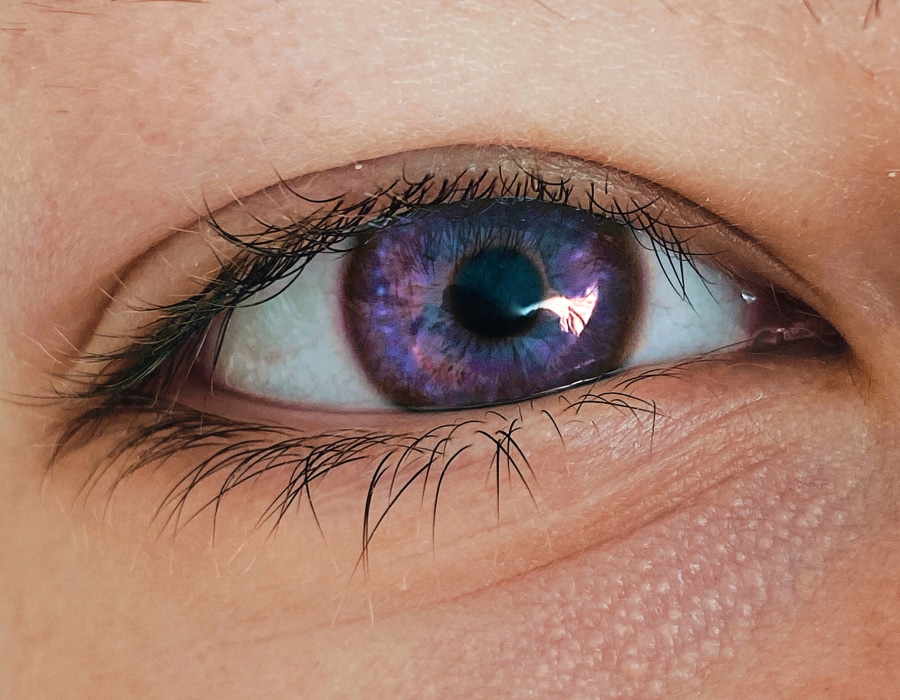
In the realm of human biology, the question of what is the most rare color of eyes often leads to a discussion about genetics and aesthetics. However, in the fast-evolving landscape of technology, the answer holds significant implications for biometric security, artificial intelligence, and digital identification. While the general consensus identifies green as the rarest common eye color—occurring in only about 2% of the global population—tech innovators are less interested in the color itself and more focused on the complex, unique patterns that accompany these rare pigmentations.

As we transition into an era where our biological data serves as our digital key, understanding the intersection of ocular rarity and technological precision becomes paramount. The “rare” factor is not just a curiosity; it is a data point that challenges and refines the algorithms governing our digital security.
The Science of Rarity in the Age of Biometric Data
From a technological standpoint, the rarity of an eye color like green, violet, or amber is a result of low melanin concentration and specific light-scattering patterns within the stroma. For software developers working on ocular recognition, these variations represent both a challenge and an opportunity for high-fidelity data capture.
Beyond Aesthetics: Why Heterochromia and Green Eyes Matter to Algorithms
When an AI-driven biometric system scans an eye, it isn’t just looking for color; it is mapping the structural complexity of the iris. Rare conditions like heterochromia (eyes of two different colors) or extreme rarities like violet hues (often associated with albinism or specific light-refraction anomalies) provide a stress test for optical sensors.
High-end biometric scanners must be programmed to recognize that a “rare” color does not equate to a “false” or “spoofed” identity. For instance, an algorithm trained primarily on brown-eyed datasets—which represent the vast majority of the global population—might struggle with the light reflectance levels of a rare green iris. Tech firms are now diversifying their datasets to ensure that rare phenotypes are integrated into the “standard” recognition models, ensuring global accessibility and security.
Melanin, Light Scattering, and Data Precision
The physics of rare eye colors involves “Tyndall scattering,” a phenomenon similar to why the sky appears blue. In technology, particularly in infrared (IR) scanning, the amount of melanin in the iris affects how light is absorbed and reflected back into the sensor.
Because rare eye colors like green or pale blue have less melanin, they interact differently with near-infrared light than dark brown eyes. Advanced biometric systems utilize IR because it can reveal the deep tissue patterns of the iris regardless of visible color. However, the tech industry is constantly refining “multi-spectral imaging” to ensure that the rarity of the eye color doesn’t lead to “False Rejection Rates” (FRR) in secure environments.
Iris Recognition Technology: The Gold Standard of Security
While fingerprints have long been the face of biometrics, the technology surrounding the human eye—specifically the iris—is significantly more secure. The rarity of certain eye colors adds a layer of complexity that makes the iris a nearly impossible “key” to forge.
The Architecture of the Human Eye as a Unique Identifier
The iris is a thin, circular structure responsible for controlling the diameter and size of the pupil. What makes it a tech marvel is its complexity. While a fingerprint may have 40 to 60 unique characteristics, a single iris contains over 240 unique features, including furrows, ridges, and crypts.
This complexity is present regardless of color, but rare eye colors often highlight different structural densities that sensors must interpret. Technological platforms like Aadhaar in India or Clear at airports leverage these 240+ points of data. The “rarity” of the eye doesn’t change the number of points, but it does change the contrast levels that the software must navigate to map those points accurately.
Overcoming the Challenges of Rare Pigmentation in Sensor Accuracy
One of the hurdles in current biometric tech is “liveness detection”—ensuring that the eye being scanned is a living organ and not a high-resolution photo or a prosthetic. Rare eye colors, due to their unique translucent properties, actually assist in this.
Modern sensors can detect the way light penetrates the layers of a rare-colored iris, which is much harder to replicate in a synthetic format. Developers are currently working on “Ocular-AI” that uses the specific light-signature of rare eye colors to prevent “spoofing” attacks. In this context, the rarity of your eye color isn’t just a physical trait; it’s an encrypted biological signature that enhances the security of the hardware.

AI and the Synthesis of Rare Eye Colors in Modern Media
The tech world’s obsession with rare eye colors extends beyond security and into the realm of Generative AI and digital rendering. From video games to deepfake detection, the “most rare color” serves as a benchmark for realism.
GANs and the Pursuit of Biological Realism
Generative Adversarial Networks (GANs) and diffusion models (like Midjourney or DALL-E) are often judged by their ability to render human eyes accurately. Because colors like amber or “grey-blue” are rare, AI models frequently struggle to replicate the way these eyes catch light without looking “uncanny.”
Engineers are using massive libraries of ocular photography to teach AI the subtle nuances of rare pigments. The goal is to move beyond flat color toward “sub-surface scattering,” a rendering technique that mimics how light enters the eye and bounces off the interior structures. Achieving a realistic “rare eye” in a digital avatar is currently considered a “final boss” in computer graphics and 3D modeling.
Ethical Implications of Digital Eye Replication
As it becomes easier for technology to replicate rare biological traits, the tech community is facing an ethical crossroad. If an AI can perfectly synthesize the most rare eye colors and the accompanying iris patterns, what does that mean for biometric security?
Digital security firms are now developing “watermarking” technologies for digital irises. If a system detects a rare eye color that is “too perfect” or lacks the natural micro-fluctuations of a living eye (known as pupillary hippus), it flags the image as AI-generated. The rarity of the eye, therefore, becomes a frontline defense in the war against digital misinformation.
The Future of Ocular Tech: From Health Monitoring to AR
The discussion of rare eye colors is shifting from “what they look like” to “what they can do” when integrated with wearable technology. We are moving toward a future where our eyes are not just passive observers but active interfaces.
Smart Lenses and the Digitization of the Iris
Tech giants and startups alike are prototyping “Smart Contact Lenses.” These devices are designed to sit over the iris, and for users with rare eye colors, there is a unique design challenge: transparency. The hardware—including micro-LEDs and sensors—must be integrated without obscuring the natural beauty of a rare iris or interfering with its light-receptive qualities.
Furthermore, these lenses are being developed to monitor glucose levels in tears or intraocular pressure for glaucoma patients. The “rarity” of the user’s eye color can affect how these sensors are calibrated, particularly if the sensor uses optical spectroscopy. Tech must be adaptive, ensuring that a user with rare violet or green eyes receives the same medical data accuracy as someone with brown eyes.
Predictive Analytics through Ocular Scanning
The next frontier in tech is using eye scans to predict systemic health issues. Algorithms are being trained to look at the vasculature and the pigment distribution of the iris to identify early signs of cardiovascular disease or neurological shifts.
Because rare eye colors are often linked to specific genetic markers, they provide a valuable dataset for predictive analytics. Tech companies in the health-tech sector are building “Digital Twins” of the human eye, using the rarity of certain ocular traits to tailor personalized wellness plans. In this scenario, the rarest eye color isn’t just a visual trait—it’s a roadmap for a longer, healthier life, decoded by artificial intelligence.
Conclusion: The Value of Biological Rarity in a Digital World
In answering “what is the most rare color of eyes,” we find that the value lies not in the color itself, but in the technological infrastructure built to recognize, protect, and replicate it. Whether it is the 2% of the population with green eyes or the even smaller fraction with amber or violet hues, these individuals represent the “edge cases” that push technology to be more inclusive, secure, and sophisticated.
As we move deeper into a tech-centric existence, our rarest physical traits become our most valuable digital assets. The iris—in all its rare, colorful glory—stands as a testament to the fact that even in a world of 1s and 0s, biological uniqueness remains the ultimate encryption key. The future of tech isn’t just about faster chips or larger screens; it’s about a more profound, more secure integration with the most unique aspects of our human identity.
aViewFromTheCave is a participant in the Amazon Services LLC Associates Program, an affiliate advertising program designed to provide a means for sites to earn advertising fees by advertising and linking to Amazon.com. Amazon, the Amazon logo, AmazonSupply, and the AmazonSupply logo are trademarks of Amazon.com, Inc. or its affiliates. As an Amazon Associate we earn affiliate commissions from qualifying purchases.