
The Moon, a celestial body that has captivated humanity for millennia, holds a profound and often overlooked significance in the realm of astrology. Beyond its gravitational pull and its visible waxing and waning in the night sky, the Moon represents a potent force within the intricate tapestry of our birth charts. In astrology, the Moon is far more than just a planetary body; it is the key to understanding our emotional landscape, our subconscious drives, our deepest needs, and the very foundation of our inner world. While the Sun governs our conscious identity and outward expression, the Moon dictates our reactions, our instincts, and the subtle currents that shape our feelings and sense of security. Understanding the Moon’s placement and sign in your astrological chart is crucial for unlocking a deeper understanding of yourself, your relationships, and your unique path through life.

The Lunar Influence on Our Inner World
The Moon’s astrological significance is rooted in its association with the divine feminine, intuition, nurturing, and the home. It governs our instincts, our emotional responses, and our unconscious patterns of behavior. Unlike the Sun, which shines outward and is readily observable, the Moon operates from within, influencing our subtler energies and our capacity for empathy and connection. Its phases, from the new moon to the full moon and beyond, mirror cycles of growth, release, and transformation, reflecting these patterns within our own emotional lives.
Understanding the Moon’s Core Astrological Meanings
At its heart, the Moon in astrology signifies:
- Emotions and Feelings: This is perhaps the Moon’s most prominent domain. It represents the spectrum of our emotions, from joy and contentment to sadness and anxiety. It tells us how we experience and express feelings, and what makes us feel emotionally secure or insecure.
- Instincts and Intuition: Our gut feelings, our subconscious reactions, and our innate knowing all fall under the Moon’s purview. It’s the voice that whispers warnings or urges us forward, often before our rational mind can catch up.
- Nurturing and Motherhood: The Moon is strongly linked to the concept of nurturing, both giving and receiving. It represents our innate desire to care for ourselves and others, and it speaks to our relationship with our own maternal instincts, or the archetype of the mother figure in our lives.
- Home and Roots: The Moon governs our sense of belonging, our early home environment, and our connection to our family lineage. It speaks to what makes us feel safe, comfortable, and grounded in our physical and emotional spaces.
- Habits and Routines: Our subconscious patterns and ingrained habits, often formed in childhood, are also ruled by the Moon. These are the automatic responses and daily rituals that provide us with a sense of order and predictability.
- The Subconscious Mind: The Moon is the gateway to our subconscious. It holds our hidden desires, our repressed emotions, and the memories and experiences that shape our underlying beliefs and perceptions.
The Impact of the Moon’s Sign
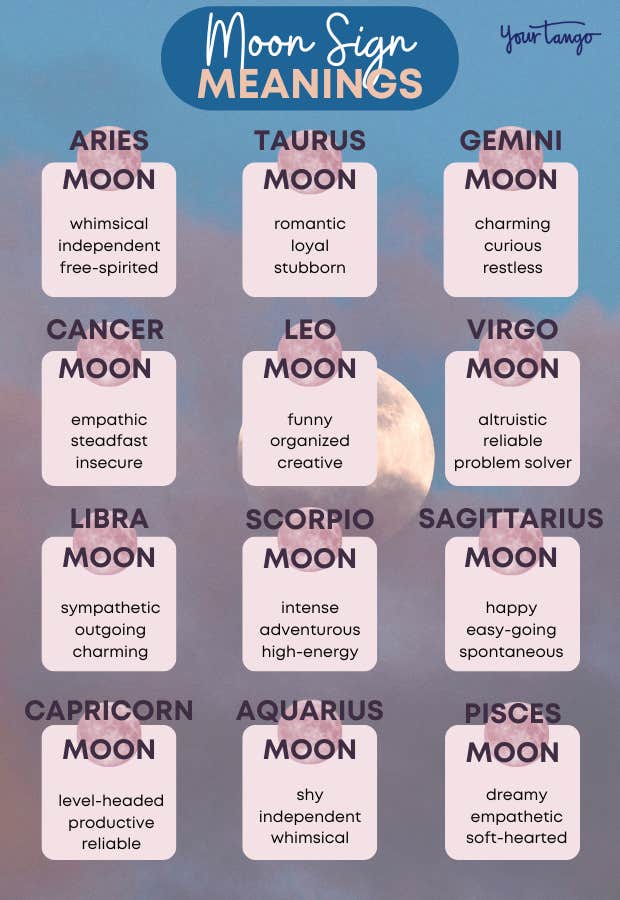
The astrological sign in which the Moon resides at the time of your birth profoundly colors how these core lunar themes are expressed. Each zodiac sign brings its unique energetic signature to your Moon, influencing your emotional temperament, your instincts, and your fundamental needs.
- Moon in Aries: Individuals with a Moon in Aries tend to be emotionally impulsive, needing a constant sense of excitement and challenge. They express their needs directly and can be quick to anger, but also quick to forgive.
- Moon in Taurus: This placement brings a need for security, comfort, and sensory pleasure. Taurean Moons are often grounded, patient, and possess a strong appreciation for the finer things in life.
- Moon in Gemini: A Gemini Moon signifies a need for mental stimulation and variety. These individuals are often adaptable, curious, and express their emotions through communication.
- Moon in Cancer: As Cancer is ruled by the Moon, this is a potent placement. Cancer Moons are deeply emotional, nurturing, and possess a strong sense of home and family. They can be sensitive and sometimes prone to moodiness.
- Moon in Leo: Leo Moons crave warmth, recognition, and affection. They express their emotions openly and with flair, seeking to be loved and admired.
- Moon in Virgo: This placement brings an analytical and practical approach to emotions. Virgo Moons often seek order and efficiency in their feelings and can be prone to worrying.
- Moon in Libra: Libran Moons desire harmony, balance, and connection in their emotional lives. They are often diplomatic and sensitive to the feelings of others.
- Moon in Scorpio: A Scorpio Moon indicates intense, deep, and transformative emotions. These individuals possess great emotional resilience and can be fiercely loyal.
- Moon in Sagittarius: Sagittarian Moons seek freedom, adventure, and emotional truth. They express their feelings with optimism and a desire for exploration.
- Moon in Capricorn: Capricorn Moons need a sense of achievement and control. They tend to express emotions in a reserved and pragmatic way, often prioritizing responsibility.
- Moon in Aquarius: Aquarian Moons are often unconventional in their emotional expression, valuing intellectual connection and humanitarian concerns. They can be detached yet compassionate.
- Moon in Pisces: This placement signifies highly sensitive, empathetic, and imaginative emotions. Pisces Moons are often drawn to the arts and can be deeply compassionate.
The Moon’s House Placement: Where Your Needs Manifest
Beyond the sign, the house in your birth chart where your Moon resides reveals the specific area of life where your emotional needs, security, and subconscious patterns will most prominently play out. The house system provides the stage upon which the lunar energies are enacted.
- 1st House Moon: Your emotions and needs are highly visible and directly influence your personality and self-expression. You are likely to be quite sensitive and outwardly show your feelings.
- 2nd House Moon: Security and emotional comfort are tied to your possessions, values, and sense of self-worth. You may find solace in creating a comfortable and aesthetically pleasing environment.
- 3rd House Moon: Your emotional world is stimulated by communication, learning, and your immediate surroundings. You express your feelings through words and are often concerned with your siblings and neighbors.
- 4th House Moon: Home, family, and your earliest roots are central to your emotional well-being. You crave a secure and nurturing home environment and are deeply connected to your ancestry.
- 5th House Moon: Your emotions are expressed through creativity, romance, pleasure, and children. You seek joy and emotional fulfillment through these avenues.
- 6th House Moon: Your emotional needs are met through service, routine, and daily work. You find comfort in order and may be prone to seeking perfection in your tasks.
- 7th House Moon: Your emotional security is deeply intertwined with your partnerships and close relationships. You seek connection and emotional validation from your significant others.
- 8th House Moon: Emotions are often intense, transformative, and deeply felt. You may experience emotional depths and a need for emotional intimacy and shared resources.
- 9th House Moon: Your emotional needs are met through exploration, higher learning, and philosophical pursuits. You seek meaning and breadth in your emotional experiences.
- 10th House Moon: Your emotional needs and sense of security are tied to your public image, career, and reputation. You may seek emotional fulfillment through achievement and recognition.
- 11th House Moon: Your emotional world is influenced by friendships, groups, and your hopes and wishes. You find comfort in community and shared ideals.
- 12th House Moon: Emotions can be subtle, hidden, and deeply subconscious. You may experience a deep well of empathy and a connection to the spiritual or unseen realms.
The Moon’s Role in Relationships and Self-Understanding
The Moon’s influence extends profoundly into our relationships, shaping our ability to connect, empathize, and feel understood. By understanding our own lunar needs, we can better communicate them to others and, in turn, better understand the lunar needs of those around us. This fosters deeper empathy, reduces conflict, and builds more harmonious connections.
Navigating Emotional Compatibility
In synastry (the astrological comparison of two birth charts), the Moon is one of the most critical factors in determining emotional compatibility. When Moons in two charts make harmonious aspects (like conjunctions, trines, or sextiles), there is often an innate sense of understanding and emotional resonance. You feel comfortable being yourself around each other, and there’s a natural flow in how you express and receive emotional support. Conversely, challenging aspects between Moons can indicate areas where emotional needs may clash, requiring more conscious effort and communication to bridge the gap.
For instance, a Cancer Moon might feel deeply nurtured by a Pisces Moon, as both signs are water signs and prioritize emotional connection. However, a fiery Aries Moon might find the Cancer Moon’s need for constant reassurance overwhelming, while the Cancer Moon might feel the Aries Moon is too emotionally detached. Recognizing these lunar dynamics allows for greater patience and understanding in relationships.
Unlocking Your Core Needs and Desires
Your Moon sign and house reveal your fundamental emotional needs – the things that, when met, make you feel secure, loved, and at peace. Conversely, when these needs are unmet, they can lead to insecurity, anxiety, and emotional distress. For example, someone with a Moon in Capricorn might feel most secure when they have a sense of accomplishment and responsibility. If their partner or work environment constantly undermines their achievements, they will likely feel emotionally unstable.
Understanding these core needs is not about dictating behavior, but about self-awareness. It allows you to:
- Identify what truly nourishes you: What activities, environments, or interactions genuinely make you feel good and emotionally replenished?
- Recognize your triggers: What situations or behaviors tend to make you feel emotionally vulnerable or upset?
- Communicate your needs effectively: Once you know what you need, you can articulate it to others, rather than expecting them to guess.
- Heal past emotional wounds: By understanding the patterns established by your Moon placement, you can begin to address and heal any lingering insecurities from your past.
The Moon and Your Instinctual Nature
The Moon governs our automatic responses and our instinctual reactions. It’s what you do when you’re comfortable, when you let your guard down, or when you’re faced with something that feels inherently threatening or appealing. For example, someone with a Moon in Gemini might instinctively reach for their phone to text a friend when they’re feeling overwhelmed, while someone with a Moon in Taurus might instinctively seek out good food and comfort.
These instinctual patterns, while often unconscious, can be incredibly revealing. By observing your own reactions and impulses, you can gain insight into your lunar nature. Are you someone who withdraws when stressed, or do you seek external stimulation? Do you need quiet solitude to feel restored, or do you thrive on social interaction? Your answers often point directly to the energies of your Moon.
The Moon’s Cycles and Personal Transformation
The Moon’s journey through its phases is a potent metaphor for the cycles of growth, release, and renewal in our own lives. Astrologers pay close attention to the Moon’s phases at the time of birth, as well as the current transiting Moon, to understand periods of potential emotional intensity, introspection, or outward expression.
Birth Moon Phases: Your Innate Emotional Blueprint
The phase of the Moon at your birth provides a unique layer of understanding about your emotional blueprint and your approach to personal development.
- New Moon Births: Individuals born under a New Moon are often seen as initiators, starting new emotional cycles and experiences. They may be less aware of past patterns and are naturally geared towards fresh beginnings.
- Waxing Crescent Moon Births: These individuals are in the early stages of emotional growth and development, often driven by a nascent idea or instinct. They are building their emotional foundations.
- First Quarter Moon Births: This is a period of action and challenge. Individuals born under a First Quarter Moon often face internal or external obstacles that force them to confront and integrate their lunar energies.
- Waxing Gibbous Moon Births: These individuals are focused on refinement and consolidation. They are working towards understanding and integrating their emotional experiences before a full realization.
- Full Moon Births: Born under the Full Moon, these individuals are often highly conscious of their emotions and their impact on others. They tend to be emotionally expressive and may experience life through the lens of relationships and projection.
- Waning Gibbous Moon Births: These individuals are in a phase of review and integration, learning from past experiences and preparing to release what no longer serves them.
- Last Quarter Moon Births: This is a time of crisis and release. Individuals born under a Last Quarter Moon often need to let go of old emotional patterns and beliefs to move forward.
- Waning Crescent Moon Births: These individuals are in a period of introspection and release, preparing for a new cycle by shedding old emotional baggage.
Transiting Moon: Navigating Current Emotional Tides
The transiting Moon, which moves through the zodiac signs approximately every 2.5 days and completes a full cycle around the Earth in about 27.3 days, offers real-time insights into the prevailing emotional atmosphere. As the Moon transits different signs and aspects other planets in the sky, it influences our collective and individual moods.
- Moon in a particular sign: When the transiting Moon is in Aries, there may be a general feeling of impatience and a desire for action. When it’s in Cancer, emotions may run higher, and people might feel more inclined towards nurturing and home.
- Moon aspects: The Moon forming aspects to other planets during its transit can highlight specific themes. For example, a Moon-Venus transit might bring a focus on love, beauty, and social harmony, while a Moon-Mars transit could indicate heightened emotions, potential conflict, or a surge of energy.
- Moon phases: Following the Moon’s phases in real-time can guide personal practices. New Moons are ideal for setting emotional intentions, while Full Moons can be powerful for emotional release and reflection.
By observing the transiting Moon, we can better understand the ebb and flow of our feelings, anticipate periods of heightened emotional sensitivity, and align our actions with the prevailing lunar energies. This awareness allows for greater emotional intelligence and a more harmonious engagement with life’s unfolding experiences.
The Moon’s Significance in the Astrological Framework
While the Sun often takes center stage as the core of our identity, the Moon acts as its silent partner, shaping the very soil from which our conscious self grows. Without the Moon, the Sun’s brilliance would lack depth, its expression would be less nuanced, and its very existence would feel adrift. The Moon grounds us, connects us to our past, and provides the essential emotional sustenance that allows our spirit to thrive.
Beyond the Sun: The Lunar Counterpart
The Sun represents our conscious ego, our outward persona, and our life force. It’s who we strive to be and how we shine our light into the world. The Moon, conversely, represents our subconscious, our inner world, and our fundamental needs for security and belonging. It’s who we are when no one is watching, our automatic reactions, and the deep-seated feelings that drive our behavior.
A balanced understanding of both the Sun and Moon in a birth chart is essential for a holistic view of an individual. For example, a fiery Leo Sun with a sensitive Cancer Moon will express their inherent confidence (Sun in Leo) through a nurturing and emotionally attuned lens (Moon in Cancer). Conversely, an introverted Virgo Sun with a gregarious Gemini Moon might find their analytical nature (Sun in Virgo) expressed through constant communication and a thirst for diverse information (Moon in Gemini).
The Moon as a Gateway to the Unconscious
The Moon’s dominion over the subconscious mind makes it a powerful tool for self-discovery and personal transformation. Many therapeutic modalities, from dream analysis to past-life regression, tap into the subconscious realms that the Moon governs. By exploring the symbolism of your Moon sign, house, and aspects, you can gain access to deeply buried emotions, unresolved issues, and hidden strengths.
This exploration can be challenging, as the subconscious can hold uncomfortable truths. However, it is also profoundly liberating. Understanding your lunar patterns allows you to move from unconscious reactivity to conscious choice. You can begin to break free from limiting beliefs, heal old wounds, and cultivate a more integrated and emotionally resilient sense of self.
Embracing Your Lunar Nature
Ultimately, understanding “what is the Moon in astrology” is an invitation to embrace the full spectrum of your being. It is about acknowledging that your emotional landscape, your instincts, and your deepest needs are not flaws to be hidden, but essential components of your unique human experience. By learning to navigate your lunar nature with compassion and awareness, you unlock a profound source of inner wisdom, emotional security, and authentic connection. The Moon, in its silent and cyclical journey across the sky, offers a constant reminder of the depths within us waiting to be understood and cherished.
aViewFromTheCave is a participant in the Amazon Services LLC Associates Program, an affiliate advertising program designed to provide a means for sites to earn advertising fees by advertising and linking to Amazon.com. Amazon, the Amazon logo, AmazonSupply, and the AmazonSupply logo are trademarks of Amazon.com, Inc. or its affiliates. As an Amazon Associate we earn affiliate commissions from qualifying purchases.