
In the complex landscape of high-stakes finance, few tools are as foundational yet frequently misunderstood as the Multiple Listing Service (MLS). While the casual observer might view the MLS as a mere digital catalog of homes for sale, it is, in reality, a sophisticated financial network and a cornerstone of the modern real estate economy. At its core, the MLS is a private offer of cooperation and compensation made by one real estate professional to another. It is the centralized infrastructure that ensures market liquidity, price transparency, and the efficient flow of capital within the residential and commercial property sectors.

For investors, business professionals, and homeowners, understanding the MLS is not just about browsing listings; it is about recognizing the financial mechanisms that determine asset value and market velocity. By consolidating data from thousands of independent brokerages into a single, verified stream, the MLS eliminates the “information asymmetry” that once plagued the real estate market, transforming a fragmented industry into a streamlined, multi-billion dollar financial engine.
The Financial Architecture of the Multiple Listing Service
The MLS is not a single, national entity. Rather, it is a network of over 500 local and regional databases, each serving as a localized exchange for property assets. To understand the MLS from a financial perspective, one must look past the photos of kitchens and backyards and examine the contractual agreements that sit beneath the surface.
Cooperative Compensation: The Business Model
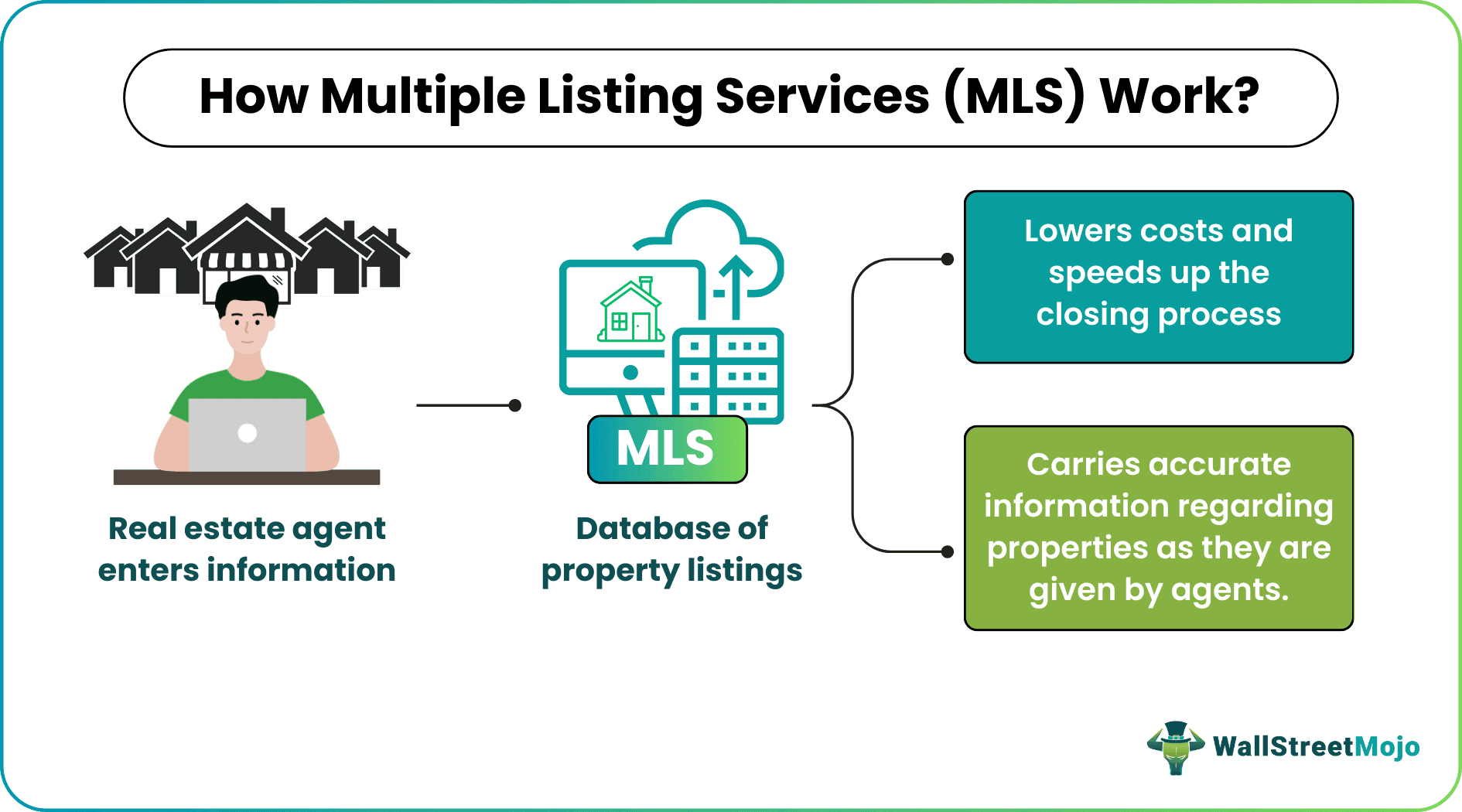
The primary function of the MLS is to facilitate “cooperative compensation.” Historically, when a listing broker places a property on the MLS, they are making a legally binding offer to pay a cooperating broker (the buyer’s agent) a portion of the total commission. This structure was designed to incentivize maximum exposure for the asset. By promising a share of the transaction revenue to any professional who brings a qualified buyer, the seller ensures that their property is marketed to the widest possible pool of capital.
From a business finance standpoint, this creates a reliable revenue-sharing model that supports the entire brokerage ecosystem. It allows small boutique firms to compete on a level playing field with massive national corporations, as every participant has access to the same inventory and the same guarantees of payment upon a successful closing.
Market Liquidity and the Velocity of Capital
One of the most significant contributions of the MLS to the broader economy is the creation of market liquidity. In financial terms, liquidity refers to how quickly an asset can be converted into cash without a significant impact on its price. Before the advent of the MLS, real estate was a notoriously illiquid asset. Buyers had to visit individual brokerage offices to see what was available, and sellers were limited to the reach of a single firm.
The MLS changed this by centralizing supply. When a property is listed, it is instantly visible to every participant in the market. This massive aggregation of data accelerates the “days on market” metric, allowing capital to move more freely between buyers, sellers, and lenders. For the broader economy, this velocity is crucial; it allows homeowners to unlock equity for other investments and enables developers to cycle capital into new projects more rapidly.
How the MLS Serves as a Strategic Tool for Investors
For real estate investors—ranging from individual “fix-and-flip” entrepreneurs to institutional REITs—the MLS is the gold standard for data integrity. While public-facing sites like Zillow or Redfin provide a window into the market, they are secondary consumers of the data generated by the MLS. The raw, unfiltered data found within the MLS provides the granular detail necessary for high-level financial modeling and risk assessment.
Analyzing “Comps” for ROI Projections
The most critical task for any real estate investor is determining the After Repair Value (ARV) or the current Fair Market Value (FMV) of a property. This is done through a Comparative Market Analysis (CMA), utilizing “comps.” The MLS is the only source that provides verified, final sale prices that have been vetted by professionals.
Unlike public records, which can be delayed by weeks or months as they move through municipal bureaucracy, the MLS is updated in real-time. It includes “concessions”—financial credits given by the seller to the buyer—which are vital for understanding the true net price of a transaction. Without this level of detail, an investor’s ROI projections would be based on incomplete data, significantly increasing the risk of over-leveraging or mispricing an asset.
Accessing Exclusive Market Data
Beyond price, the MLS contains proprietary data fields that are not always visible to the general public. This includes “Days on Market” (DOM) trends, which signal the heat of a specific sub-market, and “Expired” or “Withdrawn” listings, which can indicate opportunities for off-market negotiations.
For the sophisticated investor, the MLS acts as a sentiment indicator. By tracking the ratio of list price to sale price across different zip codes, investors can identify emerging neighborhoods before they reach peak valuation. In the world of business finance, this is known as “alpha”—the ability to generate excess returns by utilizing superior information.
The Economic Impact on Buyers and Sellers
The existence of the MLS has a profound impact on the cost of doing business for the average consumer. By streamlining the search and discovery process, the MLS reduces “search costs”—the time and money spent by buyers and sellers trying to find one another.
Efficiency Gains and Cost Reductions
In a market without a centralized listing service, a seller would have to pay significantly more in marketing and advertising to reach a global audience. Conversely, a buyer would likely need to hire multiple consultants to scout different pockets of the market. The MLS automates this connection. This efficiency has historically kept real estate transaction costs relatively stable, as the “heavy lifting” of market exposure is handled by a single, centralized digital infrastructure.
Furthermore, the MLS facilitates the appraisal and lending process. Mortgage lenders rely on MLS data to justify the valuations that underpin their loans. Without the historical data provided by the MLS, the appraisal process would be significantly more expensive and time-consuming, which would, in turn, increase the interest rates and fees passed on to the consumer.
Transparency and Asset Valuation
Transparency is the enemy of price manipulation. Because the MLS maintains a historical record of every listing—including price drops, previous sales, and property history—it prevents “information hoarding.” In some international markets where no MLS exists, real estate is often sold through “pocket listings” or private deals where the true value is hidden from the public. This often leads to inflated prices and market bubbles.
In the United States, the MLS ensures that every participant knows what a property is worth based on what someone else was willing to pay for a similar asset yesterday. This transparency stabilizes the housing market and provides a level of financial security for the middle class, whose primary wealth is often tied up in home equity.
Modern Disruptions and the Future Value of the MLS
The MLS is currently facing its most significant period of transformation since the transition from paper books to digital databases. Changes in regulation, shifts in consumer behavior, and the rise of “PropTech” (Property Technology) are forcing a reevaluation of the MLS’s financial value proposition.
Regulatory Changes and Commission Evolution
Recent legal settlements and regulatory scrutiny by the Department of Justice (DOJ) have challenged the traditional “cooperative compensation” model. The focus is on decoupling the commissions paid to buyer and seller agents. While these changes may alter the mechanics of how real estate professionals are paid, they do not diminish the value of the data itself.
In fact, as the industry moves toward more transparent fee structures, the MLS’s role as a verified data repository becomes even more critical. If commissions become more negotiable, the data within the MLS will be the primary tool used to justify those fees. Professionals will need to prove their value through the sophisticated interpretation of MLS analytics, shifting the focus from “accessing the data” to “analyzing the data.”

The Shift Toward Direct-to-Consumer Financial Data
We are seeing a democratization of real estate data. While the MLS was once a “walled garden” accessible only to licensed professionals, much of that data now flows to consumer-facing platforms via IDX (Internet Data Exchange) feeds. However, the MLS remains the “source of truth.”
The future of the MLS likely lies in its evolution into a comprehensive “Property Fintech” platform. This involves integrating more financial tools, such as instant mortgage pre-approvals, title insurance automation, and blockchain-based deed tracking, directly into the listing environment. By merging property data with financial services, the MLS will continue to serve as the vital link between physical assets and the digital capital markets.
In conclusion, the MLS is far more than a website for house hunters. It is a sophisticated financial tool that ensures the stability, transparency, and liquidity of the real estate market. For those who understand its inner workings, the MLS is the key to unlocking market trends, mitigating investment risk, and navigating the multi-trillion dollar world of property finance. Whether you are a professional investor or a first-time homebuyer, the MLS is the invisible hand that guides the value of the roof over your head.
aViewFromTheCave is a participant in the Amazon Services LLC Associates Program, an affiliate advertising program designed to provide a means for sites to earn advertising fees by advertising and linking to Amazon.com. Amazon, the Amazon logo, AmazonSupply, and the AmazonSupply logo are trademarks of Amazon.com, Inc. or its affiliates. As an Amazon Associate we earn affiliate commissions from qualifying purchases.