
The minimum wage in the United States is a cornerstone of the nation’s economic policy, serving as the baseline for labor compensation and a critical factor in both personal financial planning and corporate budgeting. Navigating the complexities of wage laws requires an understanding of a multi-tiered system where federal, state, and even local jurisdictions may have conflicting requirements. For employees, it determines their base earning potential; for businesses, it represents a significant portion of operating overhead that must be managed with precision to maintain profitability.

Understanding the Dual-Layer System: Federal vs. State Minimum Wages
The most fundamental aspect of the American wage landscape is the coexistence of federal and state laws. Since 2009, the federal minimum wage has been set at $7.25 per hour under the Fair Labor Standards Act (FLSA). This rate serves as the mandatory floor for all employees engaged in interstate commerce or employed by an enterprise with an annual gross volume of sales or business done of at least $500,000.
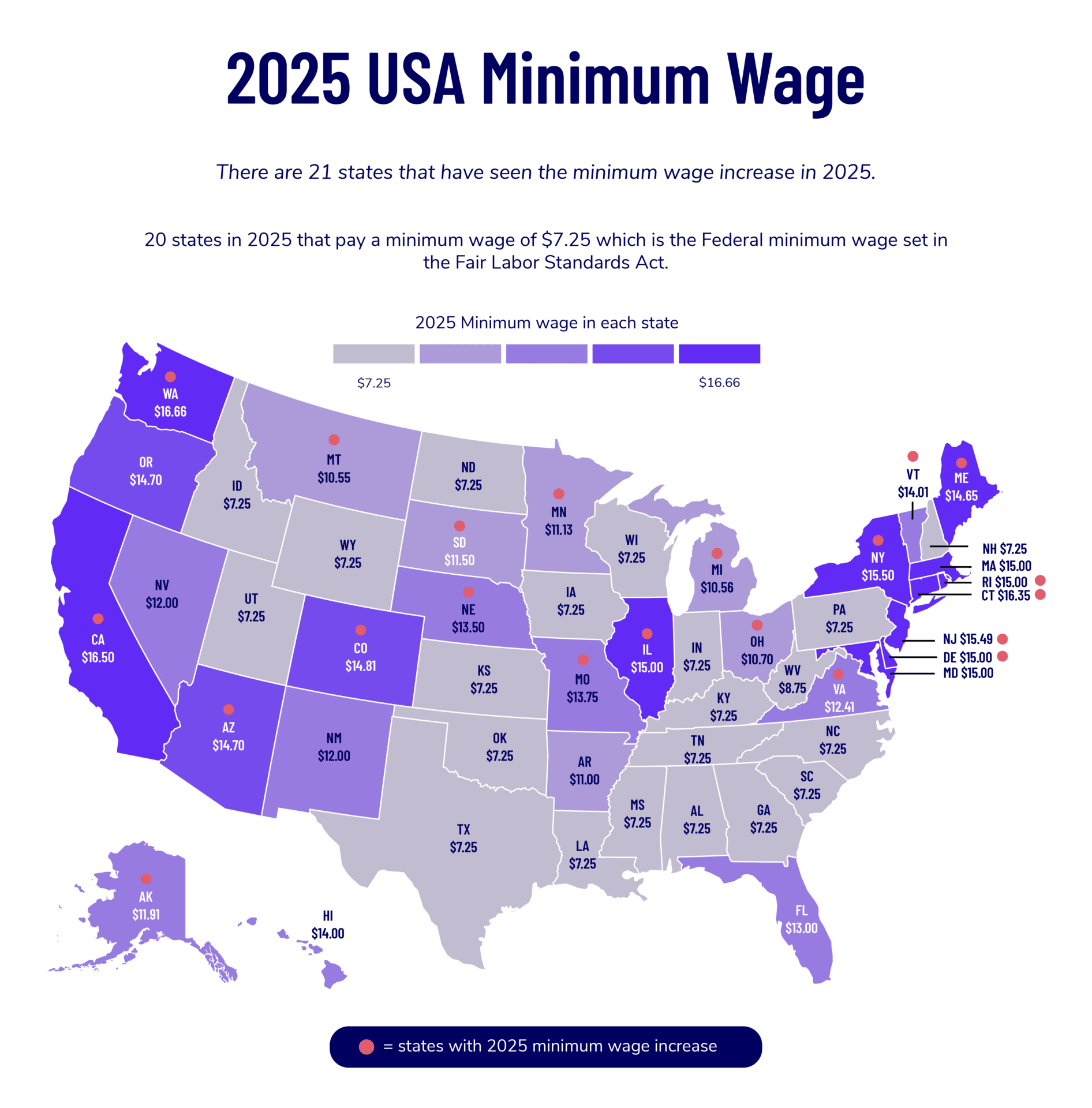
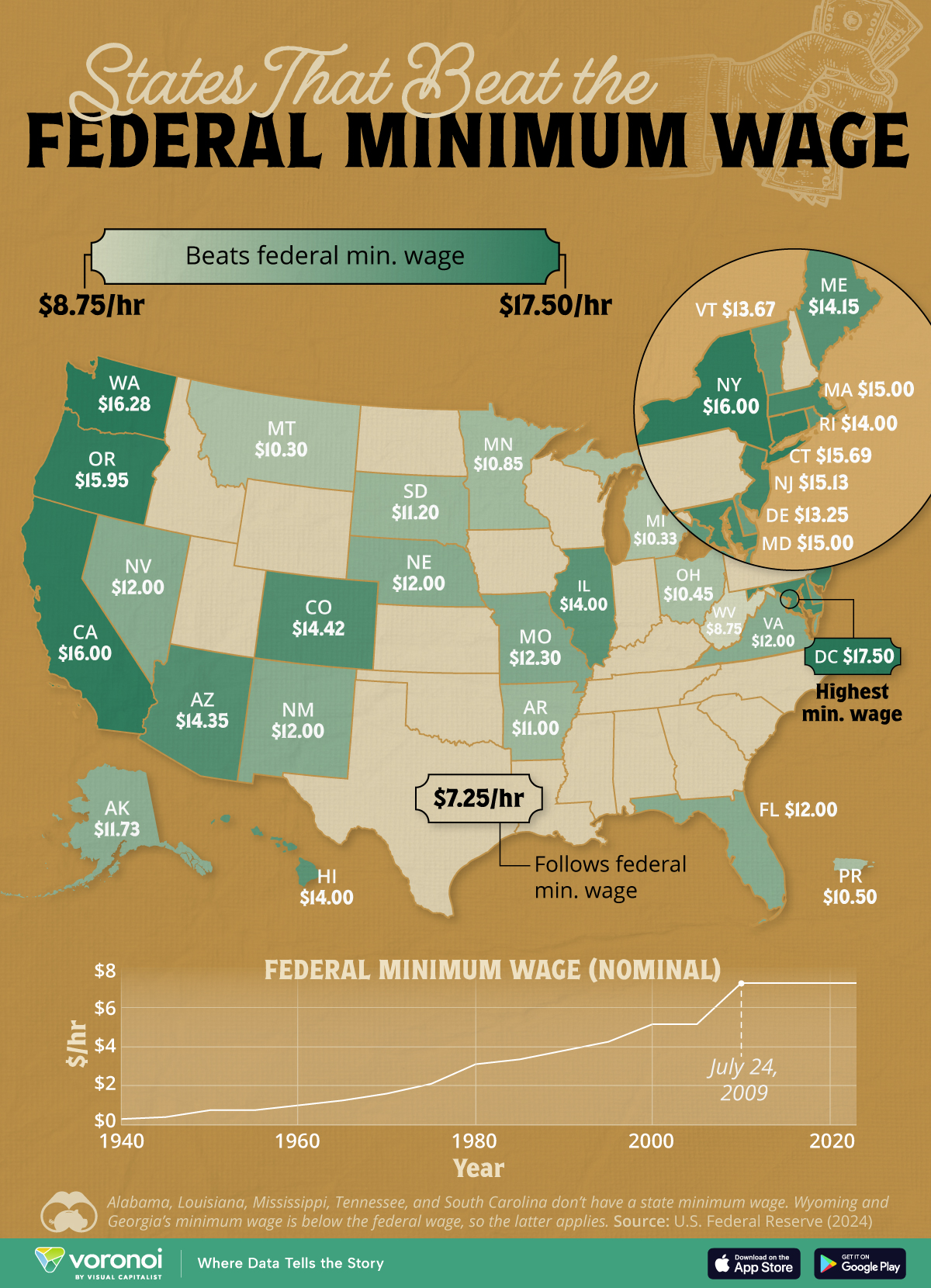
However, the FLSA allows states and local municipalities to set their own minimum wage rates. In scenarios where an employee is subject to both state and federal minimum wage laws, the employee is entitled to the higher of the two rates. As of the current fiscal landscape, 30 states and the District of Columbia have established minimum wages that exceed the federal $7.25 threshold.
The Significance of State Sovereignty in Finance
For a business operating across state lines, this creates a complex compliance environment. For example, a retail corporation with locations in both Alabama and California must manage two vastly different payroll structures. In Alabama, which does not have a state-level minimum wage law, the federal rate of $7.25 applies. In California, the state minimum wage has climbed significantly higher, often adjusted annually based on the Consumer Price Index (CPI) to account for inflation.
Local Ordinances and Hyper-Local Economics
Beyond state lines, several major cities—such as Seattle, New York City, and San Francisco—have implemented local minimum wage ordinances that are higher than their respective state requirements. This hyper-local approach is often a response to the high cost of living in urban centers. For personal finance management, understanding these local variations is essential for workers when calculating their net income and for businesses when determining the feasibility of expanding into specific metropolitan markets.
The Economic Mechanics of Wage Floors and Purchasing Power
From a financial perspective, the minimum wage is more than just a number; it is a measure of purchasing power. The debate surrounding the “stagnant” federal rate often centers on the fact that while the dollar amount has remained at $7.25 for over a decade, the real value of that money has decreased due to inflation.
Inflation and the “Real” Wage
In the world of personal finance, the “real wage” refers to wages adjusted for inflation. When the cost of housing, healthcare, and consumer goods rises while the minimum wage remains static, the standard of living for low-wage earners effectively declines. This creates a ripple effect throughout the economy. When purchasing power diminishes, consumer spending—which accounts for a significant portion of the US GDP—can fluctuate, affecting the revenue streams of businesses that rely on low-to-middle-income demographics.
The Impact on Small Business Finance
For small business owners, an increase in the minimum wage presents a dual-edged sword. On one hand, higher wages can lead to increased employee retention, lower turnover costs, and higher productivity. On the other hand, labor is often the largest line item in a service-oriented business’s budget. A mandatory increase in wages may require a business to adjust its financial strategy by:
- Price Adjustments: Passing the cost onto consumers through higher prices.
- Operational Efficiency: Investing in technology or automation to reduce the total number of labor hours required.
- Margin Compression: Accepting lower profit margins in the short term to maintain a competitive workforce.
Exceptions, Exemptions, and Special Classifications
Not every worker in the US is entitled to the standard minimum wage. The FLSA provides for several exemptions that are critical for both employers and employees to understand to ensure financial and legal compliance.
Tipped Employees and the Tip Credit
One of the most notable exceptions is the sub-minimum wage for tipped employees. Federally, employers are permitted to pay employees who regularly receive more than $30 a month in tips a cash wage of just $2.13 per hour. This is predicated on the “tip credit,” which allows the employer to count an employee’s tips toward the federal minimum wage obligation.
However, there is a crucial financial safety net: if an employee’s tips combined with their $2.13 hourly wage do not equal the federal minimum wage of $7.25, the employer is legally required to make up the difference. Furthermore, many states (such as Oregon and Washington) have abolished the tip credit entirely, requiring employers to pay the full state minimum wage before tips are even considered.
Youth Minimum Wage and Student Learners
To encourage the employment of younger workers, the FLSA allows a youth minimum wage of $4.25 per hour for employees under 20 years of age during their first 90 consecutive calendar days of employment. Additionally, there are provisions for “student-learners” and full-time students working in retail, service, or agriculture, who may be paid 75% to 85% of the minimum wage respectively, provided the employer obtains the necessary certificates from the Department of Labor.
Professional and Executive Exemptions
It is also important to distinguish between hourly “non-exempt” workers and salaried “exempt” professionals. To be exempt from minimum wage and overtime requirements, an employee must generally meet specific tests regarding their job duties and be paid on a salary basis at not less than a specified threshold. For financial planners and HR departments, staying updated on these salary thresholds is vital, as they are subject to periodic regulatory changes.
Regional Variances and the “Living Wage” Movement
As the gap between the federal minimum wage and the cost of living widens, the concept of a “living wage” has gained traction in financial and political discourse. A living wage is defined as the minimum income necessary for a worker to meet their basic needs, such as shelter, food, and healthcare, without government assistance.
The $15 Minimum Wage Milestone
Many states and private corporations have adopted $15 per hour as a target benchmark. Large-scale employers in the retail and logistics sectors have moved toward this rate to remain competitive in a tight labor market. From a corporate strategy perspective, raising the internal minimum wage above the legal requirement can serve as a powerful branding tool and a method to attract higher-quality talent, potentially reducing the long-term financial drain associated with frequent hiring and training.
Cost of Living Adjustments (COLA)
Several states have now indexed their minimum wage to inflation. This means that every year, the wage increases automatically based on the rise in the cost of goods and services. For a business, this requires proactive financial forecasting. Instead of waiting for a legislative battle to determine wage hikes, finance departments can use inflationary trends to predict labor cost increases years in advance, allowing for more stable long-term budgeting.
Future Outlook and Financial Planning for Employers
The trajectory of the minimum wage in the US suggests a continuing trend toward higher state and local floors, even if the federal rate remains unchanged. For businesses and individual investors, this shift necessitates a proactive approach to financial management.
Strategic Budgeting for Rising Labor Costs
Companies must evaluate their labor elasticity—how sensitive their business model is to changes in wage rates. In industries with thin margins, such as food service or hospitality, the move toward a $15 or $20 minimum wage necessitates a complete overhaul of the financial model. This may involve:
- Menu Engineering: Refined product offerings that maximize margin.
- Labor Management Systems: Utilizing data analytics to optimize scheduling and reduce “dead time” on the clock.
- Capital Investment: Shifting capital toward automation (e.g., self-service kiosks) to offset the cost of human labor.
The Role of Compensation in Retention
In the broader scope of personal finance and career development, the minimum wage serves as the starting point for negotiations. In a high-demand labor market, many “entry-level” positions are already paying well above the federal and state minimums. For the individual, understanding the local minimum wage is the baseline for ensuring fair compensation and calculating the feasibility of their personal financial goals, such as emergency fund building or debt repayment.
In conclusion, the minimum wage in the United States is a dynamic financial indicator. Whether you are an entrepreneur managing a payroll or an individual planning your financial future, staying informed about the evolving landscape of federal, state, and local wage laws is not just a matter of compliance—it is a fundamental component of sound economic strategy. As the debate over the “right” number continues, the emphasis for the financially savvy must remain on adaptability, cost-efficiency, and the pursuit of sustainable growth in an ever-changing market.
aViewFromTheCave is a participant in the Amazon Services LLC Associates Program, an affiliate advertising program designed to provide a means for sites to earn advertising fees by advertising and linking to Amazon.com. Amazon, the Amazon logo, AmazonSupply, and the AmazonSupply logo are trademarks of Amazon.com, Inc. or its affiliates. As an Amazon Associate we earn affiliate commissions from qualifying purchases.