
Understanding the minimum wage landscape in North Carolina is essential for both employers and employees. Whether you are a business owner looking to remain compliant with state and federal labor laws or a worker navigating your rights regarding fair compensation, the intersection of legal mandates and economic reality requires a clear understanding of current regulations.
The Current State of Minimum Wage in North Carolina
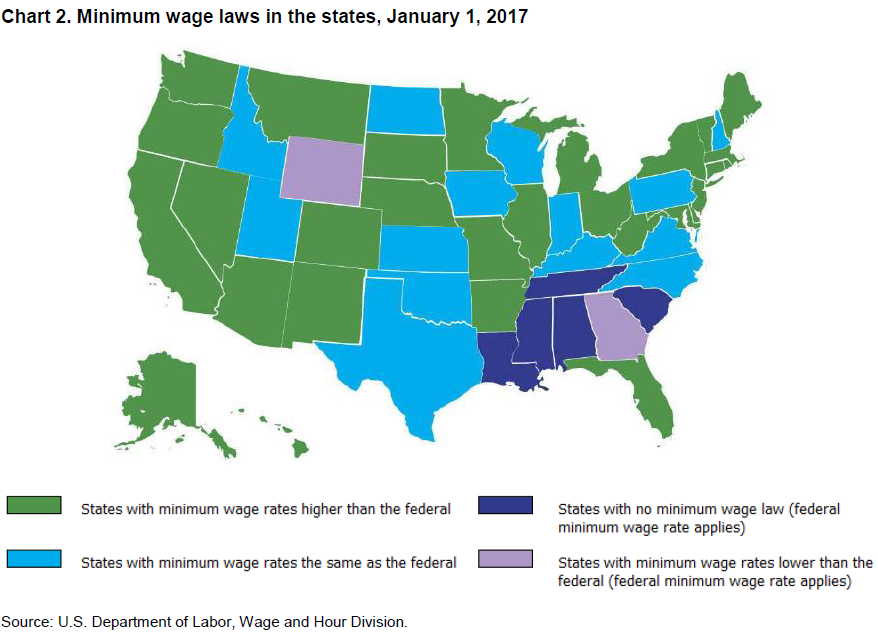
As of the current fiscal year, the minimum wage in North Carolina remains pegged to the federal minimum wage established under the Fair Labor Standards Act (FLSA). North Carolina law does not have a separate, higher state-mandated minimum wage, nor does it have provisions that automatically increase the rate based on inflation or cost-of-living adjustments.
Federal Floor and State Compliance
The federal minimum wage has been set at $7.25 per hour since July 2009. Because North Carolina state law adopts the federal standard, employers in the state must pay their non-exempt employees at least this amount. While various states and municipalities across the U.S. have enacted legislation to raise their minimum wages significantly above the federal level—reaching $15 or $17 per hour in some regions—North Carolina maintains the federal baseline.
What This Means for Employers
For business owners, complying with the $7.25 per hour requirement is the bare minimum. However, in the current economic climate, relying solely on the legal minimum can present significant challenges. With competition for talent being fiercer than ever, businesses that cap their starting pay at the statutory minimum often struggle with high turnover rates, low employee morale, and difficulty in attracting skilled labor. Operating a business in North Carolina requires not just legal compliance, but a strategic approach to compensation that balances profit margins with the reality of local labor market trends.
Navigating Exemptions and Special Pay Classifications
It is a common misconception that every worker is entitled to the standard hourly minimum wage. The North Carolina Department of Labor, in alignment with the U.S. Department of Labor, recognizes several exemptions and specialized pay structures that employers must understand to avoid wage and hour litigation.
Tipped Employees and the Sub-Minimum Wage
One of the most frequently misunderstood areas of compensation is the treatment of tipped employees. Under the FLSA and North Carolina law, employers are permitted to pay tipped employees a direct cash wage of $2.13 per hour, provided that the employee receives enough in tips to bridge the gap to the $7.25 minimum wage. If the hourly tips plus the $2.13 base wage do not equal at least $7.25 per hour, the employer is legally obligated to cover the difference.
Maintaining meticulous records for tipped employees is critical. Employers must ensure that tip credits are calculated accurately and that employees are informed of the tip credit provisions. Failure to provide proper notice or to track tips correctly can lead to significant back-pay liabilities.
Student Learners and Full-Time Students
There are specific provisions for sub-minimum wage employment for student learners and full-time students in retail or service establishments, agriculture, or institutions of higher education. These programs are strictly regulated, often requiring certification from the Department of Labor. Employers who wish to utilize these programs must be prepared for rigorous documentation requirements to prove that the employment does not displace regular workers and is primarily for the educational benefit of the student.
Exempt Employees (Salaried Professionals)
The minimum wage laws generally apply to non-exempt employees. Certain executive, administrative, professional, and outside sales positions may be classified as “exempt” from the minimum wage and overtime requirements of the FLSA. To be exempt, employees must meet specific “duties tests” and earn a salary above a designated threshold. As federal thresholds for exempt status have fluctuated in recent years, business owners must conduct periodic audits of their payroll structures to ensure that employees classified as exempt still meet the updated legal criteria.
Beyond the Law: The Economics of Fair Compensation
While $7.25 is the legal requirement in North Carolina, it is rarely the competitive reality. For professionals interested in personal finance and business growth, it is vital to distinguish between “legal pay” and “living wage.”
The Cost of Living Gap
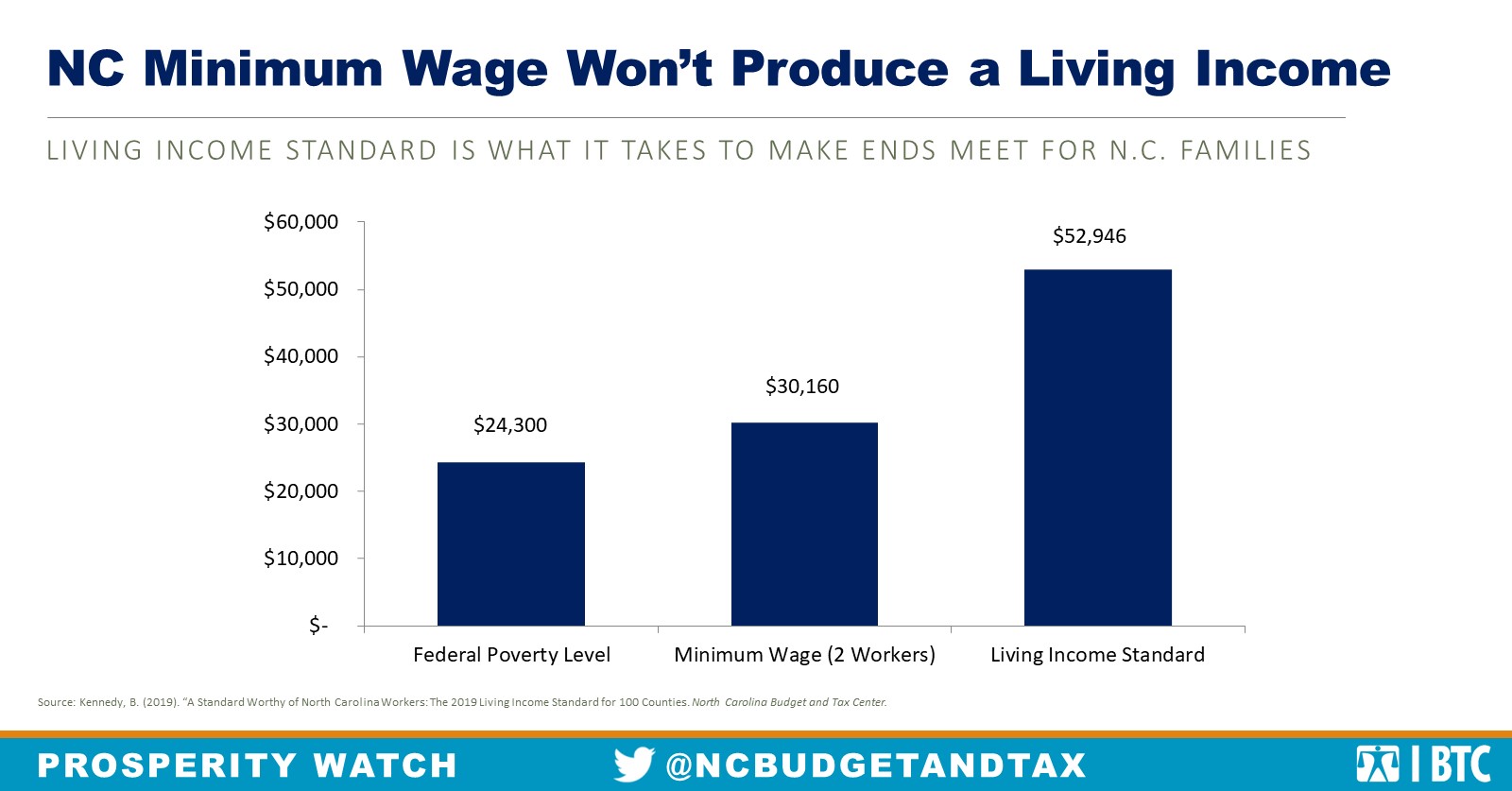
The cost of living in major North Carolina hubs—such as Raleigh, Durham, Charlotte, and Asheville—has increased significantly over the last decade. Housing costs, transportation, and groceries have all outpaced the static $7.25 federal minimum. Consequently, the minimum wage often fails to cover the basic needs of a single adult, let alone a family.
For the savvy financial manager or business owner, this discrepancy highlights a hidden cost: the cost of poverty. Employees who are not earning a living wage are more likely to experience health issues, face housing instability, and have lower cognitive bandwidth due to financial stress. These factors contribute to lower productivity and higher rates of absenteeism.
Why Businesses Are Raising Their Own “Floors”
Many North Carolina corporations have moved toward self-imposed minimum wages of $15.00 per hour or more. This is not purely an altruistic decision; it is a calculated business strategy.
- Retention and Recruitment: By offering a wage higher than the state minimum, companies reduce the high costs associated with recruiting and training new staff.
- Brand Reputation: In the modern consumer economy, brands that demonstrate social responsibility—including fair wage practices—often see increased customer loyalty.
- Operational Efficiency: Higher-paid employees tend to be more engaged and focused, leading to higher-quality work and better customer service outcomes.
Strategies for Financial Compliance and Growth
Whether you are managing a small business budget or planning your personal financial future, the minimum wage serves as a benchmark for your financial ecosystem.
For Business Owners: Auditing for Compliance
- Regular Wage Audits: Conduct quarterly reviews of your payroll. Ensure that no employee, including those in secondary roles, is being paid below the federal $7.25 threshold.
- Document Everything: Retain accurate time logs for all hourly employees. If an employee challenges their pay, your primary defense will be complete and precise records.
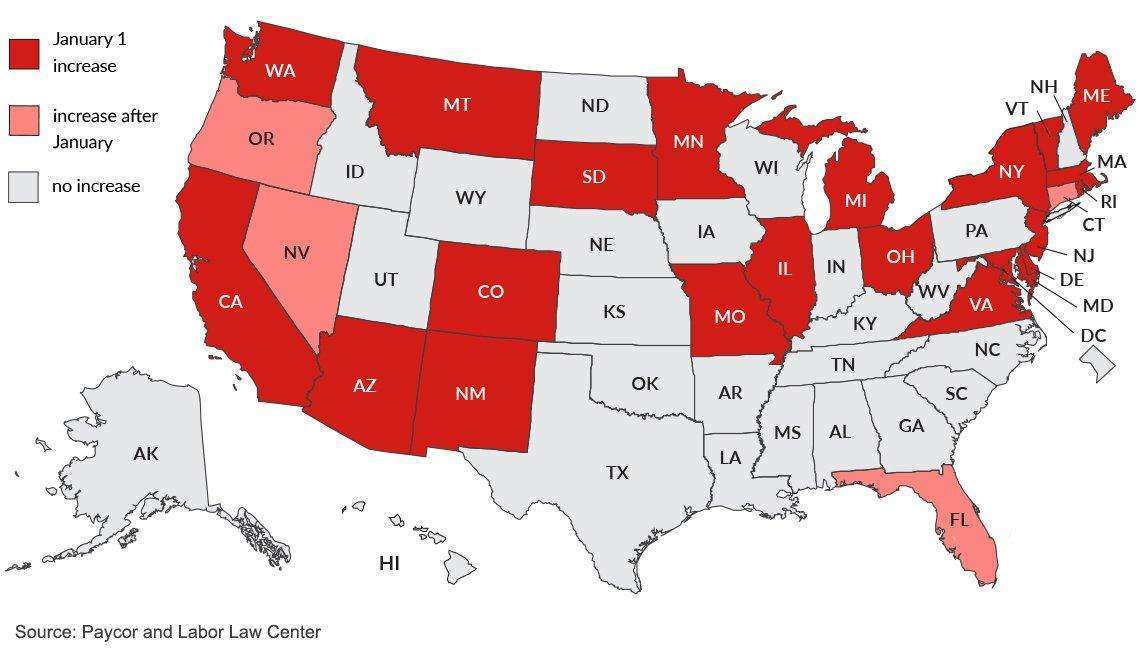
- Monitor Legislative Shifts: While North Carolina has remained stagnant at the federal level, local ordinances and statewide political pressure can shift quickly. Keep an eye on the North Carolina General Assembly and federal Department of Labor updates.
For Employees: Maximizing Your Earning Potential
If you are currently earning at or near the minimum wage, your goal should be to bridge the gap between “minimum wage” and “market value.”
- Skill Stacking: Use the stability of your current role to acquire high-demand, low-cost certifications. In the digital economy, technical skills—such as data entry, basic web management, or advanced spreadsheet proficiency—can quickly elevate your market value above the minimum wage baseline.
- Negotiate Based on Data: If you are asking for a raise, do not base your request on the minimum wage. Base it on the value you bring to the business. Research the average salary for your role in your specific city within North Carolina. Use sites like the Bureau of Labor Statistics to find localized compensation data.
- Focus on Total Compensation: Sometimes a pay bump isn’t possible due to tight business margins. If this is the case, look for “total compensation” opportunities, such as professional development stipends, flexible scheduling, or improved benefit packages that may be more valuable to your long-term financial health than a small hourly increase.
Ultimately, the minimum wage in North Carolina provides a foundation, but it should not be the ceiling for your financial ambitions. By understanding the law, respecting the economic factors that drive labor market trends, and proactively managing your compensation strategies, both employers and employees can thrive in North Carolina’s evolving economy.
aViewFromTheCave is a participant in the Amazon Services LLC Associates Program, an affiliate advertising program designed to provide a means for sites to earn advertising fees by advertising and linking to Amazon.com. Amazon, the Amazon logo, AmazonSupply, and the AmazonSupply logo are trademarks of Amazon.com, Inc. or its affiliates. As an Amazon Associate we earn affiliate commissions from qualifying purchases.