
Understanding the minimum wage in Hawaii is crucial for both employees and employers operating within the Aloha State. This foundational element of the labor market directly impacts the financial well-being of workers, influences business operational costs, and plays a significant role in the broader economic landscape of Hawaii. This article will delve into the current minimum wage rates, explore the legislative history and future considerations, and discuss the economic implications for individuals and businesses.
The Current Minimum Wage Landscape in Hawaii
Hawaii’s minimum wage has seen a series of increases over the years, reflecting an ongoing effort to ensure a living wage for its residents in a state known for its high cost of living. As of January 1, 2024, the state minimum wage stands at $14.00 per hour. This rate applies to most employees across various industries. However, there are specific nuances and exceptions that are important to understand.
Tipped Employees: A Differentiated Approach
A key area of distinction within minimum wage laws concerns tipped employees, such as servers and bartenders. In Hawaii, employers can pay tipped employees a lower cash wage, provided that their total earnings (cash wage plus tips) meet or exceed the regular state minimum wage. As of January 1, 2024, the cash wage for tipped employees is $13.00 per hour. This means that if a tipped employee’s hourly cash wage ($13.00) plus their tips does not equal at least $14.00 per hour on average, the employer must make up the difference. This policy aims to acknowledge the role of gratuities in the compensation of these workers while still ensuring a baseline hourly earning. It’s vital for both employers and tipped employees to accurately track tips and wages to ensure compliance with this dual-rate system.
Exemptions and Special Circumstances
While the $14.00 per hour rate is the general standard, certain categories of workers may be exempt from these provisions. These often include:
- Agricultural Workers: Specific agricultural employees may have different wage regulations.
- Domestics: Individuals employed in private homes for domestic service may have separate agreements.
- Students: High school students employed part-time may fall under different hourly wage structures, often designed to provide work experience.
- Certain Federal Employees: Federal employees working in Hawaii are subject to federal minimum wage laws.
- Independent Contractors: Individuals classified as independent contractors are not covered by minimum wage laws as they are considered self-employed. The classification of an individual as an employee versus an independent contractor is a critical determination, and misclassification can lead to significant legal and financial penalties for employers.
It is crucial for businesses to accurately determine the employment status of their workers and to be aware of any specific exemptions that may apply to their industry or workforce. Consulting with legal counsel or the Hawaii Department of Labor and Industrial Relations (DLIR) is recommended for definitive guidance.
Legislative History and Future Projections
The minimum wage in Hawaii has been a subject of ongoing legislative debate and adjustment, driven by the state’s persistent challenge with a high cost of living. Understanding this history provides context for current policies and sheds light on potential future directions.
A Trajectory of Incremental Increases
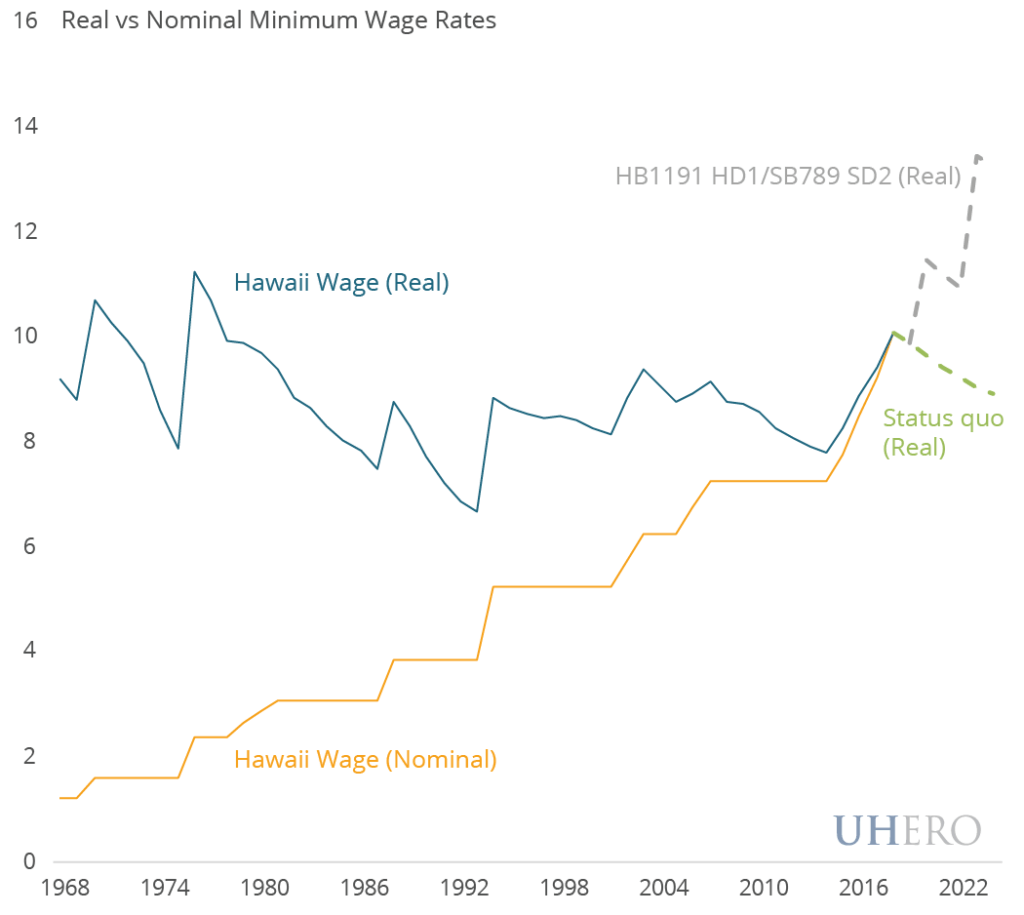
Hawaii’s journey towards its current minimum wage has been characterized by a series of legislated increases. For decades, the wage has been adjusted periodically to try and keep pace with inflation and the rising expenses of housing, food, and transportation. Each legislative session often brings proposals to further raise the minimum wage, reflecting a consistent advocacy for worker compensation that aligns with the economic realities of the islands.
The Impact of Recent Legislation
Recent legislative efforts have been particularly impactful. In 2022, Act 123 was signed into law, mandating a phased increase in the minimum wage. This legislation set the stage for the $14.00 per hour rate in 2024, with provisions for further increases in subsequent years. For instance, Act 123 included a plan for the minimum wage to rise to $16.00 per hour in 2025, and then to $18.00 per hour in 2026, and finally to $19.00 per hour in 2028. The exact trajectory beyond these dates often depends on future legislative actions and economic conditions. These incremental increases are designed to provide businesses with some predictability for adjusting their budgets while ensuring a steady improvement in the purchasing power of low-wage workers.

Factors Influencing Future Adjustments
Several factors will likely influence future adjustments to Hawaii’s minimum wage:
- Cost of Living: Hawaii consistently ranks among the states with the highest cost of living in the United States. This remains a primary driver for advocating for higher minimum wages.
- Economic Performance: The overall health of Hawaii’s economy, including its tourism sector and other key industries, will play a role in the feasibility of wage increases.
- Political Climate: The prevailing political sentiment and the priorities of elected officials will shape the legislative agenda regarding minimum wage policies.
- Advocacy and Public Opinion: Labor unions, worker advocacy groups, and public opinion will continue to exert influence on legislative decisions.
- Federal Minimum Wage: While Hawaii has its own state minimum wage, any changes to the federal minimum wage could also have an indirect impact or prompt state-level discussions.
The ongoing dialogue surrounding these factors suggests that the minimum wage in Hawaii will likely continue to be a dynamic issue, subject to review and potential modification as the state navigates its unique economic and social landscape.
Economic Implications of Hawaii’s Minimum Wage
The minimum wage is more than just a number; it’s a policy tool with far-reaching economic consequences for individuals, businesses, and the broader Hawaiian economy. Its impact is felt in consumer spending, business costs, employment levels, and the overall standard of living.
Impact on Workers and Consumer Spending
For employees earning the minimum wage, an increase directly translates to greater disposable income. This can lead to improved living standards, reduced reliance on public assistance programs, and a greater ability to afford basic necessities like housing, food, healthcare, and transportation in Hawaii’s expensive market. A higher minimum wage can also boost consumer confidence and spending. As low-wage workers tend to spend a larger proportion of their income, an increase in their earnings can stimulate demand for goods and services, potentially benefiting local businesses. This can create a positive feedback loop, where increased consumer spending supports business growth and, in turn, employment.
Impact on Businesses: Costs and Adjustments
For businesses, particularly small businesses and those in labor-intensive sectors, an increase in the minimum wage represents a rise in operational costs. Employers must either absorb these increased labor expenses, potentially by reducing profit margins, or pass them on to consumers through higher prices. Businesses may also explore strategies to mitigate these costs. This could include:
- Increased Productivity: Investing in training or technology to enhance worker efficiency.
- Automation: Implementing automated processes to reduce the need for human labor in certain tasks.
- Hiring Adjustments: Modifying hiring practices, potentially reducing the number of entry-level positions or adjusting staffing levels.
- Employee Benefits Review: Re-evaluating non-wage compensation packages.
The ability of businesses to adapt to these changes often depends on their profit margins, the elasticity of demand for their products or services, and the competitive landscape. Industries that rely heavily on minimum wage labor, such as hospitality and retail, may face more significant challenges.
Broader Economic Effects: Poverty, Inequality, and Economic Growth
The minimum wage has been a subject of extensive economic research regarding its effects on poverty and income inequality. Proponents argue that a higher minimum wage is an effective tool for lifting low-income families out of poverty and reducing the gap between the highest and lowest earners. By ensuring that full-time work provides a more adequate income, it can reduce the need for multiple jobs or reliance on social safety nets.
Conversely, some economic theories suggest that significant increases in the minimum wage could lead to job losses, particularly for low-skilled workers, and potentially contribute to inflation as businesses pass on increased costs. The net effect on poverty and inequality is a complex interplay of these various factors, and studies often yield different conclusions depending on the specific economic context, the magnitude of the wage increase, and the industry being examined.
In Hawaii, with its unique economic structure heavily influenced by tourism and a high cost of living, policymakers must carefully balance the goal of ensuring a living wage for workers with the need to maintain a competitive business environment. The ongoing adjustments to the minimum wage reflect this continuous effort to find that equilibrium, aiming to foster a more equitable and prosperous economy for all residents of the islands.
aViewFromTheCave is a participant in the Amazon Services LLC Associates Program, an affiliate advertising program designed to provide a means for sites to earn advertising fees by advertising and linking to Amazon.com. Amazon, the Amazon logo, AmazonSupply, and the AmazonSupply logo are trademarks of Amazon.com, Inc. or its affiliates. As an Amazon Associate we earn affiliate commissions from qualifying purchases.