
Defining the “middle class” is one of the most persistent challenges in American economics. While the term is frequently used in political discourse and marketing, its financial parameters are often shifting. To understand what the middle-class tax bracket is, one must first reconcile the difference between sociological identity and the cold, hard numbers of the Internal Revenue Service (IRS). Because the United States utilizes a progressive tax system, there is no single “middle-class bracket”; rather, most middle-income earners find their income spanning across several different marginal rates.
In the current fiscal landscape, identifying where you fall requires looking at your Adjusted Gross Income (AGI), your filing status, and how the federal government defines income tiers relative to the national median. This guide explores the tax brackets that define the middle-class experience, the mechanisms of the progressive tax system, and the strategies middle-income earners can use to optimize their tax liability.
Defining the Middle Class in the Modern Economy
Before diving into the specific percentages, it is essential to define who qualifies as middle class. Economists often use the Pew Research Center’s definition: a household that earns between two-thirds and double the national median income.
Income Thresholds vs. Purchasing Power
National median incomes fluctuate annually based on inflation and labor market shifts. For a single filer, the middle-class range might span from approximately $50,000 to $150,000, while for a family of four, that range could extend from $70,000 to over $200,000. However, the tax code does not adjust for the cost of living. A person earning $100,000 in a rural area may feel wealthy, while the same income in a metropolitan hub like San Francisco or New York City may feel financially precarious. Despite these differences in purchasing power, the IRS applies the same federal tax brackets to both individuals.
The Role of Filing Status
Your tax bracket is not determined by your income alone; it is heavily influenced by your filing status. The IRS categorizes taxpayers into four primary groups: Single, Married Filing Jointly, Married Filing Separately, and Head of Household. For middle-class earners, the “Married Filing Jointly” status often provides the most significant tax advantages, as the income thresholds for each bracket are roughly double those of single filers. Understanding which category you fall into is the first step in identifying your specific tax burden.
Navigating the Progressive Tax System
The most common misconception about tax brackets is the idea that if you “move into a higher bracket,” all of your income is taxed at that higher rate. This is fundamentally incorrect. The U.S. uses a progressive tax system, which functions like a series of buckets.
How Marginal Tax Rates Work
Imagine your income as water filling a series of buckets. The first bucket represents the 10% tax rate. Once that bucket is full, the remaining water flows into the 12% bucket, then the 22% bucket, and so on. If you are in the “24% tax bracket,” only the dollars that fall into that specific bucket are taxed at 24%. The dollars in the lower buckets are still taxed at 10%, 12%, and 22%.
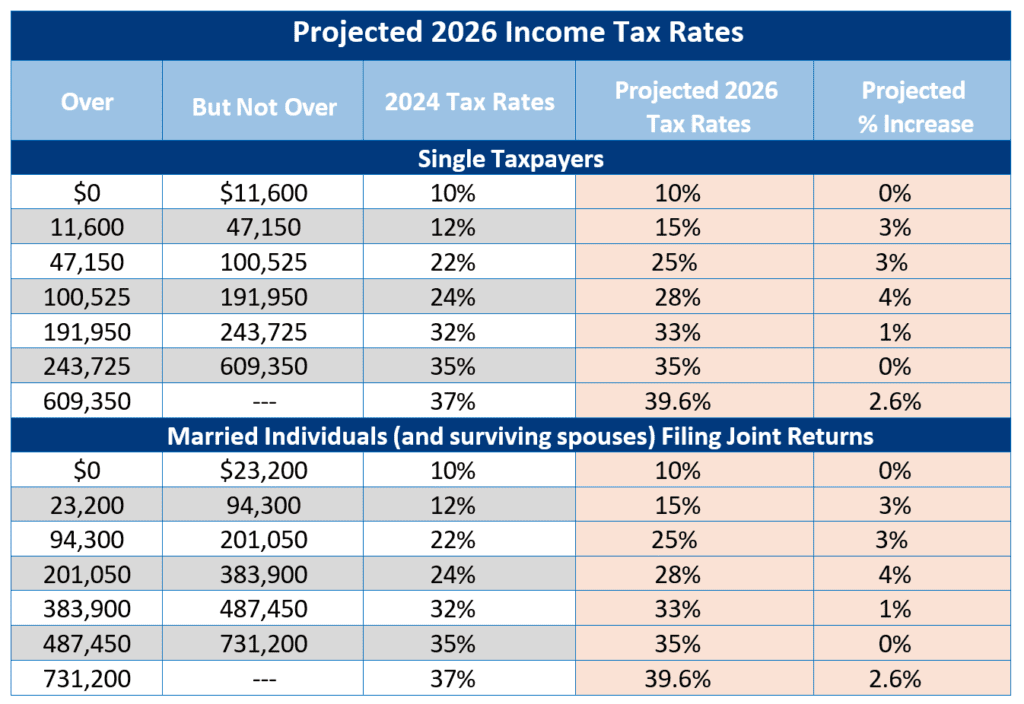
For the 2024 and 2025 tax years, the brackets most commonly associated with the middle class are:
- 12% Bracket: This covers a significant portion of low-to-mid-range earners.
- 22% Bracket: Often considered the “heart” of the middle-class tax experience.
- 24% Bracket: This captures upper-middle-class earners and professionals.
Identifying the Federal Brackets
For a single filer in 2024, the 22% bracket applies to incomes between $47,151 and $100,525. For married couples filing jointly, that same 22% rate applies to income between $94,301 and $201,050. These figures are adjusted annually for inflation, a process known as “bracket creep” prevention. Without these adjustments, inflation-driven raises would push taxpayers into higher brackets even if their standard of living remained the same.
Tax Deductions and Credits for Middle-Class Families
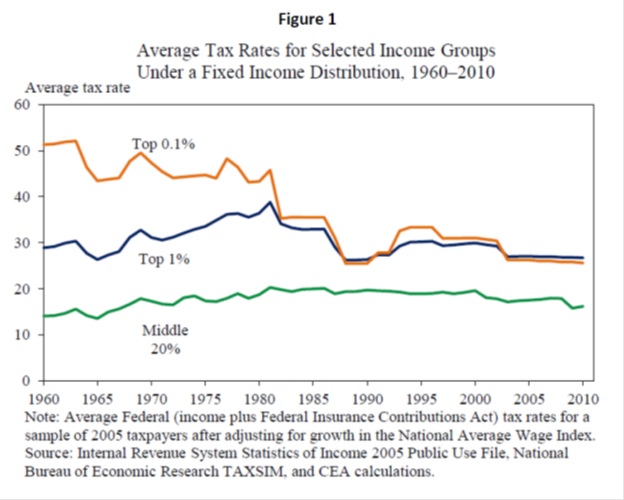
Identifying your bracket is only half the battle. The goal for most middle-class taxpayers is to reduce their taxable income so that fewer dollars fall into the higher “buckets.” This is achieved through deductions and credits.
Standard vs. Itemized Deductions
The majority of middle-class taxpayers utilize the standard deduction. For the 2024 tax year, the standard deduction is $14,600 for singles and $29,200 for married couples filing jointly. This amount is subtracted directly from your total income before your tax is calculated. If you have significant mortgage interest, state and local taxes (SALT), or large charitable contributions, you might choose to itemize instead. However, since the Tax Cuts and Jobs Act (TCJA) of 2017 nearly doubled the standard deduction, itemizing has become less common for the average middle-income household.
Key Credits: Child Tax Credit and Education Credits
While deductions lower the income you are taxed on, tax credits are a dollar-for-dollar reduction of the tax you actually owe. They are far more powerful than deductions.
- Child Tax Credit (CTC): A cornerstone of middle-class tax relief, providing up to $2,000 per qualifying child.
- Education Credits: The American Opportunity Tax Credit (AOTC) and the Lifetime Learning Credit (LLC) help offset the costs of higher education, which is often a major expense for middle-class families.
- Earned Income Tax Credit (EITC): While often targeted at lower-income earners, those at the lower end of the middle-class spectrum with several children may still qualify for this credit.
Strategic Financial Planning for Middle-Income Earners
The middle class often finds itself in a unique position: earning too much to qualify for certain subsidies but not enough to benefit from the complex tax-sheltering strategies used by the ultra-wealthy. However, there are several “Money” niche strategies that can significantly lower a middle-class tax bill.
Tax-Advantaged Retirement Accounts
One of the most effective ways to drop into a lower tax bracket is by contributing to a traditional 401(k) or a traditional IRA. Contributions to these accounts are “pre-tax,” meaning they are deducted from your gross income. If a married couple earns $105,000 and contributes $15,000 to their employer-sponsored 401(k), their taxable income drops to $90,000, potentially moving a portion of their income from the 22% bracket down to the 12% bracket.
Conversely, for those who expect to be in a higher bracket during retirement, the Roth IRA or Roth 401(k) is a popular middle-class tool. While you don’t get a tax break today, your investments grow tax-free, and withdrawals in retirement are not taxed. Balancing these two types of accounts is a hallmark of sophisticated middle-class financial planning.
Health Savings Accounts (HSAs)
For those with high-deductible health plans, the HSA is often called the “triple tax advantage” tool. Contributions are tax-deductible, the growth is tax-free, and withdrawals for qualified medical expenses are tax-free. For a middle-class family, maximizing an HSA is an excellent way to reduce AGI while building a safety net for healthcare costs.
The Impact of Policy Changes on Middle-Class Tax Liability
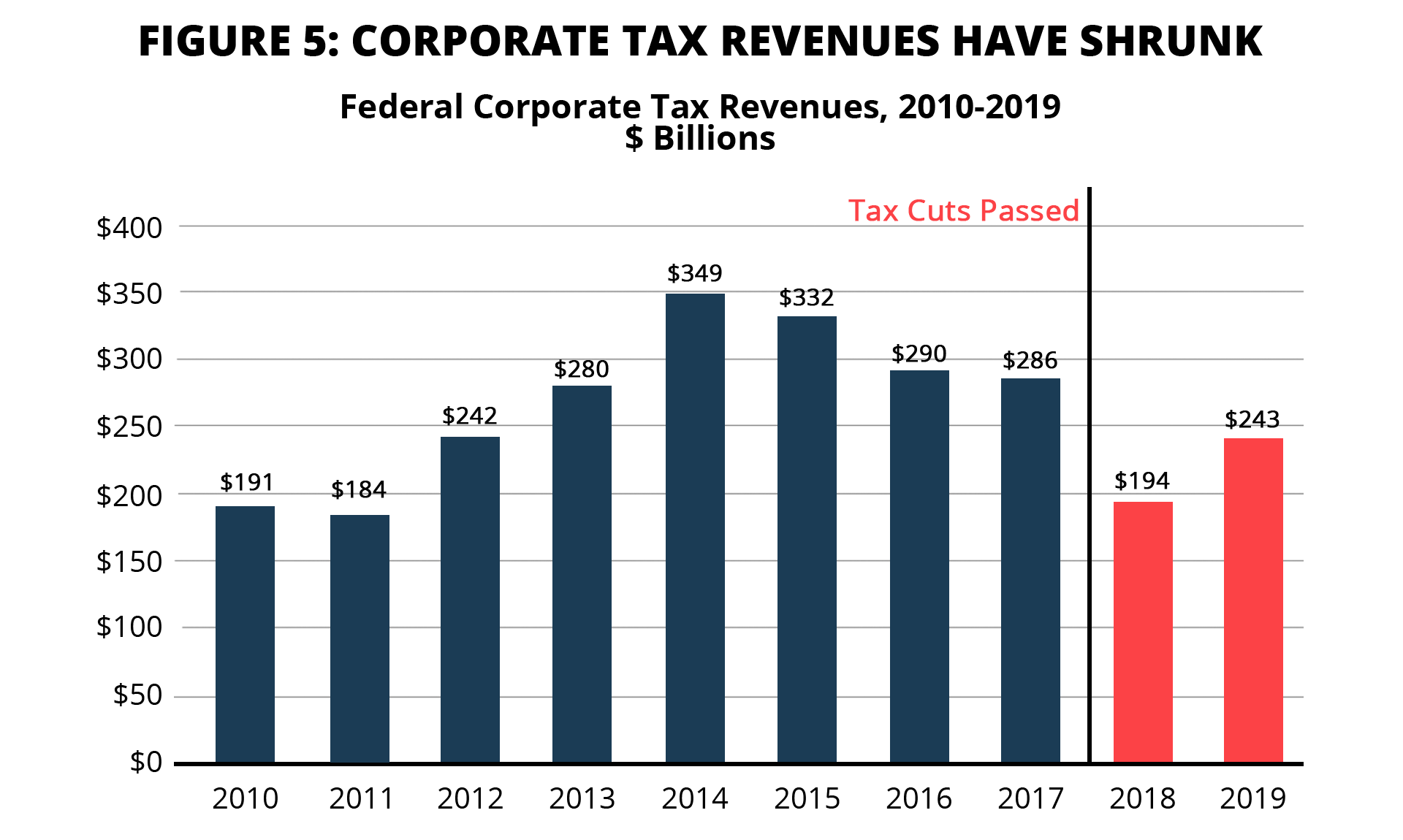
The middle-class tax experience is not static; it is heavily influenced by legislative cycles. The most significant factor currently looming on the horizon is the expiration of the Tax Cuts and Jobs Act (TCJA).
The Sunset of the Tax Cuts and Jobs Act
Many of the tax provisions currently enjoyed by the middle class—including the lower marginal rates and the expanded standard deduction—are set to expire at the end of 2025 unless Congress acts. If these provisions “sunset,” the 12% bracket could revert to 15%, the 22% bracket to 25%, and the 24% bracket to 28%. Additionally, the standard deduction could be significantly reduced, and the personal exemption could be reinstated. For middle-class earners, this highlights the importance of tax-loss harvesting and income timing over the next few years.
Preparing for Future Fiscal Shifts
To maintain financial stability, middle-class taxpayers must stay informed about these shifts. Wealth management is not just for the elite; it is a necessity for the middle class to ensure that inflation and tax policy do not erode their savings. This involves regular reviews of withholding amounts to avoid “tax season surprises” and staying flexible with investment strategies.
In summary, there is no single middle-class tax bracket, but rather a range of rates—typically 12%, 22%, and 24%—that define the middle-income experience. By understanding the progressive nature of the system, leveraging deductions and credits, and utilizing tax-advantaged investment vehicles, middle-class earners can effectively navigate the complexities of the IRS and retain more of their hard-earned wealth. Financial literacy in this area is not just about compliance; it is a critical component of long-term wealth building and economic security.
aViewFromTheCave is a participant in the Amazon Services LLC Associates Program, an affiliate advertising program designed to provide a means for sites to earn advertising fees by advertising and linking to Amazon.com. Amazon, the Amazon logo, AmazonSupply, and the AmazonSupply logo are trademarks of Amazon.com, Inc. or its affiliates. As an Amazon Associate we earn affiliate commissions from qualifying purchases.