
For decades, the “Middle Class” has served as the heartbeat of the American identity. It is a term that carries weight far beyond simple tax brackets, representing a blend of economic stability, social aspiration, and the promise of the American Dream. However, as the global economy evolves and the domestic financial landscape shifts, defining what it actually means to be middle class in America has become increasingly complex. No longer defined solely by a white picket fence and a steady manufacturing job, today’s middle class is a demographic defined by fluctuating income thresholds, rising costs of living, and a strategic approach to personal finance.
To understand the middle class today, one must look past the nostalgia and examine the hard data, the regional nuances, and the specific financial behaviors that distinguish this group from those above and below them on the economic ladder.
Defining the Middle Class: The Math and the Myth
When economists attempt to pin down the middle class, they usually start with income. The most widely accepted benchmark comes from the Pew Research Center, which defines the middle class as those earning between two-thirds and double the median household income. In the current economic climate, this translates to a broad range, typically starting around $52,000 and topping out near $156,000 for a three-person household.
The Pew Research Definition
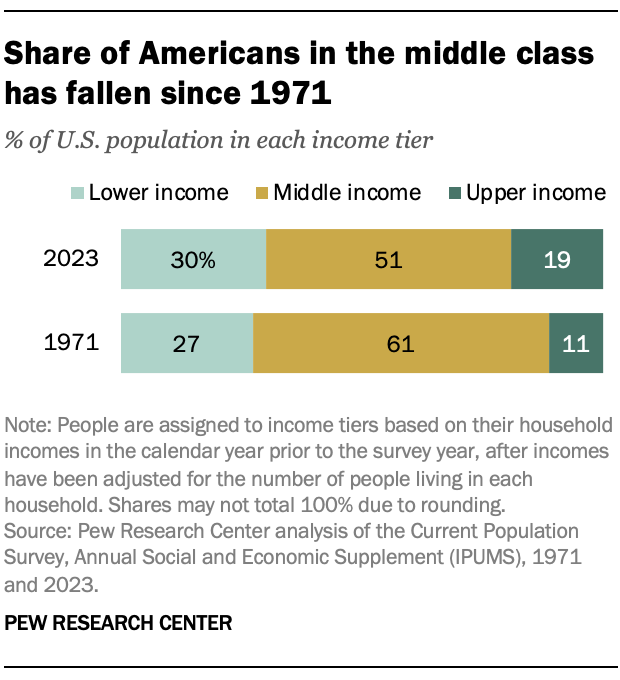
Income tiers are the most objective way to categorize the population. According to this model, a household’s standing depends heavily on its size and local context. For instance, a single individual earning $50,000 might feel firmly middle class, whereas a family of five on the same income would likely fall into the lower-income category. This statistical approach helps policymakers track the “hollowing out” of the middle class—a phenomenon where the percentage of adults living in middle-income households has steadily declined from 61% in 1971 to roughly 50% today.
Regional Cost of Living Adjustments
The biggest flaw in a national income definition is the radical variance in purchasing power across the United States. In cities like New York, San Francisco, or Seattle, a $100,000 salary can be stretched thin by astronomical rents and service costs, potentially relegating a household to “working class” status in terms of lifestyle. Conversely, in the Midwest or the South, that same $100,000 can afford a spacious home, multiple vehicles, and significant discretionary spending. Therefore, being middle class is often relative to one’s zip code; it is a measure of local purchasing power parity rather than a fixed national number.
The Qualitative Definition: Security and Choice
Beyond the spreadsheets, the middle class is defined by a specific set of life circumstances. Historically, this included homeownership, the ability to afford a college education for one’s children, health insurance, and the prospect of a secure retirement. In modern terms, the middle class is often defined by “financial breathing room”—the ability to cover an unexpected $1,000 emergency expense without turning to high-interest debt. When choice and security vanish, the individual leaves the middle class, regardless of their gross annual earnings.
The Changing Anatomy of Middle-Class Wealth
While income represents the flow of money, wealth (or net worth) represents the reservoir. For the American middle class, the composition of that reservoir has undergone a massive transformation over the last thirty years. Understanding this anatomy is crucial for anyone looking to navigate the current financial environment.
The Role of Home Equity
For the vast majority of middle-class Americans, the primary residence remains their largest financial asset. Homeownership has long been the “forced savings account” that built generational wealth. However, the barrier to entry has risen significantly. With housing prices outpacing wage growth in many Tier-1 and Tier-2 cities, the “landed” middle class—those who bought property before the post-2020 surge—find themselves in a vastly different financial position than the “aspiring” middle class, who are currently priced out or burdened by high mortgage rates.
The Shift from Pensions to Defined Contribution Plans
Thirty years ago, a middle-class career often ended with a guaranteed pension. Today, that security has been replaced by the 401(k) and the IRA. This shift has placed the burden of investment risk and financial literacy directly on the individual. Being middle class today requires a level of sophistication in managing equity portfolios and understanding compound interest that was previously reserved for the wealthy. The “investor class” and the “middle class” are now, by necessity, becoming one and the same.
The Impact of Liquidity and Debt
A defining characteristic of the modern middle class is the high ratio of debt to assets. While a household may have a high net worth on paper due to home equity, their “liquid” wealth—cash and easily accessible investments—is often low. Student loans, auto loans, and credit card balances frequently act as a drag on middle-class mobility. True financial health in this category is increasingly measured by the debt-to-income ratio, as high levels of debt can turn a middle-class income into a paycheck-to-paycheck existence.
The Core Financial Pressures of Modern Middle-Class Life
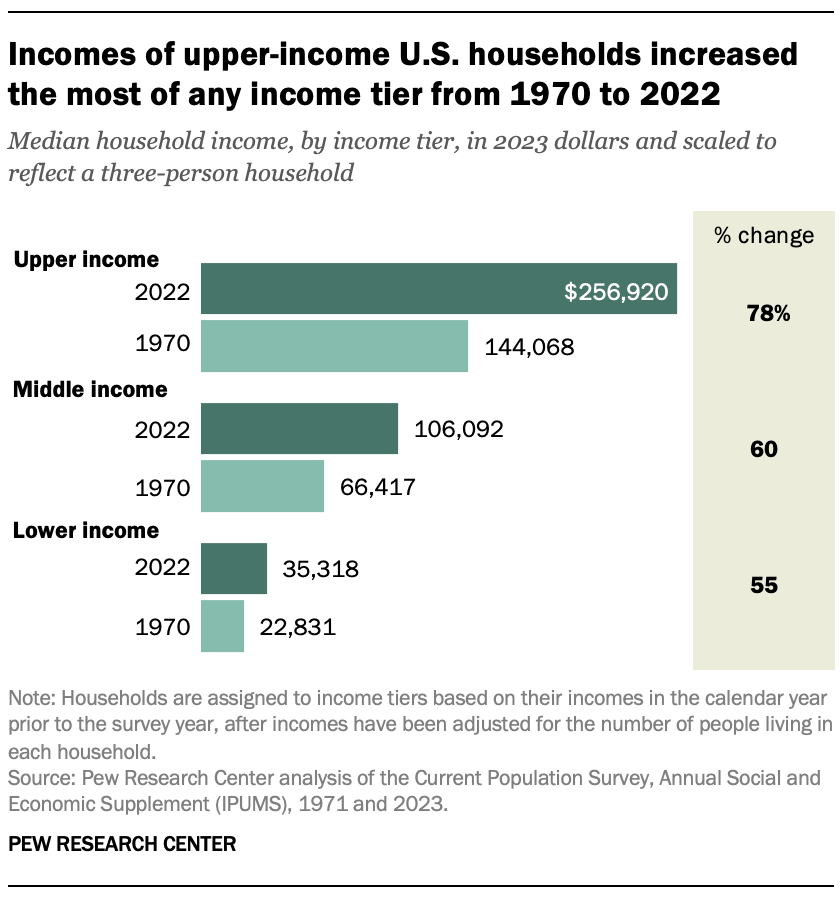
The “Middle-Class Squeeze” is not just a political talking point; it is a documented economic reality. The costs of the essential pillars of middle-class life—housing, healthcare, and education—have risen at rates far exceeding the Consumer Price Index (CPI).
The Education Inflation
A college degree is still the most reliable ticket into the middle class, yet it is also the most significant financial hurdle. The cost of higher education has increased by more than 160% since 1980, adjusted for inflation. This has led to a cycle where young professionals enter the middle class with “negative wealth” due to student loans, delaying major life milestones such as home purchases or starting families.
Healthcare and Insurance Vulnerability
Even with employer-sponsored insurance, healthcare remains a volatile variable in middle-class personal finance. High-deductible health plans have become the norm, meaning a single major medical event can wipe out a year’s worth of savings. This vulnerability creates a sense of “precarity” that contradicts the traditional definition of middle-class stability.
The Childcare Crisis
For middle-class families with two working parents, childcare costs often rival or exceed mortgage payments. In many states, the annual cost of infant care is higher than the tuition at a public university. This “middle-class tax” on young families prevents capital accumulation during the most critical years for compound interest, creating a long-term ripple effect on retirement readiness.
Financial Strategies for the Modern Middle Class
Navigating the middle-class landscape requires more than just hard work; it requires a strategic, business-like approach to personal finance. To maintain a middle-class lifestyle in the face of current headwinds, households are increasingly turning to advanced financial tactics.
Diversifying Income Streams
The reliance on a single employer is increasingly seen as a risk. Many in the middle class are adopting “side hustles” or gig-economy work not just for extra spending money, but as a hedge against corporate downsizing. Whether it is consulting, e-commerce, or rental property income, diversifying how money enters the household is a hallmark of the resilient middle class.
Tax-Advantaged Investing
To combat the squeeze, maximizing tax efficiency is essential. Middle-class households are becoming more adept at using Health Savings Accounts (HSAs) as stealth IRA vehicles, utilizing 529 plans for education, and taking full advantage of employer matching in 401(k)s. In a high-cost environment, the “tax alpha” created by these accounts can be the difference between a comfortable retirement and an indefinite working life.
The Rise of Frugalism and “Loud Budgeting”
There is a growing movement within the middle class that rejects the “keeping up with the Joneses” mentality. By focusing on high savings rates and intentional spending—sometimes referred to as FIRE (Financial Independence, Retire Early) principles—many are redefining middle-class success as the accumulation of time rather than the accumulation of things. This shift in values is a direct response to the rising costs of traditional status symbols.
The Future of Middle-Class Prosperity
As we look toward the next decade, the definition of the middle class will likely continue to bifurcate. The “Upper Middle Class” (those with high-skill jobs in tech, finance, and specialized medicine) will likely see continued growth, while the “Lower Middle Class” may face increased pressure from automation and the rising cost of essentials.
The Impact of Remote Work
One of the greatest opportunities for the middle class is the decoupling of geography from income. Remote work allows a professional to earn a “Big City” salary while living in a low-cost area. This geographic arbitrage is perhaps the most powerful tool currently available for middle-class wealth building, as it instantly resets the cost-of-living equation in the individual’s favor.
Intergenerational Wealth Transfers
We are currently entering the era of the “Great Wealth Transfer,” as trillions of dollars pass from the Baby Boomer generation to their heirs. For many, this inheritance will be the factor that solidifies their middle-class status, providing the down payment for a home or the capital to clear student debt. However, this also points to a growing divide between those with familial safety nets and those attempting to build middle-class wealth from scratch.
Redefining Financial Success
Ultimately, being middle class in America today is less about a specific dollar amount and more about the mastery of one’s financial ecosystem. It is a state of being where income is sufficient to cover needs, debt is managed, and the future is actively planned for. While the path has become narrower and the obstacles more numerous, the middle class remains the primary engine of the American economy—a demographic defined by its resilience, its adaptability, and its pursuit of long-term financial security.
aViewFromTheCave is a participant in the Amazon Services LLC Associates Program, an affiliate advertising program designed to provide a means for sites to earn advertising fees by advertising and linking to Amazon.com. Amazon, the Amazon logo, AmazonSupply, and the AmazonSupply logo are trademarks of Amazon.com, Inc. or its affiliates. As an Amazon Associate we earn affiliate commissions from qualifying purchases.