
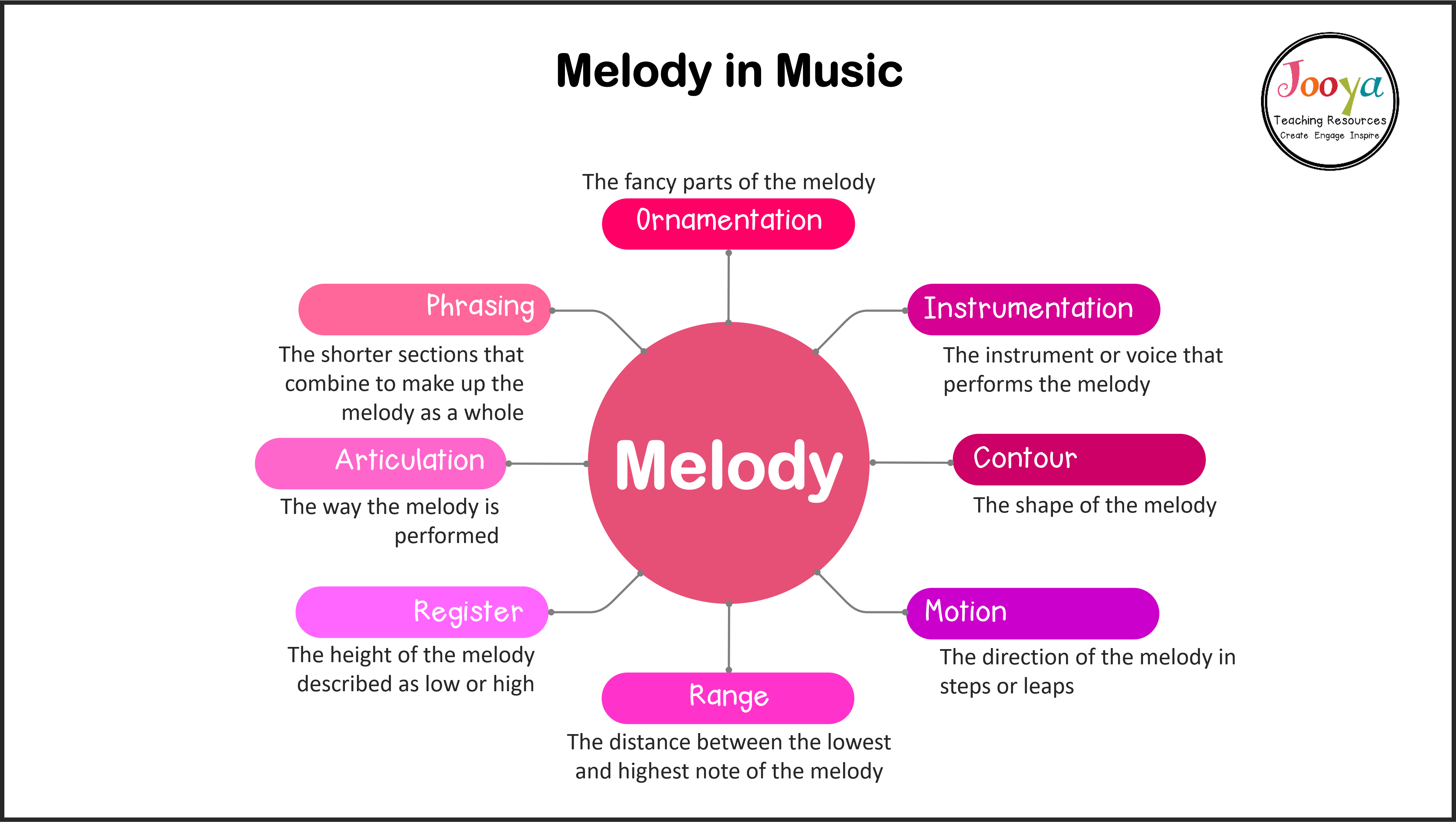
In the digital age, the question “what is the melody?” has evolved from a subjective musical inquiry into a complex technical challenge. For a human, a melody is a sequence of notes that are perceived as a single entity; for a computer, it is a dense stream of data, a series of frequencies, and a set of mathematical relationships. The bridge between these two perspectives is built upon sophisticated technologies: Digital Signal Processing (DSP), machine learning algorithms, and the burgeoning field of generative artificial intelligence. Understanding the technology behind the melody allows us to appreciate how software can identify a song in a crowded bar, how AI can compose a symphony, and how digital security protects the intellectual property embedded within those sound waves.
The Science of Identification: How Software Hears the Melody
When a user triggers a music recognition app like Shazam or SoundHound, they are engaging with one of the most elegant applications of audio technology. The process begins with audio fingerprinting, a technique that allows a software system to condense a vast amount of acoustic data into a unique digital signature.
Audio Fingerprinting and Spectrogram Analysis
The first step in identifying a melody involves converting sound into a visual representation known as a spectrogram. A spectrogram plots frequency against time, showing the intensity of the sound at different pitches. However, raw spectrograms are too large and resource-intensive to compare against a database of millions of songs in real-time.
To solve this, developers use algorithms to identify “peak points” within the spectrogram—points where the energy of the sound is highest. These points usually correspond to the fundamental frequencies of the melody and the prominent rhythmic accents. By mapping these peaks and the time intervals between them, the software creates a “constellation map.” This map is the audio fingerprint. Because it relies on relative timing and frequency ratios rather than absolute volume, the technology can identify a melody even when there is significant background noise or if the recording quality is poor.
Pattern Matching and Database Queries
Once the fingerprint is generated, it is sent to a central server where it is compared against a massive index of known fingerprints. This is not a simple linear search. Tech companies use high-performance hashing algorithms to find matches within milliseconds. The “melody” is effectively reduced to a set of hashes—short alphanumeric strings—that act as a unique identifier. If a threshold of matching points is met, the software returns the metadata: song title, artist, and album. This technological feat relies on distributed computing and optimized database architectures that manage petabytes of audio data globally.
Generative AI: From Identification to Creation
The most significant shift in music technology in recent years is the transition from identifying melodies to generating them. Generative AI models, such as those powering Suno, Udio, and Google’s MusicLM, have redefined our technical understanding of melodic structure.
Transformers and Sequential Data
At the heart of modern AI music generation is the Transformer architecture, the same technology that powers Large Language Models (LLMs) like GPT-4. In the context of music, a melody is treated as a sequence of “tokens,” much like words in a sentence. Each token represents a specific musical element—a pitch, a duration, or a dynamic shift.
The AI is trained on vast datasets of MIDI files and raw audio. Through this training, the model learns the statistical probability of what note should follow another. For instance, in Western pop music, a G note is highly likely to follow a C and a D7 chord in a specific progression. The “melody” produced by the AI is essentially a high-probability path through a multidimensional space of musical possibilities. This is known as “predictive modeling” for audio, where the software anticipates the next logical step in a melodic sequence based on the context of the preceding notes.
Latent Diffusion Models in Audio
While Transformers handle the symbolic structure of the melody, Diffusion models are increasingly used to generate the actual sound. Diffusion models work by starting with a field of pure digital noise and gradually “denoising” it until a clear audio signal emerges. By conditioning this process on text prompts or existing melodic fragments, the technology can synthesize high-fidelity audio that includes not just the notes of the melody, but the timbre of the instruments, the acoustics of the room, and the nuances of a human performance. This represents a leap from MIDI-based “robot music” to fluid, organic soundscapes that are indistinguishable from human-composed melodies.
The Infrastructure of Sound: Processing and Latency
The technical reality of “the melody” is also tied to the hardware and infrastructure required to process it. Whether it is a streaming service delivering a high-resolution track or a mobile app processing a voice command, the underlying tech stack is critical.
Digital Signal Processing (DSP) and Low Latency
Digital Signal Processing is the backbone of all audio technology. It involves the mathematical manipulation of an audio signal to improve its quality or extract information. In modern gadgets, dedicated DSP chips handle tasks like noise cancellation and echo suppression so that the “melody”—the primary audio signal—remains clear.
For interactive applications, such as cloud gaming or virtual reality, the “melody” must be processed with near-zero latency. If a user’s action in a virtual world triggers a musical response, any delay (latency) greater than 20 milliseconds will be perceptible and jarring. Achieving this requires specialized audio drivers and optimized data transfer protocols like MIDI 2.0 and high-bitrate Bluetooth codecs (LDAC, aptX), which ensure that the integrity of the melody is maintained across wireless connections.
Compression and Fidelity
How we experience a melody is also dictated by compression algorithms. Codecs like AAC, MP3, and FLAC determine how much data is discarded to make a file manageable. Lossy compression uses psychoacoustic modeling to remove frequencies that the human ear typically cannot hear, focusing on preserving the core melody while sacrificing the extreme highs and lows. In contrast, lossless technology ensures that every bit of the original studio recording is preserved, providing the “high-fidelity” experience sought by audiophiles and professional sound engineers.
Digital Security and Intellectual Property in Audio
As melodies become increasingly digital, the technology used to protect them becomes more vital. The intersection of audio tech and digital security is a major frontier for software developers and rights holders.
Acoustic Watermarking
To prevent unauthorized use of digital melodies, companies employ acoustic watermarking. This involves embedding a hidden digital signal within the audio that is inaudible to the human ear but can be detected by monitoring software. Unlike a traditional file-based watermark, an acoustic watermark survives recording, re-encoding, and even being played over a speaker and re-recorded. This allows platforms like YouTube and Spotify to use “Content ID” systems to automatically flag copyrighted melodies, ensuring that creators are compensated and that digital security protocols are upheld.
Blockchain and Smart Contracts in Music
Emerging tech trends are also exploring the use of blockchain to define what a melody is in a legal and financial sense. By minting a melody as an NFT (Non-Fungible Token) or associating it with a smart contract, the ownership and usage rights are baked into the digital asset itself. This creates a transparent, immutable record of who created the melody and who is authorized to use it in their software or content. This decentralized approach to “the melody” aims to solve the complex web of licensing and royalties that has plagued the music industry since the dawn of the internet.
The Future: Adaptive Audio and Personalization
Looking forward, the technology of the melody is moving toward total personalization. We are entering an era of “adaptive audio,” where the melody of a track is not fixed but changes in real-time based on the listener’s environment or biometric data.
Biometric Feedback and Real-time Synthesis
Wearable tech—such as smartwatches and fitness trackers—can now feed heart rate and activity level data into music apps. Using AI, these apps can adjust the tempo, key, and intensity of a melody to match a runner’s pace or a meditator’s breathing pattern. In this context, the melody becomes a living, breathing algorithm that responds to the user’s physical state.

Spatial Audio and Three-Dimensional Sound
Technological advancements in spatial audio (such as Dolby Atmos) have changed the way a melody is “placed” in a digital environment. By using HRTF (Head-Related Transfer Function) algorithms, software can trick the brain into hearing a melody as if it is coming from a specific point in 3D space. This is not just a stereo pan from left to right; it involves calculating how sound waves would bounce off the human ear and shoulders. For developers, this means the melody is no longer just a one-dimensional string of notes, but a spatial object that can be moved and manipulated within a virtual soundstage.
In conclusion, when we ask “what is the melody?” through the lens of technology, we find a multifaceted landscape of algorithms, data structures, and innovative hardware. From the fingerprinting systems that identify our favorite songs to the generative models that create new ones, technology is the silent conductor of the digital music era. As AI continues to evolve and our processing power increases, the line between the human-created melody and the machine-generated soundscape will continue to blur, opening new possibilities for creativity, security, and immersive digital experiences.
aViewFromTheCave is a participant in the Amazon Services LLC Associates Program, an affiliate advertising program designed to provide a means for sites to earn advertising fees by advertising and linking to Amazon.com. Amazon, the Amazon logo, AmazonSupply, and the AmazonSupply logo are trademarks of Amazon.com, Inc. or its affiliates. As an Amazon Associate we earn affiliate commissions from qualifying purchases.