
In the realm of professional commerce, logistics, and agricultural finance, precision is the cornerstone of profitability. While many modern consumers view the “peck” as an archaic term relegated to nursery rhymes or historical texts, it remains a vital unit of measurement in specific commodity markets. For entrepreneurs, small business owners, and those involved in the farm-to-market supply chain, understanding the measurement of a peck is not merely a matter of trivia; it is a fundamental component of unit economics and financial reporting.
When we ask, “What is the measurement of a peck?” we are navigating the complexities of dry volume standards that dictate how goods are priced, packaged, and sold. In a financial landscape where margins are increasingly thin, mastering these traditional units is essential for accurate inventory management and cost-basis analysis.

Understanding the Peck: The Unit Economics of Dry Volume
To manage a business that deals in physical commodities, one must first master the conversion factors that govern that industry. The peck is a unit of dry volume, primarily used for measuring produce such as apples, peaches, or grains. In the United States, the peck is standardized under the dry measure system, which differs significantly from liquid measurements.
The Standard Conversion: From Quarts to Bushels
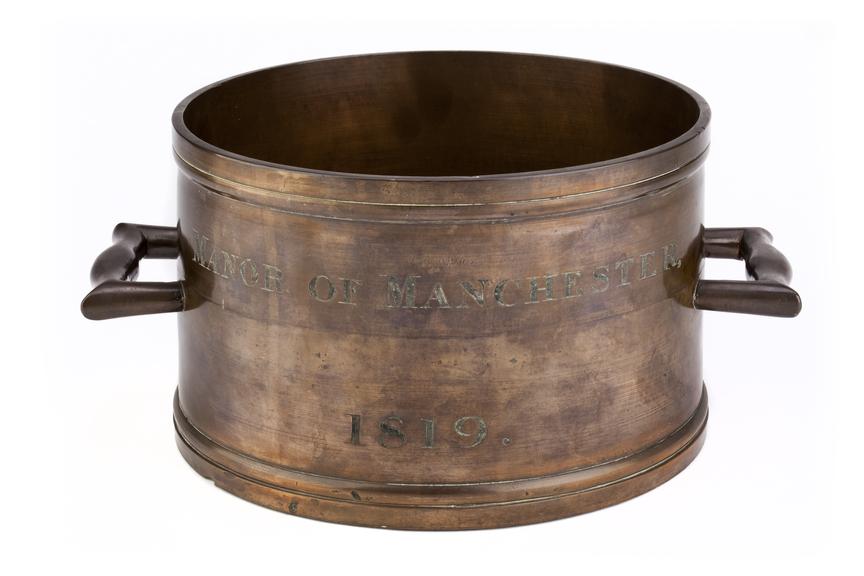
In the United States Customary System, a peck is defined as 2 gallons or 8 dry quarts. It is a sub-unit of a bushel, which is the gold standard for agricultural trading. Specifically, there are four pecks in one bushel. Understanding this 4-to-1 ratio is critical for business owners when calculating bulk purchase discounts or setting retail prices.
From a financial perspective, if a wholesaler quotes a price per bushel, a retailer must be able to instantly calculate the cost basis of a peck to determine the necessary markup for individual sales. For example, if a bushel of premium apples is priced at $40, the cost per peck is $10. Any pricing strategy for a single peck must then account for overhead, labor, and desired profit margins above that $10 baseline.
Dry Volume vs. Liquid Volume: Avoiding Financial Errors
A common pitfall in small business finance is the confusion between dry and liquid measurements. A dry quart is approximately 16.36% larger than a liquid quart. Therefore, a peck—which consists of 8 dry quarts—contains a different volume than 8 liquid quarts. For a business involved in cross-border trade or diverse product lines, miscalculating this volume can lead to significant discrepancies in inventory audits and shipping weight estimations, directly impacting the bottom line.
The Financial Impact of Measurement Standards in the Supply Chain
In the world of logistics and supply chain management, the “peck” serves as a bridge between small-scale retail and large-scale agricultural production. Standardizing this measurement allows for predictable financial modeling and streamlined operations.
Inventory Management and the “Peck” Standard
For businesses operating in the artisanal or “farm-to-table” space, the peck is often the primary unit of sale. Effective inventory management requires tracking these units with high granularity. When a business understands exactly how many pecks are produced per acre or per harvest cycle, they can engage in more accurate financial forecasting.
Using a standardized unit like the peck allows for “Unit Value” tracking. This involves assigning a specific financial value to each unit in stock. If a warehouse holds 500 pecks of a commodity, and the market price fluctuates by $0.50 per peck, the business can immediately realize a $250 shift in its asset valuation. This level of detail is necessary for maintaining a transparent balance sheet.
Mitigating Shrinkage and Loss in Dry Volume Goods
“Shrinkage” refers to the loss of inventory due to spoilage, theft, or damage. In the agricultural sector, where goods are measured in pecks and bushels, shrinkage is an ever-present threat to profit. Because the peck is a measure of volume rather than weight, factors like humidity and packing density can affect the perceived quantity.
Financial controllers must implement “measurement-based audits.” By verifying that the volume of goods received matches the volume of goods sold (minus an acceptable percentage of shrinkage), companies can identify leaks in their supply chain. If a business buys 100 bushels (400 pecks) but only records sales for 370 pecks, the financial discrepancy highlights a 7.5% loss that needs to be addressed through better storage or security protocols.

Commodities Trading: How Traditional Units Influence Modern Markets
While digital trading platforms deal in high-speed data, the underlying physical assets are still governed by traditional units. The peck plays a significant role in the price discovery process for localized and niche commodity markets.
The Role of the USDA and Financial Standardization
The United States Department of Agriculture (USDA) provides strict guidelines on how dry volumes like the peck are measured to ensure fair trade. For an investor or a business owner, these standards provide “financial certainty.” When you buy a “peck” of a product, you are legally entitled to a specific volume. This standardization prevents price gouging and ensures that market participants are operating on a level playing field.
In commodity trading, “grade and volume” are the two variables that determine price. A peck of “Grade A” produce will command a higher price than a peck of “Grade B.” Financial analysts use these standardized units to create price indices, helping investors decide where to allocate capital in the agricultural sector.
Hedging Against Fluctuations in Unit Prices
Small business owners often face the challenge of volatile market prices. By understanding the measurement of a peck and its relationship to larger units like the bushel, businesses can engage in simple “forward contracting.”
For instance, a bakery that requires a certain volume of apples per month can lock in a price per peck with a local orchard months in advance. This provides the business with predictable costs, protecting its profit margins from sudden market spikes. This type of micro-hedging is only possible when both parties have a clear, undisputed understanding of the unit of measurement involved.
Leveraging Traditional Units for Modern Side Hustles and Niche Businesses
The resurgence of local economies and “direct-to-consumer” (DTC) business models has brought the peck back to the forefront of entrepreneurial finance. For those looking to start a side hustle in the food or agriculture space, the peck is a powerful branding and pricing tool.
Pricing Strategies for Small-Batch Produce
In marketing, the way a product is measured can influence consumer perception of value. Selling produce by the peck often feels more substantial and “authentic” to consumers than selling by the pound. From a finance perspective, this allows for “Value-Based Pricing” rather than “Cost-Plus Pricing.”
A peck of peaches might weigh roughly 10 to 12 pounds. If the market price for peaches is $2.00 per pound, the “cost” of the peaches is $20-$24. However, a beautifully packaged “Peck of Premium Peaches” can often be sold for $30 or $35. The unit of measurement itself helps the entrepreneur capture a higher margin by shifting the consumer’s focus from weight to the “experience” of a traditional harvest unit.
Building a Profitable Farm-to-Table Financial Model
For those looking to turn a small plot of land or a specialized sourcing business into a consistent income stream, the peck serves as the primary “Stock Keeping Unit” (SKU). A robust financial model will calculate the “Revenue per Peck” (RPP) and the “Customer Acquisition Cost” (CAC) for each unit sold.
By analyzing which crops yield the most pecks per square foot and which of those pecks have the highest market demand, an entrepreneur can optimize their land or warehouse space for maximum ROI. In this context, the peck isn’t just a measurement of volume; it’s a measurement of potential profit.
Precision in Measurement, Excellence in Finance
The question “What is the measurement of a peck?” may seem simple on the surface, but for the financially savvy, it opens a door to a deeper understanding of market mechanics, supply chain efficiency, and retail strategy. Whether you are a commodities trader, a small business owner, or an investor looking into agricultural tech, the ability to translate traditional units into modern financial data is a valuable skill.
In the world of money, every unit counts. By mastering the measurement of the peck—8 dry quarts or a quarter of a bushel—you ensure that your business operates with the precision required to thrive in a competitive marketplace. Understanding these measurements allows for better budgeting, more accurate forecasting, and ultimately, a more resilient and profitable enterprise.
aViewFromTheCave is a participant in the Amazon Services LLC Associates Program, an affiliate advertising program designed to provide a means for sites to earn advertising fees by advertising and linking to Amazon.com. Amazon, the Amazon logo, AmazonSupply, and the AmazonSupply logo are trademarks of Amazon.com, Inc. or its affiliates. As an Amazon Associate we earn affiliate commissions from qualifying purchases.