
In the ever-evolving landscape of social media, platforms introduce a myriad of features designed to facilitate connection and interaction. While some tools become ubiquitous, others remain a peculiar relic, their purpose shrouded in a delightful ambiguity. Among these, the “poke” on Facebook stands out as one of the platform’s most iconic yet perplexing functionalities. Launched in the nascent days of Facebook, the poke has defied easy categorization, serving as everything from a playful nudge to a cryptic invitation. Understanding its meaning requires a deep dive into its history, technical implementation, and the nuanced social dynamics it aims to enable, or perhaps, subtly complicate. This exploration will unravel the layers of this unique feature, dissecting its mechanics, user interpretations, and its enduring, albeit diminished, role in the digital social sphere.
The Enigmatic “Poke”: A Feature’s Evolution and Enduring Mystery
When Facebook first emerged in 2004, its interface was starker, and its features more rudimentary than the sophisticated ecosystem we know today. The “poke” was one of its earliest and most distinctive additions, immediately sparking curiosity and conversation. Unlike a “like,” a comment, or a message, the poke deliberately lacks explicit communication. This inherent vagueness has been its defining characteristic and the source of its enduring enigma.
Origins and Early Interpretations
The poke was introduced shortly after Facebook’s inception, at a time when digital communication was still finding its footing. In those early days, the platform primarily served college students, a demographic known for its playful and informal interactions. Facebook’s official — and famously unhelpful — explanation for the poke was simply: “You can poke your friends to say hello or get their attention. When you poke a friend, they’ll get a notification on their home page or in their notifications.” This explanation did little to clarify the intent behind the action, leaving users to define its meaning for themselves.
Initially, users interpreted the poke in a myriad of ways. For some, it was a digital tap on the shoulder, a simple acknowledgement of existence. For others, it was a flirtatious gesture, a low-stakes way to express interest without the commitment of a direct message. It could also be a playful taunt, a way to annoy a friend, or even an inside joke understood only by a select few. This open-ended interpretation contributed to its viral nature in the early days, making it a topic of discussion both online and offline. The poke capitalized on human curiosity and the desire for social engagement, even if that engagement was purely speculative. Its simplicity, combined with its ambiguity, made it a powerful, albeit subtle, tool for interaction in a new digital world.
The Functionality in Practice
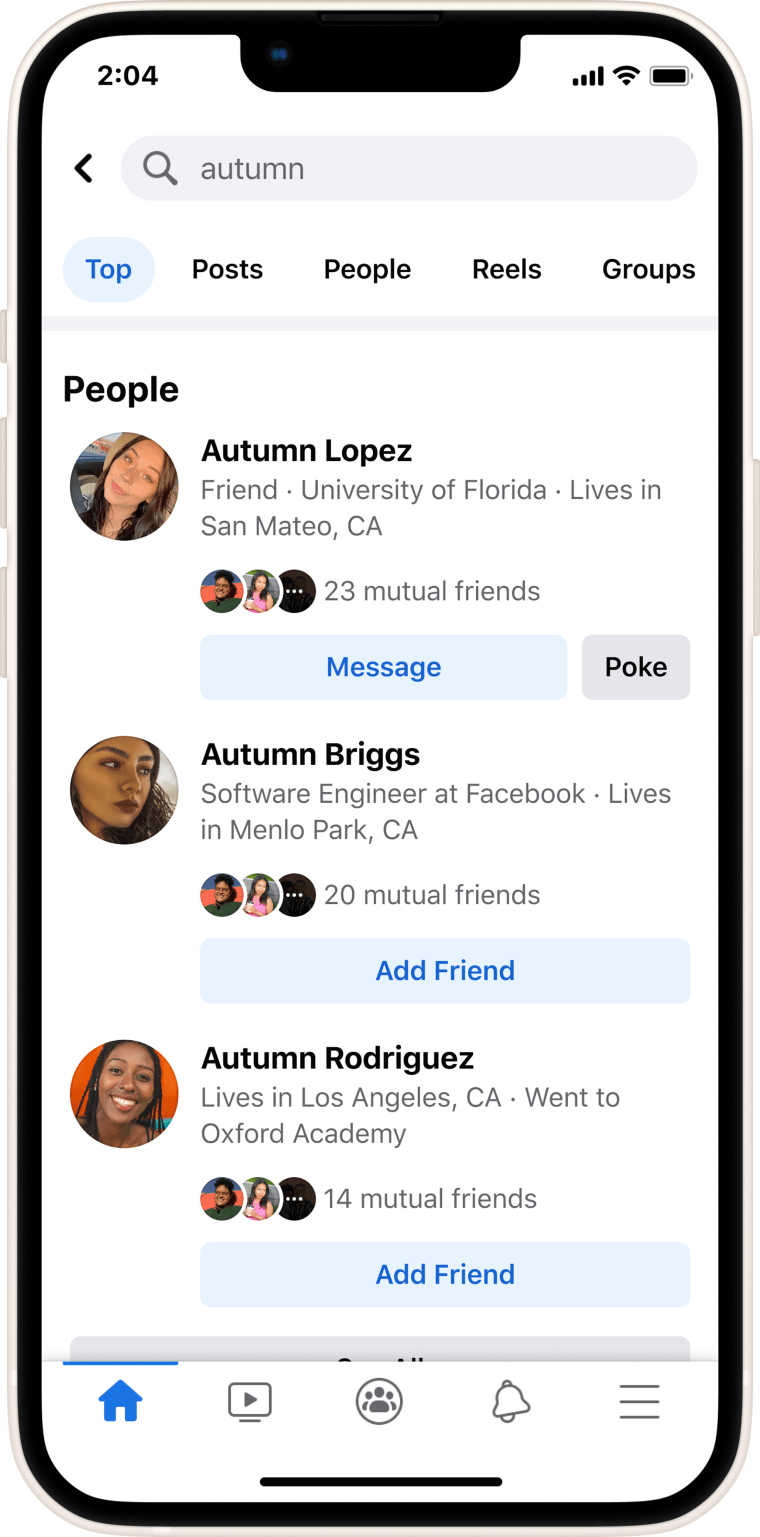
Technically, a poke is a one-click action. When a user pokes another, the recipient receives a notification that says, “[Your Friend’s Name] poked you.” The recipient then has the option to “poke back” or “remove poke.” There’s no additional text, no accompanying emoji, just the bare notification. This minimalist design is crucial to its nature. It’s a non-verbal cue in a predominantly text-based communication environment. It requires no effort to send but demands cognitive effort from the recipient to interpret.
Over the years, as Facebook grew and introduced more sophisticated features like the News Feed, Reactions, and Messenger, the prominence of the poke began to wane. It moved from a central position on profile pages to a more obscure location, accessible primarily through the “Pokes” page or search. This shift reflects Facebook’s evolving design philosophy, moving towards more explicit and quantifiable forms of interaction. Yet, despite its diminished visibility, the poke has never been entirely removed, suggesting that Facebook recognizes its niche utility or perhaps simply its nostalgic value.
Deciphering the Digital Nudge: Why People Poke
Despite its ambiguity, or perhaps because of it, users have consistently found reasons to deploy the poke. These reasons often fall into distinct categories, reflecting various social impulses and communication strategies within the digital realm. The act of poking, while simple in execution, often carries a complex subtext.
Re-engaging Dormant Connections
One of the most common uses for a poke is to re-establish contact with someone you haven’t interacted with in a while. In an era of vast friend lists, it’s easy for connections to fade into the background. A poke serves as a gentle, low-pressure way to say, “Hey, I’m still here, and I remembered you.” It requires no specific topic of conversation, alleviating the pressure of initiating a full dialogue. If the recipient pokes back, it’s an indication of mutual recognition and perhaps an invitation for further interaction. This can be particularly useful for casual acquaintances or friends from the past who you’re not ready to commit to a full message exchange with.
A Playful Gesture or Inside Joke
For many, the poke is purely a playful act among close friends. It can be a digital equivalent of a nudge, a playful tap, or even a silly reminder of an inside joke. Friends might engage in “poke wars,” sending pokes back and forth simply for the amusement of it. In this context, the ambiguity of the poke is not a hindrance but a feature. It allows for a lighthearted, non-serious interaction that strengthens bonds without requiring deep conversation. It’s a way to maintain a sense of camaraderie through shared, unspoken understanding. This use case often highlights the intimacy of a relationship, where even a meaningless gesture can hold meaning.
Subtle Reminders and Notifications
Beyond playfulness, pokes can also serve as a subtle reminder. Perhaps you’re waiting for a friend to reply to a message, or you’re trying to get their attention without being overly direct. A poke can act as a gentle ping, a non-intrusive way to signal that you’re thinking of them or awaiting a response. It’s less demanding than sending another message, giving the recipient the option to acknowledge without feeling pressured. This use case is particularly valuable when you don’t want to come across as impatient or demanding but still want to prompt a response.
Testing the Waters: Friend Request Follow-up
In some instances, a poke can be used after sending a friend request. If a request has gone unanswered, a poke might be used to gently draw attention to it. It’s a way to say, “I’ve sent you a request, just checking if you saw it.” This can be a less direct approach than sending a message asking them to confirm the request, which some might find overly pushy. By using a poke, the sender maintains a sense of casualness, allowing the recipient to respond at their leisure without feeling obligated to explain a delay or refusal.
The Mechanics of Poking: How It Works Today
While the philosophical interpretations of the poke are varied, its technical operation on Facebook remains straightforward. For those looking to understand or utilize this peculiar feature, knowing its current location and functionality is key.
Locating the Poke Feature
As Facebook’s interface has grown more complex, the poke feature has become somewhat less prominent. It’s no longer prominently displayed on every profile. To find it, users typically need to:
- Search for “Pokes”: The easiest way is often to use the search bar at the top of Facebook and type “Pokes.” This will usually lead to a dedicated “Pokes” page.
- Navigate to the Pokes Page Directly: Facebook maintains a specific page for this feature, often accessible via
facebook.com/pokes. This page displays a list of people you can poke and who have poked you. - Via a Friend’s Profile (Less Common Now): In earlier versions, a “Poke” button was often visible on a friend’s profile. While this can still appear for some users or in specific contexts, it’s not a universal element anymore.

Once on the Pokes page, you’ll typically see a list of “Suggested Pokes” (friends you might want to poke) and a section displaying “Pokes You’ve Received.” Next to each name, there will be a “Poke” or “Poke Back” button.
Receiving and Responding to Pokes
When someone pokes you, you receive a standard Facebook notification. This notification typically appears in your notification tab (the bell icon) and might also be summarized in your activity feed. The notification will state: “[Friend’s Name] poked you.”
Upon seeing this notification, you have two primary options:
- Poke Back: Clicking the “Poke Back” button sends a poke in return to the original sender. This is often interpreted as an acknowledgement, an acceptance of the playful interaction, or a continuation of a “poke war.”
- Remove Poke: If you wish to dismiss the poke without engaging, you can click “Remove Poke.” This action clears the notification and effectively ends the interaction from your side. The sender will not be explicitly notified that you removed their poke, but you will no longer appear on their “poked you” list.
It’s important to note that Facebook allows users to poke someone only once until the recipient either pokes back or removes the poke. This prevents endless spamming through the feature.
Privacy and Visibility Settings
While the poke itself is a simple action, users generally have control over their general notification settings for it. There isn’t a granular “turn off pokes” setting akin to message requests, but managing your overall Facebook notifications can influence how prominently poke notifications appear. Importantly, a poke is a public action between two individuals on Facebook, meaning it’s only visible to the sender and recipient. It does not appear on your public profile or in the News Feed of your other friends. This privacy aspect contributes to its utility as a discrete form of interaction. Users can only poke people who are their friends or, in some cases, friends of friends, depending on their privacy settings, making it a feature rooted in established or proximate connections.
The Social Psychology Behind the Poke
Beyond its technical operation, the poke presents a fascinating case study in digital communication and social psychology. Its design taps into fundamental human tendencies, even as it navigates the unique constraints of an online environment.
Low-Effort Communication
In an age of information overload, the poke offers an unparalleled level of low-effort communication. Sending a poke requires a single click and no thought about crafting a message, choosing an emoji, or formulating a response. This minimal cognitive load makes it an attractive option when you want to make contact but lack the time, energy, or specific reason for a more elaborate interaction. It’s the ultimate “just checking in” without the social pressure often associated with initiating conversation. This efficiency is a core reason for its continued, albeit niche, use.
Non-Verbal Digital Cues
Humans rely heavily on non-verbal cues in face-to-face interactions – a glance, a tap, a smile. The digital realm, being largely text-based, often struggles to replicate these nuances. The poke, in its raw simplicity, attempts to bridge this gap. It’s a non-verbal digital cue, an abstract signal that allows for a breadth of interpretation. This ambiguity is its strength, enabling it to function as a placeholder for countless unspoken intentions, from flirtation to gentle annoyance. It becomes a blank canvas onto which users project their social intentions, making it a uniquely adaptive communication tool.
The Ambiguity Factor
The most significant psychological aspect of the poke is its inherent ambiguity. Unlike a “like” (which expresses approval) or a message (which conveys explicit information), a poke carries no single, universally understood meaning. This ambiguity can be both frustrating and liberating. It allows senders to avoid commitment to a specific message, and it forces recipients to engage in interpretation, often leading to curiosity or even playful speculation. In a world where every digital action is often scrutinized, the poke offers a refreshing lack of clarity, a space for playful uncertainty that can sometimes be more engaging than explicit communication. This strategic vagueness can foster a deeper connection between individuals who share an understanding of its unspoken codes.
The Poke in the Modern Facebook Landscape
Facebook has undergone monumental transformations since its inception. New features are constantly introduced, old ones are refined, and user behaviors evolve. Where does the humble poke fit into this dynamic ecosystem today?
Declining Prominence vs. Niche Utility
It’s undeniable that the poke no longer holds the central role it once did. The rise of Messenger, News Feed algorithms, Reactions, and Stories has shifted Facebook’s focus towards richer, more explicit forms of interaction. For many younger users, the poke is an archaic feature they might stumble upon by accident, or not at all. Its physical location within the Facebook interface, being somewhat hidden, further contributes to its diminished prominence.
However, “declining prominence” does not equate to “obsolescence.” The poke continues to serve its niche utility. As explored earlier, for certain types of interactions—rekindling old ties, engaging in playful banter, or sending subtle reminders—it remains uniquely suited. It’s a tool for specific, often understated, social functions that other features, with their more explicit demands, cannot fulfill as elegantly.
Beyond the Poke: Other Interaction Features
Facebook now offers a robust suite of interaction features. Users can send direct messages through Messenger, react to posts with a variety of emojis, comment publicly, share content, or engage in real-time video calls. Each of these tools serves a distinct communication purpose. Messenger facilitates private, conversational exchanges. Reactions offer quick emotional feedback. Comments enable public dialogue. The poke stands apart from these by being intentionally minimalist and ambiguous. It doesn’t aim to compete with the richness of other features but rather to occupy a unique space as a low-stakes, open-ended prompt for attention or acknowledgment.
Is the Poke Still Relevant?
The question of the poke’s relevance is ultimately subjective. For users who appreciate its subtle art, its ambiguity, and its low-effort nature, it remains a valuable, if infrequent, tool. For others, particularly those who prefer direct communication or haven’t encountered it, it may seem like an outdated or perplexing relic.
From a technological perspective, Facebook’s decision to retain the poke speaks volumes. It indicates that the platform understands the value of maintaining legacy features that, even if not universally popular, cater to specific user behaviors and preferences. The poke is a testament to the idea that not all digital interactions need to be overtly communicative or laden with content. Sometimes, a simple, enigmatic nudge is all that’s needed to maintain a connection or spark a conversation. In a world saturated with information, the “meaning of the poke on Facebook” might just be the value of saying something without saying anything at all.
aViewFromTheCave is a participant in the Amazon Services LLC Associates Program, an affiliate advertising program designed to provide a means for sites to earn advertising fees by advertising and linking to Amazon.com. Amazon, the Amazon logo, AmazonSupply, and the AmazonSupply logo are trademarks of Amazon.com, Inc. or its affiliates. As an Amazon Associate we earn affiliate commissions from qualifying purchases.