
The digital clock is a ubiquitous presence in our modern lives, from the smartphone we check first thing in the morning to the smart speaker that wakes us up. Within these glowing digits, two unassuming sets of letters – AM and PM – play a crucial role in our understanding and organization of time. While their meaning might seem intuitively understood, a deeper dive into their origins and implications reveals a fascinating intersection of history, language, and the very fabric of how we structure our days. For those navigating the fast-paced world of technology, understanding these temporal markers is not merely an academic exercise; it’s fundamental to the seamless operation of countless digital systems, the efficiency of global communication, and the very design of user interfaces that shape our daily interactions.
The Latin Roots of Our Timekeeping
The seemingly simple abbreviations AM and PM are not arbitrary designations. They are direct descendants of Latin phrases, reflecting a historical reliance on precise timekeeping that predates modern digital displays by centuries. Their adoption into common parlance, and subsequently into the digital realm, underscores the enduring influence of classical languages on Western civilization. Understanding these roots provides essential context for their continued use and significance.
Ante Meridiem: Before the Midday Sun
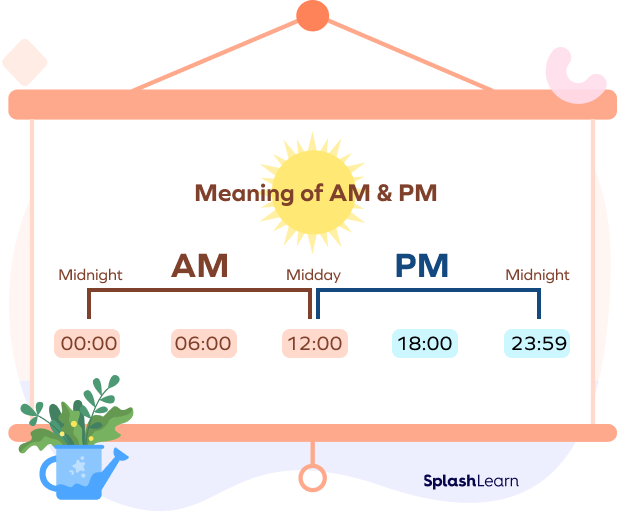
AM, an abbreviation for the Latin phrase Ante Meridiem, translates directly to “before midday.” This designation encompasses the hours from midnight up to, but not including, noon. In the 12-hour clock system, the day begins at 12:00 AM, signifying the stroke of midnight. The subsequent hours, 1:00 AM, 2:00 AM, and so on, mark the progression of time through the early morning, the pre-dawn darkness, and into the waking hours leading up to noon.
The concept of meridiem (midday) itself historically referred to the sun reaching its highest point in the sky, a significant marker that divided the day into two distinct halves. The “before midday” period, therefore, represents the entire span of time from the very beginning of the day until this solar zenith. In technological contexts, this is crucial for scheduling, logging events, and setting alarms. Imagine a software system that needs to record the exact time a user accessed a file or performed a critical operation. A precise AM/PM designation ensures that these timestamps are unambiguous, preventing confusion between a morning operation and an afternoon one. For instance, if a server logs an alert at 9:00 AM, it’s critically important to distinguish it from an alert at 9:00 PM, which could indicate a vastly different operational issue.
Post Meridiem: After the Midday Sun
Conversely, PM is an abbreviation for Post Meridiem, meaning “after midday.” This designation covers the hours from noon up to, but not including, midnight. Noon itself is often represented as 12:00 PM, a point of transition. The hours that follow, 1:00 PM, 2:00 PM, and so forth, mark the afternoon and evening as the sun begins its descent.
The importance of Post Meridiem in temporal notation is as significant as its counterpart. It delineates the latter half of the day, encompassing the period when most professional activities continue, social engagements often take place, and the day eventually winds down towards sleep. In technology, PM designations are vital for everything from flight schedules displayed on airport departure boards to the automated dispatch of marketing emails. A failure to correctly interpret or display PM can lead to significant disruption. Consider a scheduling app that sends a reminder for a meeting at 3:00 PM. If this is misinterpreted as 3:00 AM, the user might miss a crucial appointment, leading to reputational damage for the app developer or a loss of business for the user.
The Evolution and Application in Digital Systems
While the Latin roots of AM and PM are historical, their practical application and the systems that rely on them are inherently modern. The digital revolution has embraced the 12-hour clock system, often alongside the 24-hour format, creating a dual landscape of temporal representation that demands careful consideration in software development and user interface design. The ubiquity of digital devices means that AM and PM are not just abstract concepts but active components of our daily technological interactions.
Navigating the 12-Hour Clock in Digital Interfaces
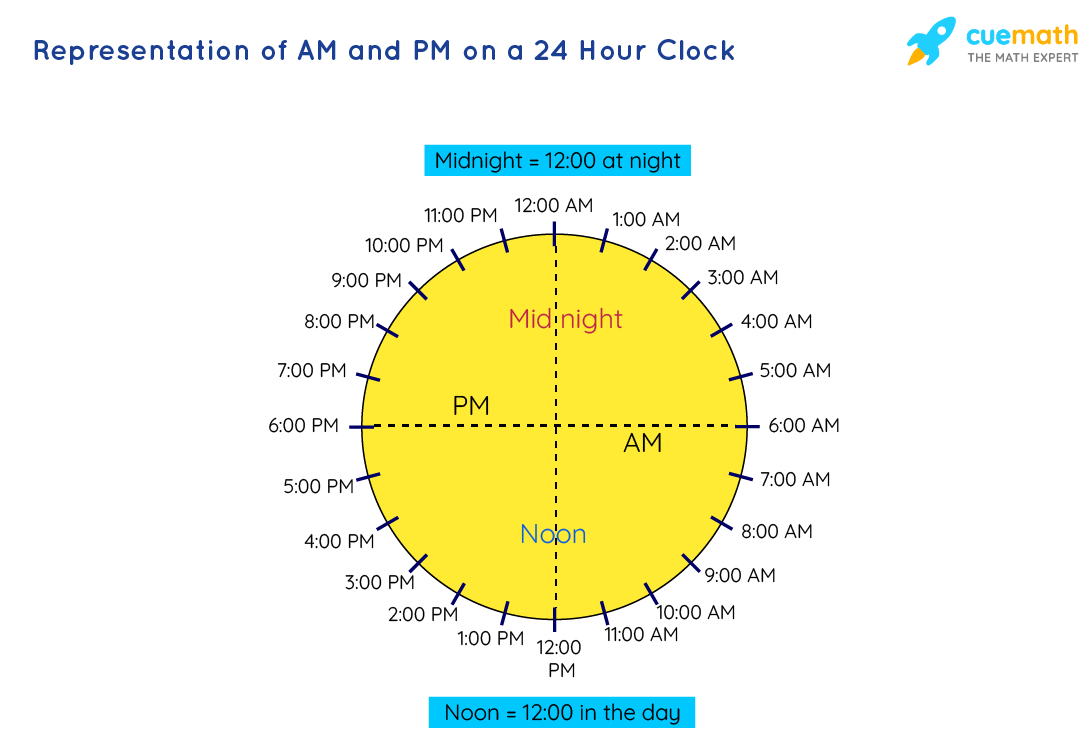
The 12-hour clock, with its AM and PM markers, remains prevalent in many parts of the world, particularly in North America and the United Kingdom. Digital interfaces, from operating systems to mobile applications, must cater to this convention. When users set alarms, schedule events, or input times for various functions, they are typically presented with options that clearly distinguish between AM and PM.
This involves not just displaying the letters but also providing intuitive selection mechanisms. Dropdown menus, toggle switches, or direct numerical input with visual cues are common. The underlying programming must accurately parse these inputs and convert them into a universal time representation for internal processing. For example, a calendar application needs to store an event scheduled for “3:00 PM” in a way that is universally understood, regardless of whether the user interface displays it in 12-hour or 24-hour format. This internal representation is often in a 24-hour format or a timestamp format like Unix time, which is then translated back for display based on user locale preferences. The potential for error lies in the ambiguity around 12:00 AM and 12:00 PM. Technically, 12:00 AM is midnight, the start of the day, and 12:00 PM is noon. However, misinterpretations are common, leading to design considerations that aim for clarity, such as labeling noon as “12:00 PM (Noon)” and midnight as “12:00 AM (Midnight)”.
The 24-Hour Clock: A Global Standard in Tech
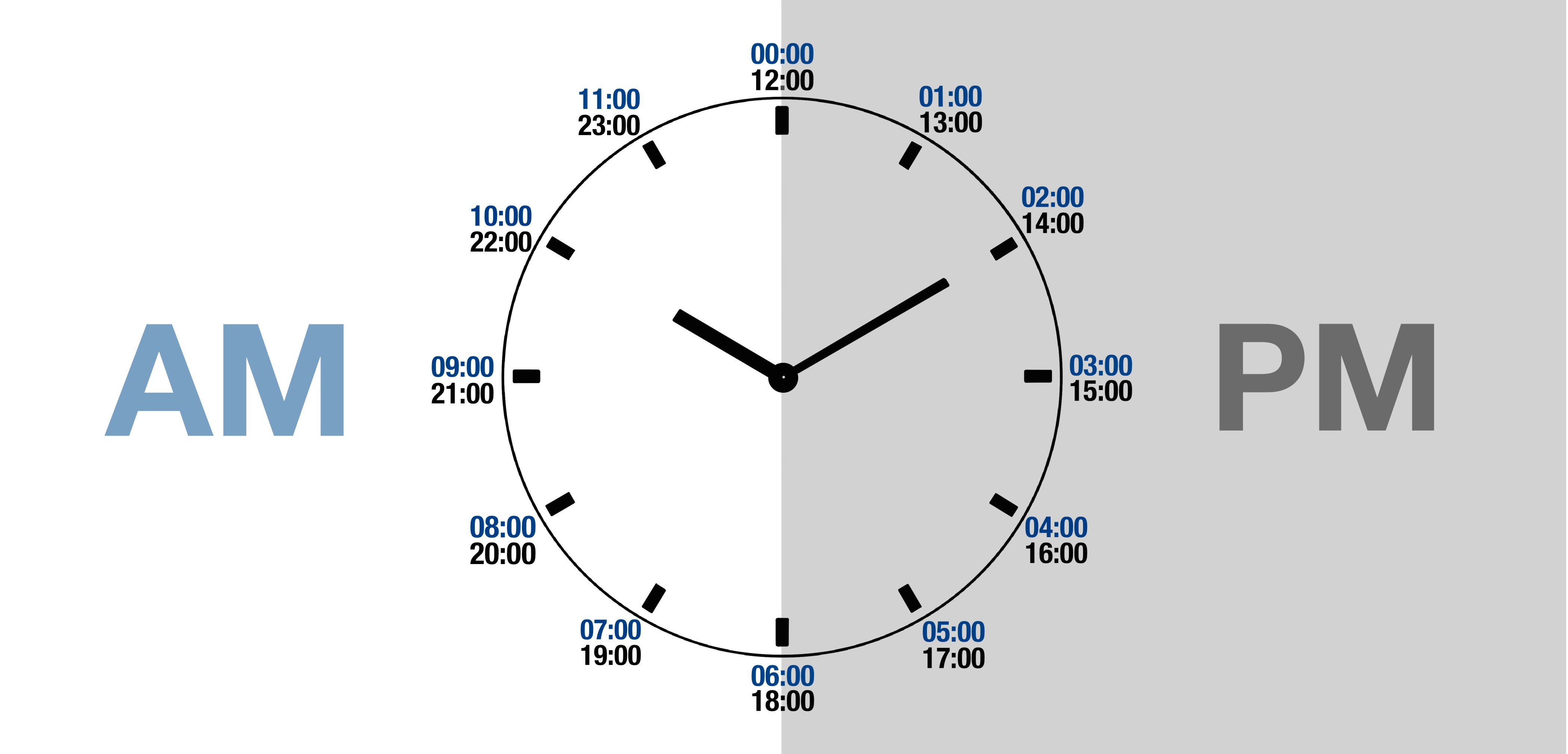
In contrast to the 12-hour system, the 24-hour clock, often referred to as military time or continental time, eliminates the need for AM and PM by representing the entire day on a single 24-hour cycle. Midnight is 00:00, and the hours progress sequentially up to 23:59. This format is widely adopted in technical fields, scientific research, military operations, and in many countries globally, due to its inherent clarity and lack of ambiguity.
In technology, the 24-hour format is frequently the preferred internal standard for data logging, system timestamps, and communication protocols. This is because it avoids the potential confusion associated with the 12-hour clock’s transition points and eliminates the need for separate AM/PM indicators. When dealing with international data exchange or complex network operations, using the 24-hour format ensures that timestamps are universally interpretable, preventing costly errors in synchronization or data analysis. For instance, financial transaction logs, scientific experiment results, or network traffic analysis all benefit from the unambiguous precision of the 24-hour format. Developers often implement logic that allows users to choose their preferred time format, but internally, the system will likely convert to and process the time in a 24-hour or absolute time representation to maintain consistency and accuracy.
Technical Implications and Best Practices
The accurate handling of AM and PM, or their equivalent in the 24-hour format, is a fundamental aspect of software engineering. Errors in time representation can lead to a cascade of issues, affecting everything from user experience to critical system functionality. Understanding these implications is crucial for developers and tech professionals.
Preventing Time-Related Bugs and User Frustration
Time-related bugs are notoriously difficult to track down and resolve. They often manifest unpredictably, particularly around daylight saving time changes or when dealing with systems that span multiple time zones. The correct interpretation of AM and PM is a cornerstone of preventing these bugs.
Consider a scheduling application where a user sets a recurring meeting for “every Tuesday at 9:00 AM.” If the system incorrectly interprets this as 9:00 PM on occasion, or fails to adjust for daylight saving shifts, the consequences can be significant, leading to missed meetings, duplicated events, or system-wide scheduling conflicts. In critical systems, such as those managing power grids or air traffic control, such errors can have severe safety implications. Developers must implement robust date and time libraries that correctly handle time zones, daylight saving time, and the precise conversion between 12-hour and 24-hour formats. Thorough testing, especially around transitional periods and across different geographical locations, is essential to ensure temporal accuracy. User interfaces should provide clear visual feedback, confirming the time selected with AM/PM or the unambiguous 24-hour format to minimize user error.
Global Interoperability and Standardization
In an increasingly interconnected world, the ability of technology to communicate and synchronize across different regions is paramount. The choice of time representation – AM/PM or 24-hour format – directly impacts global interoperability.
When designing applications or systems that will be used internationally, developers must consider the prevalent timekeeping conventions in different regions. While the 12-hour clock with AM/PM is common in some areas, the 24-hour format is the de facto standard in many others. For seamless global operation, systems should ideally support both formats and offer users the ability to select their preferred display. More importantly, internal data exchange and API communications should ideally adhere to a universal standard, such as ISO 8601, which specifies unambiguous date and time formats, often leveraging the 24-hour clock. This ensures that a timestamp generated in one system, regardless of its local display format, can be accurately interpreted by another system anywhere in the world. For instance, an e-commerce platform processing orders from customers in various countries needs to record order times in a consistent, unambiguous format to manage fulfillment and customer service effectively. The correct handling of AM and PM, or the universal adoption of the 24-hour format, is a subtle yet vital element of modern technological design and global connectivity.
aViewFromTheCave is a participant in the Amazon Services LLC Associates Program, an affiliate advertising program designed to provide a means for sites to earn advertising fees by advertising and linking to Amazon.com. Amazon, the Amazon logo, AmazonSupply, and the AmazonSupply logo are trademarks of Amazon.com, Inc. or its affiliates. As an Amazon Associate we earn affiliate commissions from qualifying purchases.