
The seemingly simple preposition “in” carries a profound and multifaceted meaning within the realm of mathematics. Far from being a mere linguistic flourish, “in” signifies membership, containment, property, and even a state of being within a defined mathematical structure. Its usage is ubiquitous, underpinning fundamental concepts across various branches of mathematics, from set theory and number systems to abstract algebra and topology. Understanding the nuanced interpretations of “in” is crucial for deciphering mathematical statements, constructing proofs, and grasping the underlying logic of mathematical objects and their relationships. This exploration will delve into the various contexts where “in” plays a pivotal role, illuminating its significance and clarifying its diverse meanings.

Membership and Belonging: The Foundation of Set Theory
At its most elemental, “in” denotes membership within a set. This is perhaps the most intuitive and foundational use of the term in mathematics, directly stemming from the principles of set theory.
The Symbol of Inclusion: ∈ and Its Significance
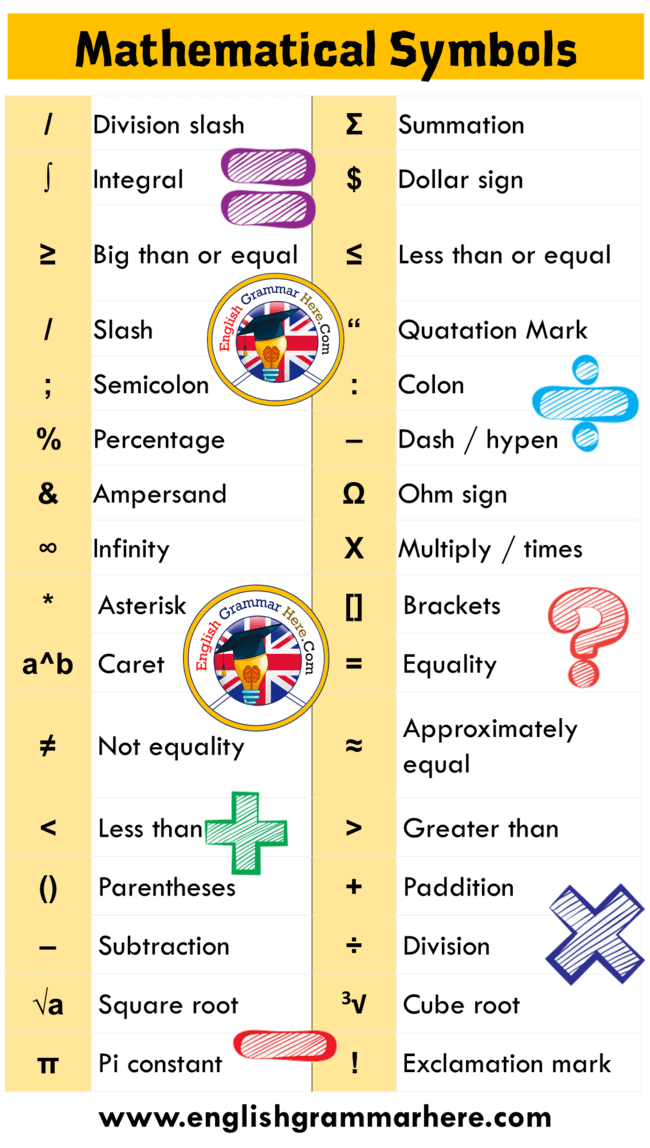
The mathematical symbol for “in” is $in$, read as “is an element of” or “belongs to.” When we write $x in A$, it unequivocally states that the object $x$ is a member of the set $A$. This notation is the bedrock upon which much of modern mathematics is built. For instance, stating that $5 in {1, 2, 3, 4, 5}$ signifies that the number 5 is one of the elements contained within the set of the first five positive integers. Conversely, if $y notin B$, it means $y$ is not an element of set $B$.
The elegance of this notation lies in its conciseness and its ability to express complex relationships clearly. It allows mathematicians to precisely define collections of objects and to assert or deny membership with unambiguous precision. This forms the basis for understanding concepts like subsets, unions, and intersections. For example, if $C$ is a subset of $A$ ($C subseteq A$), it implies that every element in $C$ is also an element in $A$, meaning for every $x in C$, it must also be true that $x in A$.
Beyond Numbers: Sets of Functions, Spaces, and More
The concept of membership extends far beyond simple numerical sets. In higher mathematics, we encounter sets of functions, sets of geometric shapes, sets of abstract algebraic structures, and even sets of topological spaces. The “in” relationship consistently signifies that an object, whatever its nature, is a constituent part of a larger defined collection.
Consider the set of all continuous functions defined on the interval $[0, 1]$. If $f$ represents a function and $C[0, 1]$ denotes this set, then writing $f in C[0, 1]$ asserts that the function $f$ possesses the property of continuity on that specific interval. Similarly, in geometry, if a point $P$ lies on a line $L$, we can express this as $P in L$. The fundamental idea of “being part of” or “being contained within” remains constant, regardless of the complexity or abstract nature of the mathematical entities involved.
Properties and Characteristics: “In” as a Descriptor
Beyond simply belonging to a collection, “in” can also describe a specific property or characteristic that an object possesses within a particular mathematical system or context. This usage often implies a state or condition that is relevant within that defined domain.
Numbers “In” Specific Sets: Integers, Rationals, Reals
When we discuss number systems, “in” is frequently used to specify the type or category of a number. For example, stating that a number $n$ is “in the set of integers” ($n in mathbb{Z}$) means $n$ is a whole number, positive, negative, or zero. Similarly, if $q$ is “in the set of rational numbers” ($q in mathbb{Q}$), it implies $q$ can be expressed as a fraction $frac{a}{b}$, where $a$ and $b$ are integers and $b neq 0$.
This usage highlights that “in” can signify adherence to the defining rules or properties of a particular mathematical set. A number might be a real number but not a rational number, thus $x in mathbb{R}$ and $x notin mathbb{Q}$. This distinction is vital for understanding the hierarchy and relationships between different number systems, such as the fact that all integers are also real numbers.
Functions “In” Certain Classes: Differentiable, Continuous
In calculus and analysis, the term “in” is employed to classify functions based on their properties. A function $f$ is said to be “in the class of differentiable functions” if its derivative exists at every point in its domain. Likewise, a function is “in the class of continuous functions” if it has no breaks or jumps.
Here, “in” serves as a qualifier, indicating that an object (a function, in this case) possesses a specific defining characteristic that places it within a recognized category of mathematical objects. This allows for the application of theorems and properties associated with that class. For example, if $f$ is “in the class of twice-differentiable functions,” we know we can apply theorems related to second derivatives.
State of Being and Contextual Conditions: “In” as a Framework

The preposition “in” can also define the context or framework within which a mathematical statement holds true. It establishes a particular environment or condition under which certain properties are relevant or observable.
“In” a Specific Field or Ring: Algebraic Structures
In abstract algebra, the concept of “in” is fundamental to defining algebraic structures like fields and rings. When we say $a$ is “in a ring $R$” ($a in R$), it means $a$ is an element that adheres to the axioms defining a ring (closure under addition and multiplication, associativity, distributivity, existence of additive identity and inverse).
Similarly, if an operation is defined “in a group $G$,” it signifies that the operation is performed on elements belonging to $G$ and that the results of the operation also reside within $G$ (closure property). This contextual usage is crucial for understanding the properties and behaviors of abstract mathematical systems. For instance, discussing the additive inverse of an element $a$ being “in the ring $R$” emphasizes that the inverse must also be an element of that specific ring.
“In” a Particular Space: Geometric and Topological Contexts
In geometry and topology, “in” often denotes location or containment within a defined space. A point $P$ is “in the plane $Pi$” means $P$ lies within the two-dimensional manifold defined by $Pi$. A curve $C$ is “in the sphere $S$” indicates that all points forming the curve are also part of the surface of the sphere.
In topology, “open sets” are fundamental. An open set $U$ is a collection of points such that for every point $x$ in $U$, there exists a small “neighborhood” around $x$ that is also entirely contained within $U$. This is often expressed as: for every $x in U$, there exists an $epsilon > 0$ such that the open ball $B(x, epsilon) subseteq U$. Here, “in” signifies that the neighborhood is a subset of the open set. This concept is vital for defining continuity, convergence, and other topological properties.
The Nuance of “In” in Mathematical Proofs
The precise interpretation of “in” is paramount in constructing rigorous mathematical proofs. Misinterpreting or misusing this preposition can lead to flawed arguments and incorrect conclusions.
Establishing Premises and Assumptions
When initiating a proof, mathematicians often establish the context or the universe of discourse. For example, a proof might begin with “Let $x$ be an arbitrary real number.” This statement implicitly means $x in mathbb{R}$. The subsequent steps of the proof then operate under the assumption that $x$ possesses all the properties associated with real numbers, and that any derived results will also be considered within the domain of real numbers.
Demonstrating Properties and Relationships
In the process of proving a theorem, one frequently needs to demonstrate that an object possesses a certain property or relationship. For instance, to prove that a function $f$ is continuous at a point $a$, we might need to show that for every $epsilon > 0$, there exists a $delta > 0$ such that if $|x – a| < delta$, then $|f(x) – f(a)| < epsilon$. The “if…then” structure here means that if the condition $|x – a| < delta$ is met, then the consequence $|f(x) – f(a)| < epsilon$ must hold. This establishes a specific relationship between the input and output of the function within a defined neighborhood.
Universal and Existential Quantifiers
The meaning of “in” is often amplified or constrained by quantifiers.
-
Universal Quantifier ($forall$): When we say “for all $x$ in $S$, property $P(x)$ holds,” denoted as $forall x in S, P(x)$, it means that every single element of the set $S$ possesses the property $P$. The “in $S$” part specifies the domain over which the universal claim is made.
-
Existential Quantifier ($exists$): When we say “there exists an $x$ in $S$ such that property $P(x)$ holds,” denoted as $exists x in S, P(x)$, it means that at least one element within the set $S$ satisfies the property $P$. Again, “in $S$” defines the search space for such an element.
The interplay between quantifiers and the “in” relation is fundamental to expressing mathematical statements precisely and constructing valid logical deductions.
Conclusion: The Ubiquitous Power of “In”
The humble preposition “in,” when translated into the precise language of mathematics, reveals itself as a concept of immense power and versatility. It is the cornerstone of set theory, defining membership and structure. It acts as a descriptor of properties and characteristics, categorizing mathematical objects. It establishes the contextual framework within which mathematical truths are asserted and explored. From the simplest statement of a number belonging to a set, to the complex conditions of theorems within abstract spaces, “in” consistently serves to delineate boundaries, assert belonging, and define relationships. A deep understanding of its multifaceted meanings is not merely an academic exercise but a fundamental requirement for navigating the intricate and elegant landscape of mathematics. It is through the precise application of “in” that mathematicians can communicate complex ideas with clarity and build the rigorous edifices of mathematical knowledge.
aViewFromTheCave is a participant in the Amazon Services LLC Associates Program, an affiliate advertising program designed to provide a means for sites to earn advertising fees by advertising and linking to Amazon.com. Amazon, the Amazon logo, AmazonSupply, and the AmazonSupply logo are trademarks of Amazon.com, Inc. or its affiliates. As an Amazon Associate we earn affiliate commissions from qualifying purchases.