
In the ever-evolving landscape of social media, where features come and go with the speed of a trending hashtag, some elements endure, albeit sometimes as digital relics. The “poke” on Facebook is one such intriguing anachronism. A seemingly simple, almost enigmatic function, the poke has been a part of Facebook since its nascent days, predating many of the rich interactive features we now take for granted. To new users, it might appear baffling, a vestige of an earlier internet era. To long-time users, it evokes a sense of nostalgia, yet its precise meaning remains fluid and open to interpretation. This article delves into the technical origins, functional mechanics, and the nuanced user experience surrounding the Facebook poke, dissecting its enduring, if perplexing, presence in one of the world’s largest social networks.
The Curious Case of the Facebook Poke: A Digital Relic
When Facebook launched in 2004, its interface was minimalist, its features sparse, and its purpose primarily to connect college students. The “poke” emerged as one of these early, foundational interactions. Unlike the detailed messaging or wall posts that would soon dominate, the poke offered a unique, non-committal form of engagement.
Origins and Initial Intent: Simple Digital Nudge
The original intent behind the Facebook poke was deliberately ambiguous. According to Facebook’s own help center, the poke “is a feature that allows you to get a friend’s attention.” This very definition highlights its core function: a low-effort notification, a digital tap on the shoulder. In an era before instant messaging was ubiquitous within social platforms, and before sophisticated notification systems existed, the poke served as a basic signaling mechanism. It was a way to say “hello,” “I’m thinking of you,” or “check your messages” without actually typing out those words. Its simplicity was its strength, requiring minimal user effort and providing immediate feedback.
The Enigma of Purpose: Ambiguity as a Feature
What made the poke particularly enduring, and at times frustrating, was its inherent lack of a predefined meaning. Unlike a “like” which signifies approval, or a “share” which denotes endorsement, a poke carries no explicit semantic weight. This ambiguity was not an oversight but arguably a design choice that allowed users to project their own meanings onto the interaction. For some, it was a playful flirtation; for others, a friendly greeting; for still others, a subtle reminder of their presence. This open-ended interpretation mirrored the nascent stage of digital social interactions, where users were still defining the etiquette and language of online connectivity. The poke became a blank canvas for casual, low-stakes communication, operating outside the more formal bounds of messages or public posts.
Evolution in a Dynamic Social Landscape
As Facebook grew, adding features like the News Feed, photo sharing, groups, and eventually Messenger, the poke seemed to fade into the background. Richer, more expressive forms of interaction — comments, reactions, direct messages – became the norm. Yet, the poke never truly disappeared. While its prominence diminished, and Facebook itself occasionally redesigned its interface, relegating the poke to less obvious locations, it always remained accessible. This persistence speaks to a certain utility, perhaps even a sentimental value, that it held for a subset of users. It became a kind of digital Easter egg, a feature discovered by new users and revisited by old ones, a subtle nod to Facebook’s early days.
Decoding the Modern Poke: Interpretations and Uses
Despite its aged appeal, the poke continues to be used, albeit often with a self-aware sense of irony or nostalgia. Understanding its contemporary relevance requires dissecting the various interpretations users assign to it today.
A Playful Gesture: Breaking the Ice or Rekindling Connection
In its most common contemporary application, a poke is often a playful, non-committal way to initiate or re-initiate contact. It can be used to “break the ice” with a new connection without the pressure of formulating a full message. For friends who haven’t interacted in a while, a poke can serve as a gentle nudge, a low-stakes way to say, “Hey, I still exist, and I remember you.” This can be particularly useful for those who might feel awkward sending a direct message out of the blue but want to signal their presence.
The Reminder Function: “Hey, I’m Here!”
Beyond playfulness, the poke can function as a simple reminder. Perhaps you’re waiting for a friend to reply to a message, or you want to draw their attention to something without being overly demanding. A poke can be a subtle, non-intrusive way to signal, “Don’t forget about me,” or “I’m online.” It’s less aggressive than sending multiple messages and less public than tagging someone in a post.
Non-Verbal Communication: When Words Aren’t Needed (or Wanted)
In a world saturated with verbal and textual communication, the poke offers a rare glimpse into truly non-verbal digital interaction. It’s an action devoid of explicit words, allowing the recipient to interpret its meaning based on context, relationship, and personal history with the sender. This can be particularly powerful in relationships where an unspoken understanding exists, or where a light touch is preferred over direct conversation. It’s a digital equivalent of a wink or a subtle wave across a crowded room.
Digital Flirting and Subtle Attention-Seeking
For some, the poke retains its early association with digital flirting. A poke can be an ambiguous yet intentional signal of interest, allowing the sender to gauge a reaction without making an overt move. If the poke is returned, it might be interpreted as a reciprocal interest, opening the door for further interaction. Similarly, it can be used for subtle attention-seeking, particularly from someone a user is interested in connecting with more deeply. The ambiguity allows for plausible deniability if the gesture isn’t reciprocated or is misinterpreted, making it a low-risk option.
Technical Mechanics and User Experience
Understanding the poke isn’t just about its social meaning; it also involves grasping its technical implementation within the Facebook platform and how users interact with it.
How to Send a Poke: A Step-by-Step Guide
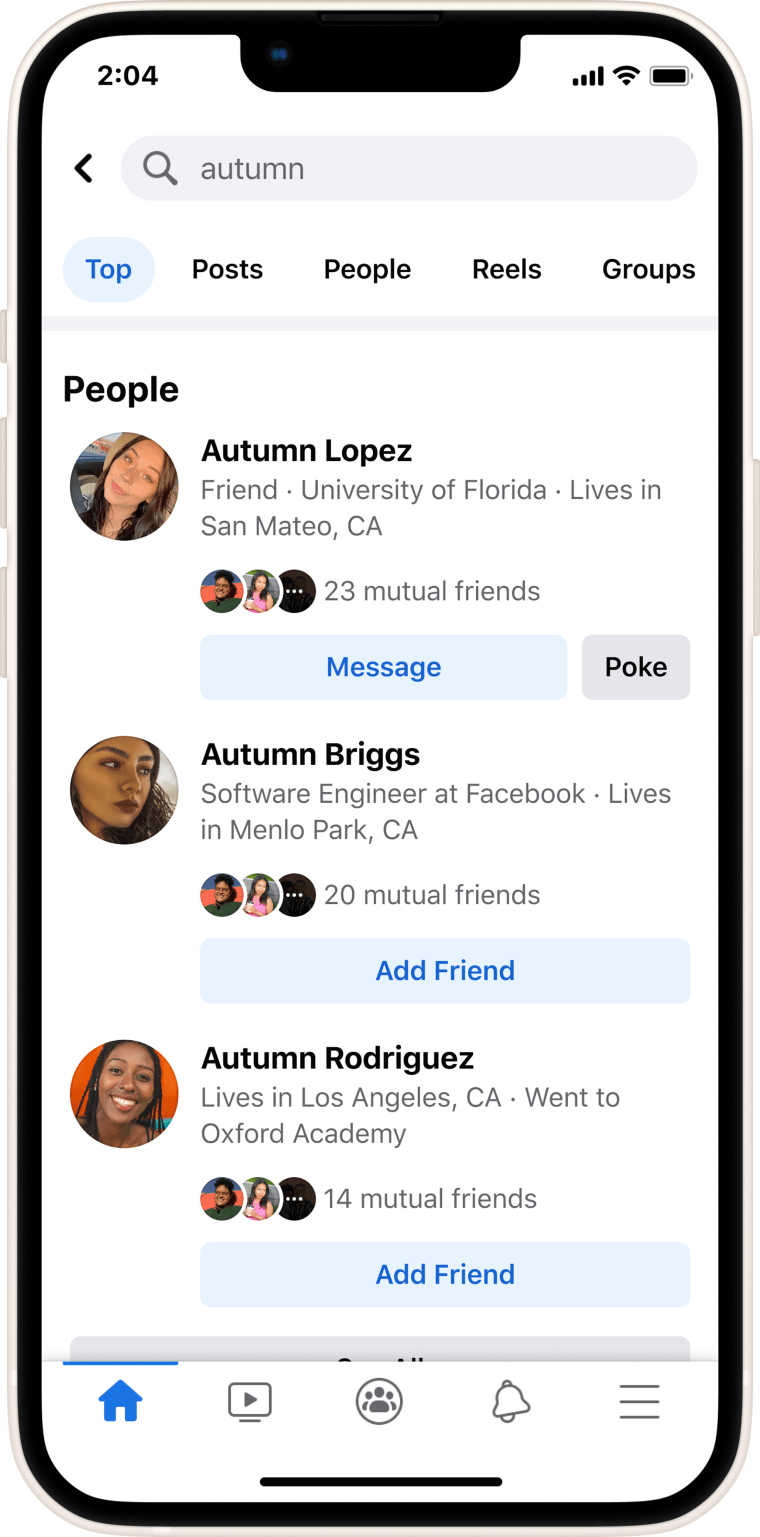
Sending a poke is a straightforward process, though its location can sometimes be elusive within Facebook’s continually updated interface.
- Navigate to the Pokes Page: The most reliable way to find the poke function is to visit the dedicated “Pokes” page. This can typically be found by searching “pokes” in the Facebook search bar or by navigating directly to
facebook.com/pokes. - Locate the Friend: On this page, Facebook will often suggest friends you might want to poke. You can also use the search bar on that page to find a specific friend.
- Click “Poke”: Next to the friend’s name, there will be a “Poke” button. Clicking this sends the notification.
While sometimes a “Poke” button might appear directly on a friend’s profile page (often in the “…” menu or under a specific “More” tab), the dedicated Pokes page remains the most consistent method.
Receiving and Responding to Pokes

When a user receives a poke, they are notified through Facebook’s standard notification system. This notification typically appears in the top bar (bell icon) and also shows up on the dedicated Pokes page.
Upon receiving a poke, users have two primary options:
- Poke Back: They can return the poke, initiating a reciprocal interaction. This is often interpreted as acknowledging the poke and potentially expressing reciprocal interest or friendship.
- Remove Poke: This option dismisses the notification. It doesn’t block future pokes from that person but effectively clears the current one from their notification list. There’s no explicit “ignore” button, but simply not poking back serves the same purpose.
Privacy and Notification Settings: Managing Your Interactions
Facebook’s privacy settings play a crucial role in how users manage pokes. While users cannot outright disable the ability for others to poke them (unlike message requests), they can manage how notifications are delivered. Users can customize their notification settings to control whether they receive push notifications, email alerts, or just in-app notifications for pokes. Furthermore, if a user finds a specific individual’s pokes unwelcome, they can block that individual entirely, which prevents all future interaction, including pokes. However, the intent behind the poke remains unchangeable by the platform itself; its meaning is always user-defined.
The Algorithm’s View: Impact on Engagement?
From a technical perspective, it’s intriguing to consider how Facebook’s algorithms might interpret a poke. Does a poke count as an engagement signal? While Facebook’s algorithms are complex and proprietary, it’s plausible that any interaction, no matter how small, contributes to the overall engagement metrics between two users. Frequent pokes, especially returned pokes, might signal a higher level of social connection, potentially influencing what content from that friend appears higher in your News Feed. However, compared to richer interactions like likes, comments, or shares, the weighting of a poke as an engagement signal is likely minimal. Its primary function remains direct user-to-user notification rather than a broad content amplification signal.
The Poke’s Place in the Broader Social Media Ecosystem
The poke’s unique characteristics distinguish it within the vast and varied landscape of social media features, highlighting its unusual longevity and niche utility.
Standing Apart: Uniqueness in a Feature-Rich Environment
In an era dominated by sophisticated messaging apps, elaborate content creation tools, and complex algorithmic feeds, the poke stands out for its sheer simplicity and ambiguity. Most social features today are designed for explicit communication (e.g., direct messages, comments), content sharing (e.g., posts, stories), or specific reactions (e.g., emojis). The poke, however, offers a bare-bones interaction that defies easy categorization. It is a notification that carries no payload, a message without content, and a reaction without a specific emotion. This uniqueness is precisely what has allowed it to persist, offering an alternative form of interaction that no other feature quite replicates.
The Shift Towards Richer Interaction: From Pokes to Reactions
The trajectory of social media has largely been towards richer, more expressive forms of interaction. Facebook itself moved from simple “Like” buttons to a diverse set of “Reactions” (Love, Haha, Wow, Sad, Angry). Messaging platforms offer GIFs, stickers, voice notes, and video calls. In this context, the poke represents a step backward in terms of communicative richness. However, this backward step isn’t necessarily a flaw; it’s a deliberate choice of minimalist interaction. It underscores that sometimes, less is more, particularly when the goal is merely to signal presence or initiate contact without the burden of crafting a detailed message.
Nostalgia and Digital Archaeology
For many long-time Facebook users, the poke evokes a sense of nostalgia for the early days of social networking. It’s a digital artifact, a functional piece of the platform’s history that reminds users of a simpler internet. Its continued existence allows for a form of digital archaeology, where users can trace the evolution of online communication and reflect on how platforms have changed. It serves as a subtle reminder that not every feature needs to be cutting-edge to have a purpose; sometimes, historical continuity itself holds value.
A Legacy of Simplicity in Complex Networks
The Facebook poke’s legacy is one of elegant simplicity in an increasingly complex digital world. It proves that even the most basic interactive elements can carve out a niche and remain relevant. While Facebook continually introduces new ways to connect and share, the poke reminds us that sometimes, a simple digital tap is all that’s needed to bridge the gap between people, an enduring testament to the platform’s foundational goal: connection.
Strategic Implications for Users: Why Pokes Still Matter (or Don’t)
While the poke may seem insignificant, understanding its potential uses and misuses can still be beneficial for users navigating their social interactions on Facebook.
Low-Effort Engagement: A Gateway to Deeper Interaction
For users looking to re-engage with someone or make a new connection, a poke offers an incredibly low-effort entry point. It requires almost no cognitive load to send, and it doesn’t demand an immediate, elaborate response from the recipient. This makes it an ideal “gateway drug” to deeper interaction. A successful poke (one that is returned or leads to a message) can effectively break the ice, making subsequent, more substantial communication feel less awkward or forced.
Re-engaging Dormant Connections
Facebook relationships, like real-world ones, can sometimes go dormant. A poke can be a gentle, non-intrusive way to re-engage with friends or acquaintances with whom you haven’t interacted in a while. It signals that you’re still thinking of them, potentially prompting them to reach out or simply to remember your connection. This can be particularly useful for maintaining a wide network without the constant demand of active conversation.
The Risk of Misinterpretation: Communication Gaps
The inherent ambiguity of the poke is a double-edged sword. While it allows for flexible interpretation, it also carries a significant risk of misinterpretation. What one user intends as a friendly greeting, another might perceive as flirting, annoyance, or even an unwanted intrusion. This communication gap can lead to awkwardness or even friction if not handled carefully. Users should be mindful of their relationship with the recipient and the potential for their poke to be misunderstood.
Deciding When to Poke: Etiquette in the Digital Age
Given its ambiguous nature, the decision of when and whom to poke often comes down to personal judgment and a nascent understanding of digital etiquette. Generally, pokes are best reserved for individuals with whom you already have an established, informal relationship. Poking a stranger or someone with whom you have a strictly professional relationship might be perceived as inappropriate or unprofessional. Ultimately, the “meaning” of a poke on Facebook is less about a single, universal definition and more about the context, the relationship between the sender and receiver, and the unspoken agreement they share in the ever-evolving language of digital interaction. As a tool, it remains a testament to the versatility of simple features within complex technological ecosystems.
aViewFromTheCave is a participant in the Amazon Services LLC Associates Program, an affiliate advertising program designed to provide a means for sites to earn advertising fees by advertising and linking to Amazon.com. Amazon, the Amazon logo, AmazonSupply, and the AmazonSupply logo are trademarks of Amazon.com, Inc. or its affiliates. As an Amazon Associate we earn affiliate commissions from qualifying purchases.