
In the rapidly evolving landscape of computational chemistry, nuclear engineering, and precision medical technology, the fundamental components of matter are no longer just concepts in a textbook—they are critical data points. For professionals working in high-tech sectors, understanding the “mass number” of an isotope is essential for everything from calibrating mass spectrometers to programming the algorithms that simulate nuclear fission or molecular dynamics.
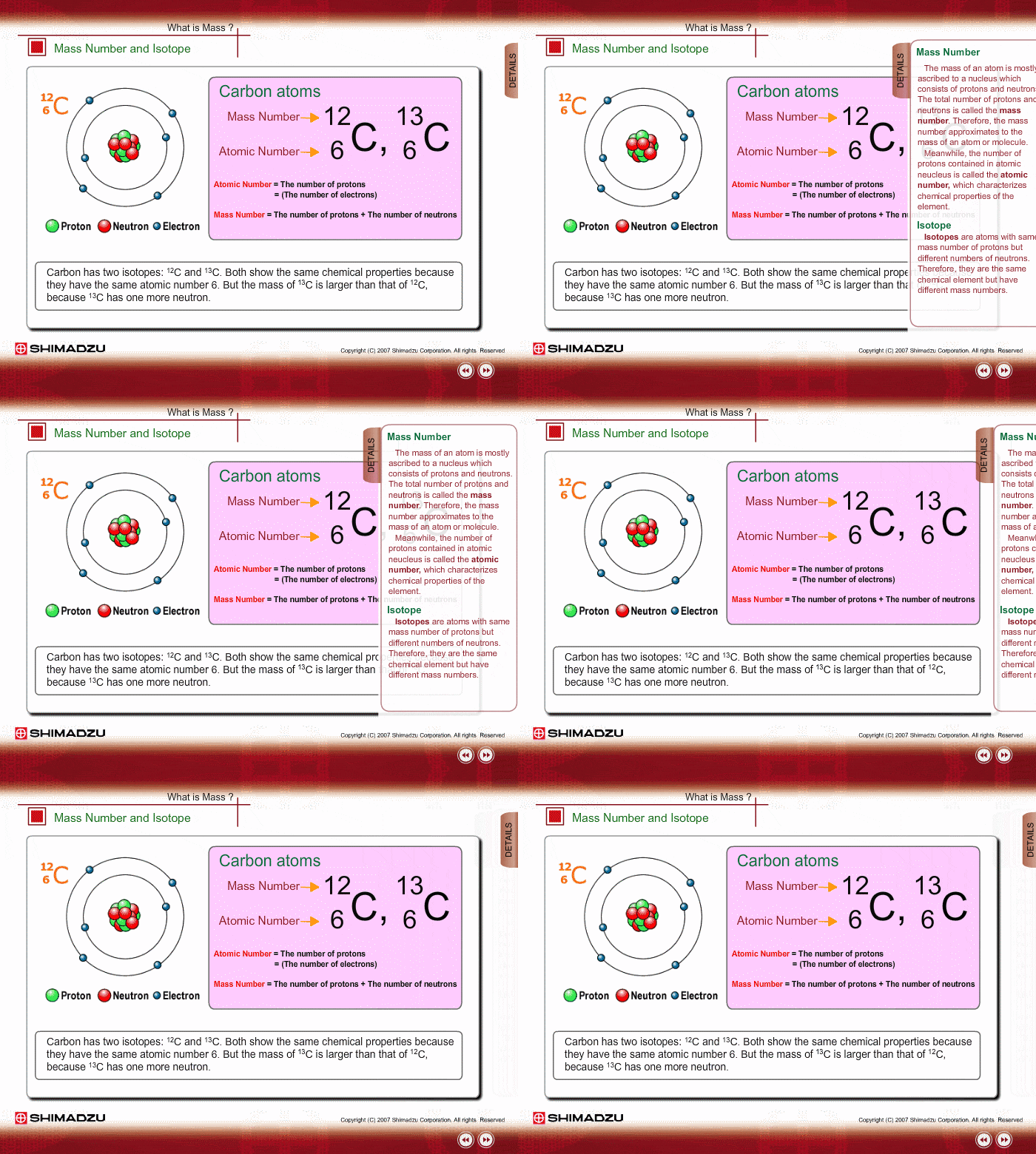
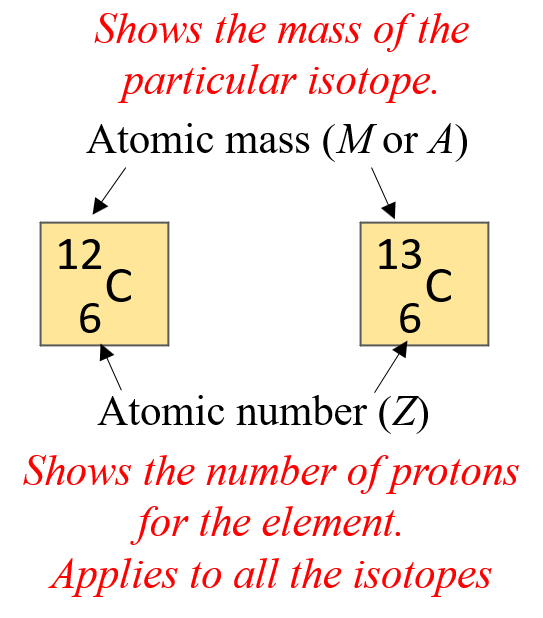
At its core, the mass number is the total count of protons and neutrons in an atom’s nucleus. While the atomic number (the number of protons) defines which element we are dealing with on the periodic table, the mass number allows us to differentiate between various versions of that element, known as isotopes. In the digital age, where precision is the primary currency, these isotopic variations represent the difference between a successful medical diagnostic tool and a failed experiment.
The Fundamental Science Behind the Data
Before diving into the technological applications, it is crucial to establish the technical foundation of isotopic mass. Every atom consists of a nucleus surrounded by an electron cloud. The nucleus contains protons, which carry a positive charge, and neutrons, which are electrically neutral.
Protons, Neutrons, and the Identity of Matter
The identity of an element is hard-coded by its atomic number (Z). For example, carbon always has six protons. However, the number of neutrons (N) within the nucleus can vary. This variation creates isotopes. The mass number (A) is defined by the simple mathematical formula: A = Z + N.
In the context of material science technology, this formula is the starting point for calculating atomic weight—a weighted average used in chemical simulations. Because neutrons have approximately the same mass as protons, but carry no charge, adding or subtracting them significantly changes the physical properties (like stability and weight) of the atom without changing its chemical identity. For software developers building chemical databases, the mass number is the primary key that distinguishes one isotopic record from another.
How Isotopes Differ from Elements
In the tech sector, we often treat “elements” as the hardware and “isotopes” as the specific firmware versions. A “Carbon” element is the standard model, but Carbon-12 and Carbon-14 are specific iterations with different operational lifespans and stability profiles.
Isotopes can be stable or unstable (radioactive). Technology leverages these differences in diverse ways. Stable isotopes are often used as “tracers” in environmental sensors, while unstable isotopes are the powerhouses behind nuclear batteries and radiopharmaceuticals. Understanding the mass number is the first step in identifying which version of an element is required for a specific technical application.
Computational Modeling and Atomic Simulation Tech
As we move toward “Industry 4.0,” the role of the mass number has shifted from a theoretical value to a computational input. Modern high-performance computing (HPC) and artificial intelligence are revolutionizing how we interact with isotopic data.
The Role of AI in Predicting Isotopic Behavior
Artificial intelligence and machine learning models are now being trained on massive datasets of isotopic properties. By inputting the mass number and the corresponding binding energy of various isotopes, AI researchers are developing predictive models that can identify new, synthetic isotopes before they are ever created in a particle accelerator.
These neural networks look for patterns in the “valley of stability”—a graphical representation of isotopes plotted by their proton and neutron counts. Tech startups in the energy sector use these AI simulations to discover more efficient fuel cycles for small modular reactors (SMRs). For these algorithms, the mass number is not just a digit; it is a coordinate in a multidimensional search for the next generation of clean energy.
Software Frameworks for Nuclear Engineering
In the field of nuclear software development, precision is non-negotiable. Programs used for reactor core modeling, such as Monte Carlo N-Particle (MCNP) code, rely heavily on accurate mass number data. These simulations track how neutrons interact with various nuclei.
A neutron hitting a Uranium-235 nucleus (mass number 235) produces a vastly different result than one hitting a Uranium-238 nucleus. The software must be programmed to recognize these mass numbers to calculate the “cross-section”—the probability of a nuclear reaction occurring. Without the precise mass number as a variable, the digital twins used to monitor nuclear power plants would be functionally useless.
Practical Applications in Medical and Energy Technology
The mass number of an isotope is the driving force behind some of the most advanced hardware in the world today. From the scanners in a hospital to the sensors in a deep-sea probe, isotopes are the “smart materials” of the 21st century.
Digital Radiography and Nuclear Medicine
In medical tech, isotopes with specific mass numbers are chosen for their decay rates and the type of radiation they emit. Technetium-99m, for instance, is a workhorse in diagnostic imaging. Its specific mass number and metastable state allow it to be detected by gamma cameras, providing high-resolution digital maps of a patient’s internal organs.
The development of PET (Positron Emission Tomography) scanners represents a pinnacle of isotopic technology. These machines detect the results of positron emission from isotopes like Fluorine-18. The software back-end of a PET scanner performs complex Fourier transforms and back-projection algorithms, all predicated on the known physics of an isotope with a mass number of 18. Engineering these machines requires a deep synthesis of nuclear physics and high-speed digital signal processing.
Precision Mass Spectrometry in Modern Gadgets
Mass spectrometry is perhaps the most direct technological application of the mass number. This technology identifies the chemical composition of a sample by ionizing the molecules and accelerating them through an electromagnetic field.
The device measures the mass-to-charge ratio of the ions. Because the mass number determines how much an atom will deflect in a magnetic field (heavier isotopes deflect less than lighter ones), the machine can provide a digital readout of every isotope present. Modern portable mass spectrometers are now being integrated into security tech at airports and handheld devices for environmental monitoring, allowing for real-time data collection in the field.
Data Management for Chemical and Physical Research
As the volume of scientific data grows, the management of isotopic information has become a specialized branch of data science. The way we categorize and secure this information is vital for global research and national security.
Managing Isotopic Databases in the Cloud
Large-scale research projects, such as those conducted at CERN or the Oak Ridge National Laboratory, generate petabytes of data regarding isotopic interactions. Managing this data requires robust cloud architecture and specialized database schemas.
In these systems, the mass number serves as a critical metadata tag. Cloud-based platforms like the “Isotope Browser” provide researchers with instant access to half-lives, decay modes, and parity for thousands of isotopes. The integration of these databases with collaborative tools allows global teams to run distributed simulations, accelerating the pace of discovery in materials science and quantum physics.
Security and Regulation in the Digital Atomic Age
The tracking of isotopes is also a matter of international digital security. Radioactive isotopes with specific mass numbers—such as Plutonium-239 or Cobalt-60—are strictly regulated.
Blockchain technology is currently being explored as a method for creating immutable ledgers for the supply chain of these materials. By assigning a digital twin to a physical isotope sample, identified by its mass number and batch ID, authorities can ensure that dangerous materials are tracked from the reactor to the hospital or research lab. This “Internet of Isotopes” (IoI) represents a new frontier where nuclear physics meets cybersecurity.

The Future of Isotopic Technology
Looking forward, the mass number will remain a central pillar of technological advancement. As we move into the era of quantum computing, we are beginning to explore the use of specific isotopes as qubits.
For example, Silicon-28 (mass number 28) is highly prized in quantum computing research. Unlike naturally occurring silicon, which contains a mix of isotopes, purified Silicon-28 is “magnetically quiet,” making it an ideal substrate for quantum chips. The tech industry’s ability to isolate and utilize isotopes based on their mass number will be a deciding factor in the race for quantum supremacy.
In conclusion, while the mass number of an isotope may seem like a basic concept from a high school chemistry class, it is a foundational metric in the tech world. It informs the algorithms of our most powerful computers, drives the precision of our medical hardware, and secures the future of our energy grid. In a world defined by data, the mass number is one of the most important digits in the universe.
aViewFromTheCave is a participant in the Amazon Services LLC Associates Program, an affiliate advertising program designed to provide a means for sites to earn advertising fees by advertising and linking to Amazon.com. Amazon, the Amazon logo, AmazonSupply, and the AmazonSupply logo are trademarks of Amazon.com, Inc. or its affiliates. As an Amazon Associate we earn affiliate commissions from qualifying purchases.