
Brazil, a nation renowned for its vibrant culture, breathtaking landscapes, and economic dynamism, possesses a linguistic identity that is both singular and profoundly influential. While many may associate South America with Spanish, Brazil stands as a compelling exception, its national narrative woven with the rich tapestry of Portuguese. Understanding this linguistic cornerstone is not merely an academic pursuit; it is fundamental to grasping Brazil’s place in the global arena, its cultural exports, and its burgeoning economic brand. This exploration delves into the historical roots of Portuguese in Brazil, its contemporary dominance, and the far-reaching implications of this linguistic singularity on the nation’s identity and its international perception.

The Historical Roots of Brazilian Portuguese
The story of Portuguese in Brazil is intrinsically linked to the Age of Exploration and the expansionist ambitions of European powers. In 1500, Portuguese navigators, led by Pedro Álvares Cabral, landed on the shores of what is now Brazil. This marked the beginning of Portuguese colonization, a process that would irrevocably shape the linguistic and cultural landscape of the subcontinent. Unlike other colonized regions in the Americas, which often saw a mosaic of languages and dialects, Brazil’s colonization was predominantly spearheaded by Portugal, leading to a remarkably homogenous linguistic outcome.
Early Colonial Influence and Linguistic Consolidation
The initial years of colonization were characterized by the interaction between Portuguese settlers and the indigenous populations, who spoke a multitude of Tupi-Guarani languages. While these indigenous tongues left an indelible mark on Brazilian Portuguese through vocabulary, particularly for flora, fauna, and local customs, Portuguese gradually became the language of administration, religion, and commerce. The Catholic Church played a significant role in this linguistic consolidation, with missionaries often learning indigenous languages to evangelize but also promoting Portuguese as the language of prayer and instruction.
The arrival of African slaves, beginning in the 16th century, introduced another crucial linguistic layer. Although enslaved Africans brought with them diverse languages from various regions of Africa, their interaction with Portuguese speakers and the pervasive influence of the dominant language led to the assimilation of many African linguistic elements into Brazilian Portuguese, particularly in terms of rhythm, intonation, and certain idiomatic expressions. This complex interplay of indigenous, European, and African influences is what gives Brazilian Portuguese its unique character, distinct from European Portuguese.
The Imperial Era and National Identity Formation
During Brazil’s imperial period, following its independence from Portugal in 1822, the Portuguese language was actively promoted as a unifying force for a vast and diverse nation. The establishment of a centralized government and educational institutions further solidified Portuguese as the language of national discourse. Academies and literary movements emerged, often consciously seeking to distinguish Brazilian Portuguese from its European ancestor, fostering a sense of linguistic independence that paralleled political independence. This period saw the codification of grammar and the development of a distinct Brazilian literary tradition, all firmly rooted in the Portuguese language. The deliberate cultivation of a shared language was a critical component in forging a cohesive national identity from disparate regional cultures and histories.
Contemporary Dominance and Linguistic Uniqueness
Today, Portuguese is not just a major language in Brazil; it is the de facto and de jure official language, spoken by virtually the entire population. This linguistic unity is a rare phenomenon in a country of Brazil’s size and diversity, a key element of its national brand. While regional dialects and accents certainly exist, they are variations within a common linguistic framework, facilitating communication and cultural exchange across vast distances.
The Scale of Portuguese Speakers in Brazil
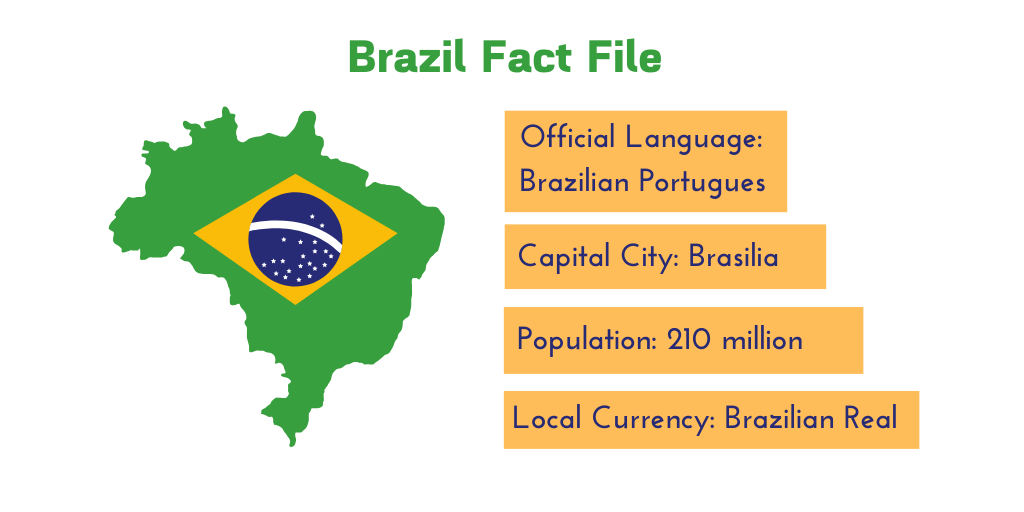
With a population exceeding 210 million people, Brazil accounts for the vast majority of Portuguese speakers worldwide. This makes it not only the largest Portuguese-speaking country but also a global hub for the language. This immense demographic concentration means that any discourse on global Portuguese immediately points to Brazil. The sheer scale of its Portuguese-speaking populace means that Brazilian culture, music, literature, and media are disseminated and consumed in Portuguese by a massive audience within the country, and increasingly, on a global scale. This linguistic dominance ensures that Portuguese remains a vibrant and evolving language, deeply embedded in the fabric of Brazilian life and identity.
Distinctions from European Portuguese and Other Lusophone Nations
While sharing a common root, Brazilian Portuguese has evolved distinct characteristics from European Portuguese. These differences are evident in pronunciation, vocabulary, grammar, and even idiomatic expressions. For instance, the pronunciation of ‘s’ at the end of syllables often sounds like a soft ‘sh’ in many parts of Brazil, a feature less common in Portugal. Vocabulary variations are also significant; words common in Brazil might be unfamiliar in Portugal, and vice versa. Furthermore, grammatical nuances, such as the preferential use of the second-person informal pronoun “você” over “tu” in most of Brazil, and differences in verb conjugations, contribute to the distinct flavor of Brazilian Portuguese. These linguistic divergences are a natural outcome of Brazil’s unique historical trajectory, its geographical isolation from Portugal, and its continuous cultural evolution. Understanding these distinctions is crucial for anyone engaging with the Lusophone world, as it highlights the diverse expressions of a shared linguistic heritage and shapes how Brazil is perceived and interacts globally.
The Global Brand of Brazilian Portuguese
Brazil’s linguistic uniqueness is a powerful component of its national brand. It sets the country apart, contributing to its exotic appeal and its distinct cultural identity on the world stage. This linguistic singularity is not merely a matter of communication; it is a cultural export, a symbol of national pride, and an economic asset.
Cultural Exports and Soft Power
The global recognition of Brazilian music, such as Samba and Bossa Nova, Brazilian telenovelas, and Brazilian literature, are all disseminated through the Portuguese language. These cultural exports carry with them the unique rhythm, sensibility, and narratives of Brazil, creating a powerful soft power that influences global perceptions. The romanticism associated with Brazilian Portuguese, often perceived as melodious and expressive, adds to its allure. As more people are exposed to Brazilian culture, there is a growing interest in learning the language, further enhancing Brazil’s global cultural footprint. This linguistic capital translates into a more profound engagement with Brazilian art, film, and literature, fostering a deeper understanding and appreciation of the nation’s multifaceted identity.
Economic Implications and International Business
In the realm of international business and economics, Brazil’s linguistic identity has tangible implications. As a major economic player in Latin America and an emerging global market, Brazil’s Portuguese-speaking status influences trade relations, investment opportunities, and bilateral agreements. Companies seeking to penetrate the Brazilian market must engage with its Portuguese-speaking populace, necessitating language proficiency or localized communication strategies. Furthermore, the growing influence of Brazil on the global stage, from its role in international organizations to its contributions to global innovation, means that Portuguese is increasingly becoming a language of international business and diplomacy. The ability to communicate effectively in Portuguese opens doors to economic partnerships, talent acquisition, and market access within Brazil and potentially other Lusophone countries. The perception of Brazil as a dynamic and growing economy is intrinsically linked to its linguistic distinctiveness, making Portuguese a key element in its international economic brand.

Opportunities for Language Learning and Cultural Exchange
The global interest in Brazil’s culture and economy has spurred a growing demand for Portuguese language learning. Educational institutions worldwide are increasingly offering Portuguese courses, and online learning platforms provide accessible avenues for acquiring this important language. This surge in interest not only benefits individuals seeking to expand their linguistic repertoire but also strengthens Brazil’s international ties. Enhanced language proficiency among foreigners facilitates deeper cultural exchange, tourism, and collaboration in various fields, from academia to scientific research. This linguistic bridge-building contributes to a more nuanced and positive global perception of Brazil, solidifying its position as a significant cultural and economic force. The vibrant and expressive nature of Brazilian Portuguese itself becomes an attractive draw, inviting a wider audience to explore the richness of Brazilian society and its people.
In conclusion, the major language of Brazil is Portuguese, a fact that underpins its historical development, shapes its contemporary identity, and significantly contributes to its global brand. From its colonial origins to its modern-day influence, Portuguese has been the unifying thread in a nation of immense diversity. Its distinctiveness from European Portuguese, its sheer scale of speakers, and its role in cultural exports all combine to create a powerful and recognizable national brand. As Brazil continues to grow in economic and cultural significance, its major language, Portuguese, will undoubtedly play an even more crucial role in defining its interactions with the rest of the world. Understanding this linguistic cornerstone is therefore essential for anyone seeking to comprehend the multifaceted essence of Brazil.
aViewFromTheCave is a participant in the Amazon Services LLC Associates Program, an affiliate advertising program designed to provide a means for sites to earn advertising fees by advertising and linking to Amazon.com. Amazon, the Amazon logo, AmazonSupply, and the AmazonSupply logo are trademarks of Amazon.com, Inc. or its affiliates. As an Amazon Associate we earn affiliate commissions from qualifying purchases.