
In the intricate landscape of modern business and political economy, the concept of an interest group serves as a critical mechanism for collective influence. While the term is frequently bandied about in political science circles, its fundamental purpose is deeply rooted in the pragmatic world of resource allocation, market positioning, and the strategic protection of capital. To understand interest groups through the lens of business finance and economic strategy is to recognize them as essential risk-mitigation tools—organizations designed to influence the environment in which companies operate to ensure long-term fiscal viability and competitive advantage.

The Economic Rationale for Collective Action
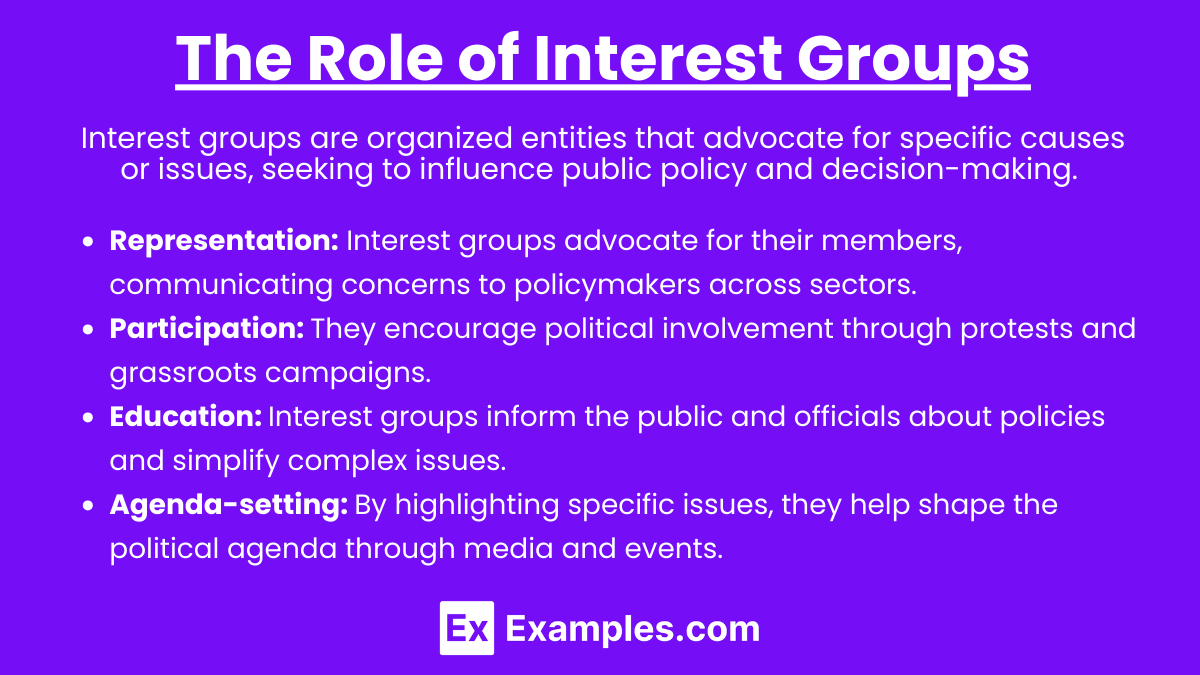
At its core, an interest group exists to solve the “collective action problem.” In a complex global economy, individual firms—even large ones—often lack the capacity to single-handedly shape regulatory frameworks, tax policies, or trade agreements. The primary purpose of an interest group is to aggregate the financial and political capital of multiple entities to achieve a common goal that provides a return on investment for all participating members.
Lowering Transaction Costs and Risk
When businesses operate in a vacuum, the cost of monitoring legislative changes, analyzing market shifts, and lobbying for beneficial tax structures is prohibitively high. By pooling resources into an interest group, firms benefit from economies of scale. The group assumes the “transaction costs” of advocacy, allowing individual member firms to focus on their core business operations while benefiting from a favorable regulatory or economic climate. From a business finance perspective, membership dues paid to an interest group are often treated as strategic R&D or operational insurance—an investment meant to hedge against systemic risks that could otherwise jeopardize a firm’s bottom line.
Market Stabilization and Regulatory Clarity
One of the most valuable outputs of a well-functioning interest group is market predictability. Unpredictable shifts in government regulation, labor laws, or environmental standards create financial volatility. Interest groups work to provide guidance and structure to these policies, ensuring that the rules of the game are consistent and understood. For investors, this stability is paramount; it allows for long-term capital allocation and reduces the discount rate applied to future earnings, as the threat of sudden, adverse legislative shocks is minimized.
Interest Groups as Strategic Assets in Corporate Finance
For C-suite executives and shareholders, interest groups are not merely social clubs; they are active participants in the “political marketplace.” They function as specialized information conduits that bridge the gap between private enterprise and public policy, ensuring that the interests of a specific industry are represented where capital flows are determined.
Shaping Public Policy for Profitability
The primary objective of an interest group within the financial domain is the optimization of the fiscal environment. This includes, but is not limited to, advocating for:
- Tax Incentives: Lobbying for credits or deductions that lower the effective tax rate for specific sectors.
- Subsidies and Grants: Securing government funding for emerging industries or critical infrastructure projects that lower entry barriers.
- Trade Protections: Advocating for tariffs or quotas to protect domestic industry profits from low-cost international competition.
- Regulatory Sandboxes: Promoting policies that allow for the testing of new business models without the immediate burden of stifling regulations.
By successfully influencing these areas, interest groups directly contribute to the expansion of corporate margins and the preservation of cash flow.
Information Asymmetry and Competitive Edge
Effective interest groups act as early warning systems. Because they are embedded within the halls of power, they gather high-fidelity intelligence regarding upcoming legislative changes or economic shifts. Members of these groups gain a temporal advantage—knowing what is coming before the general market does. This information asymmetry allows firms to adjust their capital expenditure (CapEx) plans, divest from vulnerable assets, or ramp up production in anticipation of new policies. In the world of high-stakes business finance, this strategic intelligence is a primary driver of sustained competitive performance.
The Return on Investment of Advocacy
When evaluating the purpose of an interest group through a financial lens, one must inevitably ask about the ROI. If a firm spends a significant portion of its operating budget on annual dues or voluntary contributions to a PAC (Political Action Committee), the justification must be quantifiable in terms of bottom-line impact.
Measuring Advocacy ROI
The success of an interest group is measured by the “delta” created in a firm’s financial outcomes. For example, if an industry group successfully lobbies for a 5% reduction in the excise tax on manufactured goods, that savings is a direct boost to the EBITDA (Earnings Before Interest, Taxes, Depreciation, and Amortization) of every member firm. When the collective savings generated for the membership far outweigh the aggregate costs of running the interest group, the organization is deemed highly effective.
Defensive vs. Offensive Financial Strategies
The purpose of an interest group shifts based on whether the firm is playing defense or offense. Defensively, the group protects against “regulatory creep”—the gradual introduction of rules that increase compliance costs or erode profit margins. Offensively, the group pushes for structural changes that create new revenue streams or market opportunities. By balancing these strategies, interest groups help ensure that capital is not drained by inefficient government mandates and that it is instead channeled into high-growth areas of the economy.
Long-Term Capital Preservation and ESG Considerations
In the contemporary investment climate, the definition of an interest group has expanded to include organizations that influence Environmental, Social, and Governance (ESG) standards. While these groups are often viewed through a social lens, their primary purpose remains firmly rooted in financial sustainability.
Influencing Standards for Financial Consistency
As global markets shift toward more rigorous ESG reporting, interest groups have become the architects of these standards. By helping to define what constitutes “sustainable” or “responsible” investment, these groups ensure that their member firms are not unfairly penalized by emerging reporting requirements. They act as the voice of industry reality, ensuring that mandated ESG disclosures are both practical and financially feasible.

The Sustainability of Business Models
Furthermore, interest groups provide a platform for industry leaders to collaborate on innovation. By pooling capital for research into new energy efficiency measures or supply chain security, interest groups ensure that the sector as a whole remains relevant and profitable in the face of changing consumer preferences and international agreements. This collaboration protects the long-term value of shareholder equity by ensuring the industry avoids obsolescence.
Ultimately, the main purpose of an interest group in the financial sphere is the systematic preservation and growth of value. By providing a platform for collective advocacy, lowering the cost of regulatory engagement, and securing a seat at the table where the rules of global commerce are written, these groups are indispensable assets for any firm aiming to navigate the complexities of modern economic life. They transform individual corporate challenges into manageable industry-wide solutions, ensuring that the engine of capitalism continues to run with as little friction as possible. Through collective action, the interest group serves as a buffer against volatility, a catalyst for legislative advantage, and a vital tool for ensuring the long-term health of private enterprise.
aViewFromTheCave is a participant in the Amazon Services LLC Associates Program, an affiliate advertising program designed to provide a means for sites to earn advertising fees by advertising and linking to Amazon.com. Amazon, the Amazon logo, AmazonSupply, and the AmazonSupply logo are trademarks of Amazon.com, Inc. or its affiliates. As an Amazon Associate we earn affiliate commissions from qualifying purchases.