
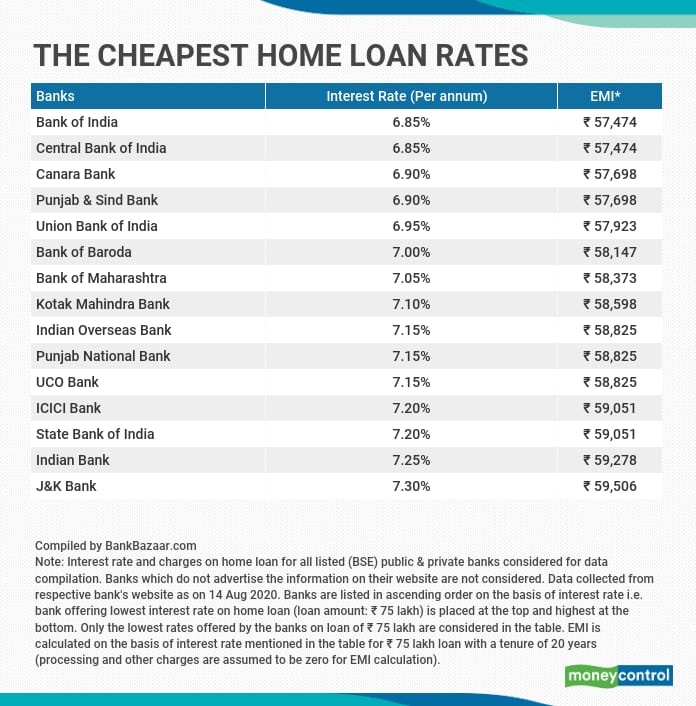
Securing the lowest possible interest rate on a home loan is often the single most significant financial milestone for a prospective homeowner. In the complex world of personal finance, a difference of even half a percentage point can translate into tens of thousands of dollars saved or lost over the life of a thirty-year mortgage. However, identifying the “lowest” rate is not a static endeavor. It is a pursuit influenced by global economic shifts, institutional banking policies, and the individual’s unique financial profile. To navigate this landscape, one must look beyond the advertised numbers and understand the mechanics of the mortgage market.
Understanding the Macroeconomic Drivers of Mortgage Rates
Interest rates do not exist in a vacuum. They are the product of a sophisticated interplay between government policy and market sentiment. For a borrower to understand what constitutes a “good” rate today, they must first understand why rates are positioned where they are.
The Role of the Federal Reserve and Treasury Yields
While the Federal Reserve does not directly set mortgage rates, its influence is absolute. The Federal Funds Rate—the interest rate at which commercial banks borrow and lend to each other overnight—serves as the benchmark for all other consumer debt. When the Fed raises rates to combat inflation, the cost of borrowing for banks increases, which is invariably passed down to the consumer.
More specifically, mortgage rates tend to track the yield on the 10-year Treasury note. Investors view mortgages as long-term investments, similar to government bonds. When Treasury yields rise due to economic growth or inflation fears, mortgage rates follow suit to remain competitive for investors. A “low” rate in a high-inflation environment might be 6%, whereas a “low” rate in a stagnant economy might be 3%. Context is the primary filter through which any rate must be viewed.
Inflation and Economic Indicators
Inflation is the natural enemy of low interest rates. When the purchasing power of the dollar erodes, lenders demand higher interest rates to compensate for the fact that the money they are paid back in the future will be worth less than the money they lent out today. Consequently, data points like the Consumer Price Index (CPI) and employment reports are leading indicators for where home loan rates are headed. A “cooling” economy often leads to lower rates as the demand for borrowing shifts and the central bank pivots toward a more accommodative stance.
Market Competition and Lender Margins
The mortgage industry is highly competitive, consisting of traditional banks, credit unions, and non-bank online lenders. Each institution has a different “cost of funds” and a different appetite for risk. During periods of low loan volume, lenders may trim their profit margins to offer more attractive rates, hoping to capture market share. Conversely, during a housing boom, they may keep rates higher because the demand is already saturated. Shopping for the lowest rate requires an understanding that the “market rate” is often a range, not a single fixed point.
The Role of Personal Financial Health in Rate Determination
The lowest advertised rates are typically reserved for “prime” borrowers—those who represent the lowest risk to the lender. If you see a rate of 6.2% on a bank’s website, that is generally the best-case scenario for a borrower with an impeccable financial history.
Credit Score Benchmarks
In the eyes of a mortgage lender, your credit score is the ultimate predictor of your reliability. The difference between a 680 FICO score and a 780 FICO score can be a full percentage point on your mortgage. Lenders use “Loan-Level Price Adjustments” (LLPAs). These are essentially surcharges for risk. A borrower with a high credit score avoids these extra costs, effectively unlocking the “true” floor of interest rates. To secure the lowest rate, focusing on credit hygiene—paying down revolving debt and ensuring no late payments—is a prerequisite.
Debt-to-Income (DTI) Ratio
Lenders assess your ability to manage monthly payments by comparing your gross monthly income to your total debt obligations. While a high DTI might not always prevent you from getting a loan, it can certainly prevent you from getting the most favorable terms. A DTI below 36% is often the sweet spot for premium pricing. When a lender sees that you have plenty of “breathing room” in your monthly budget, they are more likely to offer a competitive rate because the likelihood of default is statistically lower.
Down Payment Size and Loan-to-Value (LTV)
The amount of equity you put into the home upfront significantly impacts your interest rate. A 20% down payment is the traditional gold standard because it eliminates the need for Private Mortgage Insurance (PMI) and lowers the lender’s risk. However, many borrowers do not realize that putting down 25% or even 30% can sometimes trigger further rate reductions. The lower the Loan-to-Value (LTV) ratio, the more the lender is protected against market fluctuations, and that protection is often rewarded with a lower interest rate.
Navigating Different Loan Products for the Best Rate
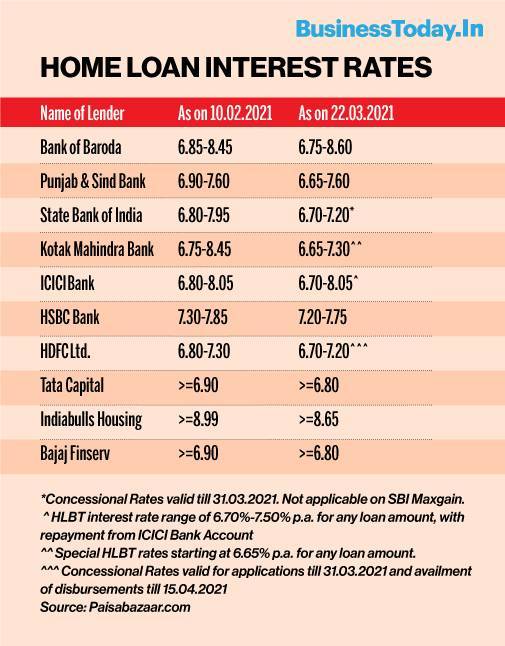
Not all home loans are created equal. The “lowest rate” can change depending on the specific structure of the loan you choose. Choosing the right vehicle for your financial situation is essential to minimizing interest costs.
Fixed-Rate vs. Adjustable-Rate Mortgages (ARMs)
The 30-year fixed-rate mortgage is the most popular choice for its stability, but it rarely offers the lowest initial rate. Because the lender is taking the risk that interest rates might rise significantly over three decades, they charge a premium for that certainty.
An Adjustable-Rate Mortgage (ARM), such as a 5/1 or 7/1 ARM, typically offers a significantly lower introductory rate for the first five or seven years. For a borrower who plans to sell the home or refinance before the introductory period ends, an ARM can be the most effective way to secure the lowest possible interest rate. However, this strategy requires a calculated risk regarding where future rates will be.
Government-Backed Loans (VA, FHA, and USDA)
For those who qualify, government-backed loans often provide interest rates that are lower than conventional market rates.
-
VA Loans: Available to veterans and active-duty service members, these often boast the lowest rates in the entire market, sometimes 0.25% to 0.50% lower than conventional loans, with no down payment requirement.
-
FHA Loans: These are designed for borrowers with lower credit scores. While the “face” interest rate might be lower than a conventional loan, borrowers must factor in the cost of mortgage insurance premiums, which can make the effective rate higher.
-
USDA Loans: Targeting rural and suburban homebuyers, these offer competitive rates and zero down payment, though they are geographically restricted.
Jumbo Loans vs. Conforming Loans
Conforming loans follow the limits set by Fannie Mae and Freddie Mac. When a loan amount exceeds these limits, it becomes a “Jumbo” loan. Historically, Jumbo loans carried higher interest rates because they were harder for banks to sell on the secondary market. However, in recent years, the gap has narrowed, and occasionally Jumbo rates are actually lower than conforming rates as banks compete for high-net-worth clients who bring significant deposits and investment business to the institution.
Strategic Maneuvers to Lower Your Interest Rate
Once you have assessed the market and your personal finances, there are proactive steps you can take to “buy” or negotiate a lower rate.
Buying Down the Rate with Points
One of the most effective ways to lower your interest rate is through the use of discount points. One “point” is equal to 1% of the loan amount and typically reduces your interest rate by about 0.25%. This is essentially a “prepaid interest” strategy.
For example, if you are borrowing $400,000, one point would cost $4,000. If that point lowers your rate from 6.5% to 6.25%, you would calculate the monthly savings and determine the “break-even point.” If you plan to stay in the home for ten years but your break-even point is at year five, buying points is a mathematically sound way to secure a lower rate.
Comparison Shopping and Rate Locks
Research consistently shows that borrowers who get at least three quotes save an average of $1,500 to $3,000 over the first few years of the loan. When you receive a Loan Estimate, you can use it as a bargaining chip with other lenders.
Furthermore, interest rates fluctuate daily. Once you find a rate you are comfortable with, utilizing a “rate lock” is vital. A rate lock guarantees that your interest rate won’t change between the time of your application and the closing of the loan, protecting you from sudden market volatility.
Timing the Market
While it is impossible to perfectly time the bottom of a rate cycle, there are seasonal and economic patterns. Rates often stabilize or dip slightly during the winter months when the housing market is slower. Additionally, keeping an eye on the Federal Reserve’s calendar and major economic releases can help you decide whether to lock in a rate now or wait a few weeks for a potential dip.
The Mathematical Reality: Cost vs. Benefit over the Loan Term
Finding the lowest rate is only half the battle; the other half is understanding the total cost of the debt. A low interest rate attached to high closing costs may actually be more expensive than a slightly higher rate with no fees.
Amortization and Total Interest Paid
Amortization is the process of paying off a debt over time through regular installments. In the early years of a mortgage, the vast majority of your monthly payment goes toward interest, not principal. This is why a lower interest rate is so powerful; it reduces the “rent” you pay on the bank’s money every single month. Over thirty years, the compounding effect of a 1% lower rate can result in over $100,000 in savings on a mid-priced home.
Refinancing Opportunities
The quest for the lowest interest rate doesn’t end when you sign the closing papers. Financial markets are cyclical. If you purchase a home during a period of high interest rates, you should always be looking for a “Rate and Term” refinance opportunity. General financial wisdom suggests that if you can lower your rate by 0.75% to 1%, and you plan to stay in the home long enough to recover the closing costs, refinancing is a powerful tool to reset your personal finance trajectory.

The Opportunity Cost of Capital
Finally, it is essential to consider the opportunity cost. If you have the choice between a 5% mortgage and putting extra money into a diversified investment portfolio that averages an 8% return, the “lowest” rate might not be your only priority. In this scenario, the mortgage is “cheap” debt. Using a low-interest home loan as a tool to maintain liquidity for other investments is a hallmark of sophisticated personal finance management. The goal isn’t just to have the lowest rate; it’s to have the most efficient overall financial structure.
aViewFromTheCave is a participant in the Amazon Services LLC Associates Program, an affiliate advertising program designed to provide a means for sites to earn advertising fees by advertising and linking to Amazon.com. Amazon, the Amazon logo, AmazonSupply, and the AmazonSupply logo are trademarks of Amazon.com, Inc. or its affiliates. As an Amazon Associate we earn affiliate commissions from qualifying purchases.