
The Love Canal tragedy is often cited as the watershed moment for the environmental movement in the United States, but from a business and financial perspective, it represents one of the most significant shifts in the history of corporate liability and real estate risk assessment. What began as a failed 19th-century infrastructure project in Niagara Falls, New York, evolved into a toxic graveyard that ultimately restructured how corporations value assets, how insurance companies underwrite risk, and how the federal government intervenes in private sector failures.
To understand the Love Canal tragedy is to understand the birth of modern “polluter pays” economics. It serves as a stark case study in the catastrophic financial consequences that arise when short-term cost-saving measures in industrial waste management collide with long-term real estate development and public health.

The Financial Origin Story: A Failed Vision and a Costly Shortcut
The name “Love Canal” stems from William T. Love, an ambitious entrepreneur in the 1890s who envisioned a model industrial city powered by a man-made canal connecting the upper and lower Niagara River. Love’s project was a classic real estate speculation play; he intended to create a shipping lane and a source of cheap hydroelectric power that would attract industry and residents alike. However, the “Panic of 1893” and the development of alternating current (which allowed electricity to be transmitted over long distances) rendered his localized power scheme obsolete. The project was abandoned, leaving behind a 3,000-foot-long, 60-foot-wide trench.
The Hooker Chemical Acquisition: From Asset to Toxic Liability
In 1942, the Hooker Electrochemical Company (now Occidental Petroleum) identified the abandoned trench as a convenient and inexpensive disposal site for chemical byproducts. Over the next decade, the company dumped approximately 21,000 tons of hazardous waste—including benzene, dioxin, and PCBs—into the canal. At the time, this was a common industrial practice aimed at minimizing operational costs. In an era before rigorous environmental regulation, the “cost of doing business” did not account for the potential for future remediation or litigation.
By 1953, the canal was full. Hooker capped the site with clay and soil, essentially “closing the books” on the disposal site. However, the financial implications were just beginning. The city of Niagara Falls was experiencing a post-war population boom, and the local school board sought to acquire the land for a new elementary school and residential neighborhood.
The $1 Sale and the Transfer of Risk
In a move that remains a central focus of legal and business ethics courses, Hooker Chemical sold the land to the Niagara Falls School Board for a nominal fee of $1. The deed included a specific “warning” clause, disclaiming liability for any injuries that might occur due to the presence of the chemicals. From a corporate finance standpoint, this was an attempt to offload a massive latent liability for a symbolic dollar.
The school board, eager for cheap land to accommodate a growing tax base, ignored the warnings. They built the 99th Street School directly atop the dump site, and developers constructed hundreds of modest homes surrounding it. This decision effectively tethered the financial well-being and home equity of hundreds of families to a ticking time bomb of industrial waste.
The Market Collapse: Real Estate Devaluation and Personal Financial Ruin
By the late 1970s, the physical reality of the buried chemicals could no longer be ignored. Record rainfalls caused the water table to rise, forcing a “witches’ brew” of chemicals into the basements of nearby homes and the playground of the school. The resulting public health crisis—characterized by high rates of birth defects, miscarriages, and rare illnesses—led to a total collapse of the local real estate market.
The Destruction of Home Equity in Niagara Falls
For the average American family in the 1970s, a home was their primary financial asset. As the extent of the contamination at Love Canal became public, property values in the neighborhood plummeted to zero. Residents found themselves in a financial trap: they could not sell their homes because no buyer would assume the risk, yet they could not afford to abandon their mortgages and move elsewhere.
This scenario highlighted a massive gap in the insurance markets of the time. Standard homeowner policies did not cover “gradual pollution” or environmental contamination, leaving the residents with no financial recourse. The tragedy demonstrated how environmental externalities could instantaneously vaporize private wealth, leading to a demand for government intervention to protect the integrity of the housing market.
The State Buyout: A Precedent for Government Intervention
In 1978, President Jimmy Carter declared a federal health emergency at Love Canal—the first time federal funds were used for an emergency not caused by a natural disaster. The subsequent state and federal buyout of over 800 homes was a massive financial undertaking. The government was forced to act as the “buyer of last resort,” spending tens of millions of dollars to relocate families and stabilize the area.
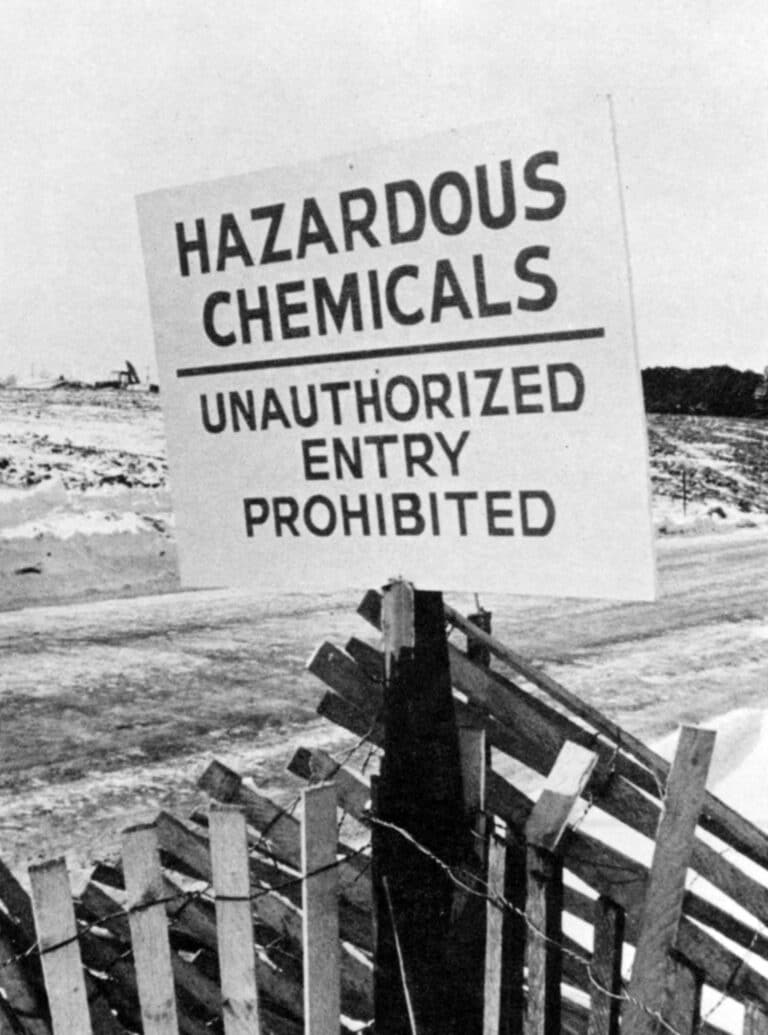
This intervention set a precedent for the “socialization” of industrial risk, where the public sector bears the immediate cost of corporate negligence. However, it also sparked a legislative movement to ensure that, in the future, the financial burden would return to the entities responsible for the contamination.
Corporate Accountability and the Birth of the Superfund (CERCLA)
The most significant financial legacy of Love Canal is the Comprehensive Environmental Response, Compensation, and Liability Act (CERCLA) of 1980, commonly known as the Superfund. Before Love Canal, there was no comprehensive federal framework for cleaning up abandoned hazardous waste sites or for assigning financial responsibility for them.
The Fiscal Burden of Remediation
CERCLA was designed to provide the Environmental Protection Agency (EPA) with the authority and the funding to clean up contaminated sites. Crucially, it established a “strict, joint, and several liability” framework. Under this legal doctrine, any party involved in the generation, transportation, or disposal of hazardous waste at a site could be held responsible for the entire cost of the cleanup, regardless of whether their specific actions were legal at the time.
For the corporate world, this was a seismic shift in financial risk. A company could now be held liable for billions of dollars in cleanup costs for actions taken decades earlier. The Love Canal site itself eventually cost over $250 million to remediate—a sum far exceeding the original “savings” Hooker Chemical achieved by using the canal as a dump. In 1994, Occidental Petroleum (the successor to Hooker) agreed to pay $129 million to the federal government to settle claims related to the site, following years of expensive litigation.
Taxpayer vs. Corporate Funding: The Tax on Chemical Industries
Initially, the Superfund was financed through a dedicated tax on the chemical and petroleum industries. This created a pool of capital that allowed the government to act quickly on “orphan sites” where the original polluter was bankrupt or unknown. While the specific taxes expired in the 1990s and were later replaced by general fund appropriations (and more recently reinstated in parts), the economic principle remains: the industry that profits from the creation of hazardous materials must bear the collective financial risk of their disposal.
The Modern Financial Impact: ESG and Risk Assessment
Today, the lessons of Love Canal are baked into the core of corporate finance, mergers and acquisitions (M&A), and commercial real estate. What was once an overlooked footnote in a balance sheet is now a primary focus of due diligence.
Quantifying Environmental Risk in Corporate Finance
No major corporate acquisition happens today without an exhaustive environmental audit. The “Love Canal risk”—the possibility of inheriting a multi-billion dollar cleanup liability—has led to the standard practice of Phase I and Phase II Environmental Site Assessments (ESAs). Investors and lenders require these assessments to ensure that a property or a company does not have “latent toxic debt.”
In the world of ESG (Environmental, Social, and Governance) investing, Love Canal is the ultimate “G” and “E” failure. Institutional investors now use sophisticated data tools to screen for companies with poor waste management track records, understanding that environmental negligence is a leading indicator of future financial instability.
The Evolution of Environmental Insurance
The tragedy also birthed a new sector in the insurance industry. Since standard commercial general liability (CGL) policies now almost universally exclude pollution, a specialized market for Environmental Impairment Liability (EIL) insurance has emerged. Companies now pay significant premiums to transfer the risk of “another Love Canal” to insurers, who in turn demand rigorous safety and disposal protocols to mitigate their own exposure.

Final Economic Lessons of Love Canal
The Love Canal tragedy was more than a localized environmental disaster; it was an expensive lesson in the true cost of industrial activity. It proved that “saving” money through improper waste disposal is a false economy. The eventual costs—comprising legal fees, remediation expenses, devalued real estate, and lost brand equity—invariably dwarf the initial savings.
For the modern business leader, Love Canal serves as a reminder that environmental sustainability is inextricably linked to financial sustainability. The tragedy shifted the economic landscape from one of “out of sight, out of mind” to one of permanent, traceable liability. In the current global economy, where transparency and accountability are driven by both regulation and market demand, the fiscal ghosts of Love Canal continue to shape how capital is allocated and how risk is managed across every industrial sector.
aViewFromTheCave is a participant in the Amazon Services LLC Associates Program, an affiliate advertising program designed to provide a means for sites to earn advertising fees by advertising and linking to Amazon.com. Amazon, the Amazon logo, AmazonSupply, and the AmazonSupply logo are trademarks of Amazon.com, Inc. or its affiliates. As an Amazon Associate we earn affiliate commissions from qualifying purchases.