
In the lexicon of personal finance, the “lottery number” is a term often used to describe a specific, life-changing sum of money. For some, it is a literal set of digits on a Saturday night ticket; for others, it is the precise figure required to achieve permanent financial independence. Regardless of the definition, the pursuit of this “number” governs much of our economic behavior, driving everything from high-stakes speculation to disciplined, long-term retirement planning.
Understanding what your lottery number actually is requires a deep dive into the mechanics of wealth, the reality of probability, and the psychological frameworks that dictate how we interact with money. It is not merely about the “how much,” but about the “how” and the “why.” To truly grasp the concept of the lottery number, one must look past the allure of overnight riches and toward the strategic accumulation of capital.
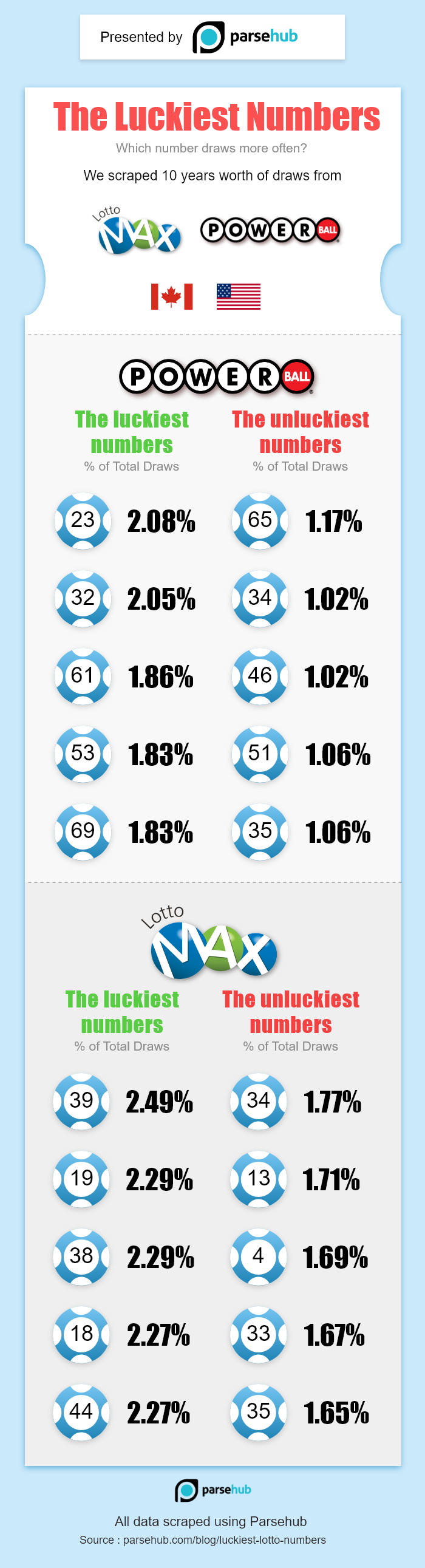
The Financial “Lottery Number”: Defining Your Target for Independence
For the disciplined investor, the lottery number isn’t a random sequence of integers; it is a calculated threshold. This is the point at which your invested assets generate enough passive income to cover your living expenses indefinitely. In the world of personal finance, this is often referred to as the “Financial Independence” (FI) number.
The 4% Rule and the Math of Retirement
The most common method for calculating this number is based on the Trinity Study, which birthed the “4% Rule.” To find your personal lottery number, you must first determine your annual expenses. If you require $100,000 per year to maintain your lifestyle, the math suggests you need 25 times that amount invested in a diversified portfolio. In this scenario, your number is $2.5 million.
The logic is that a portfolio split between equities and bonds can historically sustain a 4% withdrawal rate, adjusted for inflation, without being depleted over a 30-year horizon. Understanding this specific figure transforms a vague dream of wealth into a concrete, measurable goal. It shifts the focus from “winning” to “building,” allowing an individual to track progress through a lens of mathematical certainty rather than blind hope.
Inflation and the Shifting Goalposts
One of the most significant challenges in identifying your lottery number is the erosion of purchasing power. A million dollars in 1990 provided a drastically different lifestyle than a million dollars provides today. When projecting a target number for the future, investors must account for a long-term average inflation rate of approximately 2% to 3%.
This means that your lottery number is a moving target. If your goal is ten years away, you must adjust your final figure to ensure that your future distributions maintain today’s purchasing power. Professional financial planning involves stress-testing this number against various economic cycles, ensuring that “hitting the number” remains a permanent solution rather than a temporary windfall.
The Odds of Success: Comparing Gambling to Calculated Investing
The phrase “lottery number” carries a dual meaning: the statistical impossibility of a game of chance versus the statistical probability of wealth accumulation through markets. To understand money, one must understand the difference between a “positive expectancy” and a “negative expectancy” event.
Probability vs. Possibility
The probability of winning a major national lottery like Powerball is roughly 1 in 292 million. While it is possible to win, it is not a probable financial strategy. From a wealth management perspective, playing the lottery is often described as a “tax on those who are bad at math.” It represents a negative expectancy event where, for every dollar spent, the average return is significantly less than a dollar.
Conversely, investing in the broad stock market represents a positive expectancy event. Historically, the S&P 500 has returned an average of 10% annually over long periods. While no single year is guaranteed, the probability of wealth creation over a 20-year horizon in the markets is exceptionally high. When people ask “what is the lottery number,” the most professional answer is usually found in a low-cost index fund rather than a gas station ticket.
The Cost of “Hope” as a Financial Strategy
The psychological allure of the lottery stems from the desire for a “quantum leap” in socioeconomic status. This is what behavioral economists call “skewness preference.” People are willing to accept a small, certain loss (the price of a ticket) for a microscopic chance of an infinite gain.
However, the opportunity cost of this behavior is staggering. If an individual redirected $50 a month—roughly what some spend on various lottery games—into a compound interest vehicle with a 7% return, they would accumulate over $60,000 in 30 years. This is the “hidden” lottery number: the wealth that is sacrificed at the altar of high-risk speculation.
Managing a Windfall: What to Do If You Actually Hit the Number
Whether the number is reached through a decade of savvy investing, a business exit, or a literal lottery win, the transition from “accumulation” to “preservation” is where most people fail. Statistics show that a vast majority of windfall recipients—up to 70%—lose their wealth within a few years. Managing a sudden influx of capital requires a shift in mindset from growth to stewardship.
The Immediate Action Plan: Protecting the Principal
The first step upon hitting your lottery number is not to spend, but to pause. This is known as the “cooling-off period.” Professional advisors recommend placing the funds in short-term, liquid, and safe vehicles like Treasury bills or high-yield money market accounts while a strategy is developed.
The primary goal is the protection of the principal. Once the capital is gone, the “machine” that generates passive income is destroyed. Successful wealth management involves creating a “moat” around the principal, ensuring that only the interest or dividends are utilized for lifestyle enhancements. This preserves the lottery number for future generations and provides a permanent safety net.
Tax Implications and Structural Planning
Taxation is the single largest “leak” in any financial plan. Hitting a large number often triggers the highest marginal tax brackets. For those who win a literal lottery, the choice between a lump sum and an annuity is a critical financial decision. While the lump sum offers control and the potential for market-beating returns, the annuity provides a guaranteed floor and mitigates the risk of “blowing” the entire amount.
Furthermore, hitting a high-net-worth threshold necessitates structural changes, such as the creation of trusts, family limited partnerships, or private foundations. These entities serve to minimize estate taxes and protect assets from litigation. At this level of wealth, the “lottery number” is no longer just a balance in a bank account; it is a complex financial ecosystem.
Designing Your Own “Luck”: Strategic Wealth Accumulation
The most reliable way to find your lottery number is to build it. This involves moving away from the “lottery mindset” and toward a “business mindset.” It requires an understanding of leverage, compounding, and risk management.
Compounding as the Real-World Lottery
Albert Einstein famously called compound interest the “eighth wonder of the world.” It is the only mechanism that allows for exponential growth without the requirement of extreme risk. The “number” grows slowly at first, but in the final years of an investment horizon, the growth becomes parabolic.
For most, the lottery number is reached not through a single event, but through the consistent application of capital over time. The “luck” in this scenario is the intersection of preparation and time. By automating investments and reinvesting dividends, an individual creates a self-fulfilling prophecy of wealth.

Diversification: Lowering the Volatility of Your Fortune
A common mistake made by those chasing a specific number is “concentration risk.” They put all their capital into a single stock, a single property, or a single business idea in hopes of hitting it big. While concentration creates wealth, diversification preserves it.
As you approach your target lottery number, the strategy should shift. By diversifying across asset classes—equities, real estate, fixed income, and alternative investments—you ensure that a failure in one sector doesn’t reset your progress to zero. The ultimate lottery number is one that is resilient. It is a number that stays hit, regardless of market volatility or economic downturns.
In conclusion, “what is the lottery number” is a question with two answers. One is a fantasy rooted in chance; the other is a reality rooted in mathematics and discipline. By defining your personal financial independence number, understanding the probabilities of different wealth-building vehicles, and implementing a rigorous management strategy, you can turn the concept of a lottery into a predictable financial outcome. True wealth is not about the numbers drawn on a screen, but about the numbers built into your balance sheet through strategy, patience, and professional financial management.
aViewFromTheCave is a participant in the Amazon Services LLC Associates Program, an affiliate advertising program designed to provide a means for sites to earn advertising fees by advertising and linking to Amazon.com. Amazon, the Amazon logo, AmazonSupply, and the AmazonSupply logo are trademarks of Amazon.com, Inc. or its affiliates. As an Amazon Associate we earn affiliate commissions from qualifying purchases.