
In the traditional sense, the line of scrimmage is an invisible transverse line across the football field that no player may cross before the snap of the ball. For decades, it was a concept defined by grass, dirt, and the subjective eye of an official. However, in the modern era of sports, the line of scrimmage has evolved into one of the most technologically dense locations in all of professional entertainment. What used to be a physical standoff between offensive and defensive linemen is now a sophisticated data point—a digital frontier where sensor technology, computer vision, and predictive algorithms converge to enhance officiating, broadcast quality, and team strategy.
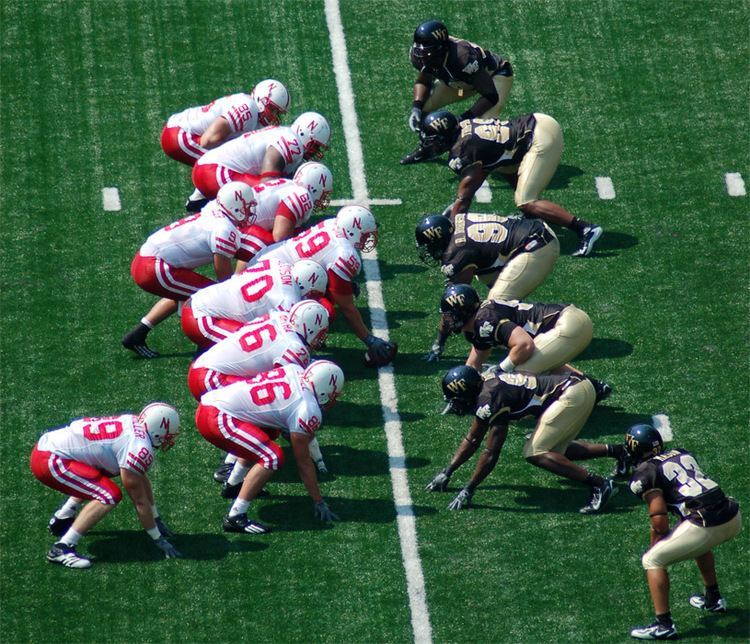
Understanding the “line of scrimmage” today requires looking past the players and into the infrastructure of the stadium. It is no longer just a rule in a playbook; it is a nexus of technological innovation that serves as the foundation for how the game is analyzed and consumed in the 21st century.
The Evolution of the Virtual Line: From Graphics to Real-Time Data
For the average viewer at home, the line of scrimmage is synonymous with the vibrant blue and yellow lines that appear on their television screens. While these lines seem like simple overlays, they represent a monumental leap in broadcast technology that transformed the viewer experience and set the stage for modern sports tech integration.
The 1st & Ten System and the Birth of Augmented Reality
The “Yellow First Down Line” (and its blue counterpart for the line of scrimmage) was first introduced by a company called Sportvision in 1998. This was arguably the first mainstream application of Augmented Reality (AR) in live television. To create this “invisible” line that sits under the players’ feet but over the grass, engineers had to create a 3D digital model of every NFL field. Because no field is perfectly flat, the software must account for the crown of the turf and the exact position and tilt of every broadcast camera. This ensures that when a camera pans or zooms, the line of scrimmage remains locked in its precise geographic location.
Computer Vision and Broadcast Overlay
Today, the technology has moved far beyond static 3D models. Advanced computer vision algorithms now analyze every frame of video in real-time. This allows the system to distinguish between the colors of the grass and the colors of the players’ jerseys, ensuring the digital line of scrimmage never “bleeds” onto a player’s cleats or uniform. This level of visual precision is essential for fans to understand the nuances of “encroachment” or “offsides,” turning a complex rule into a clear, visual narrative.
Enhancing Fan Engagement Through Data Visualization
The digital line of scrimmage has become a platform for advanced data visualization. During broadcasts, we now see “probability bubbles” or “target zones” mapped out relative to the line. These graphics are powered by real-time data feeds that allow broadcasters to show how far a quarterback is dropping back or how much “cushion” a cornerback is giving a receiver. This technological layer has turned the line of scrimmage from a static rule into a dynamic piece of storytelling.
Sensor-Driven Officiating: Microchips and the Battle for Precision
One of the greatest challenges in football is “spotting the ball.” In a pile of twenty players, determining exactly where the ball was when a player’s knee hit the ground relative to the line of scrimmage is a Herculean task for human officials. To solve this, the industry has turned to Internet of Things (IoT) technology and localized positioning systems.
RFID Tags and Player Tracking
Since 2014, the NFL has partnered with Zebra Technologies to embed RFID (Radio Frequency Identification) tags into the shoulder pads of every player. These tags are roughly the size of a nickel and emit signals to receivers positioned throughout the stadium. This allows for the tracking of player movement within inches. When we talk about the line of scrimmage, these sensors provide an objective record of which player crossed the line before the snap, providing a digital “audit trail” for officiating that moves faster than the human eye can track.
The “Smart” Football and Ball-Spotting Tech
Perhaps the most significant innovation is the integration of sensors within the football itself. Modern footballs contain a lightweight sensor that tracks the ball’s location, speed, and rotation. When combined with the RFID data from the players, the “digital line of scrimmage” becomes a tool for precision officiating. This tech is used to determine if the ball actually crossed the plane of the goal line or the line of scrimmage on a critical fourth-down play. By digitizing the ball, the league is moving toward a future where the “chain gang” and manual measurements are replaced by automated, high-precision electronic spotting.

Reducing Human Error with Optical Tracking
Beyond RFID, optical tracking systems like Hawk-Eye (famously used in tennis and soccer) are being tested to monitor the line of scrimmage. Using a synchronized array of high-speed cameras, these systems create a “skeleton” of every player on the field. This allows officials to see exactly where a player’s hand or helmet was at the millisecond the ball was snapped. The line of scrimmage is no longer just a guess; it is a calculated coordinate in a three-dimensional digital space.
AI and Predictive Analytics at the Snap
The line of scrimmage is the starting point for every play, making it the primary data source for Artificial Intelligence (AI) and machine learning models. Teams and analysts are now using the “at the snap” data to predict outcomes and evaluate performance in ways that were impossible a decade ago.
Next Gen Stats (NGS) and AWS Integration
Through partnerships with Amazon Web Services (AWS), the NFL processes millions of data points generated at the line of scrimmage. Machine learning models analyze the “formation” of the offensive and defensive lines. By looking at the spacing between players at the line of scrimmage, AI can predict with high accuracy whether a play will be a run or a pass before it even begins. This “Expected Rushing Yards” or “Completion Probability” is all predicated on the initial alignment at the line.
Machine Learning for Formation Recognition
For coaching staffs, AI tools can now ingest thousands of hours of game film and automatically categorize every play based on the alignment at the line of scrimmage. Instead of a video scout manually labeling “Shotgun” or “I-Formation,” AI does it instantly. This allows coaches to identify “tells”—subtle shifts in how a lineman places his hand on the line of scrimmage—that might indicate a specific play type. The line of scrimmage has become a data set for competitive intelligence.
Defensive Pressure and “Time to Throw” Metrics
The distance between the defensive line and the quarterback at the line of scrimmage is the basis for modern “pressure” metrics. Technology now tracks how quickly a defender closes the gap from the line of scrimmage to the “pocket.” These analytics have revolutionized how we value players; a defensive end’s worth is no longer just about “sacks,” but about their “average distance to the QB” from the line of scrimmage throughout a game.
The Future of the Line of Scrimmage: VR, AR, and Beyond
As we look toward the future, the line of scrimmage will continue to migrate further into the digital realm. The convergence of 5G connectivity, edge computing, and wearable tech will make this boundary even more interactive.
Augmented Reality on the Field
In the near future, officials may wear AR-enabled visors that project the virtual line of scrimmage directly onto their field of vision. This would eliminate the need for them to look over their shoulders at the chains or the sidelines. By seeing a digital “wall” at the line of scrimmage, officials could make instantaneous calls on offsides or neutral zone infractions with 100% accuracy.
Virtual Coaching and Simulation
Virtual Reality (VR) is already being used to train quarterbacks to read defenses at the line of scrimmage. By using the data captured from previous games, teams can recreate the exact “look” of an opponent’s defensive front in a 360-degree virtual environment. A quarterback can practice identifying the “Mike” linebacker and adjusting the line of scrimmage protection without ever stepping onto a practice field, significantly reducing physical wear and tear.
The Path to 100% Digital Officiating
There is a growing movement toward the “connected stadium,” where the line of scrimmage is monitored by a fully automated system. Much like the “Goal Line Technology” in global football (soccer), a sensor-based system could automatically buzz an official’s watch the moment a player breaches the line of scrimmage illegally. While the human element remains a cherished part of the game, the technology is rapidly reaching a point where the line of scrimmage is an absolute, digitally-enforced boundary.

Conclusion
In the world of modern sports, the question “what is the line of scrimmage” can no longer be answered simply by citing a rulebook. It is a sophisticated technological construct that sits at the intersection of computer vision, IoT sensors, and Artificial Intelligence. From the iconic yellow line on our television screens to the microchips embedded in players’ pads, the line of scrimmage has become the most data-rich real estate in the world of athletics. As technology continues to advance, this invisible line will become even more precise, transforming the way the game is coached, played, officiated, and experienced by millions of fans worldwide. The line of scrimmage is no longer just where the play begins; it is where the future of sports technology lives.
aViewFromTheCave is a participant in the Amazon Services LLC Associates Program, an affiliate advertising program designed to provide a means for sites to earn advertising fees by advertising and linking to Amazon.com. Amazon, the Amazon logo, AmazonSupply, and the AmazonSupply logo are trademarks of Amazon.com, Inc. or its affiliates. As an Amazon Associate we earn affiliate commissions from qualifying purchases.