
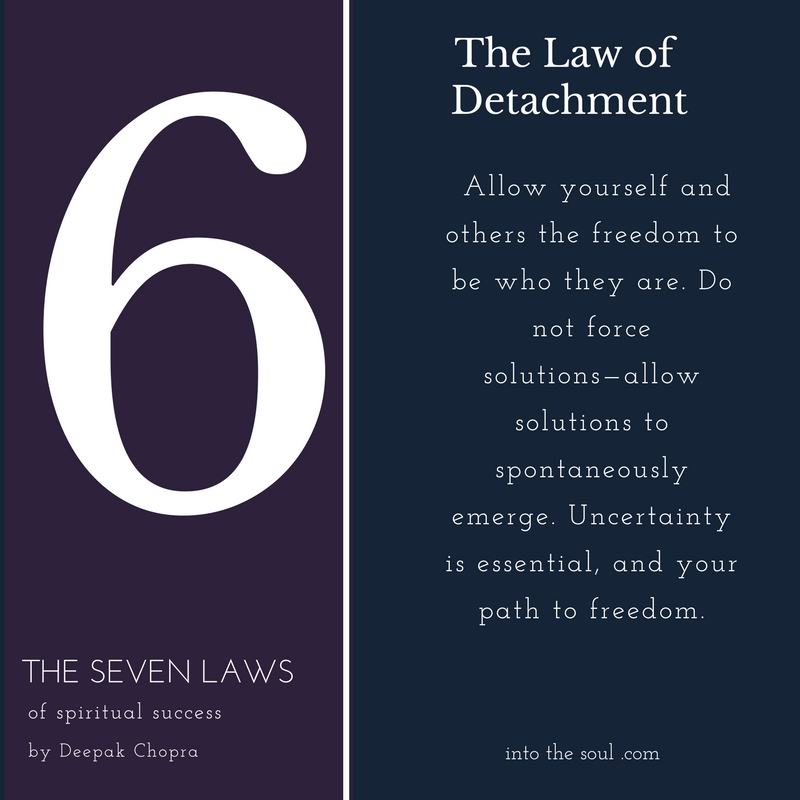
In the world of high-stakes finance, the most significant barrier to wealth is rarely a lack of information or a shortage of opportunity; rather, it is the psychological grip of emotional attachment. The “Law of Detachment,” while often discussed in philosophical or spiritual circles, has a profound and pragmatic application within the realms of personal finance, investing, and business management.
At its core, the Law of Detachment in a financial context suggests that to attract and retain wealth, one must release the desperate emotional attachment to a specific outcome. This does not imply a lack of effort or a disregard for goals. On the contrary, it involves setting a clear financial intention and then detaching from the anxiety, fear, and “neediness” associated with the result. By doing so, an investor or entrepreneur can make decisions based on logic, data, and long-term strategy rather than the volatile whims of market sentiment or personal insecurity.
The Core Concept: Detaching Emotion from Capital
The primary reason investors fail is not the market’s behavior, but their own. Behavioral finance has long documented that humans are hardwired to be irrational with money. We feel the pain of a loss twice as intensely as we enjoy the pleasure of a gain—a phenomenon known as loss aversion. The Law of Detachment serves as a psychological framework to counteract these biological impulses.
Redefining Value Beyond Net Worth
One of the most dangerous attachments in personal finance is the conflation of self-worth with net worth. When an individual’s identity is inextricably linked to their bank balance, every market dip feels like a personal failure, and every gain leads to irrational exuberance. Detachment allows for a professional distance. It enables you to view your capital as a tool—much like a carpenter views a hammer—rather than a reflection of your human value. When you detach your ego from your portfolio, you gain the clarity needed to cut losses when necessary and let winners run without the urge to “lock in” small gains out of fear.
The Psychology of Sunk Cost Fallacy
Emotional attachment is the fuel for the sunk cost fallacy. This is the tendency to continue investing in a losing proposition—be it a failing stock, a stagnant business, or a bad real estate deal—simply because you have already put money into it. The Law of Detachment empowers you to look at your current assets with fresh eyes every day. It asks: “If I didn’t already own this today, would I buy it at the current price?” If the answer is no, detachment provides the emotional freedom to liquidate the position and move capital to more productive avenues without the baggage of past decisions.
Strategic Detachment in Wealth Building
Wealth building is a marathon, not a sprint. However, the modern financial landscape is designed to keep us in a state of constant attachment through real-time notifications, 24-hour news cycles, and fluctuating ticker symbols. Strategic detachment is the intentional act of creating distance between yourself and the “noise” of the financial world.
Long-term Vision vs. Short-term Volatility
The Law of Detachment is the secret weapon of the “buy and hold” investor. History shows that the S&P 500 has a stellar track record over 20-year periods, yet the average investor’s returns often lag behind because they react to short-term volatility. By detaching from the daily fluctuations of the market, you allow the power of compounding to work its magic. Strategic detachment means acknowledging that volatility is the price of admission for long-term returns. When you are detached from the “how” and “when” of market movements, you are less likely to engage in panic selling during a correction.
Automation as a Tool for Emotional Distance
One of the most effective ways to practice the Law of Detachment is through automation. By setting up automatic contributions to retirement accounts, brokerage funds, and savings, you remove the “choice” from the equation. This is mechanical detachment. When the process is automated, you are no longer making an emotional decision every month about whether it is a “good time” to buy. You are detached from the market’s current state, consistently building wealth through dollar-cost averaging regardless of whether the headlines are bullish or bearish.
Detachment in Business and Side Hustles
For entrepreneurs and those managing side hustles, the Law of Detachment is vital for survival. Starting a business requires immense passion, but scaling or pivoting a business requires cold objectivity. Many founders fail because they are too attached to their original idea to notice that the market is asking for something else.
Pivoting Without Personal Friction
In the lean startup methodology, the ability to pivot is essential. However, pivoting is emotionally taxing if you are attached to a specific vision of your brand or product. The Law of Detachment allows a business owner to treat every product launch or marketing campaign as an experiment. If the data shows that a specific side hustle isn’t generating the expected ROI, a detached entrepreneur can shut it down or change direction without feeling a sense of personal defeat. This agility is what separates successful serial entrepreneurs from those who go down with a sinking ship.
The “Freedom Fund” and Its Psychological Impact
Financial detachment is significantly easier when you have a safety net. This is often referred to as an “Emergency Fund” or a “Freedom Fund.” When you have six to twelve months of living expenses liquid and available, your attachment to any single paycheck or client diminishes. This lack of desperation—this detachment—actually increases your leverage. In negotiations, the party who is most willing to walk away always has the most power. By detaching from the “need” for a specific deal, you often find yourself in a position to negotiate better terms, ironically leading to more wealth.
Implementing the Law: Practical Financial Frameworks
How does one transition from emotional investing to a state of disciplined detachment? It requires more than just willpower; it requires systems that enforce detachment.
Rule-Based Investing (The Algorithmic Approach)
The most successful hedge funds use algorithmic trading to remove human emotion from the equation. While retail investors may not have a supercomputer, they can implement rule-based investing. This involves creating a “Financial Policy Statement”—a written document that dictates exactly what you will do in specific scenarios. For example: “If the market drops 20%, I will rebalance my portfolio by selling bonds and buying equities.” By deciding your moves in advance, you detach from the fear present during a crash. You aren’t making a decision in the moment; you are simply following a pre-written script.
Diversification as Risk (and Emotional) Mitigation
Diversification is the ultimate expression of the Law of Detachment. By spreading your capital across various asset classes—equities, fixed income, real estate, and perhaps commodities or digital assets—you are essentially saying, “I am not attached to any single one of these performing well.” Diversification ensures that the failure of one investment does not lead to financial ruin. This structural detachment provides the peace of mind necessary to stay invested during turbulent times, as the “hit” to one area of your portfolio is often mitigated by stability in another.
The Ultimate Financial Dividend: Peace of Mind
Ultimately, the goal of accumulating wealth is to gain freedom. However, if the pursuit of money leads to constant anxiety, sleepless nights over market swings, and a desperate attachment to every cent, then the wealth has become a prison rather than a path to freedom.
The Law of Detachment teaches us that true financial mastery is the ability to pursue wealth with intensity while remaining indifferent to the day-to-day results. It is the realization that while you can control your inputs—your savings rate, your asset allocation, and your work ethic—you cannot control the global economy or the timing of a bull market.
By embracing this reality, you shift from a “scarcity mindset” (characterized by fear and attachment) to an “abundance mindset” (characterized by trust in the process and long-term strategy). This shift not only leads to better financial outcomes through more rational decision-making but also provides the “ultimate dividend”: the ability to enjoy your life and your family without being a slave to the numbers on a screen. In the end, the Law of Detachment is not about caring less about your money; it is about caring so much about your financial future that you refuse to let your emotions destroy it.
aViewFromTheCave is a participant in the Amazon Services LLC Associates Program, an affiliate advertising program designed to provide a means for sites to earn advertising fees by advertising and linking to Amazon.com. Amazon, the Amazon logo, AmazonSupply, and the AmazonSupply logo are trademarks of Amazon.com, Inc. or its affiliates. As an Amazon Associate we earn affiliate commissions from qualifying purchases.