
The landscape of the electric vehicle (EV) industry moves at a pace that often mirrors the software world more than traditional automotive manufacturing. For Tesla, “the latest model” is a concept that exists in two dimensions: the newest physical vehicle to hit the production line and the continuous iterative updates applied to existing hardware through software and engineering refreshes. Currently, the spotlight is shared by two significant entries: the comprehensively redesigned Model 3, internally known during development as “Project Highland,” and the radical engineering departure that is the Cybertruck. Together, these vehicles represent the pinnacle of Tesla’s current technological stack, showcasing advancements in power electronics, structural engineering, and artificial intelligence.

The Model 3 “Highland” Refresh: A New Standard for Electric Sedans
While the Model 3 has been a staple of the EV market since 2017, the latest iteration released globally over the last year represents the most significant overhaul of the platform to date. This is not merely a facelift; it is a fundamental re-engineering of the vehicle’s acoustics, aerodynamics, and user interface.
Redesigned Hardware and Aerodynamics
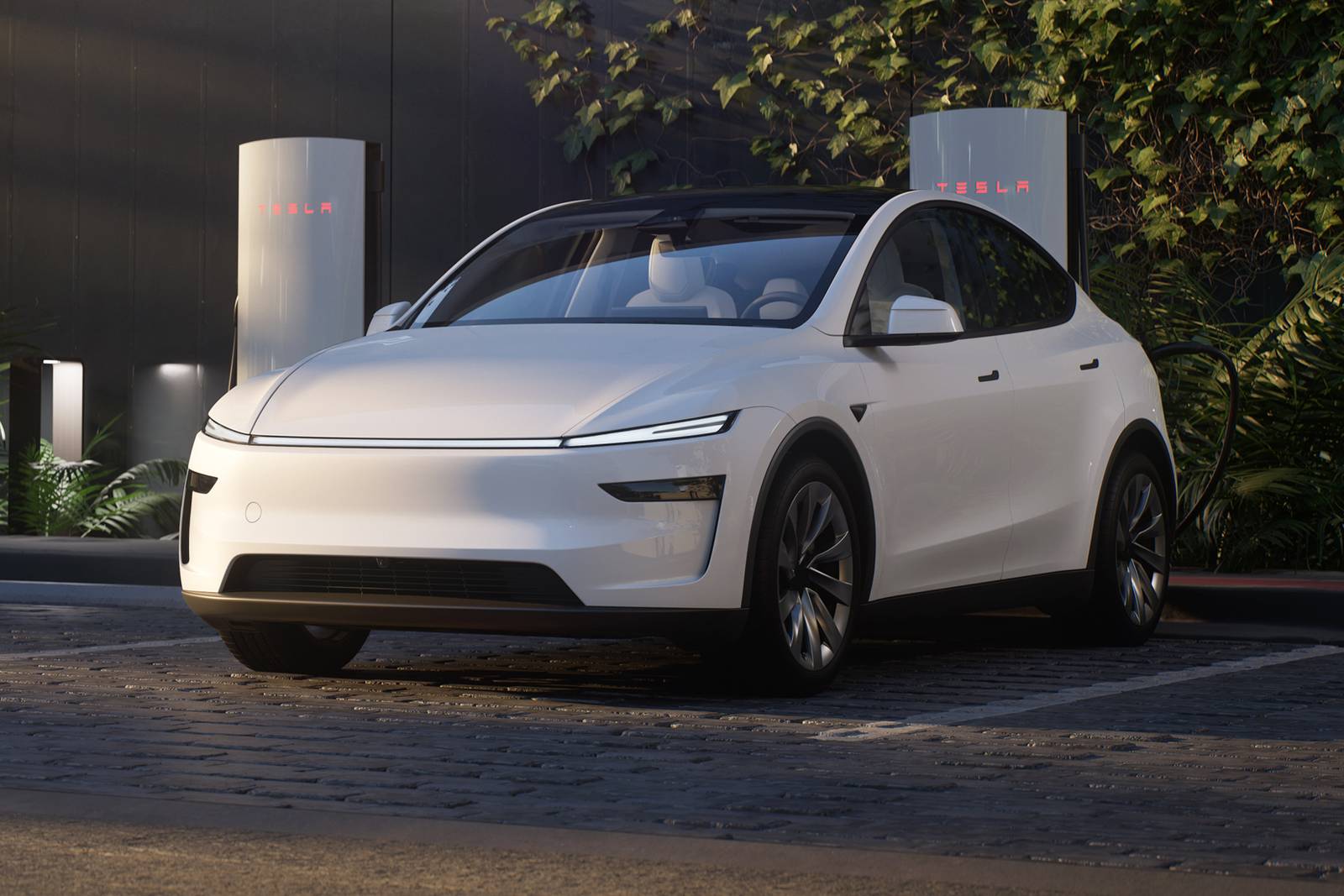
The most immediate change in the latest Model 3 is its exterior silhouette. Tesla engineers focused heavily on reducing the coefficient of drag to 0.219, making it the most aerodynamic car in the company’s lineup. This was achieved through slimmer headlight housings, a revised front bumper, and a more streamlined rear end. From a technical perspective, these changes serve a critical purpose: increasing range without increasing battery size. By reducing wind resistance, the vehicle requires less energy to maintain high speeds, directly translating to improved watt-hours per mile.
Furthermore, the latest Model 3 introduces significant hardware upgrades aimed at cabin comfort. The inclusion of 360-degree acoustic glass—meaning all windows, not just the windshield—dramatically lowers the noise floor within the cabin. This is complemented by upgraded suspension components, including frequency-selective damping, which provides a smoother ride quality that historically was reserved for the more expensive Model S.
Interior Tech and Minimalist Interface
The interior of the latest Model 3 pushes Tesla’s minimalist philosophy even further. One of the most talked-about technical shifts is the removal of traditional steering column stalks. Gear selection is now handled through the central touchscreen or via “Auto Shift out of Park,” an AI-driven feature that predicts the intended direction of travel based on surroundings. Turn signals and wipers are now integrated into haptic buttons on the steering wheel.
For rear-seat passengers, a new 8-inch touchscreen has been integrated into the back of the center console. This display allows for independent climate control and entertainment streaming, essentially turning the car into a mobile multi-zone media hub. This integration highlights Tesla’s transition toward treating the vehicle as a “computer on wheels” where every passenger has access to the digital ecosystem.
Range Optimization and Efficiency
The latest Model 3 utilizes refined battery chemistry and thermal management. The introduction of an improved heat pump system—originally pioneered in the Model Y—ensures that the vehicle maintains high efficiency even in sub-zero temperatures. This system scavenges waste heat from the powertrain and battery to warm the cabin, minimizing the energy draw on the high-voltage battery and preserving range during winter months.
The Cybertruck: Redefining Automotive Engineering
If the Model 3 represents the perfection of the sedan, the Cybertruck represents a total departure from a century of automotive norms. As the newest model in Tesla’s production lineup, it serves as a rolling laboratory for several “first-in-industry” technologies that will likely trickle down to future mass-market vehicles.
The Exoskeleton and Material Science
Unlike traditional body-on-frame trucks, the Cybertruck utilizes a structural exoskeleton made from a proprietary Ultra-Hard Stainless-Steel alloy. This material was developed to be “stress-skin,” meaning the exterior of the vehicle provides a significant portion of its structural integrity. This allows for a reduction in internal bracing, potentially lowering the vehicle’s weight despite its massive size. The glass is also a proprietary “Armor Glass,” an integrated laminate designed to absorb and redirect impact energy.
48-Volt Architecture and Steer-by-Wire
One of the most profound technical achievements in the Cybertruck is the transition from a 12-volt to a 48-volt electrical architecture. For decades, the automotive industry has been stuck on 12-volt systems, which require thick, heavy wiring harnesses to carry the necessary current for modern electronics. By quadrupling the voltage, Tesla has been able to reduce the current—and thus the gauge of the wires—by approximately 70%. This significantly reduces the weight of the vehicle and simplifies the manufacturing process.
Coupled with the 48-volt system is a fully electronic “Steer-by-Wire” system. There is no physical steering column connecting the yoke to the wheels. Instead, redundant sensors detect the driver’s input and send digital signals to electromechanical actuators on the front and rear axles. This allows for variable steering ratios; at low speeds, a small turn of the wheel provides maximum turn angle (ideal for parking), while at high speeds, the sensitivity decreases to provide stability. The inclusion of four-wheel steering makes the Cybertruck’s turning radius tighter than that of many compact sedans.
Powering the Grid: Bidirectional Charging
The Cybertruck is the first Tesla model to officially support bidirectional charging, marketed as “Powershare.” This technology allows the vehicle’s massive battery pack to export power to external devices, or even power an entire home during an outage. With a continuous power output of up to 9.6 kW, the Cybertruck functions as a mobile Powerwall, bridging the gap between transportation and residential energy storage.
Full Self-Driving (FSD) and the Neural Network Revolution
While hardware distinguishes the models, the software defines the experience. The latest Tesla vehicles are shipping with Hardware 4 (HW4), a new suite of sensors and processing units designed specifically to run the next generation of artificial intelligence.
Hardware 4 (HW4) and AI Inference
HW4 features high-resolution cameras with increased dynamic range, allowing the car to “see” further and more clearly in challenging lighting conditions, such as driving directly into the sun or in heavy rain. The FSD computer itself has seen a significant boost in “teraflops” (trillions of operations per second), providing the raw computational power required to process visual data in real-time.
The latest software iteration, FSD v12, marks a paradigm shift in how the vehicle navigates. Previous versions relied on millions of lines of “C++” code—essentially rules written by engineers (e.g., “if you see a stop sign, slow down”). FSD v12 replaces much of this with end-to-end neural networks. The car has essentially “learned” how to drive by watching millions of hours of video footage from the global Tesla fleet. This results in much more human-like behavior, such as smoother braking and more intuitive lane positioning.
Vision-Based Navigation vs. Traditional Sensors
Tesla has doubled down on its “Tesla Vision” approach, removing ultrasonic sensors and radar from the latest models. The company’s engineers argue that since the road system is designed for human eyes and biological neural networks, a sophisticated artificial vision system is the most robust way to solve autonomy. By using high-speed cameras and spatial intelligence, the latest models can create a 3D reconstruction of their environment with centimeter-level accuracy, including depth perception and occupancy mapping.
The Future of the Tesla Ecosystem: Robotics and the Unboxed Process
The latest models are not just products; they are the result of a new manufacturing philosophy known as the “Unboxed Process.” This method involves building different sections of the car simultaneously in separate sub-assemblies and only bringing them together at the final stage. This reduces the factory footprint and improves the efficiency of the assembly line.
Optimus and Shared AI Architecture
It is impossible to discuss the latest tech at Tesla without mentioning the Optimus humanoid robot. While not a vehicle, Optimus shares the same “brain” as the latest Tesla cars. The vision systems, the FSD computer, and the battery management systems used in the Model 3 and Cybertruck are being adapted for the robot. This synergy means that every improvement in automotive AI accelerates the development of general-purpose robotics, and vice versa.

Next-Generation Platforms
Looking ahead, the technology found in the latest Model 3 and Cybertruck is setting the stage for the upcoming “Robotaxi” platform. This vehicle is expected to eliminate the steering wheel and pedals entirely, relying solely on the vision-based AI matured in today’s models. The focus on cost reduction through the 48-volt architecture and the Unboxed Process suggests that Tesla’s next technical milestone will be a high-volume, low-cost platform that brings premium EV technology to a much broader demographic.
In conclusion, the latest Tesla models are defined by a relentless pursuit of efficiency and the bold adoption of unproven (at scale) technologies. From the aerodynamic refinements and cabin quietness of the new Model 3 to the 48-volt revolutionary architecture of the Cybertruck, Tesla continues to move the goalposts of what is possible in the tech space. As the company transitions from a car manufacturer to an AI and robotics powerhouse, the “latest model” will increasingly be defined by the intelligence of its software as much as the durability of its steel.
aViewFromTheCave is a participant in the Amazon Services LLC Associates Program, an affiliate advertising program designed to provide a means for sites to earn advertising fees by advertising and linking to Amazon.com. Amazon, the Amazon logo, AmazonSupply, and the AmazonSupply logo are trademarks of Amazon.com, Inc. or its affiliates. As an Amazon Associate we earn affiliate commissions from qualifying purchases.