
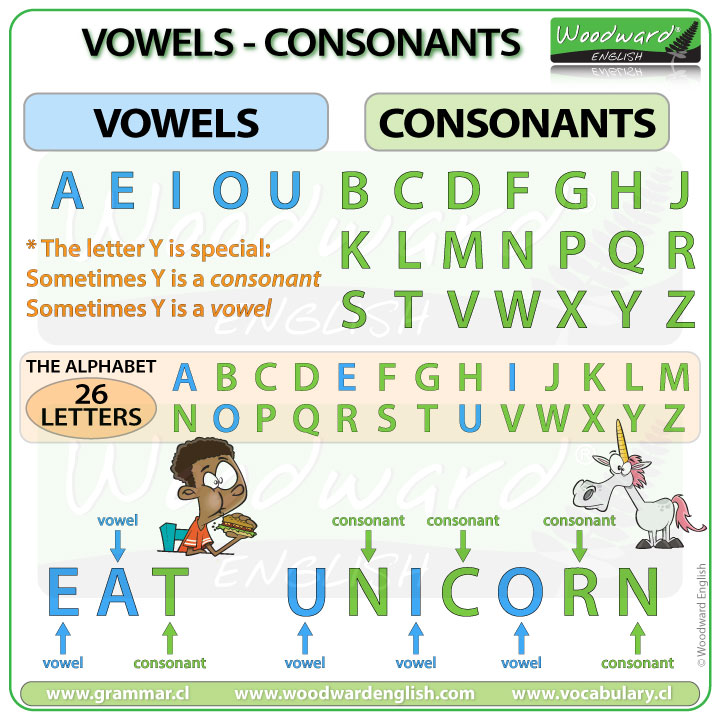
The question of which vowel stands at the end of the alphabet seems, at first glance, to be a matter of elementary school grammar. In the standard English lexicon, the vowels are taught as A, E, I, O, U, and sometimes Y. From a strictly sequential perspective, U is the last of the core vowels, while Y occupies a unique, hybrid space at the tail end of the Latin script. However, in the realm of technology, software development, and natural language processing (NLP), the answer is far from a simple character placement.

To a machine, a “vowel” is not an inherent concept; it is a data point governed by character encoding standards, algorithmic logic, and phonetic processing. As we transition deeper into the era of artificial intelligence and globalized software systems, understanding the “last vowel” requires an exploration of how digital architecture interprets the building blocks of human language. This technical deep dive examines the intersection of linguistics and technology, focusing on character sets, programming logic, and the future of automated speech.
Character Encoding and the Digital Hierarchy of the Alphabet
The way a computer perceives the alphabet is rooted in character encoding. In the early days of computing, the American Standard Code for Information Interchange (ASCII) defined the digital representation of the English alphabet. Within this framework, every letter was assigned a numerical value.
From ASCII to Unicode: Standardizing the Final Vowel
In the ASCII system, the uppercase ‘U’ is represented by decimal 85 (hexadecimal 55), and ‘Y’ is represented by decimal 89 (hexadecimal 59). In this linear, binary-driven world, ‘Y’ is technically the final character that functions as a vowel. However, ASCII was limited to 128 characters, which proved insufficient as technology became a global phenomenon.
The shift to Unicode, and specifically UTF-8, transformed the “alphabet” from a static list of 26 letters into a massive database of over 140,000 characters. In this context, the “last vowel” depends entirely on the character set (locale) being utilized. For instance, in the Swedish alphabet, the vowels extend beyond ‘U’ and ‘Y’ to include ‘Å’, ‘Ä’, and ‘Ö’. In the context of globalized software engineering, a developer must account for these extended vowels to ensure that search algorithms, sort functions, and text-to-speech engines operate correctly across different linguistic landscapes.
The Logic of String Manipulation and Vowel Identification
In software development, identifying vowels is a common task in string manipulation and data validation. When a developer writes a regular expression (Regex) to filter out vowels, the “last vowel” is defined by the developer’s parameters.
A standard search for vowels might look like this: /[aeiou]/gi. In this logic, ‘U’ is the final vowel. However, if the software is designed for advanced phonetic analysis, the developer might use /[aeiouy]/gi. The inclusion of ‘Y’ as the “sometimes” vowel introduces a layer of complexity into the algorithm. Modern software must determine the function of ‘Y’ based on its position in a string (e.g., ‘fly’ vs. ‘yellow’). This conditional logic is a cornerstone of digital linguistics, proving that the “last” vowel is often a variable rather than a constant.
The “Sometimes Y” Paradox in Natural Language Processing (NLP)
Natural Language Processing (NLP) is the branch of AI that allows computers to understand, interpret, and generate human language. In the world of NLP, the distinction between a consonant and a vowel is vital for tasks like tokenization, lemmatization, and sentiment analysis.
Training AI to Recognize Phonetic Context
For a Large Language Model (LLM) or a voice assistant, the “last vowel” isn’t just a character; it is a sound (a phoneme). When an AI processes the word “sky,” it identifies ‘Y’ as the vowel. When it processes “yesterday,” ‘Y’ is treated as a consonant. This is handled through deep learning models that have been trained on massive datasets to recognize the contextual role of characters.
The challenge for tech designers is that “Y” acts as a linguistic outlier. In algorithmic terms, ‘Y’ is often treated as a “semi-vowel” or a “glide.” If an AI is tasked with syllable counting—a common requirement in automated poetry generation or accessibility tools—it must apply a set of heuristic rules to decide if ‘Y’ should be treated as the terminal vowel. The complexity of this task highlights the gap between simple character encoding and sophisticated linguistic intelligence.
Tokenization and Search Engine Optimization (SEO)
Search engines like Google use complex algorithms to understand the intent behind a query. When a user searches for “vowels in the alphabet,” the engine does not just look for literal character matches. It uses tokenization to break down the query into its most basic meaningful units.
In the context of SEO and digital indexing, the way vowels are handled can affect how content is ranked. While vowels are generally considered “stop words” or insignificant when they stand alone, their placement at the end of words influences the “stemming” process. For example, if a search algorithm is looking for the root of a word, the presence of a terminal vowel like ‘Y’ or ‘E’ can change how the word is categorized. Understanding the technical nuances of these characters allows developers to build more efficient indexing systems that accurately reflect human speech patterns.
UX Design and the Visual Weight of the Final Vowel
Beyond the backend logic, the vowels at the end of the alphabet present unique challenges for User Experience (UX) and User Interface (UI) design. The visual representation of letters—typography—is a fundamental aspect of digital branding and readability.
Readability and Typography in Digital Interfaces
In digital typography, the letters ‘U’ and ‘Y’ possess very different visual properties. ‘U’ is a stable, symmetrical character that fits neatly within the “x-height” of most fonts. ‘Y’, however, is a “descender”—a letter with a tail that drops below the baseline in lowercase form (‘y’).
From a UX perspective, this makes ‘Y’ a critical character for line spacing and vertical rhythm. If a mobile app’s interface is too cramped, the descender of the ‘y’ can clash with the letters on the line below, hindering readability. Designers must use CSS (Cascading Style Sheets) properties like line-height and padding to ensure that these “last” vowels do not disrupt the visual flow of the text. This is especially important on high-resolution displays where every pixel of a font’s weight and curve is visible to the user.
Accessibility Standards and Screen Readers
For users who are visually impaired, screen readers are the primary method of interacting with digital content. These tools translate text into synthesized speech. The “last vowel” plays a disproportionate role in how these tools pronounce words.
Standardized accessibility protocols, such as WCAG (Web Content Accessibility Guidelines), emphasize the importance of clear, unambiguous text. If a screen reader encounters a word with an ambiguous terminal vowel, the resulting audio output can be confusing. For instance, the difference between “entry” and “entree” is a single vowel change at the end, but the pronunciation shift is significant. Technical teams must ensure that their HTML is semantically correct so that assistive technologies can accurately interpret the phonetic nuances of every character.
The Future of Alphabetical Processing in the Era of Generative AI
As we move toward a future dominated by Generative AI and voice-first interfaces, our relationship with the alphabet is shifting from the visual to the auditory. The “last vowel” is no longer just a spot on a keyboard; it is a data point in a neural network.
The Rise of Phonetic Computing
Future operating systems may move away from traditional character-based input toward phonetic-based input. In such a system, the “alphabet” is replaced by a set of sounds. In this framework, the distinction between ‘U’ and ‘Y’ becomes even more blurred, as the machine focuses on the frequency and amplitude of the vocal output rather than the ASCII code.
This transition requires a massive leap in how we approach data storage and processing. Instead of storing words as strings of characters, we may store them as vectors in a high-dimensional space. In this scenario, the “last vowel” is a specific coordinate in a cluster of sounds, representing the final breath or inflection of a spoken word.
Conclusion: The Technical Reality of the Alphabet
So, what is the last vowel in the alphabet? From a technical perspective, the answer is “it depends.”
If you are a developer working with basic ASCII, it is ‘U’. If you are an NLP engineer or a linguist working with English datasets, it is likely ‘Y’. If you are a global software architect working with Unicode, it could be an ‘Ö’ or an ‘Ω’ depending on the language of the user.
In the tech industry, we must look beyond the surface level of the question. The alphabet is not a static list; it is a dynamic system of symbols that we use to interface with the machines we have built. Whether it is ‘U’ or ‘Y’, the “last vowel” serves as a reminder of the complexity of translating human thought into binary code. As technology continues to evolve, our definition of these characters will only become more nuanced, reflecting the intricate dance between human language and digital innovation.
aViewFromTheCave is a participant in the Amazon Services LLC Associates Program, an affiliate advertising program designed to provide a means for sites to earn advertising fees by advertising and linking to Amazon.com. Amazon, the Amazon logo, AmazonSupply, and the AmazonSupply logo are trademarks of Amazon.com, Inc. or its affiliates. As an Amazon Associate we earn affiliate commissions from qualifying purchases.