
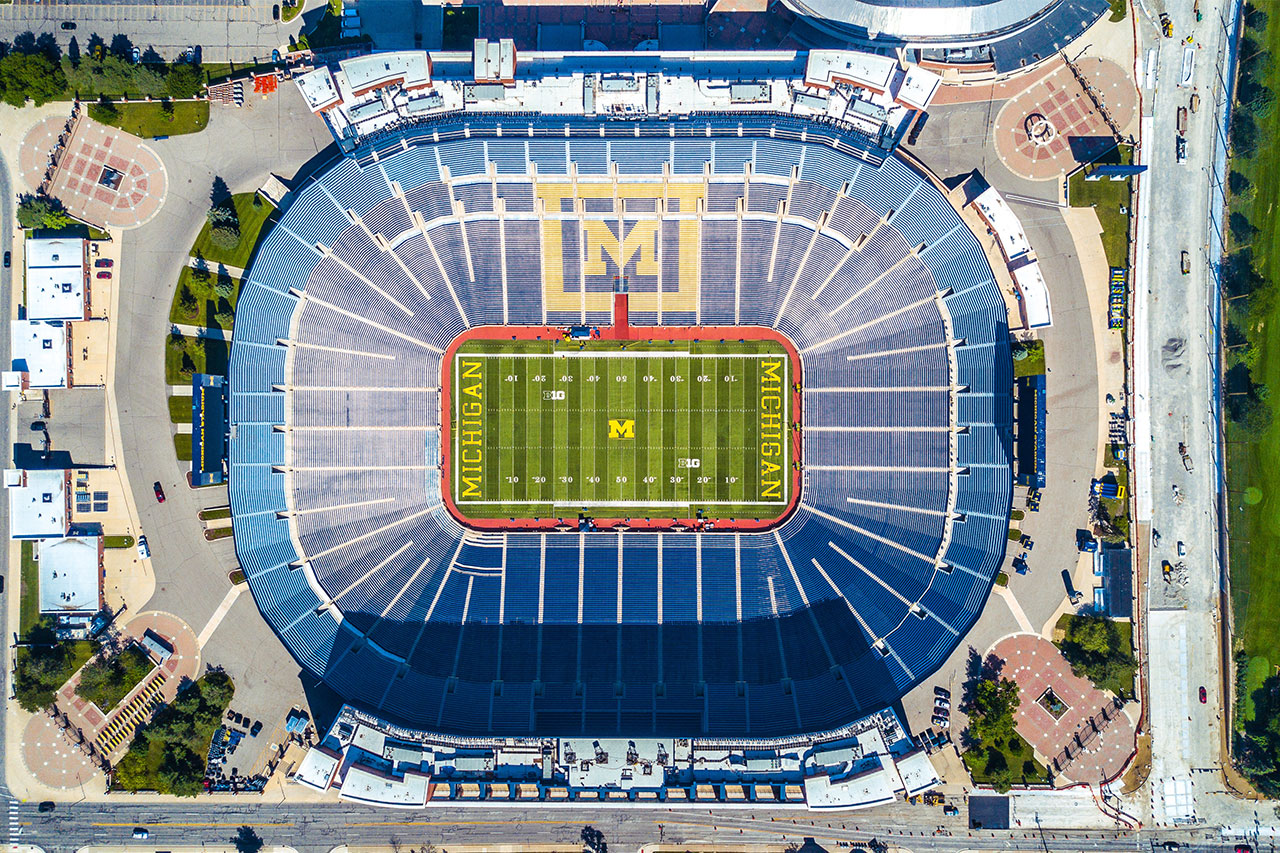
The question “What is the largest stadium in the US?” often elicits a quick, factual answer: Michigan Stadium, with an official capacity of 107,601 spectators. Known affectionately as “The Big House,” this iconic venue in Ann Arbor stands as a testament to the enduring appeal of collegiate sports and large-scale public gatherings. However, beyond the impressive number and the roar of the crowd, the existence and operation of such a colossal structure represent a monumental financial undertaking, a complex web of investments, revenue streams, and economic impacts that stretch far beyond the playing field.
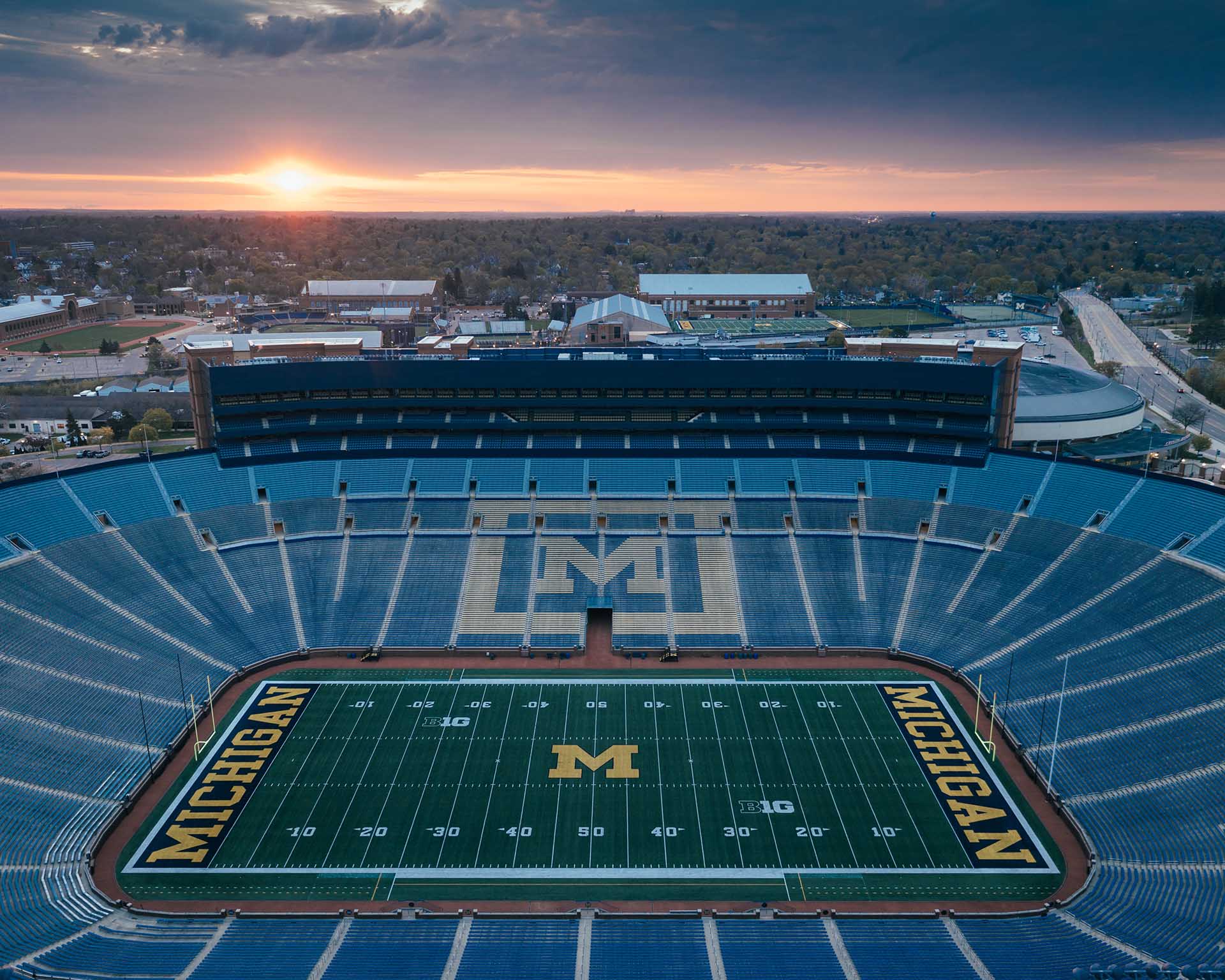
In an era where sports, entertainment, and urban development increasingly intersect, understanding the financial architecture behind mega-stadiums is crucial. These aren’t merely concrete and steel behemoths; they are sophisticated business enterprises, urban regeneration catalysts, and significant drivers of local and regional economies. From the initial multi-billion-dollar investment to their daily operational costs and their ripple effect on surrounding communities, large stadiums are powerful financial instruments, demanding astute business acumen and strategic foresight. This exploration delves into the money aspect of America’s largest stadiums, dissecting the economics that underpin their existence and their profound influence on the financial landscape.
The Colossal Investment: Financing Mega-Stadiums
Building or significantly renovating a stadium with the capacity and modern amenities expected today is an astronomical financial endeavor. The costs frequently soar into the hundreds of millions, often exceeding a billion dollars, necessitating intricate financing strategies involving a blend of public, private, and hybrid funding models.
Initial Construction Costs: Billions at Stake
The sheer scale of a venue like Michigan Stadium, or newer colossal structures built for professional sports, translates directly into astronomical construction costs. These expenses cover not just the basic structure but also advanced infrastructure, cutting-edge technology, luxurious suites, extensive concessions, and intricate environmental controls. For instance, the recent construction of NFL stadiums has seen price tags routinely exceeding $1.5 billion, with some approaching $5 billion. These figures dwarf previous generations of sports venues, reflecting not only inflation but also a dramatic increase in the scope and complexity of modern stadium design.
Financing these mega-projects is a delicate dance. Public funding, often through municipal bonds or direct subsidies, is frequently justified by the promise of economic development, job creation, and enhanced civic pride. However, this often sparks vigorous debate about the appropriate use of taxpayer money versus other public services. Private funding typically comes from team owners, league contributions, and lucrative naming rights deals. Hybrid models, combining public infrastructure investment with private operational funding, attempt to balance the financial burden and risk. The choice of funding mechanism significantly impacts the long-term financial health of the stadium and its beneficiaries, dictating who profits and who bears the risk.
Ongoing Maintenance and Upgrades: Perpetual Capital Expenditures
Once built, the financial commitments do not end. A stadium, particularly one hosting hundreds of thousands of people annually, requires continuous, significant capital expenditure for maintenance, repairs, and technological upgrades. Unlike a typical commercial building, stadiums face intense wear and tear from massive crowds, frequent events, and exposure to the elements.
Annual maintenance budgets can easily run into the tens of millions, covering everything from HVAC systems, plumbing, and electrical infrastructure to seating repairs, turf management, and structural integrity checks. Beyond routine upkeep, stadiums must continually innovate to remain competitive and enhance the fan experience. This includes investing in state-of-the-art video boards, high-speed Wi-Fi, mobile ticketing and payment systems, and enhanced security technologies. These upgrades, often costing hundreds of millions over a stadium’s lifespan, are not optional luxuries but rather necessary investments to maintain revenue streams, attract top-tier events, and meet evolving consumer expectations. Without ongoing financial commitment to modernization, even the largest and most iconic stadiums risk becoming obsolete, diminishing their revenue potential and economic impact.
Stadiums as Economic Engines: Revenue Streams and Local Impact
Beyond their primary function as event venues, large stadiums are powerful economic engines, generating diverse revenue streams for their owners and creating a significant ripple effect throughout local economies. Understanding these financial flows is key to grasping their true value.
Diversified Revenue Models: Beyond Ticket Sales
While ticket sales remain a fundamental income source, modern stadiums have sophisticated revenue models that extend far beyond the gate. Naming rights deals, for instance, can be worth hundreds of millions of dollars over the life of a contract, providing a consistent, high-value revenue stream. Premium seating, including luxury suites and club seats, offers significantly higher margins than general admission, catering to corporate clients and affluent fans seeking exclusive experiences.
Concessions, merchandise, and parking generate substantial income, often managed by specialized third-party operators who share revenue with the stadium or team. Furthermore, multi-purpose stadiums are designed to host a wide array of events beyond their primary sport – concerts, conventions, trade shows, motorsports, and even unique private events. Each of these events brings in additional rental fees, sponsorship opportunities, and ancillary spending, transforming the stadium into a year-round entertainment complex rather than a seasonal sports venue. This diversification insulates the stadium from reliance on a single team’s performance or a specific sport’s popularity, ensuring a more stable and robust financial outlook.
Ripple Effects: Job Creation and Local Business Growth
The economic impact of a major stadium extends well beyond its gates, creating a significant ripple effect across the local economy. Construction phases alone can generate thousands of temporary jobs, from engineers and architects to construction workers and material suppliers, injecting substantial wages into the local economy. Once operational, a large stadium creates hundreds, if not thousands, of permanent and part-time jobs across various sectors: event management, security, catering, ticketing, maintenance, and administrative roles.
Beyond direct employment, stadiums act as magnets for ancillary businesses. Hotels, restaurants, bars, retail shops, and transportation services all see increased demand on event days, benefiting from the influx of fans and visitors. Property values in the vicinity of successful stadiums can appreciate, and urban redevelopment projects often cluster around new venues, transforming dormant areas into vibrant commercial and residential districts. This broader economic stimulation, encompassing direct, indirect, and induced impacts, is a key argument made by proponents of public funding for stadium projects, framing them as essential catalysts for urban growth and prosperity.
The Elusive ROI: Measuring Public Investment vs. Economic Benefit
Despite the undeniable economic activity generated by stadiums, the return on investment (ROI), particularly for public funds, remains a subject of intense debate among economists and city planners. While proponents highlight job creation and increased tax revenues from sales and tourism, critics often point to “leakage” – money spent by local residents that would have been spent elsewhere in the local economy anyway – and the displacement of other potential investments.
Studies on the net economic impact of stadiums funded heavily by public dollars often yield mixed results. Some suggest that the actual net benefit, after accounting for opportunity costs and the displacement effect, is modest or even negative. The direct financial returns to the public entity (e.g., through increased tax revenue) may not always fully offset the initial investment and ongoing subsidies. Therefore, assessing the true ROI requires a comprehensive and long-term analysis that considers all financial inputs and outputs, as well as intangible benefits like civic pride and increased visibility for the city, which are harder to quantify but nonetheless valuable. This ongoing discussion underscores the complexity of valuing these colossal investments from a purely financial perspective.
The Business of Capacity: Why Size Matters Financially
The sheer capacity of a stadium, such as Michigan Stadium’s 107,601 seats, is not merely an arbitrary number but a strategic financial decision. Size dictates potential revenue, event scalability, and the stadium’s competitive standing in the lucrative world of large-scale entertainment.
Maximizing Fan Experience and Revenue Potential
Larger stadiums, by definition, can accommodate more spectators, directly translating into higher potential ticket sales revenue for any given event. This fundamental principle underpins the financial logic of “The Big House” and similar mega-venues. More fans mean more opportunities for concession sales, merchandise purchases, and parking revenue. Furthermore, modern stadiums are designed to enhance the fan experience, with comfortable seating, diverse food options, interactive displays, and robust digital connectivity. Investing in these amenities, while costly, is seen as crucial to maximizing attendance and encouraging repeat visits, thereby increasing the per-fan spending and overall revenue.
The layout and design of a large stadium also allow for a wider array of premium seating options. Luxury suites, club seats, and VIP areas command significantly higher prices and often come with multi-year contracts, providing stable and predictable high-margin revenue. These exclusive experiences cater to a corporate clientele and affluent individuals, significantly boosting the stadium’s overall profitability beyond what standard ticket sales could achieve. Thus, capacity isn’t just about fitting more people; it’s about optimizing the revenue potential across a stratified pricing structure and offering diverse experiences to a broad audience.
Scaling for Marquee Events: From Collegiate Rivalries to Super Bowls
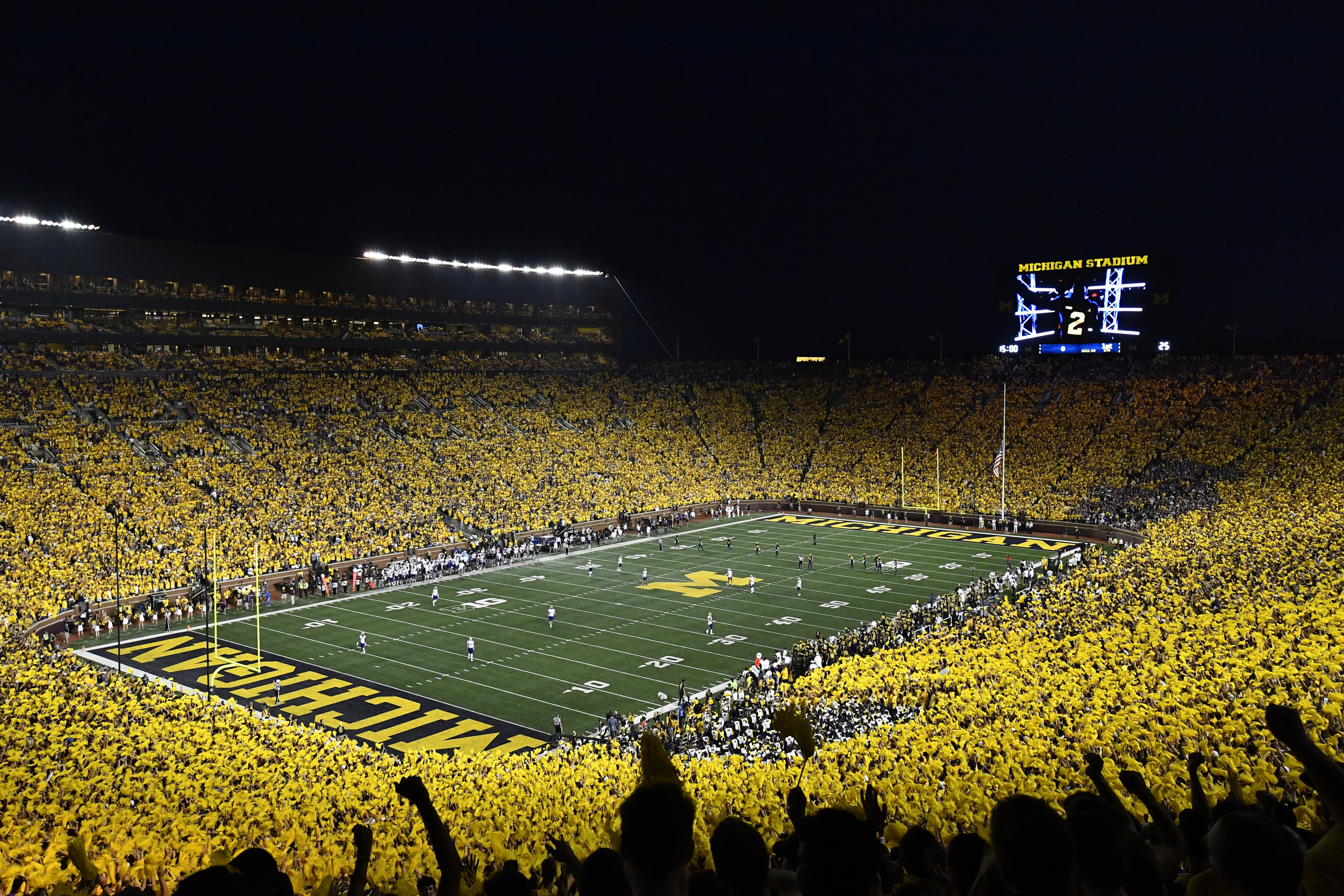
One of the most significant financial advantages of a large stadium is its ability to host marquee events that smaller venues simply cannot accommodate. For collegiate venues like Michigan Stadium, its immense size allows it to host some of the most anticipated rivalries in college football, drawing national attention and maximizing gate receipts. For professional stadiums, this means being eligible to bid for events like the Super Bowl, NCAA Final Four tournaments, or major international soccer matches.
Hosting such prestigious events brings an enormous economic windfall to the host city and, by extension, the stadium. Beyond the direct revenue from event fees and increased concession sales, these events attract tens or even hundreds of thousands of out-of-town visitors, generating significant tourism revenue for hotels, restaurants, and local attractions. They also provide invaluable global media exposure, elevating the city’s profile and potentially attracting future investments and tourism. The ability to scale up for these high-profile, high-revenue events is a critical component of a large stadium’s financial strategy and a key justification for its colossal size and initial investment.
The Sweet Spot: Balancing Capacity with Demand and Cost
While bigger often seems better from a revenue perspective, there is a “sweet spot” in stadium capacity. Overbuilding can lead to empty seats, which not only looks bad on television but also signals a miscalculation of demand, potentially diminishing the fan experience and morale. An excessive capacity that is rarely filled means that a significant portion of the stadium’s construction and maintenance costs are not generating their potential return.
Conversely, a stadium that is too small for its market or the events it aims to host represents missed revenue opportunities. Finding the optimal capacity requires careful market research, analysis of fan demographics, and projection of future demand. It involves balancing the desire for maximum revenue potential with the risk of underutilization and the associated operational costs. The decision to build a stadium of Michigan’s size decades ago was predicated on a deeply entrenched football culture and a sustained, fervent demand, a gamble that has demonstrably paid off over time. Modern stadium development employs sophisticated financial modeling to strike this delicate balance, ensuring that the investment aligns with long-term profitability and community needs.
Future-Proofing Stadium Investments: Technology and Sustainability
As financial assets, stadiums must evolve to remain competitive and profitable. Future-proofing these massive investments involves strategic deployment of technology and a commitment to sustainable practices, both of which have significant long-term financial implications.
Integrating Smart Technology for Operational Efficiency and Fan Engagement
The digital age has transformed the stadium experience, making technology integration not just an amenity but a financial imperative. Investing in smart stadium technology, such as robust Wi-Fi networks, 5G connectivity, mobile ticketing and payment systems, and interactive apps, enhances fan engagement and streamlines operations. For instance, cashless systems speed up concession lines, increasing transaction volume and revenue. Personalized fan apps can offer tailored promotions, navigation, and even real-time replays, enriching the in-venue experience and encouraging higher spending.
Beyond the fan experience, technology drives operational efficiency, leading to significant cost savings. Smart building management systems can optimize energy consumption, predict maintenance needs, and manage security more effectively. Data analytics tools gather insights into fan behavior, allowing stadium operators to refine pricing strategies, target marketing efforts, and improve inventory management. These technological investments, while initially expensive, yield long-term financial benefits by boosting revenue, reducing operational costs, and maintaining the stadium’s competitive edge in a rapidly evolving entertainment landscape.
Sustainable Design and Operations: Long-Term Financial and Environmental Gains
Sustainability is no longer just an ethical choice but a smart financial strategy for large stadiums. Implementing green building practices and sustainable operational procedures can lead to substantial long-term cost reductions and enhanced brand reputation. This includes designing for energy efficiency with LED lighting, advanced HVAC systems, and solar panel installations that can significantly reduce utility bills. Water conservation measures, such as low-flow fixtures and rainwater harvesting, similarly cut down on operational expenses.
Waste reduction programs, comprehensive recycling initiatives, and composting efforts not only minimize environmental impact but also lower waste disposal costs. Furthermore, many corporations and consumers are increasingly valuing sustainability, making a stadium’s green credentials an attractive selling point for sponsors and attendees. Investing in sustainability upfront can lead to substantial operational savings over the decades-long lifespan of a stadium, contributing positively to its financial bottom line while also demonstrating corporate social responsibility.
The Evolving Landscape: Adapting to New Fan Expectations and Revenue Models
The entertainment industry is in constant flux, and stadiums must adapt to survive and thrive financially. This means continuously monitoring evolving fan expectations, technological advancements, and new revenue opportunities. The rise of esports, for example, presents a new avenue for stadium utilization and revenue generation, with some venues beginning to host competitive gaming events. Multi-purpose venues are increasingly designed with flexibility in mind, allowing for quick transformations to accommodate diverse event types, maximizing their utilization throughout the year.
The future of stadium finance also involves leveraging digital platforms and media rights more effectively. Content creation, virtual reality experiences, and global streaming rights are becoming increasingly valuable assets. Successful stadiums will be those that can innovate beyond traditional event hosting, exploring new business models, partnering with technology companies, and continuously investing in experiences that resonate with a new generation of fans. This forward-looking approach to investment and adaptation is crucial for ensuring the sustained financial viability and profitability of the US’s largest stadiums in the decades to come.
In conclusion, while “The Big House” holds the title for the largest stadium in the US by capacity, its significance, and that of its professional counterparts, extends far beyond a simple number. These monumental structures are intricate financial ecosystems, demanding colossal investments, generating diverse revenue streams, and wielding immense economic influence. Understanding the financial strategies behind their construction, operation, and future-proofing reveals that stadiums are not just venues for sport and entertainment, but powerful engines driving economies, creating jobs, and shaping urban landscapes through a complex interplay of capital, commerce, and community.
aViewFromTheCave is a participant in the Amazon Services LLC Associates Program, an affiliate advertising program designed to provide a means for sites to earn advertising fees by advertising and linking to Amazon.com. Amazon, the Amazon logo, AmazonSupply, and the AmazonSupply logo are trademarks of Amazon.com, Inc. or its affiliates. As an Amazon Associate we earn affiliate commissions from qualifying purchases.