
Determining which institution holds the title of the “largest bank” is not as straightforward as it might seem. In the world of global finance, “large” can be measured by several different metrics, each telling a different story about power, stability, and influence. To understand the landscape of modern banking, one must look at two primary categories: total assets and market capitalization.
While a bank might hold the most cash and loans on its books, another might be valued more highly by investors on the stock market. This distinction is crucial for personal finance enthusiasts, business owners, and investors alike, as the size of a financial institution often dictates its technological capabilities, its “too big to fail” status, and its ability to facilitate massive international transactions.
Defining Greatness: The Metrics of Banking Scale
To accurately answer the question of which bank is the largest, we must first define the yardsticks used by economists and financial analysts.
Total Assets: The Standard Measure of Size
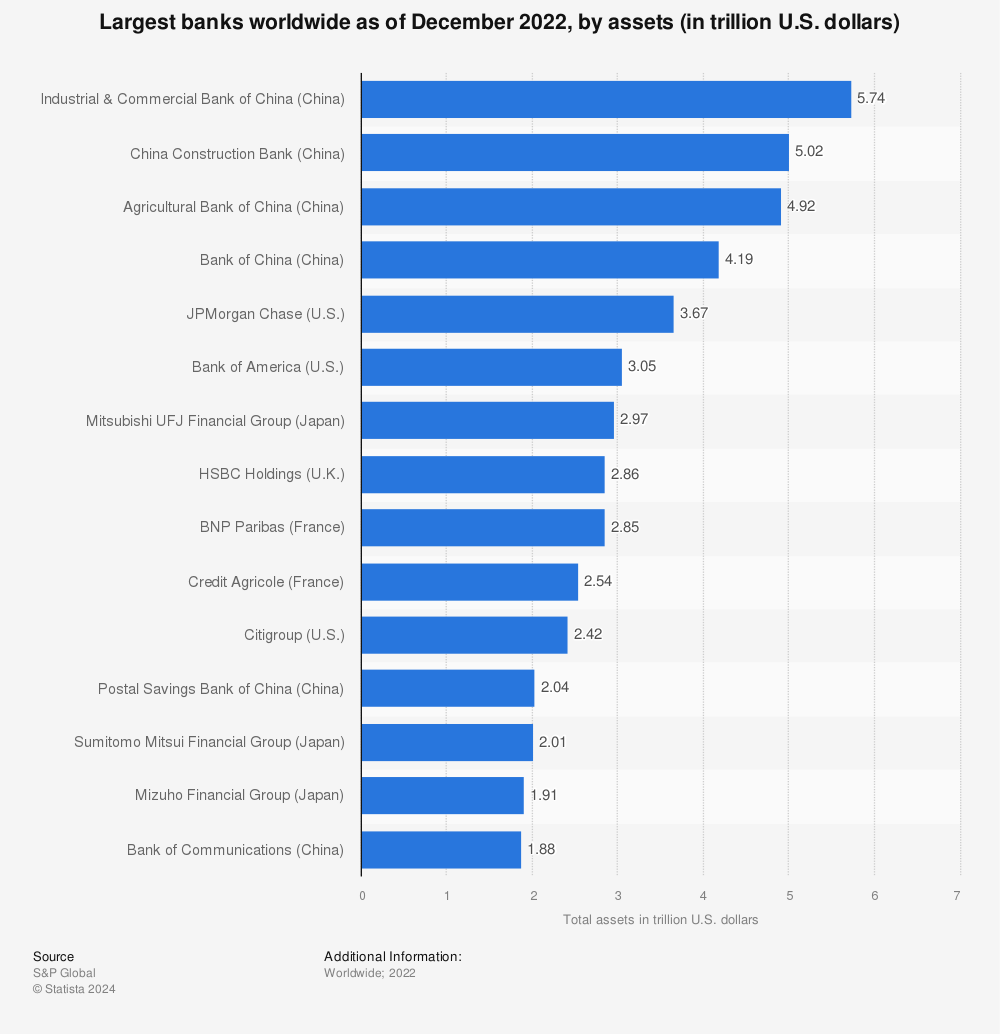
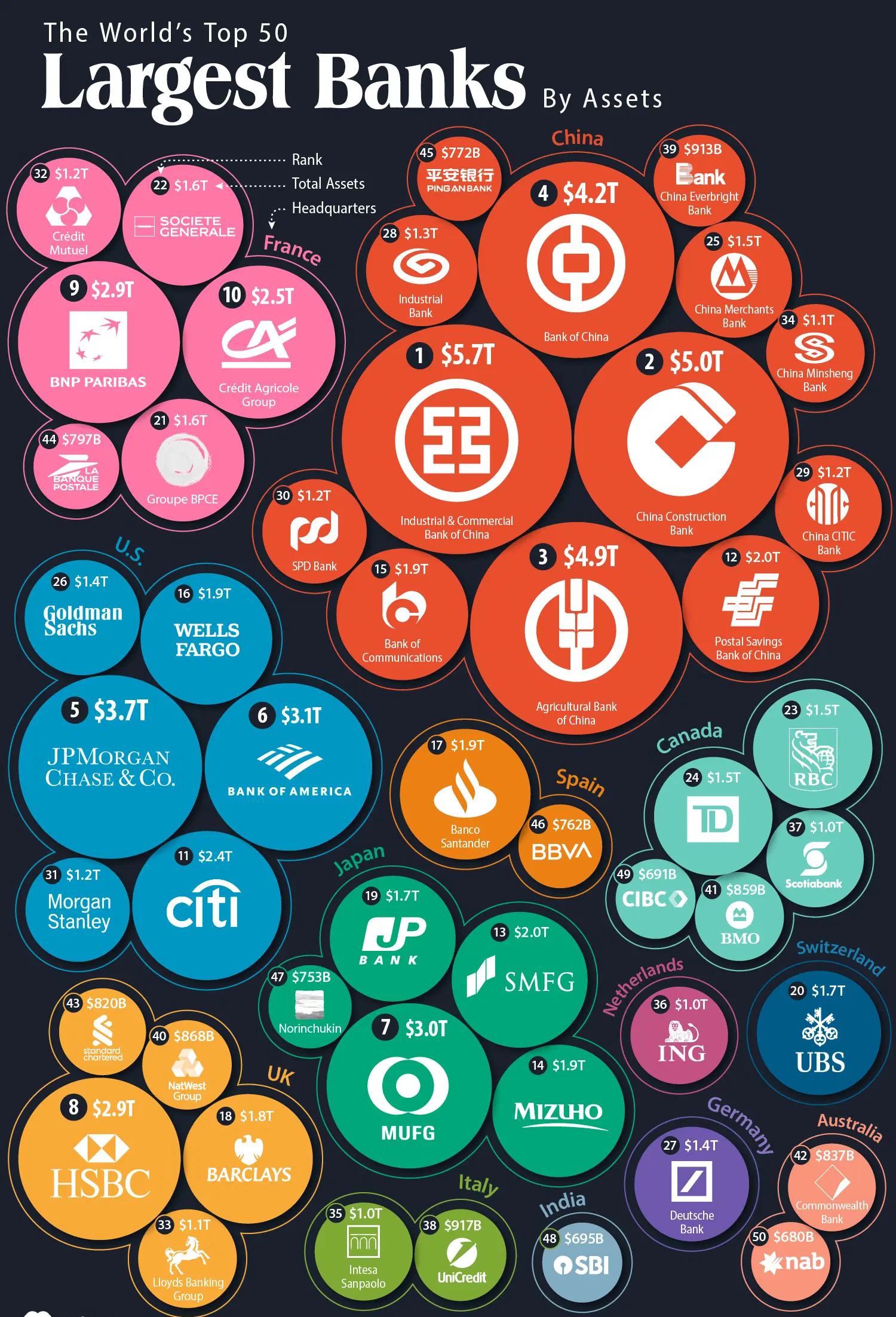
The most common way to rank banks is by their total assets. This includes everything the bank owns: cash, government securities, property, and, most importantly, the loans it has issued to consumers and businesses. When a bank has a high asset count, it indicates a massive footprint in the lending market. Currently, the list of the world’s largest banks by assets is dominated by Chinese institutions, which have seen meteoric growth over the last two decades.
Market Capitalization: The Investor’s Perspective
Market capitalization (market cap) represents the total value of a company’s shares as traded on the stock exchange. This metric reflects how much investors believe the bank is worth, factoring in its profitability, growth potential, and risk profile. A bank can have fewer assets than a competitor but a higher market cap if it is more efficient, more technologically advanced, or operates in a more stable regulatory environment. In this category, American banks, specifically JPMorgan Chase, frequently lead the world.
Assets Under Management (AUM)
While less commonly used to define the “largest bank,” AUM is a vital metric for institutions that focus on wealth management and investment banking. It represents the total market value of the investments that a person or entity handles on behalf of clients. For individuals looking into personal finance and high-level investing, a bank’s AUM can be a sign of its expertise in managing capital rather than just lending it.
The Global Asset Titans: The Reign of the Chinese “Big Four”
When looking strictly at the balance sheet, the largest banks in the world are currently located in China. The “Big Four” state-owned commercial banks have consistently occupied the top spots on global rankings for several years.
Industrial and Commercial Bank of China (ICBC)
By almost every asset-based metric, the Industrial and Commercial Bank of China (ICBC) is the largest bank in the world. With total assets exceeding $6 trillion, its scale is difficult to comprehend. ICBC functions as the backbone of the Chinese economy, providing the necessary capital for infrastructure, manufacturing, and international trade. For perspective, ICBC’s total assets are roughly equivalent to the entire GDP of Japan.
China Construction Bank (CCB)
Ranking second globally, China Construction Bank focuses heavily on corporate lending and credit for infrastructure projects. Originally established to manage government funds for construction and infrastructure development, it has evolved into a full-service commercial giant. Its massive asset base allows it to fund projects on a scale that few other institutions can match.
Agricultural Bank of China (ABC) and Bank of China (BoC)
The remaining members of the Big Four—Agricultural Bank of China and Bank of China—round out the top of the global list. While ABC historically focused on the country’s vast rural regions and agricultural development, it is now a diversified financial powerhouse. The Bank of China, the oldest of the four, is the most internationalized, handling the lion’s share of China’s foreign exchange and cross-border transactions.
The American Dominance: JPMorgan Chase and the Market Capitalization Crown
While Chinese banks lead in total assets, the United States remains the home of the world’s most valuable bank by market capitalization: JPMorgan Chase & Co.
The Power of JPMorgan Chase
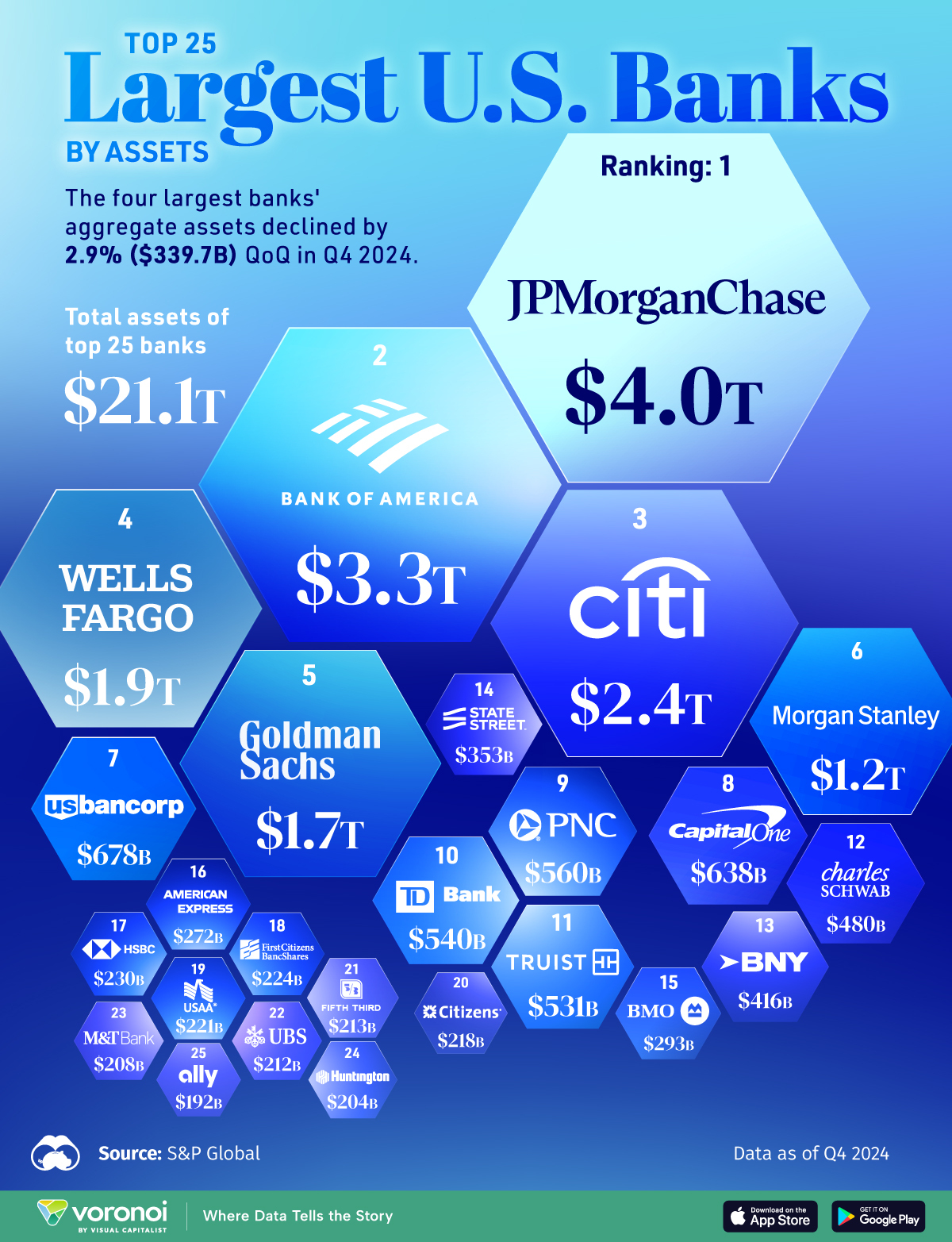
JPMorgan Chase is widely considered the most influential bank in the Western world. As of 2024, it holds the title of the largest bank in the United States by both assets and market cap. Led by Jamie Dimon, the bank has built what it calls a “fortress balance sheet,” designed to withstand extreme economic volatility.
JPMorgan’s dominance is not just about size; it is about diversification. It operates at the top of the food chain in retail banking, investment banking, asset management, and private banking. When the U.S. banking sector faces turmoil—such as the regional banking crisis of 2023—JPMorgan is often the institution called upon by regulators to provide stability, as seen with its acquisition of First Republic Bank.
Bank of America and the Retail Giant
Following JPMorgan in the U.S. rankings is Bank of America. With a massive footprint in consumer banking, it serves approximately 68 million consumer and small business clients. Bank of America has invested billions into digital banking, positioning itself as a leader in financial technology (Fintech) among the traditional “Big Four” U.S. banks, which also include Citigroup and Wells Fargo.
Why U.S. Banks Lead in Value
The reason U.S. banks often have higher market caps despite having fewer assets than their Chinese counterparts lies in profitability and transparency. U.S. banks generally operate with higher margins and are subject to rigorous stress testing and regulatory oversight that, while strict, provides a level of confidence to global investors. The American financial system’s depth and the dollar’s status as the world’s reserve currency give these institutions a unique competitive advantage.
The Strategic Advantage of Scale: What Size Means for You
Whether you are a retail customer, a small business owner, or an investor, the size of a bank has tangible effects on your financial life.
1. Stability and the “Too Big to Fail” Concept
Large banks are designated as Global Systemically Important Banks (G-SIBs). This means that regulators consider them so essential to the global economy that they cannot be allowed to collapse. For a personal finance depositor, this provides a layer of implicit security. These banks are subject to higher capital requirements, meaning they must keep more cash in reserve than smaller regional banks, making them theoretically more resilient during a recession.
2. Technological Infrastructure
The largest banks have the biggest budgets for research and development. In an era where mobile banking, AI-driven financial advice, and cybersecurity are paramount, scale matters. A bank like JPMorgan or Bank of America spends billions annually on technology, ensuring that their apps are seamless and their security protocols are state-of-the-art. For the tech-savvy consumer, a larger bank often provides a superior digital experience.
3. Global Reach for Business Finance
For businesses that operate internationally, size is a necessity. Large banks have branches in nearly every major global city and can facilitate currency exchange, international wire transfers, and cross-border lending with ease. A small local credit union cannot provide the “boots on the ground” support that a multinational giant like HSBC or Citigroup can offer to a growing corporation.
4. The Downsides of Magnitude
However, being the largest isn’t always a benefit for the customer. Massive banks often have more bureaucratic processes and less personalized service. Small businesses may find it harder to secure personalized loan terms at a global giant compared to a local community bank where the loan officer knows their history. Additionally, larger banks may offer lower interest rates on savings accounts because they do not need to compete as aggressively for deposits as smaller institutions.
The Future of Global Banking: Can Digital Banks Surpass the Giants?
The hierarchy of the world’s largest banks is currently being challenged by the rise of Fintech and “neobanks.” While institutions like ICBC and JPMorgan hold trillions in assets, the way people interact with money is shifting.
The Rise of Digital-First Institutions
In regions like South America and Europe, digital-only banks like Nubank or Revolut are gaining tens of millions of customers. While their asset bases are currently a fraction of the traditional giants, their growth rate is significantly higher. These companies focus on user experience, lower fees, and accessibility, targeting the younger demographic that prioritizes speed over physical branch locations.
The Threat of Decentralized Finance (DeFi)
Furthermore, the emergence of blockchain technology and decentralized finance presents a long-term challenge to the very structure of traditional banking. If individuals and businesses can lend, borrow, and transfer money without a centralized intermediary, the “size” of a bank’s balance sheet may become less relevant in the decades to come.
Conclusion: A Dual Leadership
In summary, the answer to “what is the largest bank” depends on your perspective. If you look at the raw power of the balance sheet and the ability to fund national economies, the Industrial and Commercial Bank of China (ICBC) stands alone at the top. If you look at investor confidence, profitability, and global influence in the private sector, JPMorgan Chase holds the crown.
For the average person managing their personal finance, the size of these giants serves as a reminder of the interconnectedness of the global economy. Whether through the app on your phone or the stability of the global markets, these financial titans play a silent but massive role in the movement of capital around the world. As the landscape evolves with new technology, the definition of a “large bank” may change, but the importance of these institutions in the global financial fabric remains undisputed.
aViewFromTheCave is a participant in the Amazon Services LLC Associates Program, an affiliate advertising program designed to provide a means for sites to earn advertising fees by advertising and linking to Amazon.com. Amazon, the Amazon logo, AmazonSupply, and the AmazonSupply logo are trademarks of Amazon.com, Inc. or its affiliates. As an Amazon Associate we earn affiliate commissions from qualifying purchases.