
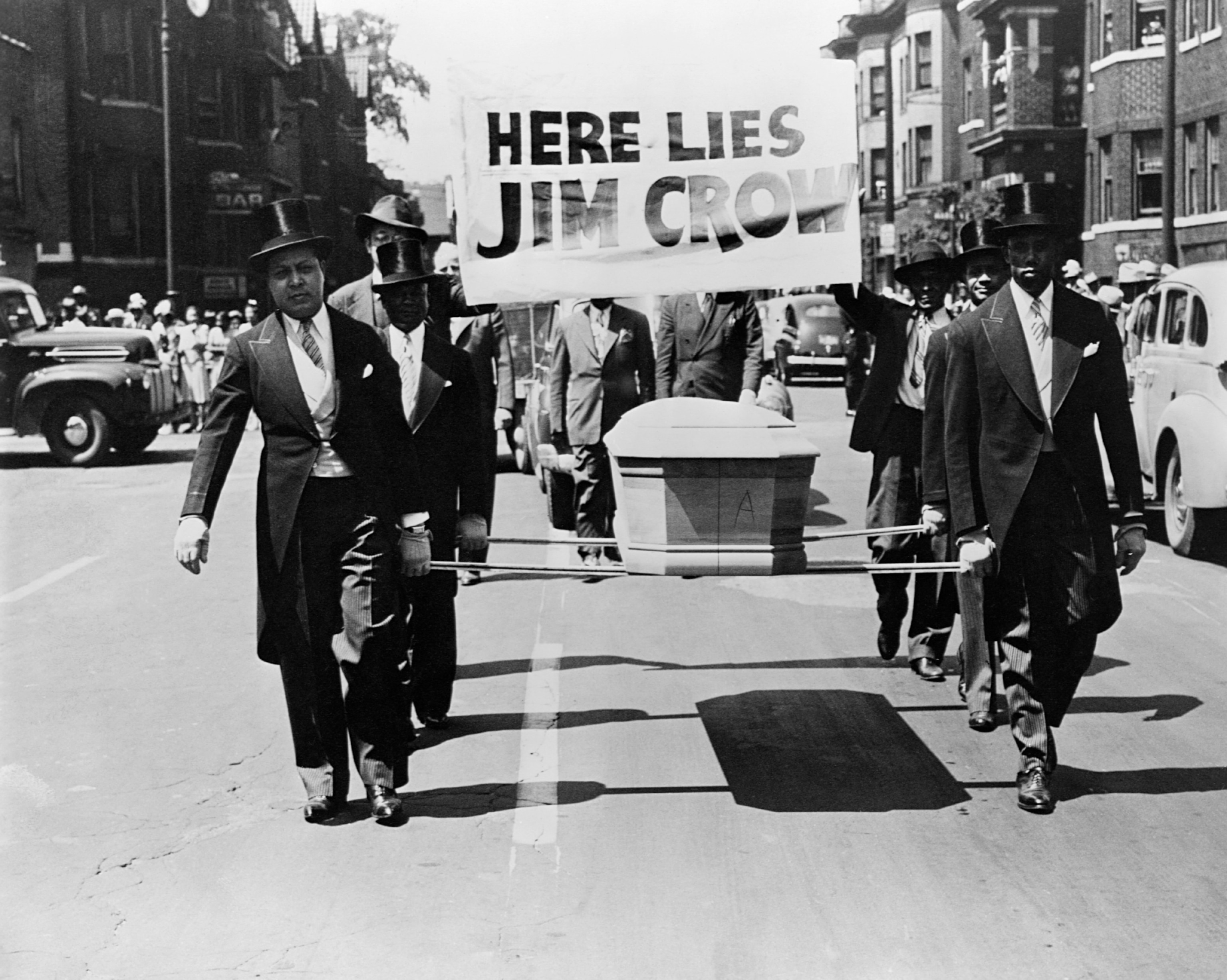
While often discussed through the lens of social policy and civil rights, the Jim Crow South was, at its core, a sophisticated and rigid economic engine. To understand “what” the Jim Crow South was from a financial perspective, one must look past the visible signs of segregation and examine the underlying fiscal structures designed to extract labor, limit capital accumulation, and maintain a permanent economic underclass. It was a period defined by state-sanctioned financial exclusion, where the “Money” category of life—investing, property ownership, and business finance—was weaponized to ensure regional stability for a narrow demographic at the expense of broader economic growth.
The Financial Foundation: Segregation as an Economic Strategy
The Jim Crow South operated as a closed-loop economic system designed to maximize the extraction of value from Black labor while minimizing the costs of labor reproduction. Following the Reconstruction era, Southern legislatures enacted a series of laws that were not merely social in nature but were specifically crafted to control the movement of capital and people.
Labor Market Monopolies and Wage Compression
One of the primary economic functions of the Jim Crow South was the suppression of competition in the labor market. Through “vagrancy laws” and “enticement laws,” Southern states effectively criminalized unemployment for Black citizens. This created a captive labor pool. If a worker attempted to leave a low-paying job for a better-paying one, they could be arrested and fined.
From a business finance perspective, this was a form of market manipulation. By preventing labor mobility, plantation owners and industrial employers could keep wages artificially low, well below what a free market would dictate. This wage compression was a cornerstone of the Southern economy, allowing industries such as textiles, tobacco, and agriculture to maintain high profit margins through the systemic underpayment of their workforce.
The Sharecropping System: Debt Peonage as a Financial Tool
Perhaps the most pervasive financial instrument of the Jim Crow South was sharecropping. On the surface, sharecropping appeared to be a simple rental agreement where a tenant farmed a portion of a landlord’s land in exchange for a share of the crop. In practice, however, it was a complex system of debt peonage.
Landlords often mandated that sharecroppers purchase supplies—seeds, tools, and food—from “plantation stores” on credit. These stores charged exorbitant interest rates, often exceeding 50% to 60% annually. When the crop was harvested and sold, the sharecropper’s portion was frequently insufficient to cover the debt accrued over the season. This created a cycle of permanent indebtedness, effectively anchoring the worker to the land and ensuring a steady, low-cost labor supply for the land-owning class. In financial terms, sharecropping was a predatory lending scheme backed by the power of the state.
Real Estate and the Wealth Gap: The Business of Displacement
Wealth in the United States has historically been built through property ownership. In the Jim Crow South, the mechanisms of the real estate market were manipulated to prevent Black citizens from building equity, a trend that laid the groundwork for the modern racial wealth gap.
Redlining and the Devaluation of Black Property
While redlining is often associated with the mid-20th-century North, its roots and logic were deeply embedded in the Jim Crow South. The financial industry, supported by government policy, categorized Black neighborhoods as “high risk” for investment. This meant that even when Black Southerners managed to save enough capital to purchase homes or businesses, they were denied the mortgages and insurance necessary to protect and grow those assets.
The economic result was a dual housing market. In Black communities, the lack of available credit meant that property values remained stagnant or declined, while white-owned property appreciated. This served as a massive barrier to generational wealth. In the “Money” niche, we understand that real estate is a primary vehicle for leverage; by denying that leverage to a significant portion of the population, the Jim Crow system ensured that capital remained concentrated in the hands of the white elite.
Municipal Underinvestment and the Cost of Exclusion
The fiscal management of Southern municipalities during this era was defined by a redirection of tax revenue. Black citizens paid property and sales taxes, yet the majority of those funds were funneled into white neighborhoods, schools, and infrastructure. This was, in essence, a forced subsidy.

Black business owners faced higher costs of doing business due to poor infrastructure—lack of paved roads, inadequate sewage, and limited access to electricity. This “tax” on Black entrepreneurship made it significantly harder for businesses to scale or attract outside investment. The Jim Crow South was characterized by a systemic disinvestment in the human capital and physical infrastructure of the Black community, which hindered the overall economic development of the entire region.
The Cost of Segregated Infrastructure: A Case Study in Fiscal Inefficiency
From a purely economic and business standpoint, the Jim Crow South was remarkably inefficient. The requirement for “separate but equal” facilities meant that states and municipalities had to fund and maintain two of everything: two school systems, two sets of public transportation, two hospital wings, and even two sets of public restrooms.
Duplicative Services and Economic Waste
The maintenance of dual systems was a fiscal nightmare. Instead of achieving economies of scale, Southern governments were forced to spread their limited tax revenues across duplicative infrastructures. This led to a chronic underfunding of both systems, though Black institutions bore the brunt of the deficit.
For the regional economy, this was a massive waste of resources. Capital that could have been used for innovation, industrial development, or higher education was instead spent on the administrative overhead of maintaining segregation. The “business of Jim Crow” was one of low productivity and high operational costs, which is why the South lagged behind the rest of the country in GDP growth for nearly a century.
Long-term Impact on Regional GDP
Economists have long noted that the Jim Crow South acted as a drag on the national economy. By excluding a vast portion of the population from high-skilled labor and entrepreneurial opportunities, the South suppressed its own potential for innovation. Brain drain was a constant issue, as talented individuals fled the restrictive economic environment of the South for more open markets in the North and West—a movement known as the Great Migration.
This exodus represented a massive loss of human capital. The South essentially educated and raised workers only to see their economic contributions benefit other regions. The financial legacy of Jim Crow is not just found in the poverty of the Black community, but in the relative economic stagnation of the Southern region as a whole during the first half of the 20th century.
Modern Implications: From Jim Crow to Contemporary Financial Systems
The economic architecture of the Jim Crow South did not disappear with the passage of the Civil Rights Act of 1964. Instead, many of its financial mechanisms evolved into more subtle forms of exclusion that continue to influence the “Money” landscape today.
The Persistence of the Racial Wealth Gap
Today’s racial wealth gap is a direct descendant of Jim Crow financial policies. When families are denied the ability to own land, access credit, or receive a fair wage for decades, they cannot pass down the “start-up capital” necessary for the next generation to succeed. The lack of intergenerational wealth transfer means that many Black entrepreneurs today must rely on higher-interest debt rather than family equity to start businesses.
Furthermore, the geographic concentration of poverty resulting from Jim Crow-era housing policies continues to affect property values and, by extension, the funding of local schools through property taxes. This creates a feedback loop where the economic environment of a neighborhood dictates the future earning potential of its residents.

Financial Inclusion as a Path to Rectification
Understanding the Jim Crow South as an economic system highlights the importance of modern financial inclusion. The tools of the “Money” niche—banking, investing, and credit—are the very tools that were used to enforce segregation. Therefore, the remedy must also be financial in nature.
Modern FinTech, micro-lending, and community development financial institutions (CDFIs) are now working to bridge the gap created by decades of exclusion. By providing access to capital in traditionally underserved markets, these organizations are attempting to dismantle the lingering financial structures of the Jim Crow era. For the modern investor or business leader, recognizing the historical context of these markets is essential for identifying undervalued opportunities and promoting a more robust, inclusive economy.
In conclusion, the Jim Crow South was more than a period of social tension; it was a deliberate economic framework designed to control wealth and labor. By analyzing it through the lens of business and finance, we see a system of managed inequality that prioritized short-term extraction over long-term regional prosperity. The echoes of this system remain visible in today’s financial markets, making the study of Jim Crow economics a vital pursuit for anyone looking to understand the current state of American wealth.
aViewFromTheCave is a participant in the Amazon Services LLC Associates Program, an affiliate advertising program designed to provide a means for sites to earn advertising fees by advertising and linking to Amazon.com. Amazon, the Amazon logo, AmazonSupply, and the AmazonSupply logo are trademarks of Amazon.com, Inc. or its affiliates. As an Amazon Associate we earn affiliate commissions from qualifying purchases.