
For millions of Americans, the Internal Revenue Service (IRS) website is an indispensable digital portal, serving as the primary gateway to managing their federal tax obligations. Far from being merely a static information repository, IRS.gov functions as a dynamic and comprehensive financial tool, offering a suite of services designed to facilitate tax compliance, provide critical financial guidance, and ensure the efficient administration of the nation’s tax system. Understanding “what is the IRS website” means delving into its multifaceted role in personal and business finance, its digital offerings, and its evolving efforts to serve taxpayers more effectively.

In an increasingly digitized world, the IRS has embraced technology to streamline interactions, moving many traditional paper-based processes online. From filing tax returns and making payments to accessing tax records and finding authoritative answers to complex tax questions, IRS.gov consolidates an immense volume of financial information and services into a single, accessible platform. This guide will explore the website’s core functionalities, its critical resources for financial planning and problem-solving, and the paramount importance of digital security when interacting with such a sensitive financial hub.
The IRS Website as a Core Financial Tool for Taxpayers
At its heart, the IRS website is a critical financial utility, a direct line between U.S. taxpayers and their federal tax responsibilities. It demystifies the often-complex world of taxation, providing clarity and operational tools that empower individuals and businesses to meet their financial obligations accurately and on time.
Understanding Its Primary Purpose and Scope
The fundamental purpose of IRS.gov is to serve as the official online presence of the Internal Revenue Service, the federal agency responsible for collecting taxes and administering the Internal Revenue Code. Its scope is vast, encompassing everything from tax law explanation and form distribution to payment processing and taxpayer support. For anyone dealing with U.S. taxes, whether an individual employee, a small business owner, or a large corporation, the website is the definitive source of information and the primary channel for transaction. It aims to reduce the need for physical visits or phone calls by providing self-service options, thereby enhancing efficiency for both the taxpayer and the agency.
Democratizing Tax Information and Resources
One of the most significant contributions of the IRS website to the financial literacy of the nation is its role in democratizing tax information. Before the widespread adoption of the internet, obtaining official tax guidance often required consulting expensive professionals or navigating dense government publications. Today, IRS.gov makes an unparalleled wealth of authoritative tax information freely available to everyone. This includes detailed explanations of tax laws, eligibility criteria for various credits and deductions, and updates on tax legislation. This accessibility is crucial for financial planning, allowing individuals and businesses to proactively understand their tax liabilities and opportunities for savings. By providing clear, concise, and official information, the website empowers taxpayers to make informed financial decisions, reducing reliance on potentially inaccurate third-party sources.
Key Services for Individuals and Businesses
The website offers distinct yet interconnected sections tailored to the needs of individuals, businesses, and tax professionals. For individuals, services range from tracking refund statuses and making estimated tax payments to understanding retirement plan contributions and implications of life events (like marriage, birth of a child, or homeownership) on their financial situation. Businesses, on the other hand, can find information on employer identification numbers (EINs), payroll tax obligations, independent contractor rules, and various business-specific credits. Tax professionals also have a dedicated portal for e-filing, obtaining client transcripts, and staying updated on regulatory changes. These diverse offerings underscore the website’s role as a comprehensive financial hub, catering to the entire spectrum of tax-paying entities in the U.S. economy.
Navigating the Digital Landscape of Tax Compliance
The IRS website has transformed the process of tax compliance, moving it from paper forms and mailboxes to secure online platforms. This digital shift offers convenience and efficiency, but requires taxpayers to understand how to effectively utilize these online financial tools.
Filing Your Taxes Online: IRS Direct File and e-file Options
The cornerstone of modern tax compliance is electronic filing. The IRS website serves as the central point for understanding and accessing various e-file options. It provides information on IRS Direct File, a new pilot program offering eligible taxpayers a free option to file their federal tax return directly with the IRS. Beyond Direct File, the website links to approved third-party software providers through the Free File program, which offers free tax preparation and e-filing for taxpayers below a certain income threshold. For those above the income threshold, commercial e-file software integrates directly with IRS systems. This digitization of the filing process reduces errors, speeds up refund processing, and provides instant confirmation of successful submission, all critical financial benefits.
Making Payments and Checking Your Balance
Managing tax payments is another crucial financial function facilitated by IRS.gov. Taxpayers can make various types of payments directly through the website, including federal income tax, estimated taxes, and payments for balances due. Options include direct debit from a bank account, credit or debit card payments (with a processing fee from third-party processors), and electronic funds withdrawal when e-filing. The website also allows taxpayers to check their payment history and outstanding balances, offering a clear financial snapshot of their account status with the IRS. This transparency is vital for budgeting and avoiding penalties.
Accessing Your Tax Account: Transcripts, Notices, and Payment History
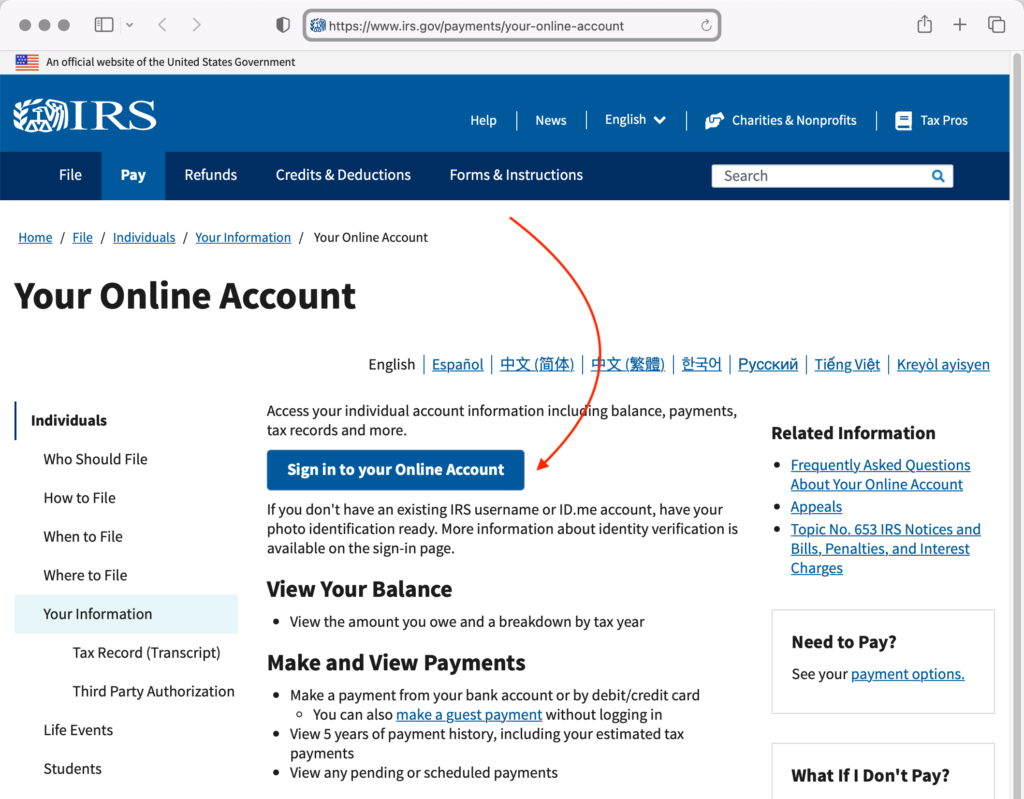
One of the most powerful financial tools on the IRS website is the “Online Account” feature. By creating an account, taxpayers can securely access a wealth of personal tax information. This includes viewing their tax history, accessing tax transcripts (which are often required for student loans, mortgages, or other financial applications), reviewing payment history, and seeing copies of certain IRS notices. This direct access significantly reduces the need to request documents by mail or phone, providing immediate financial data that can be essential for personal finance management, loan applications, or resolving discrepancies. It’s a personal financial dashboard for federal tax interactions.
Essential Resources for Financial Planning and Problem Resolution
Beyond transactional services, the IRS website is a robust educational and support hub, offering resources that are invaluable for proactive financial planning and for navigating unexpected tax challenges.
Publications, Forms, and Instructions: Your Knowledge Hub

The IRS publishes hundreds of forms, instructions, and publications annually, all of which are readily available on its website. From the ubiquitous Form 1040 to specialized forms for business deductions or foreign income, the site provides downloadable, printable, and often fillable versions. Crucially, each form is accompanied by detailed instructions and relevant publications (like Publication 17, “Your Federal Income Tax”), which translate complex tax law into understandable language. These resources are indispensable for anyone seeking to understand their specific tax obligations, identify eligible deductions or credits, or simply educate themselves on various aspects of U.S. tax policy, all of which directly impact personal and business financial health.
Taxpayer Assistance and Problem Solving: FAQs and Online Tools
When taxpayers encounter issues or have specific questions, the IRS website offers several avenues for assistance. Its extensive Frequently Asked Questions (FAQs) section covers a broad range of common tax scenarios and inquiries. Additionally, interactive tools like the “Where’s My Refund?” tool, the “Withholding Calculator,” and the “Am I an Employee or an Independent Contractor?” tool provide immediate, personalized guidance. For more complex problems, the website directs taxpayers to appropriate contact methods, including phone numbers for specific departments and information about the Taxpayer Advocate Service, an independent organization within the IRS that helps taxpayers resolve problems with the IRS. These resources are critical for maintaining financial stability and resolving potential tax disputes.
Understanding Credits, Deductions, and Exemptions
A key component of effective financial planning related to taxes is maximizing legitimate tax savings. The IRS website is the definitive source for understanding the various tax credits, deductions, and exemptions available. It provides detailed explanations of eligibility criteria for significant financial benefits like the Earned Income Tax Credit (EITC), Child Tax Credit, education credits, deductions for IRA contributions, and home mortgage interest deductions. These sections are meticulously updated with current tax law, enabling individuals and businesses to accurately assess their financial position and plan their tax strategies to reduce their overall tax burden legally. This knowledge is fundamental to smart personal and business finance.
Ensuring Financial Security: Protecting Your Information Online
Given the highly sensitive nature of the financial information exchanged on the IRS website, digital security is paramount. The IRS continually invests in robust security measures, but taxpayers also bear a significant responsibility in protecting their financial data.
Recognizing and Avoiding Scams
The IRS website is a crucial resource for educating the public about tax-related scams and identity theft. It maintains updated lists of common scams, providing examples of fraudulent emails, phone calls, and phishing attempts that aim to trick taxpayers into divulging personal financial information. The website provides clear guidance on how the IRS communicates with taxpayers (e.g., they generally initiate contact by mail, not unsolicited email or phone calls about past-due taxes) and what information they will never ask for via unsecured channels. Understanding these red flags, clearly outlined on IRS.gov, is the first line of defense against financial fraud.
Best Practices for Online Security
To safeguard personal financial information, the IRS website strongly advises taxpayers to adopt best practices for online security. This includes using strong, unique passwords for their IRS Online Account, enabling multi-factor authentication whenever possible, and ensuring their internet connection is secure when accessing sensitive financial data. The site also provides tips on keeping computer software updated to protect against vulnerabilities and avoiding public Wi-Fi networks for tax-related activities. These measures, though seemingly basic, form a critical shield against unauthorized access to one’s financial records.
Reporting Identity Theft and Fraud
Despite best efforts, tax-related identity theft can occur, leading to significant financial distress. The IRS website provides clear, step-by-step instructions on what to do if you suspect you are a victim of identity theft. This includes filing a police report, contacting credit bureaus, and notifying the IRS directly by filing Form 14039, Identity Theft Affidavit. The website details how the IRS will work with victims to resolve fraudulent accounts and correct their financial records, underscoring the agency’s commitment to protecting taxpayers’ financial integrity. This guidance is invaluable for individuals facing the severe financial implications of identity theft.
Future of Digital Tax Interactions: Modernizing the IRS
The IRS website is not static; it is continually evolving to meet the demands of a digital society and the increasing complexity of financial transactions. Modernization efforts aim to make tax interactions even more efficient, secure, and user-friendly.
Enhancements and Future-Proofing Financial Tools
The IRS is committed to enhancing its digital infrastructure and improving its online financial tools. This includes ongoing investments in secure payment processing systems, more intuitive interfaces for filing and account management, and leveraging data analytics to better identify and combat fraud. Future-proofing involves adopting new technologies that can handle growing data volumes and provide a more personalized experience, ultimately aiming to reduce the burden of tax compliance for all taxpayers and ensure the integrity of the nation’s financial system.
Improving User Experience and Accessibility
A key focus of modernization is improving the user experience (UX) and accessibility of IRS.gov. This means designing the website to be easier to navigate, more responsive across different devices (desktops, tablets, smartphones), and compliant with accessibility standards for individuals with disabilities. A better UX translates to less frustration, fewer errors, and more efficient completion of financial tasks, benefiting millions of taxpayers. The goal is to make managing tax affairs as straightforward and intuitive as possible, enhancing financial literacy and compliance.
The Role of Technology in Streamlining Tax Compliance
Ultimately, technology plays a pivotal role in streamlining tax compliance and administration. The IRS website is at the forefront of this effort, using digital solutions to reduce paperwork, automate processes, and provide real-time information. As the agency continues to embrace advancements like artificial intelligence and enhanced data security protocols, the IRS website will remain an indispensable financial tool, adapting to the needs of taxpayers and ensuring the efficient functioning of the U.S. tax system for decades to come.
The IRS website, IRS.gov, is far more than just a government webpage. It is a critical financial platform, an ever-evolving digital hub that serves as the cornerstone of tax administration and compliance for individuals and businesses across the United States. Navigating its extensive resources, utilizing its online tools, and understanding its security measures are fundamental skills for effective personal and business finance in the modern era.
aViewFromTheCave is a participant in the Amazon Services LLC Associates Program, an affiliate advertising program designed to provide a means for sites to earn advertising fees by advertising and linking to Amazon.com. Amazon, the Amazon logo, AmazonSupply, and the AmazonSupply logo are trademarks of Amazon.com, Inc. or its affiliates. As an Amazon Associate we earn affiliate commissions from qualifying purchases.