
Interest rates are not merely abstract economic figures; they are the fundamental heartbeat of the global financial system, profoundly influencing everything from your daily spending habits to the long-term trajectory of your investments. For anyone seeking to master their personal finances, embark on an investment journey, manage a business, or simply understand the economic news cycle, a clear comprehension of interest rates is not just beneficial—it’s essential. At their core, interest rates represent the cost of borrowing money or the return on lending it, acting as a crucial lever that balances risk, reward, and economic activity.
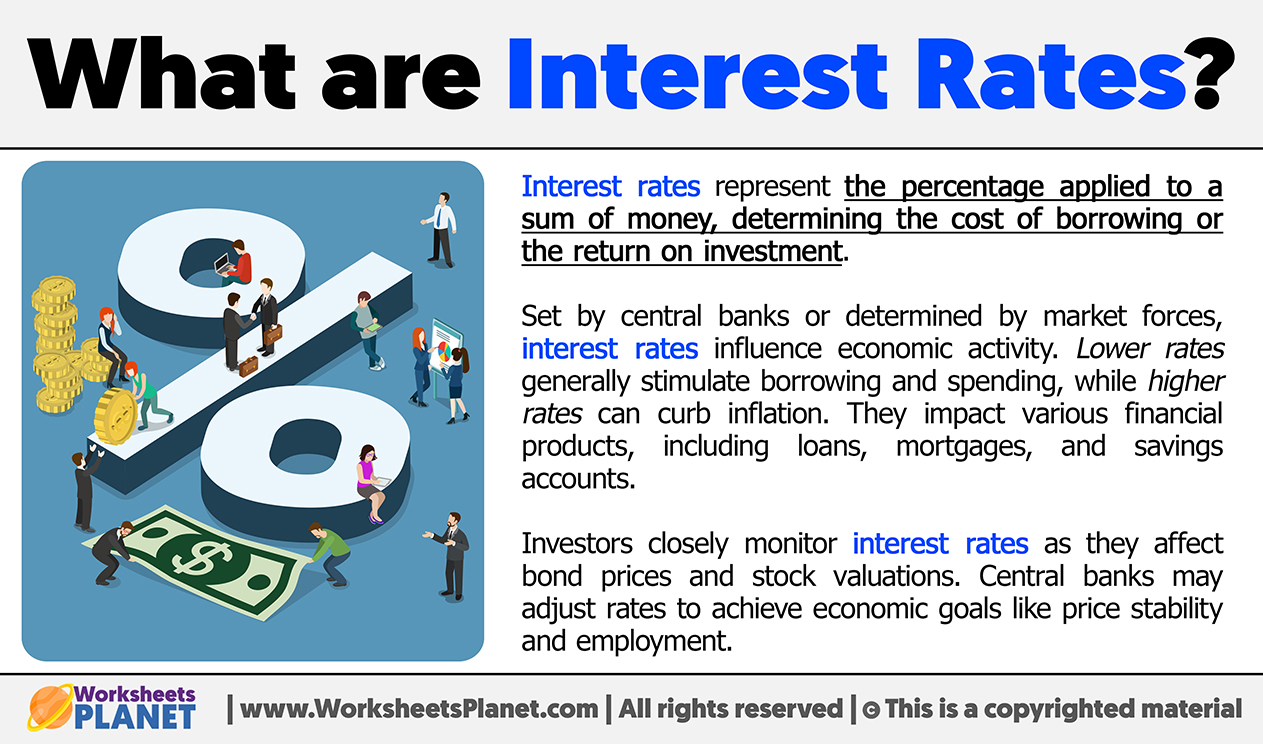
This article delves into the intricate world of interest rates, demystifying their mechanics, exploring the forces that drive their fluctuations, and detailing their far-reaching effects on individuals, businesses, and the broader economy. By understanding “what are interest rates,” you gain a powerful tool for informed decision-making, enabling you to navigate the financial landscape with greater confidence and strategic foresight. Whether you’re saving for a down payment, taking out a loan, or planning for retirement, interest rates play a pivotal role in shaping your financial future.
The Fundamental Mechanics of Interest Rates
To truly grasp the significance of interest rates, we must first understand their basic components and how they function. Interest is essentially the price paid for the use of money. When you borrow, you pay interest; when you lend or save, you earn interest. This simple concept underpins countless financial transactions daily.
Defining Interest: The Cost of Money
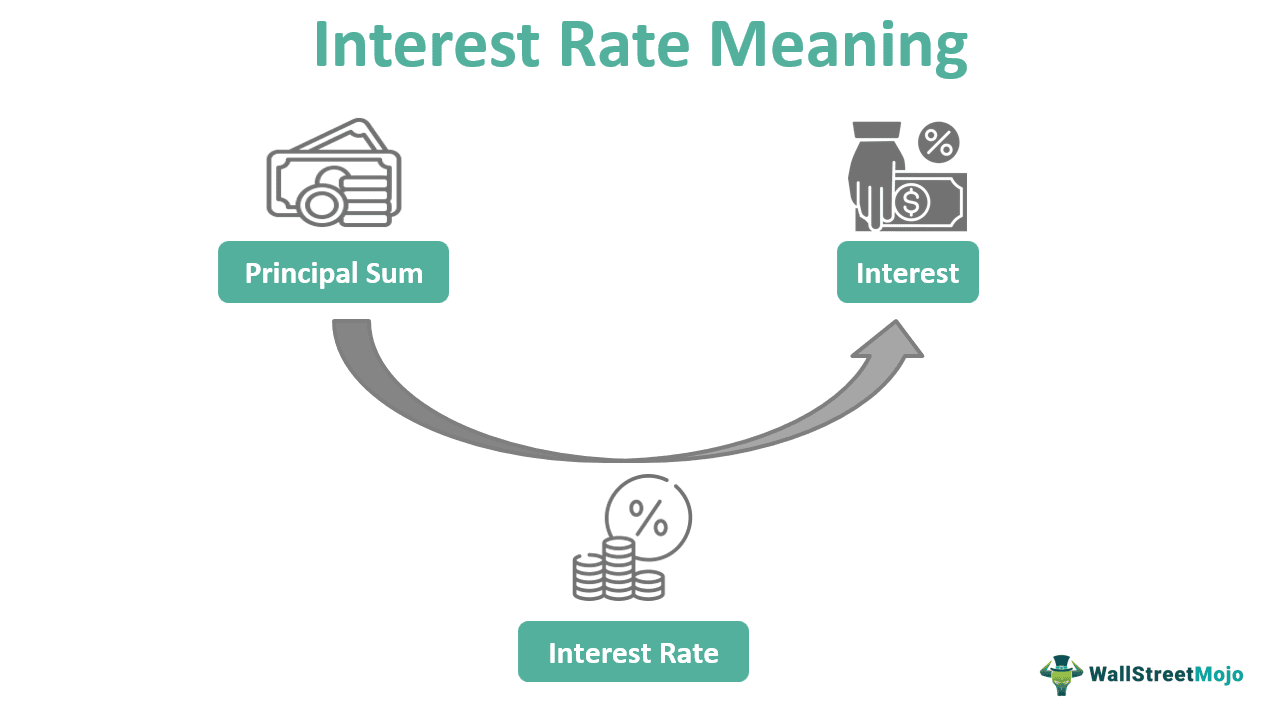
Interest is best defined as the charge for the privilege of borrowing money, typically expressed as a percentage of the principal (the initial amount borrowed or lent). Conversely, for a saver or investor, interest is the compensation received for depositing or lending money. This charge or compensation accounts for several factors, including the opportunity cost of the money, the inflation rate over the loan period, and the risk of default.
There are two primary ways interest is calculated: simple and compound. Simple interest is calculated only on the principal amount of a loan or deposit. For example, if you borrow $1,000 at a 5% simple annual interest rate, you would pay $50 in interest each year regardless of how long the loan lasts. Compound interest, however, is calculated on the principal amount and also on the accumulated interest from previous periods. This “interest on interest” effect can lead to significantly larger returns over time for savers and investors, but also to a more substantial debt burden for borrowers if not managed effectively. Albert Einstein famously called compound interest the “eighth wonder of the world,” highlighting its immense power in wealth accumulation. Understanding this distinction is crucial for both financial planning and debt management.
Key Components: Principal, Rate, and Time
Every interest calculation hinges on three core components:
-
Principal (P): This is the initial amount of money borrowed or invested. It forms the base upon which interest is calculated.
-
Interest Rate (R): This is the percentage charged or paid on the principal over a specific period, usually annually. It dictates how quickly the principal grows or how much extra needs to be paid.
-
Time (T): This refers to the duration for which the money is borrowed or invested, typically expressed in years. The longer the time, the greater the total interest accumulated or paid.
These three components are interconnected. A small change in any one of them can significantly alter the total interest paid or earned. For instance, even a slight increase in the interest rate on a long-term mortgage can add tens of thousands of dollars to the total cost over the life of the loan.
Annual Percentage Rate (APR) vs. Annual Percentage Yield (APY)
While the interest rate provides a percentage, consumers often encounter two specific terms that offer a more comprehensive view: APR and APY.
-
Annual Percentage Rate (APR): This represents the total cost of borrowing money, expressed as a yearly percentage. It includes not only the nominal interest rate but also any additional fees or charges associated with the loan, such as origination fees or discount points. APR provides a more accurate picture of the true cost of borrowing compared to the nominal interest rate alone, especially for credit cards, mortgages, and auto loans. A higher APR means a higher total cost for the borrower.
-
Annual Percentage Yield (APY): This represents the total amount of interest earned on an investment or savings account over a year, taking into account the effect of compounding interest. Because APY factors in compounding, it will always be equal to or higher than the nominal interest rate. For savers and investors, APY is the crucial figure to look at, as it reflects the true rate of return on their deposits. A higher APY means more money earned by the saver.
Understanding the distinction between APR and APY is vital for making informed decisions. When borrowing, you want the lowest possible APR. When saving or investing, you seek the highest possible APY.
Why Interest Rates Fluctuate: Driving Forces and Economic Indicators
Interest rates are rarely static; they are dynamic economic variables that constantly adjust in response to a myriad of factors. These fluctuations are not random but are driven by powerful forces, primarily central bank policies, inflation expectations, and the broader economic climate.
Central Bank Policies (Monetary Policy)
The most significant influence on interest rates comes from a country’s central bank—for instance, the Federal Reserve in the United States, the European Central Bank (ECB), or the Bank of England. Central banks utilize monetary policy tools to manage the economy, with adjusting benchmark interest rates being their primary lever.
The Federal Reserve, for example, targets the Federal Funds Rate, which is the interest rate at which commercial banks lend and borrow their excess reserves from each other overnight. While not directly what consumers pay, changes to this rate cascade through the financial system, affecting prime rates, mortgage rates, auto loan rates, and even savings account yields.
-
Rate Hikes: When inflation is high or the economy is overheating, central banks raise rates to slow down borrowing and spending, thereby cooling the economy and curbing price increases. This makes borrowing more expensive, which discourages consumer and business spending and investment.
-
Rate Cuts: During economic downturns or periods of low inflation, central banks lower rates to stimulate borrowing, spending, and investment, aiming to inject liquidity and encourage economic growth. This makes borrowing cheaper, incentivizing individuals and businesses to take on debt for consumption and expansion.
Inflation Expectations
Inflation, the rate at which the general level of prices for goods and services is rising, has a direct and profound impact on interest rates. Lenders need to be compensated for the erosion of purchasing power that inflation causes. If a lender lends money today and expects inflation to be 3% over the loan term, they will demand at least a 3% return just to break even on purchasing power, in addition to any actual profit they wish to make.
-
High Inflation Expectations: When inflation is expected to rise, lenders demand higher nominal interest rates to ensure their real (inflation-adjusted) return remains positive. Borrowers also anticipate that future earnings will be worth less, so they may be willing to pay more interest.
-
Low Inflation Expectations: Conversely, low inflation expectations can lead to lower nominal interest rates, as lenders are less concerned about the erosion of their capital’s purchasing power.
This distinction between real interest rates (nominal rate minus inflation) and nominal interest rates (the stated rate) is crucial. What truly matters for economic decisions is the real interest rate, as it reflects the actual cost of borrowing or the actual return on saving after accounting for the loss of value due to inflation.
Economic Growth and Supply & Demand for Credit
The overall health and growth trajectory of the economy also significantly influence interest rates.
-
Strong Economic Growth: In a robust economy, businesses are more confident and look to expand, investing in new projects, equipment, and hiring. This increases the demand for credit and capital, which, like any other commodity, drives up its price – the interest rate. Consumers, feeling more secure in their jobs, might also be more willing to take on loans for homes, cars, or other purchases, further increasing demand for credit.
-
Weak Economic Growth/Recession: During an economic slowdown or recession, business confidence wanes, and investment declines. Consumer spending often decreases, reducing the demand for loans. With less demand for credit, interest rates tend to fall. Central banks often exacerbate this by lowering rates to stimulate activity.
The supply of credit also plays a role. If there’s an abundance of available capital from savers and investors, interest rates might be pushed down, assuming demand remains constant. Conversely, a scarcity of capital could drive rates up.
Risk Assessment
Lenders are inherently risk-averse. When deciding on an interest rate for a specific borrower, they meticulously assess the perceived risk of that borrower defaulting on their payments.
-
Borrower-Specific Risk: Factors like an individual’s credit score, credit history, income stability, debt-to-income ratio, and the presence of collateral (e.g., a home for a mortgage) all contribute to a lender’s risk assessment. A higher perceived risk translates into a higher interest rate to compensate the lender for taking on that increased risk.
-
Loan-Specific Risk: The type and term of the loan also influence rates. Unsecured loans (like credit cards or personal loans without collateral) typically carry higher interest rates than secured loans (like mortgages or auto loans) because the lender has no asset to seize if the borrower defaults. Longer-term loans often have higher rates to compensate for the increased uncertainty and potential for economic changes over an extended period.
The Dual Impact: How Rates Affect Borrowers and Savers
Interest rate changes create a ripple effect that touches every corner of the financial landscape. For some, rising rates represent an opportunity, while for others, they pose a significant challenge. Understanding this dual impact is crucial for both personal and business financial planning.
For Borrowers: The Cost of Debt
Interest rates directly determine the cost of borrowing, making them a primary concern for individuals and businesses seeking credit.
-
Mortgages: For homeowners or prospective buyers, interest rates are paramount. A small change in mortgage rates can significantly alter monthly payments and the total cost of a home over 15 or 30 years. Fixed-rate mortgages lock in an interest rate for the life of the loan, offering predictability, while adjustable-rate mortgages (ARMs) have rates that can fluctuate with market rates, potentially leading to lower initial payments but higher payments later if rates rise. Rising rates make homeownership less affordable and can cool the housing market.
-
Credit Cards: Most credit cards carry variable interest rates, meaning the Annual Percentage Rate (APR) can change with the prime rate (which is influenced by central bank policy). As rates rise, the cost of carrying a balance on credit cards increases, making it more challenging for consumers to pay off debt and potentially leading to higher minimum payments.
-
Personal and Auto Loans: Similar to mortgages, the interest rate on these loans dictates the monthly payment and total cost. Higher rates make cars and other big-ticket items more expensive to finance, potentially slowing consumer spending on these goods.
-
Business Loans: For businesses, interest rates impact the cost of capital for expansion, inventory, or operational needs. Higher rates can deter investment, slow job creation, and reduce profitability, especially for businesses heavily reliant on borrowed capital.
For Savers and Investors: Returns and Opportunities
While borrowers generally dislike rising rates, savers and some investors often welcome them, as they typically translate to better returns.
-
Savings Accounts & CDs: For individuals holding cash in traditional savings accounts, money market accounts, or Certificates of Deposit (CDs), rising interest rates mean higher Annual Percentage Yields (APYs). This provides a greater incentive to save, as their money earns more interest over time. Conversely, low-interest-rate environments offer minimal returns on these safe assets, sometimes barely keeping pace with inflation.
-
Bonds: The relationship between interest rates and bond prices is generally inverse. When interest rates rise, newly issued bonds offer higher yields, making existing bonds (issued at lower rates) less attractive. To sell existing bonds, their price must drop to make their yield competitive with new issues. Conversely, when rates fall, existing bonds with higher yields become more valuable. This dynamic is critical for investors holding fixed-income portfolios.
-
Stock Market: The impact of interest rates on the stock market is more indirect and complex. Higher interest rates can make borrowing more expensive for companies, which can cut into profits and slow growth, potentially leading to lower stock valuations. Additionally, higher rates on bonds and savings accounts can make these “safer” investments more attractive, diverting capital away from riskier equities. Conversely, lower rates can fuel corporate growth and make stocks more appealing relative to fixed-income alternatives.
Impact on the Broader Economy
Beyond individual and business finance, interest rates serve as a powerful economic lever that influences the overall health and direction of an economy.
-
Consumer Spending: Lower rates encourage borrowing and make goods more affordable, boosting consumer spending. Higher rates do the opposite, dampening demand.
-
Business Investment: Cheaper credit encourages businesses to invest in expansion, research, and development, fostering economic growth and job creation. Expensive credit can stifle such investment.
-
Housing Market: Interest rates are a primary driver of housing affordability. Low rates stimulate demand and home construction, while high rates can cool the market, potentially leading to price stagnation or declines.
-
Exchange Rates: Higher domestic interest rates can attract foreign capital, as investors seek better returns, which can strengthen a country’s currency. Lower rates can have the opposite effect.
Navigating the Interest Rate Landscape: Strategies for Financial Success
Understanding the mechanics and movements of interest rates is only the first step. The real value lies in leveraging this knowledge to make informed financial decisions and adapt your strategies to prevailing economic conditions.
Managing Debt in a Rising Rate Environment
When interest rates are on an upward trend, debt management becomes even more critical.
-
Prioritize High-Interest, Variable Debt: Focus on paying down credit card balances and other variable-rate loans first, as their cost will increase with rising rates. Consider consolidating high-interest debt into a lower, fixed-rate personal loan if available and financially prudent.
-
Lock in Fixed Rates (When Appropriate): If you anticipate rates will continue to rise and you have significant variable-rate debt (like an ARM), consider refinancing into a fixed-rate loan while rates are still manageable. This provides certainty in your monthly payments.
-
Avoid Unnecessary Debt: In a rising rate environment, think carefully before taking on new debt, especially for depreciating assets. The long-term cost could be substantially higher than anticipated.
-
Review Your Budget: Adjust your budget to accommodate potentially higher debt payments, freeing up cash flow to tackle expensive debt.
Maximizing Savings and Investments
Rising interest rates can be a boon for savers and certain types of investors.
-
Seek Competitive APYs: Shop around for high-yield savings accounts, money market accounts, and Certificates of Deposit (CDs) that offer the best Annual Percentage Yields. Don’t let your cash sit in accounts offering negligible returns if better options are available.
-
Understand Bond Market Dynamics: If you’re investing in bonds, be aware of the inverse relationship between rates and bond prices. In a rising rate environment, consider shorter-duration bonds or bond funds, which are less sensitive to rate fluctuations, or look for opportunities in newly issued bonds with higher yields.
-
Diversify Investment Portfolios: A well-diversified portfolio that includes a mix of stocks, bonds, and other asset classes can help mitigate the risks associated with changing interest rates. While rising rates might temper stock growth, they could boost returns on cash and certain bond strategies.
-
Dollar-Cost Averaging: Continue regular contributions to your investment accounts. This strategy helps smooth out the impact of market volatility and interest rate changes over time, as you buy more shares when prices are low and fewer when prices are high.
Utilizing Financial Tools and Advice
Navigating the complexities of interest rates doesn’t have to be a solo journey.
-
Budgeting Apps and Financial Planners: Utilize budgeting software to track your income and expenses, helping you identify areas to save more or pay down debt. Consider consulting a certified financial planner who can provide personalized advice tailored to your financial goals and the current interest rate environment.
-
Understand Loan Terms and Fine Print: Before signing any loan agreement, meticulously read and understand all the terms, especially the interest rate (APR), fees, and any clauses related to rate adjustments. Knowledge is your best defense against unexpected costs.
-
Stay Informed: Keep abreast of central bank announcements, economic data, and financial news related to interest rates. This knowledge empowers you to anticipate changes and adjust your financial strategy proactively.

Conclusion
Interest rates are far more than just numbers; they are powerful economic levers that shape our financial decisions, influence our purchasing power, and dictate the growth trajectory of our wealth. From the humble savings account to complex global markets, their pervasive influence cannot be overstated. Understanding “what are interest rates” – their fundamental mechanics, the forces that drive their fluctuations, and their multifaceted impact on borrowers, savers, and the broader economy – is not just an academic exercise; it is a critical skill for navigating the modern financial world.
By proactively managing debt, optimizing savings and investments, and staying informed about economic trends, you can position yourself to thrive, regardless of whether rates are rising or falling. The ability to adapt your financial strategy in response to interest rate movements is a hallmark of sound financial management. Embrace continuous learning, seek expert advice when needed, and remember that an informed approach to interest rates is a cornerstone of achieving long-term financial success and security.
aViewFromTheCave is a participant in the Amazon Services LLC Associates Program, an affiliate advertising program designed to provide a means for sites to earn advertising fees by advertising and linking to Amazon.com. Amazon, the Amazon logo, AmazonSupply, and the AmazonSupply logo are trademarks of Amazon.com, Inc. or its affiliates. As an Amazon Associate we earn affiliate commissions from qualifying purchases.