
Navigating the landscape of real estate requires more than just finding the perfect property; it requires a deep understanding of the financial mechanisms that power the purchase. For most people, the interest rate on a home loan is the single most important number in their financial life. It determines the monthly cost of living, the total amount paid over thirty years, and the overall feasibility of homeownership.
An interest rate is essentially the cost of borrowing money from a lender, expressed as a percentage of the total loan amount. However, beneath that simple definition lies a complex web of economic indicators, personal financial metrics, and market fluctuations. To master your personal finances, you must understand how these rates are set, what influences them, and how you can position yourself to secure the most favorable terms possible.

The Mechanics of Mortgage Interest Rates: How the Numbers Are Built
Before diving into personal qualifications, it is essential to understand the macro-environmental factors that dictate the baseline for interest rates. Lenders do not pick numbers out of thin air; they base their rates on the broader economy and the cost of doing business.
The Role of Central Banks and Treasury Yields
While the Federal Reserve (or equivalent central banks in other nations) does not directly set mortgage rates, its monetary policy has a massive ripple effect. When the Fed raises the federal funds rate to combat inflation, the cost of borrowing increases across the board. Mortgage rates are most closely tied to the yield on 10-year Treasury notes. As investors demand higher yields on government debt, mortgage-backed securities must offer higher returns to remain competitive, which translates to higher interest rates for the consumer.
Fixed-Rate vs. Adjustable-Rate Mortgages (ARMs)
The structure of the loan itself dictates the nature of the interest rate. A fixed-rate mortgage offers stability; the rate you agree to at the closing table is the rate you will pay for the duration of the loan, usually 15 or 30 years. Conversely, an Adjustable-Rate Mortgage (ARM) typically offers a lower “teaser” rate for an initial period (5, 7, or 10 years), after which the rate adjusts annually based on market indices. Choosing between these requires a careful analysis of your financial horizon and your tolerance for future market volatility.
APR vs. Nominal Interest Rate
One of the most common points of confusion for borrowers is the difference between the interest rate and the Annual Percentage Rate (APR). The interest rate is the cost to borrow the principal. The APR, however, is a more inclusive figure that includes the interest rate plus other costs such as broker fees, discount points, and some closing costs. When comparing offers from different banks, the APR provides a more accurate “apples-to-apples” comparison of the total cost of the loan.
Factors Determining Your Personal Interest Rate
While market trends set the “floor” for interest rates, your personal financial profile determines how much of a “risk premium” the bank will add to that floor. Two people applying for the same loan on the same day can receive significantly different rates.
The Power of the Credit Score
In the world of personal finance, your credit score is your reputation. Lenders use FICO scores to predict the likelihood that you will default on your loan. Generally, a score above 760 is considered “excellent” and will qualify you for the lowest available rates. If your score sits in the 600s, you may still qualify for a loan, but you will likely pay a significantly higher interest rate, which can cost you tens of thousands of dollars over the life of the mortgage.
Loan-to-Value (LTV) Ratio and Down Payments
The amount of “skin in the game” you have influences the lender’s risk. The Loan-to-Value ratio is the percentage of the home’s value that you are borrowing. If you put 20% down, your LTV is 80%. Lenders prefer lower LTVs because if the market dips and they have to foreclose, they are more likely to recoup their investment. Borrowers who put down less than 20% are often viewed as higher risk and may be charged a higher rate or required to pay Private Mortgage Insurance (PMI).
Debt-to-Income (DTI) Ratio
Lenders also examine your Debt-to-Income ratio to ensure you aren’t overleveraged. This is calculated by dividing your total monthly debt obligations (including the projected mortgage payment) by your gross monthly income. A DTI below 36% is usually preferred. If your DTI is high, the lender may view you as a “tight” borrower and increase your rate to compensate for the higher probability of a missed payment during a financial hardship.
Comparing Different Types of Home Loans and Their Rate Structures
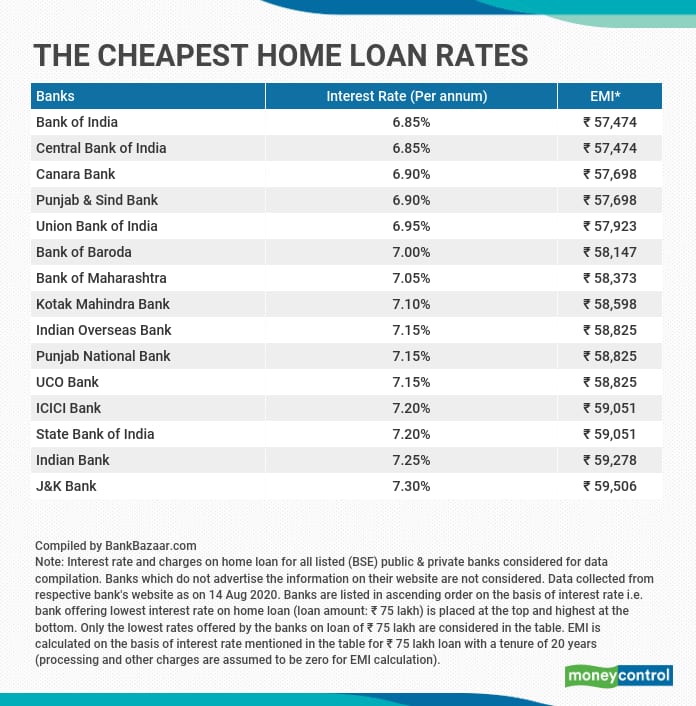
Not all home loans are created equal. The “Money” category of real estate is segmented into various products designed for different types of buyers, each carrying its own interest rate logic.
Conventional Loans
Conventional loans are the standard in the industry. They are not insured by the federal government and typically follow the lending guidelines set by Fannie Mae and Freddie Mac. These loans usually offer competitive rates for those with good credit and a solid down payment. Because they lack government backing, the interest rates are highly sensitive to your credit score and the size of your down payment.
Government-Backed Loans (FHA, VA, and USDA)
For those who may not qualify for conventional financing, the government offers programs to encourage homeownership. FHA loans (Federal Housing Administration) allow for lower credit scores and smaller down payments, though they often come with higher insurance premiums. VA loans (for veterans) often feature the lowest interest rates on the market and require no down payment, making them an incredible financial tool for eligible service members. USDA loans target rural development and offer similar benefits for low-to-moderate-income earners in specific geographic areas.
Jumbo Loans
When a loan amount exceeds the “conforming loan limits” set by the Federal Housing Finance Agency, it is classified as a Jumbo loan. Because these loans cannot be sold to Fannie Mae or Freddie Mac, they carry more risk for the lender. Interestingly, interest rates on Jumbo loans can sometimes be lower than conventional rates depending on market liquidity, but the qualification requirements—such as cash reserves and high credit scores—are much more stringent.
Strategies to Secure the Lowest Possible Interest Rate
Securing a low interest rate is not just about luck; it is about strategic financial planning. By taking specific steps before applying, you can save a fortune over the life of your loan.
Buying Down the Rate with Points
One common strategy is “buying points.” A discount point is an upfront fee paid to the lender at closing in exchange for a lower interest rate. Typically, one point costs 1% of the loan amount and reduces your interest rate by about 0.25%. This is a “Money” calculation: you must determine your “break-even point”—the moment when the monthly savings from the lower rate exceed the upfront cost of the point. If you plan to stay in the home for a long time, buying points is often a wise investment.
Rate Locks and Timing
Interest rates can change multiple times in a single day. Once you find a rate you are comfortable with, you should consider a “rate lock.” This is a guarantee from the lender that they will honor that specific rate for a set period (usually 30 to 60 days) while your loan is being processed. This protects you from market spikes during the underwriting period. However, be aware that if rates drop significantly, you might be stuck with the higher locked rate unless your agreement includes a “float-down” provision.
Shopping Multiple Lenders
Many homebuyers make the mistake of only talking to their primary bank. In reality, mortgage rates are a competitive market. Mortgage brokers, credit unions, and online lenders all have different “appetites” for risk and different overhead costs. By obtaining at least three different Loan Estimates, you can leverage offers against each other to negotiate a lower rate or reduced closing costs.
The Long-Term Financial Impact of Interest and Amortization
To truly understand what the interest rate on a home loan means, you must look at the amortization schedule. This is the timeline of how your payments are applied over time.
Front-Loading of Interest
In the early years of a mortgage, the vast majority of your monthly payment goes toward interest rather than principal. For example, on a 30-year $400,000 loan at a 7% interest rate, your first monthly payment might consist of $2,333 in interest and only $328 in principal. Understanding this “front-loading” is crucial for personal wealth building; it explains why your home equity grows so slowly in the first decade of ownership.
The Cost of a Single Percentage Point
The impact of a seemingly small difference in interest rates is staggering when compounded over 30 years. On a $500,000 loan, the difference between a 6% rate and a 7% rate is roughly $330 per month. Over 30 years, that extra 1% adds up to nearly $120,000 in additional interest payments. This highlights why the initial phase of credit building and rate shopping is perhaps the most high-ROI (Return on Investment) activity a person can engage in.

Refinancing as a Wealth Tool
The interest rate you get today isn’t necessarily the one you’re stuck with forever. Refinancing is the process of replacing your current mortgage with a new one, ideally at a lower interest rate. Savvy investors monitor the market; when rates drop by 0.5% to 1%, they calculate if the savings outweigh the closing costs of the new loan. Refinancing can also be used to switch from an ARM to a fixed-rate loan or to shorten a 30-year term to 15 years, drastically reducing the total interest paid and accelerating the path to debt-free homeownership.
In conclusion, the interest rate on a home loan is more than just a monthly obligation; it is a reflection of the global economy, your personal financial health, and your long-term wealth strategy. By understanding the mechanics of these rates and taking proactive steps to manage your credit and loan structure, you can transform a standard mortgage into a powerful tool for financial stability.
aViewFromTheCave is a participant in the Amazon Services LLC Associates Program, an affiliate advertising program designed to provide a means for sites to earn advertising fees by advertising and linking to Amazon.com. Amazon, the Amazon logo, AmazonSupply, and the AmazonSupply logo are trademarks of Amazon.com, Inc. or its affiliates. As an Amazon Associate we earn affiliate commissions from qualifying purchases.