
For most individuals, purchasing a vehicle is the second largest financial commitment they will make, surpassed only by the purchase of a home. While the sticker price of the car often dominates the conversation, the real cost of ownership is frequently dictated by a more subtle figure: the interest rate.
The interest rate on a car loan is essentially the “rent” you pay to a lender for the privilege of using their capital to acquire a vehicle today rather than waiting until you have saved the full purchase price. However, this rate is not a static number. It is a dynamic reflection of the global economy, your personal financial health, and the specific characteristics of the asset you are purchasing. To master your personal finances, you must understand how these rates are calculated, what influences them, and how you can manipulate these variables to save thousands of dollars over the life of your loan.
Decoding the Variables: What Influences Your Interest Rate?
The interest rate you are offered is rarely a matter of luck. Lenders use sophisticated algorithms to assess the level of risk they are taking by lending to you. The higher the perceived risk that you might default on the loan, the higher the interest rate they will charge to compensate for that risk.
The Critical Role of Credit Scores
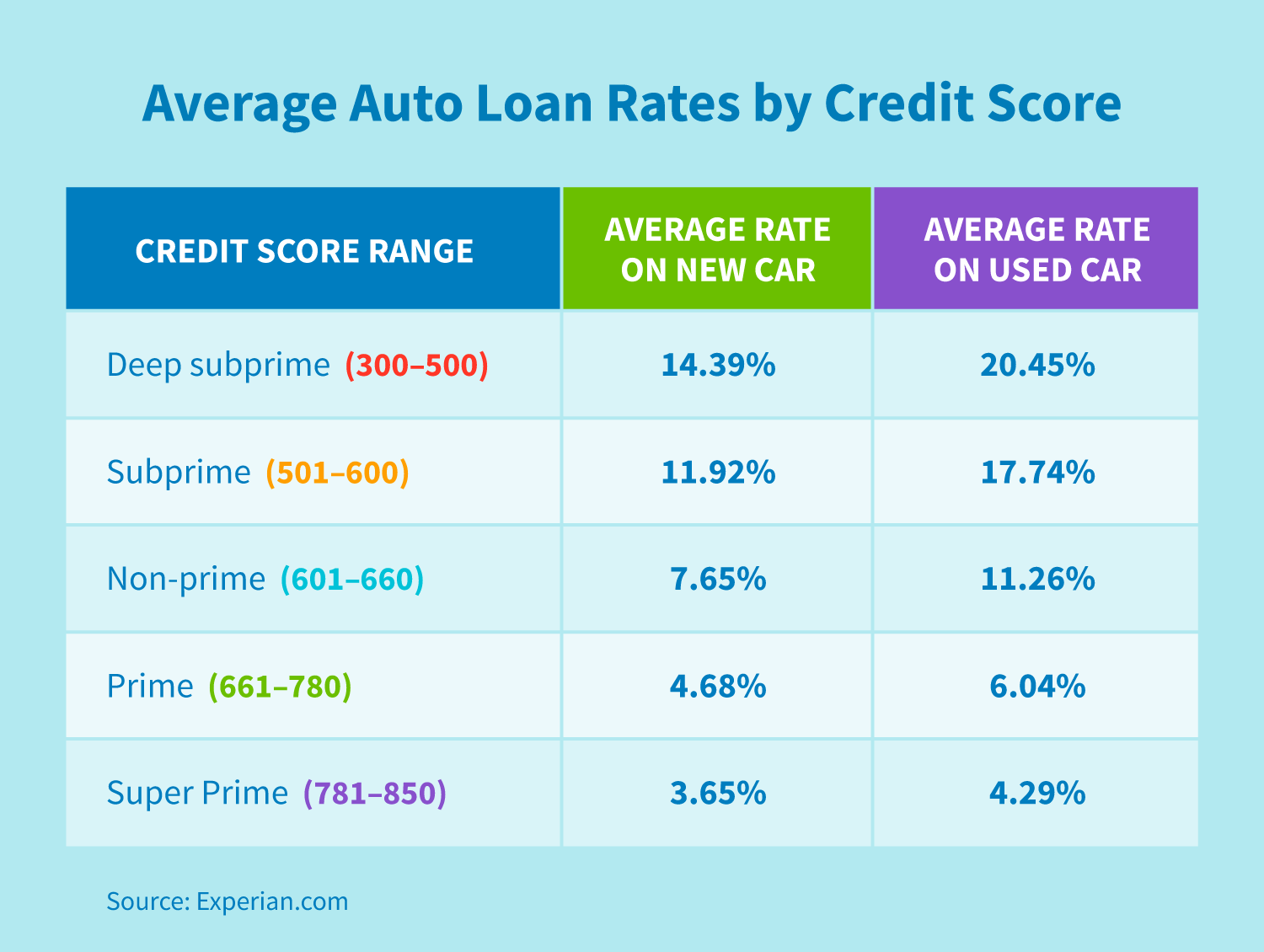
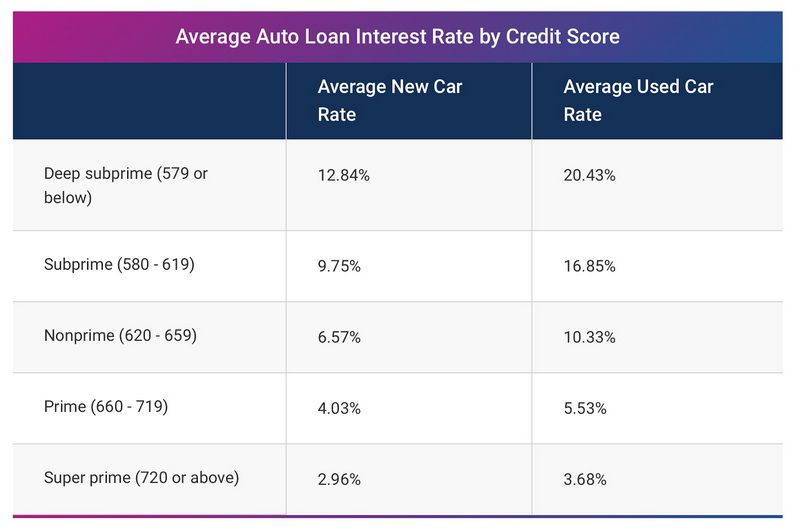
Your credit score is the single most influential factor in determining your car loan interest rate. Lenders typically categorize borrowers into tiers: Super-Prime, Prime, Near-Prime, Subprime, and Deep Subprime.
- Super-Prime (780+): These borrowers often receive “teaser” rates, sometimes as low as 0% or 1.9% during promotional periods.
- Subprime (Below 600): These borrowers may face double-digit interest rates, sometimes exceeding 15% or 20%.
The difference between a 4% rate and an 18% rate on a $30,000 loan can result in over $10,000 in additional interest payments over five years.
Loan Term and Duration
The length of your loan—often referred to as the “term”—also impacts the rate. In recent years, 72-month and 84-month loans have become increasingly common to keep monthly payments low. However, lenders view longer terms as higher risk. More can go wrong over seven years than over three years, and the vehicle’s value may depreciate faster than the loan is paid off. Consequently, an 84-month loan will almost always carry a higher interest rate than a 36-month or 48-month loan.
New vs. Used Vehicles
Generally, new cars attract lower interest rates than used cars. This seems counterintuitive since new cars are more expensive, but there are two primary reasons for this. First, new cars are easier for a lender to value accurately. Second, new cars have a higher resale value if the lender needs to repossess and sell the vehicle. Used cars, especially those older than five years, are seen as higher risk because their mechanical reliability is less certain and their market value is more volatile.
APR vs. Interest Rate: Navigating the Nuances
When shopping for a car loan, you will encounter two different figures: the interest rate and the Annual Percentage Rate (APR). While they are related, understanding the distinction is vital for accurate financial planning.
Defining the Interest Rate
The interest rate is the percentage of the principal loan amount that the lender charges annually. It does not include any of the upfront costs associated with originating the loan. If you borrow $20,000 at a 5% interest rate, the 5% applies strictly to the balance of the debt.
The Importance of the APR
The APR provides a more holistic view of the cost of borrowing. It includes the interest rate plus any additional fees, such as origination fees, documentation fees, or prepaid interest. Because the APR reflects the “all-in” cost of the loan, it is the most accurate metric to use when comparing offers from different lenders. A loan with a lower interest rate but high closing fees might actually have a higher APR than a loan with a slightly higher interest rate and no fees.
Simple Interest vs. Pre-computed Interest
Most modern auto loans are “simple interest” loans. This means interest is calculated daily based on the remaining principal balance. The benefit of a simple interest loan is that if you pay more than the minimum monthly payment, you reduce the principal faster, which in turn reduces the amount of interest that can accrue. In contrast, “pre-computed” interest loans calculate the total interest at the beginning of the term. Even if you pay the loan off early, you may still be responsible for the full amount of interest originally calculated. Always ensure your loan is a simple interest contract.
Comparing Lenders: Banks, Credit Unions, and Dealerships

Where you get your loan can be just as important as your credit score. Many consumers make the mistake of only looking at the financing offered by the car dealership, but this is rarely the most cost-effective option.
The Credit Union Advantage
For personal finance enthusiasts, credit unions are often the gold standard for auto loans. Because credit unions are member-owned, non-profit entities, they frequently offer interest rates that are 1% to 2% lower than traditional commercial banks. They also tend to have more flexible underwriting criteria for members with established relationships.
Commercial Banks and Online Lenders
Large national banks offer convenience and robust digital platforms for managing your loan. Online lenders have also entered the fray, utilizing automated underwriting to provide instant approvals. These digital-first companies often have lower overhead than brick-and-mortar banks, allowing them to offer competitive rates to borrowers with high credit scores.
Dealership (Captive) Financing
Dealerships often act as intermediaries, sending your application to multiple banks and adding a “markup” to the rate they receive back. However, “captive” lenders—the financing arms of manufacturers like Toyota Financial Services or Ford Credit—sometimes offer promotional rates, such as 0% APR, to move inventory. These deals are usually reserved for those with impeccable credit and are often offered in lieu of a cash rebate. You must do the math to see if a 0% rate is better than taking a $3,000 rebate and financing at a standard 5% rate.
Practical Strategies to Secure a Lower Rate
You are not a passive participant in the lending process. There are several proactive steps you can take to lower the interest rate offered to you before you ever set foot on a car lot.
The Power of the Down Payment
A substantial down payment reduces the “Loan-to-Value” (LTV) ratio. If you are buying a $40,000 car and put $10,000 down, the lender is only risking $30,000 on an asset worth $40,000. This provides a safety buffer for the lender, which often results in a lower interest rate. Ideally, aiming for a 20% down payment signals financial stability and reduces the lender’s risk profile.
The 14-Day Rate Shopping Window
Many people fear that applying for multiple loans will damage their credit score. However, credit scoring models (like FICO) recognize that consumers need to shop around for the best rate. As long as all of your auto loan inquiries occur within a specific window—typically 14 to 45 days—they are treated as a single “hard inquiry” for scoring purposes. This allows you to gather quotes from a bank, a credit union, and an online lender without compounding damage to your credit.
Get Pre-Approved
Walking into a dealership with a pre-approval letter from your bank is a powerful psychological and financial tool. It sets a “ceiling” on your interest rate. If the dealer wants you to use their financing, they must beat the rate you already have. This shifts the power from the salesperson to the consumer.
The Long-term Impact: Interest and Your Financial Freedom
While a 1% or 2% difference in an interest rate might seem negligible in a monthly payment, its impact on your long-term wealth is significant. Personal finance is not just about managing debt; it is about managing the opportunity cost of your money.
Total Cost of Ownership
When you look at a car loan, look at the total interest paid over the life of the loan. On a $35,000, six-year loan at 8%, you will pay roughly $9,200 in interest alone. If you can secure a 4% rate instead, that interest drops to approximately $4,400. That $4,800 difference is money that could have been invested in a Roth IRA or an index fund.
The Opportunity Cost of High-Interest Debt
Every dollar sent to a lender in the form of interest is a dollar that is not working for you. In the world of investing, the goal is to have your money earn compound interest. High-interest car loans represent “reverse compounding,” where the lender’s wealth grows at your expense. By minimizing your car loan interest rate, you maximize the amount of capital available for wealth-building activities.
Knowing When to Refinance
If you were forced to take a high-interest loan due to poor credit, you aren’t necessarily stuck with it for the full term. As your credit score improves through consistent on-time payments, you can apply for an auto loan refinance. Refinancing a loan from 12% down to 6% after eighteen months of improved credit can save you thousands of dollars and significantly shorten your path to being debt-free.
In conclusion, the interest rate on a car loan is more than just a monthly obligation; it is a critical component of your overall financial strategy. By understanding the factors that drive these rates—from credit scores to loan terms—and by aggressively shopping for the best APR, you can ensure that your vehicle purchase supports your lifestyle without sabotaging your long-term financial goals. Professional financial management requires a keen eye for detail, and in the world of auto financing, those details are found in the percentage points of your interest rate.
aViewFromTheCave is a participant in the Amazon Services LLC Associates Program, an affiliate advertising program designed to provide a means for sites to earn advertising fees by advertising and linking to Amazon.com. Amazon, the Amazon logo, AmazonSupply, and the AmazonSupply logo are trademarks of Amazon.com, Inc. or its affiliates. As an Amazon Associate we earn affiliate commissions from qualifying purchases.