
At its most fundamental level, the interest rate of a loan is the cost of borrowing money. It is the price paid by a borrower to a lender for the use of assets—usually cash—over a specific period. For the borrower, interest is an expense that must be managed alongside the repayment of the original amount borrowed, known as the principal. For the lender, the interest rate represents a return on investment, compensating them for the risk of lending the funds and the “opportunity cost” of not being able to use that money elsewhere while the loan is active.
Understanding how interest rates function is a cornerstone of personal and business finance. Whether you are applying for a mortgage, financing a new vehicle, or securing a line of credit for a startup, the interest rate will dictate the total cost of your debt and influence your long-term financial health. In this guide, we will explore the mechanics of interest rates, the factors that influence them, and how you can navigate the financial landscape to secure the most favorable terms.
The Mechanics of Interest: Why We Pay to Borrow
To understand why interest rates exist, one must look at the perspective of the lender. Lending is an inherently risky activity. There is always a possibility that the borrower may default, meaning the lender loses the principal. Furthermore, inflation erodes the purchasing power of money over time. If a lender provides $1,000 today and receives exactly $1,000 back five years from now, that money will likely buy fewer goods and services than it could have originally.
Interest rates serve three primary functions for the lender:
-
Risk Mitigation: The rate accounts for the possibility that the loan might not be repaid. Higher-risk borrowers are charged higher rates to offset the potential for loss.
-
Inflation Compensation: Lenders set rates to ensure that the value of the money they receive in the future maintains its purchasing power.
-
Opportunity Cost: By lending money, the lender gives up the ability to invest that money in other ventures, such as the stock market or business expansion. The interest rate is the “fee” for this sacrifice.
Principal vs. Interest
Every loan payment is typically split into two components: principal and interest. The principal is the actual balance of the loan that remains unpaid. The interest is the percentage of that principal charged by the lender during each billing cycle. In the early stages of most long-term loans, a larger portion of the monthly payment goes toward interest. As the principal balance decreases over time, the interest charge also decreases, allowing more of the payment to be applied to the principal. This process is known as amortization.
Types of Interest Rates: Navigating the Options
Not all interest rates are structured the same way. The type of rate attached to a loan determines how much you will pay over the life of the debt and how much your payments might fluctuate.
Fixed Interest Rates
A fixed interest rate remains constant throughout the entire term of the loan. If you sign a contract for a 30-year mortgage at 5%, your rate will remain 5% until the loan is paid off, regardless of how the global economy shifts. Fixed rates provide stability and predictability, making them ideal for long-term budgeting. Borrowers often prefer fixed rates when market interest rates are low, as it allows them to “lock in” a low cost of borrowing for years to come.
Variable (Adjustable) Interest Rates
Variable interest rates fluctuate over time based on an underlying benchmark or index, such as the Prime Rate or the Secured Overnight Financing Rate (SOFR). These loans often start with a lower “teaser” rate than fixed-rate loans, but they carry the risk of increasing if market rates rise. Variable rates are common in credit cards, home equity lines of credit (HELOCs), and certain types of adjustable-rate mortgages (ARMs). While they can save money if rates stay low or drop, they can lead to “payment shock” if the rate climbs significantly.
Annual Percentage Rate (APR) vs. Nominal Interest Rate
It is crucial for borrowers to distinguish between the nominal interest rate and the Annual Percentage Rate (APR). The nominal rate is the basic interest charge on the principal. However, the APR provides a more accurate picture of the total cost of the loan because it includes both the interest rate and any additional fees, such as origination fees, closing costs, or mortgage insurance. When comparing loan offers from different lenders, the APR is the most effective tool for an “apples-to-apples” comparison.
Factors That Determine Your Personal Interest Rate
While central banks and market forces set the baseline for interest rates, the specific rate offered to an individual borrower is determined by a variety of personal and economic factors. Lenders use these metrics to assess the likelihood of repayment.

Credit Score and Financial History
Your credit score is perhaps the most influential factor in determining your interest rate. This numerical representation of your creditworthiness—derived from your payment history, debt-to-income ratio, and length of credit history—tells the lender how much risk you represent. A borrower with a “prime” credit score (typically 740 or higher) will qualify for the lowest available rates. Conversely, a borrower with a “subprime” score will face significantly higher rates to compensate the lender for the increased risk of default.
Loan Term and Down Payment
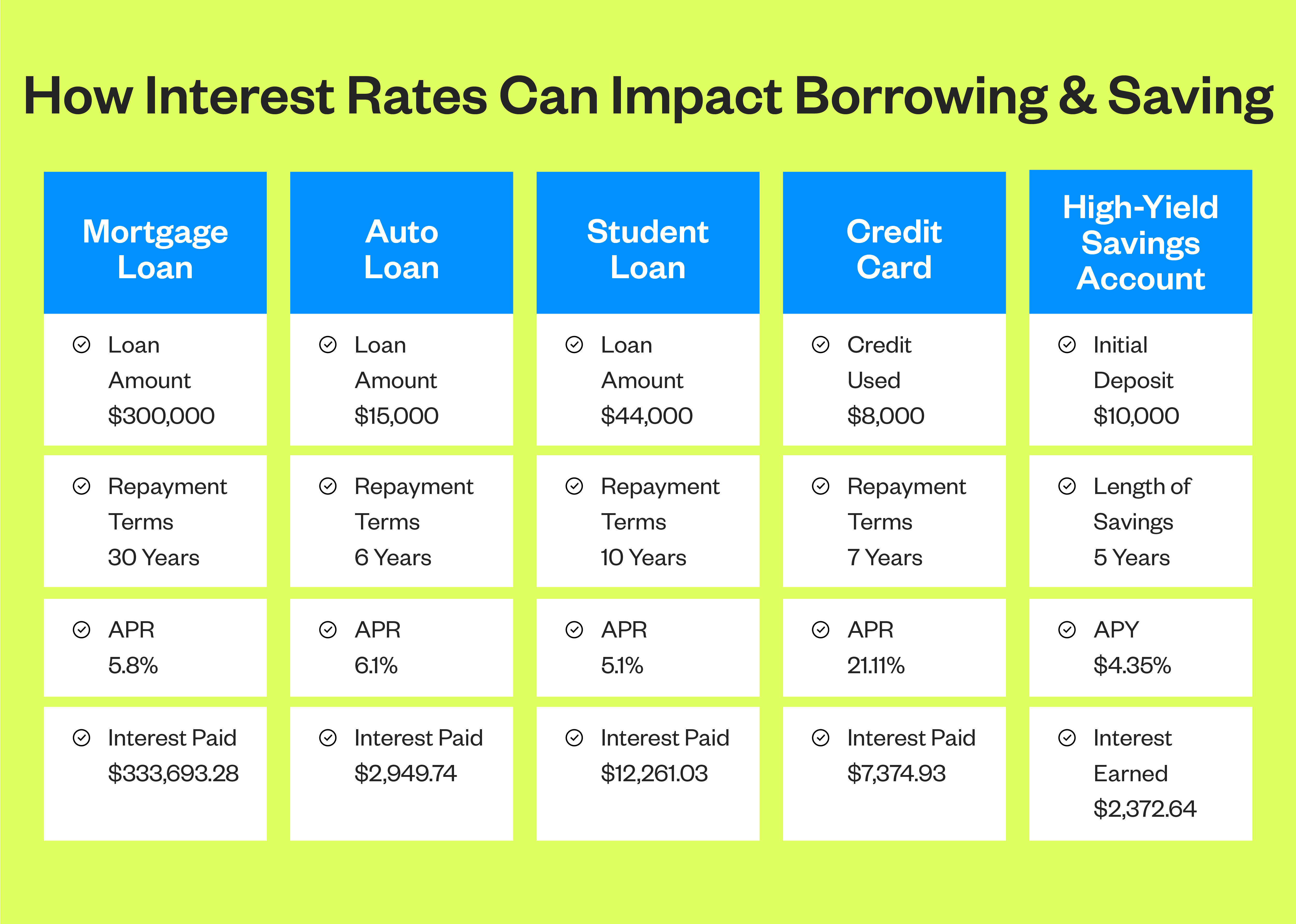
The structure of the loan itself impacts the rate. Generally, shorter-term loans (such as a 15-year mortgage) carry lower interest rates than longer-term loans (such as a 30-year mortgage). This is because the lender is exposed to risk for a shorter period. Additionally, the size of your down payment—or the “loan-to-value” (LTV) ratio—matters. A larger down payment reduces the lender’s risk, as the borrower has more “skin in the game,” which often results in a lower interest rate.
Macroeconomic Factors and the Central Bank
On a broader scale, interest rates are influenced by the monetary policy of a country’s central bank, such as the Federal Reserve in the United States. When the economy is sluggish, central banks often lower interest rates to encourage borrowing and spending. When inflation is high, they raise rates to cool the economy. These systemic changes ripple through the banking industry, affecting everything from savings account yields to mortgage rates.
How Interest is Calculated: Simple vs. Compound
The method by which interest is calculated can have a profound impact on the total amount you owe over time.
Simple Interest
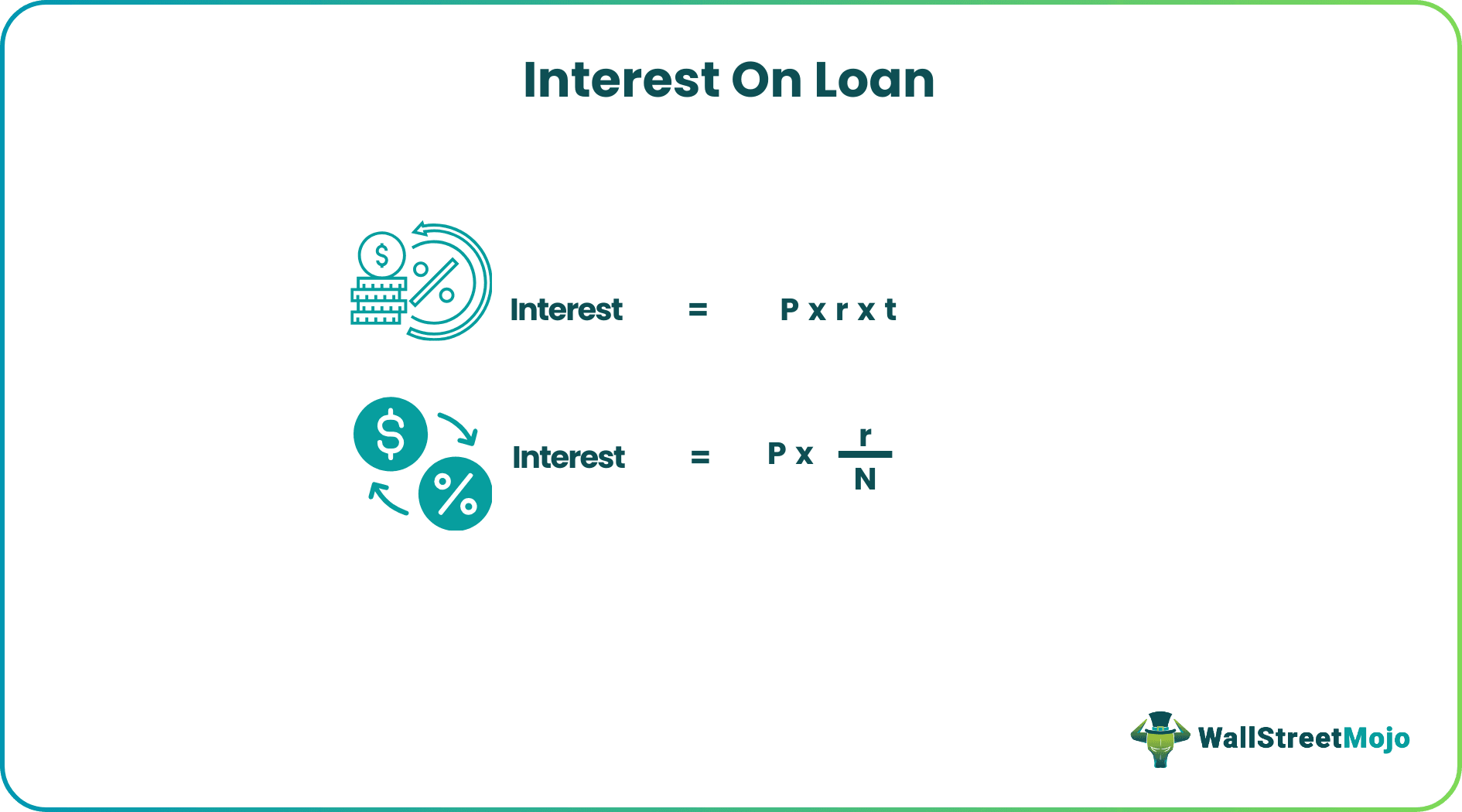
Simple interest is calculated only on the principal amount of the loan. The formula is straightforward: Principal x Rate x Time. For example, if you borrow $10,000 at a 5% simple interest rate for three years, you will pay $500 in interest each year, totaling $1,500. While rare in long-term consumer lending, simple interest is sometimes found in short-term personal loans or specific types of auto financing.
Compound Interest
Most modern financial products utilize compound interest, which is interest calculated on the initial principal and also on the accumulated interest of previous periods. In the context of a loan, “compounding” usually refers to how often the interest is added to the balance. While compounding is a powerful tool for savers (earning “interest on interest”), it can be a burden for borrowers. However, most installment loans (like mortgages and student loans) use a specialized form of compounding called amortization, where interest is calculated monthly based on the current remaining balance.
Strategies to Secure the Lowest Possible Rates
Securing a lower interest rate can save you thousands—or even tens of thousands—of dollars over the life of a loan. Borrowers who are proactive about their financial health are often rewarded with better terms.
Improve Your Credit Profile
Before applying for a major loan, take steps to optimize your credit score. This includes paying down existing credit card balances to lower your credit utilization ratio, ensuring all bills are paid on time, and checking your credit report for errors. Even a 20-point increase in your credit score can move you into a different “tier” of interest rates, resulting in substantial savings.
Shop Around and Negotiate
Interest rates are not set in stone. Different lenders have different overhead costs, risk appetites, and profit margins. It is essential to get quotes from multiple sources, including national banks, local credit unions, and online lenders. Once you have a competitive offer, you can sometimes use it as leverage to negotiate a better rate with your preferred financial institution.
Consider the Timing
If you have the flexibility to wait, monitoring the economic climate can be beneficial. If the central bank has indicated that it may cut rates in the near future, waiting a few months to apply for a mortgage could result in a lower rate. Conversely, if rates are expected to rise, locking in a fixed rate sooner rather than later is a prudent move.
The Role of Refinancing
The interest rate you start with doesn’t have to be the one you keep. If market rates drop significantly or if your credit score improves after you’ve taken out a loan, you may be able to refinance. Refinancing involves taking out a new loan with better terms to pay off the old one. This strategy is frequently used by homeowners to lower their monthly mortgage payments or by graduates to manage student debt more effectively.
In conclusion, the interest rate of a loan is far more than just a percentage on a contract. It is a dynamic reflection of risk, economic policy, and personal financial health. By understanding the nuances of how these rates are determined and calculated, borrowers can make informed decisions that protect their capital and move them closer to their long-term financial goals. Navigating the world of interest rates requires diligence and a proactive approach, but the reward is a more efficient and affordable path to achieving your financial objectives.
aViewFromTheCave is a participant in the Amazon Services LLC Associates Program, an affiliate advertising program designed to provide a means for sites to earn advertising fees by advertising and linking to Amazon.com. Amazon, the Amazon logo, AmazonSupply, and the AmazonSupply logo are trademarks of Amazon.com, Inc. or its affiliates. As an Amazon Associate we earn affiliate commissions from qualifying purchases.