
Navigating the world of car loans can often feel like deciphering a complex financial puzzle. Among the many terms and figures thrown your way, the “interest rate” stands out as arguably the most critical. It’s not just a number; it’s the cost of borrowing money, and it profoundly impacts the total amount you’ll pay for your vehicle over time. Understanding what an interest rate is, how it’s determined, and its implications is fundamental for anyone looking to finance a car responsibly. This comprehensive guide will demystify car loan interest rates, empowering you to make informed decisions and secure the most favorable terms for your next vehicle purchase.

Decoding Car Loan Interest Rates: The Fundamentals
At its core, an interest rate represents the charge for the privilege of borrowing money. When you take out a car loan, a lender provides you with the funds to purchase a vehicle, and in return, you agree to pay back that principal amount plus an additional percentage – the interest – over the life of the loan.
Defining Interest and APR (Annual Percentage Rate)
While “interest rate” is often used broadly, it’s crucial to distinguish it from the Annual Percentage Rate (APR). The interest rate is the percentage charged by the lender for the principal amount borrowed. The APR, however, is a more comprehensive measure of the total cost of borrowing, expressed as an annual percentage. It includes not only the interest rate but also other fees and charges associated with the loan, such as administrative fees, origination fees, and certain closing costs. For consumers, the APR is often a more accurate indicator of the true cost of a loan, as it provides a standardized way to compare different loan offers. A lower APR generally means a less expensive loan.
How Interest Rates are Calculated
Interest rates on car loans are typically calculated using a simple interest method, though the exact application can vary. Simple interest is calculated on the principal balance that remains on your loan. Each month, your payment is divided into two parts: one portion goes towards paying down the principal, and the other covers the interest accrued since your last payment. As the principal balance decreases over time, the amount of interest you pay each month also gradually reduces, assuming a fixed interest rate. This makes the early payments heavily weighted towards interest, while later payments pay down more principal.
Fixed vs. Variable Interest Rates
Car loans predominantly come with fixed interest rates. A fixed interest rate means that the rate – and consequently, your monthly payment – remains the same throughout the entire duration of the loan. This offers predictability and stability, making it easier to budget and manage your finances.
While less common for standard car loans, variable interest rates can exist. A variable rate, as the name suggests, can fluctuate over the life of the loan based on a specified index, such as the prime rate. If the index rate rises, your interest rate and monthly payment could increase; if it falls, they could decrease. While a variable rate might offer a lower initial payment, it introduces uncertainty regarding future costs, which is why most consumers prefer the security of a fixed rate for car financing.
Key Factors Influencing Your Car Loan Interest Rate
Interest rates are not one-size-fits-all. They are highly individualized and depend on a multitude of factors that lenders assess to determine the risk associated with lending to you. Understanding these elements can help you identify areas where you might improve your standing.
Credit Score and History: Your Financial Report Card
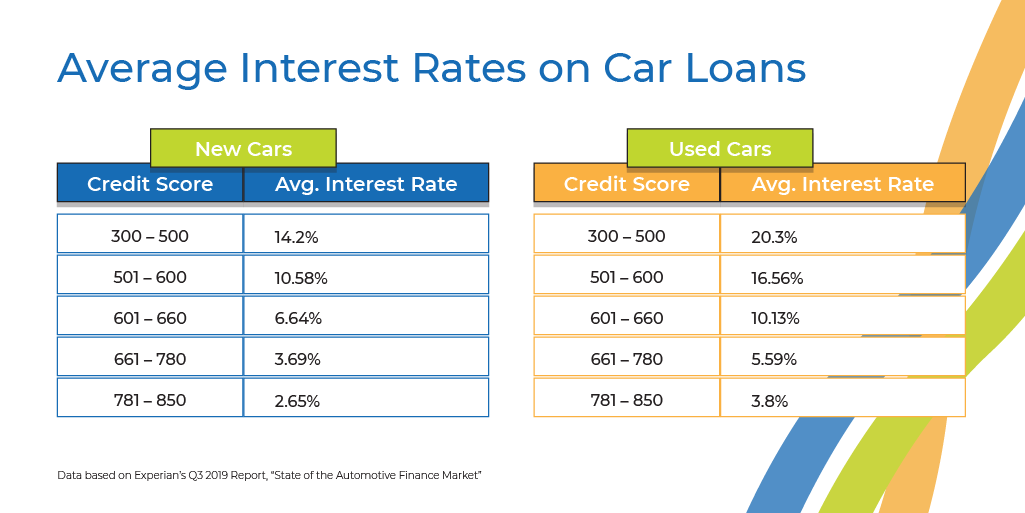
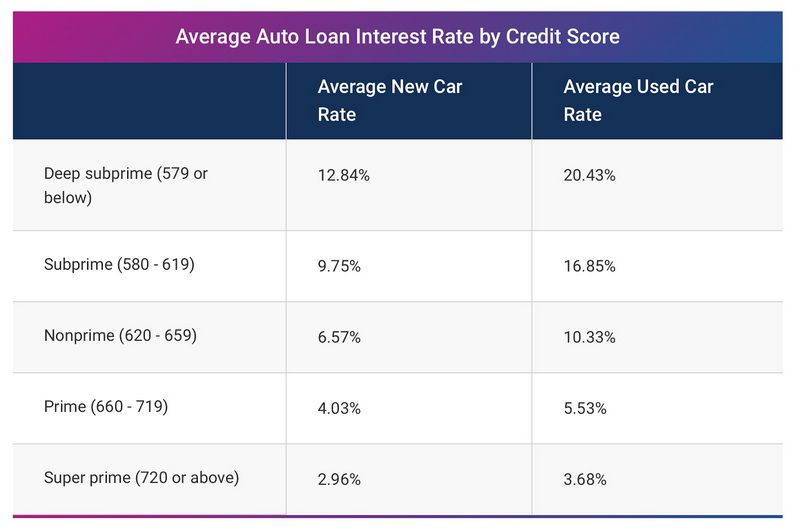
This is arguably the most significant determinant of your car loan interest rate. Your credit score (e.g., FICO or VantageScore) is a three-digit number that summarizes your creditworthiness, reflecting your history of borrowing and repaying debt. A higher credit score (typically above 700) indicates to lenders that you are a low-risk borrower, likely to repay your loan on time. Consequently, you’ll be offered lower interest rates. Conversely, a lower credit score suggests a higher risk, leading lenders to charge higher interest rates to compensate for that perceived risk. Your credit history, including payment history, amounts owed, length of credit history, and types of credit used, all contribute to this score.
Loan Term Length: Short vs. Long
The duration over which you agree to repay the loan also plays a crucial role. Shorter loan terms (e.g., 36 or 48 months) generally come with lower interest rates. This is because the lender’s money is tied up for a shorter period, reducing their exposure to risk over time. However, shorter terms mean higher monthly payments. Longer loan terms (e.g., 60, 72, or even 84 months) often carry higher interest rates. While they offer the advantage of lower monthly payments, you end up paying more interest over the life of the loan, and you typically pay a higher rate for the extended period of risk the lender takes on.
Down Payment Amount
The amount of money you put down upfront on a car can significantly influence your interest rate. A larger down payment reduces the amount you need to borrow, which in turn reduces the lender’s risk. With less money at stake for the lender, they are often willing to offer a lower interest rate. A substantial down payment also demonstrates your financial commitment and ability to save, further signaling you as a responsible borrower.
Vehicle Type and Age
Believe it or not, the car itself can influence the interest rate. New cars often qualify for lower interest rates than used cars. This is partly because new cars typically depreciate more slowly in the initial years, providing more collateral value for the lender. Additionally, manufacturers sometimes offer special financing incentives (subvented rates) on new vehicles to boost sales. Used cars, especially older models, are perceived as higher risk due to potential mechanical issues and faster depreciation, often leading to slightly higher interest rates.
Lender Type: Banks, Credit Unions, Dealerships
Where you get your loan can also impact the rate. Traditional banks, credit unions, and online lenders often compete for your business, potentially offering more competitive rates than dealership financing departments. Dealerships often partner with various lenders and may offer convenient “one-stop shop” financing, but their rates might include markups. Credit unions, being not-for-profit institutions, are particularly known for offering some of the most competitive interest rates to their members.
Current Economic Conditions (Federal Reserve Rates)
Broader economic factors and monetary policy also cast a shadow over interest rates. The Federal Reserve’s adjustments to the federal funds rate (a benchmark for short-term lending between banks) influence interest rates across the economy, including those for car loans. When the Fed raises rates, borrowing becomes more expensive overall, and car loan rates tend to climb. Conversely, when the Fed lowers rates, car loan rates may become more attractive. While you can’t control these macro factors, being aware of them helps you understand the general market environment for borrowing.
Navigating the Car Loan Application Process
Understanding how interest rates are determined is just the first step. The next is proactively engaging with the lending process to secure the best possible terms.
Pre-approval: Your Power Play
One of the most effective strategies is to get pre-approved for a car loan before you even set foot in a dealership. Pre-approval involves submitting a loan application to a bank, credit union, or online lender and receiving an offer outlining the maximum amount you can borrow, the estimated interest rate, and the loan terms. This gives you several advantages:
- Negotiating Power: You walk into the dealership knowing your financing options and can negotiate the car price as a cash buyer.
- Budget Clarity: You know exactly how much you can afford, preventing you from overspending.
- Benchmark for Comparison: You have a solid offer to compare against any financing options the dealership might present.
Understanding Loan Offers and Terms
When comparing loan offers, don’t just look at the interest rate. Focus on the APR, as it gives you the true cost. Also, carefully review the loan term, monthly payment amount, and any associated fees. A seemingly lower monthly payment on a longer loan term might mean paying significantly more interest over time. Ensure you understand if there are any prepayment penalties if you decide to pay off the loan early.
Reading the Fine Print: Hidden Fees and Charges
Always scrutinize the loan agreement before signing. Look for any additional fees that might not have been transparently discussed, such as origination fees, documentation fees, or processing fees. These can increase the overall cost of your loan even if the interest rate seems low. Ask questions and don’t hesitate to seek clarification on anything you don’t understand.
Strategies to Secure a Lower Interest Rate
While some factors are beyond your immediate control, many are within your influence, allowing you to actively work towards a lower interest rate.
Improve Your Credit Score
This is a long-term strategy but highly effective. Pay all your bills on time, reduce existing debt, avoid opening too many new credit accounts simultaneously, and regularly check your credit report for errors. Even a few points increase can sometimes move you into a better rate tier.
Increase Your Down Payment
The more you can put down upfront, the less you need to borrow, and the less risky you appear to lenders. Aim for at least 20% if possible, but any amount that reduces the principal can help secure a better rate.
Shorten Your Loan Term
While this increases your monthly payments, it significantly reduces the total interest paid and often comes with a lower interest rate. If your budget allows, opting for a 36- or 48-month loan instead of 60 or 72 months can save you thousands.
Shop Around and Compare Lenders
Don’t settle for the first offer you receive. Get quotes from multiple sources: your primary bank, local credit unions, online lenders, and even the dealership. Use pre-approvals to compare apples-to-apples offers and leverage them to negotiate.
Consider Refinancing
If you’ve already financed a car and your credit score has improved significantly, or if market interest rates have dropped, you might be able to refinance your existing car loan. Refinancing replaces your current loan with a new one, potentially at a lower interest rate or with different terms, saving you money over the remaining life of the loan.
The Long-Term Impact of Interest Rates on Your Financial Health
The interest rate on your car loan isn’t just a number on a paper; it’s a financial lever with significant long-term implications for your personal finances.
Total Cost of the Loan
A lower interest rate means you pay less over the life of the loan. For example, on a $30,000 loan, a 5% APR over 60 months results in approximately $3,950 in interest, while a 10% APR on the same loan would accrue roughly $8,000 in interest. That difference of over $4,000 could be used for savings, investments, or other financial goals.
Monthly Payment Affordability
While a lower interest rate reduces the total cost, it also typically lowers your monthly payment. This can free up cash flow for other expenses, contributing to greater financial flexibility and reducing stress. Conversely, a high interest rate can make monthly payments a burden, potentially straining your budget.
Opportunity Cost and Savings
Every dollar spent on high interest is a dollar that cannot be invested, saved for retirement, or used to pay down higher-interest debt. By securing a low interest rate, you maximize the purchasing power of your money and open up opportunities to grow your wealth elsewhere.
Building or Damaging Your Credit
Managing your car loan payments responsibly directly impacts your credit score. Timely payments on a low-interest loan demonstrate excellent credit behavior. Conversely, struggling with high monthly payments due to a high interest rate could lead to missed payments, negatively impacting your credit score and making future borrowing more expensive.
In conclusion, the interest rate in a car loan is a multifaceted financial component that demands careful attention. By understanding its definition, the factors that influence it, and strategies to secure a favorable rate, you can empower yourself to make a wise financial decision that supports your long-term financial health, rather than hindering it. Do your homework, shop around, and negotiate confidently – your wallet will thank you.
aViewFromTheCave is a participant in the Amazon Services LLC Associates Program, an affiliate advertising program designed to provide a means for sites to earn advertising fees by advertising and linking to Amazon.com. Amazon, the Amazon logo, AmazonSupply, and the AmazonSupply logo are trademarks of Amazon.com, Inc. or its affiliates. As an Amazon Associate we earn affiliate commissions from qualifying purchases.