
For most individuals, purchasing a home represents the single largest financial transaction of their lives. It’s not merely about the sticker price of the property; it’s intricately tied to the cost of borrowing the money—the interest rate on a home loan. Understanding what an interest rate is, how it’s determined, and its profound impact on your long-term financial health is paramount for anyone navigating the complex world of real estate finance. This article delves deep into the nuances of home loan interest rates, equipping you with the knowledge to make informed decisions and secure your financial future.

Understanding the Fundamentals: Interest Rates and Home Loans
At its core, a home loan, often referred to as a mortgage, is a sum of money borrowed from a financial institution to purchase real estate. This borrowing isn’t free; the lender charges a fee for providing this capital, which is expressed as an interest rate. Comprehending these foundational concepts is the first step toward demystifying the mortgage process.
Defining the Home Loan and Its Purpose
A home loan is a secured loan, meaning the property itself serves as collateral. If the borrower defaults on their payments, the lender has the right to repossess the property. The primary purpose of a home loan is to bridge the gap between the amount a buyer has saved (their down payment) and the total purchase price of the home. This allows individuals to acquire significant assets that would otherwise be out of reach, facilitating homeownership and wealth building over time. Mortgages come in various forms, tailored to different financial situations and risk tolerances, but all share the common element of an interest rate that determines the cost of the loan.
The Essence of an Interest Rate: Cost of Borrowing
An interest rate is essentially the price you pay to borrow money, or the cost a lender charges for the use of their funds, expressed as a percentage of the principal amount. For a home loan, this percentage is applied to the outstanding balance, and it dictates a significant portion of your monthly mortgage payment. It’s not just a number; it’s a crucial variable that determines how much you will ultimately pay for your home over the loan’s lifetime. A seemingly small difference in the interest rate can translate into tens of thousands of dollars saved or spent over a 15-year or 30-year mortgage term. This cost compensates the lender for the risk they take in lending you money and for the opportunity cost of not using that money elsewhere.
Differentiating Between Interest Rate and APR
While often used interchangeably by the uninformed, the nominal interest rate and the Annual Percentage Rate (APR) are distinct concepts crucial for any borrower to understand.
The interest rate is the percentage rate that determines the basic cost of borrowing the principal amount. It directly influences your monthly principal and interest payment.
The APR, on the other hand, provides a more comprehensive measure of the total cost of the loan over its term. It includes not only the interest rate but also other fees and charges associated with the loan, such as origination fees, discount points, mortgage insurance, and other closing costs. Because the APR incorporates these additional expenses, it is often higher than the nominal interest rate and serves as a better metric for comparing the true cost of different loan offers from various lenders. When comparing loans, always look at the APR to get a holistic view of the expense.
Key Factors Influencing Home Loan Interest Rates
Home loan interest rates are not static; they fluctuate constantly, influenced by a complex interplay of economic forces, market conditions, and individual borrower characteristics. Understanding these drivers is key to anticipating rate movements and timing your mortgage decisions.
Economic Indicators and Central Bank Policies
Broader economic health plays a significant role in dictating interest rates. Key economic indicators such as inflation, employment rates, and GDP growth all influence monetary policy. Central banks, like the Federal Reserve in the United States, use their policy interest rates (e.g., the federal funds rate) to control inflation and stimulate or cool down the economy. When the central bank raises its benchmark rate, it generally leads to higher borrowing costs across the economy, including mortgage rates. Conversely, a reduction in the benchmark rate typically results in lower mortgage rates. The bond market, particularly the yield on Treasury bonds, also significantly impacts mortgage rates, as mortgage-backed securities (MBS) often track the yields of these government bonds.
The Lender’s Perspective: Risk Assessment and Profit Margins
Lenders are businesses, and their goal is to make a profit while managing risk. When determining your specific interest rate, they assess the perceived risk associated with lending to you. This risk assessment involves evaluating various factors that indicate your likelihood of repayment. Lenders also factor in their operational costs, desired profit margins, and the cost of funds they acquire to lend out. Competition among lenders can also drive rates down, as they vie for market share. Ultimately, the rate offered to a borrower reflects a balance between the lender’s cost of capital, risk appetite, and profit objectives.
Borrower-Specific Factors: Credit Score, Down Payment, and Debt-to-Income Ratio
While macro-economic factors set the general market rates, your personal financial profile largely determines the specific interest rate you qualify for.
Your credit score is perhaps the most critical individual factor. A higher credit score (typically above 740-760) indicates a strong history of responsible borrowing and repayment, signaling lower risk to lenders. This translates into more favorable, lower interest rates.
The down payment also significantly impacts your rate. A larger down payment (e.g., 20% or more) reduces the amount you need to borrow, thereby lowering the lender’s risk exposure. This often results in a lower interest rate and can also help you avoid private mortgage insurance (PMI).
Finally, your debt-to-income (DTI) ratio is another crucial metric. This ratio compares your total monthly debt payments to your gross monthly income. A lower DTI ratio (ideally below 36-43%) indicates you have more disposable income to cover your mortgage payments, making you a less risky borrower and potentially qualifying you for better rates. Other factors like loan-to-value (LTV) ratio, loan term (15-year vs. 30-year), and the type of property also play a role.
Navigating Types of Home Loan Interest Rates
When seeking a home loan, you’ll encounter two primary types of interest rates: fixed and adjustable. Each comes with its own set of advantages and disadvantages, making the choice dependent on your financial goals, risk tolerance, and economic outlook.
Fixed-Rate Mortgages: Predictability and Stability
A fixed-rate mortgage is characterized by an interest rate that remains constant throughout the entire term of the loan. This means your principal and interest payment will never change, providing unparalleled predictability and stability for your monthly budget. Borrowers appreciate fixed-rate mortgages, especially during periods of low interest rates, as it allows them to lock in a favorable rate for the long term, shielding them from potential future rate hikes. Common fixed-rate terms are 15, 20, and 30 years. While the predictability is a major advantage, fixed rates are typically slightly higher than the initial rates of adjustable-rate mortgages, reflecting the lender’s assumption of interest rate risk.
Adjustable-Rate Mortgages (ARMs): Flexibility with Potential Volatility
An adjustable-rate mortgage (ARM), as the name suggests, has an interest rate that can change periodically over the life of the loan. ARMs typically start with a lower, fixed interest rate for an initial period (e.g., 3, 5, 7, or 10 years), after which the rate adjusts up or down at predetermined intervals (e.g., annually) based on a specific market index plus a lender’s margin. The initial lower rate can make ARMs attractive for borrowers who plan to sell or refinance before the fixed-rate period ends, or for those who anticipate their income will rise significantly in the future. However, the downside risk is that if market rates increase, your monthly payments could rise substantially, potentially becoming unaffordable. ARMs usually have caps on how much the interest rate can increase per adjustment period and over the life of the loan, offering some protection against extreme fluctuations.
Hybrid ARMs: A Blend of Fixed and Variable
Many ARMs are actually “hybrid” ARMs, structured to offer a combination of fixed and adjustable periods. For example, a “5/1 ARM” means the interest rate is fixed for the first five years, and then adjusts once a year for the remainder of the loan term. Other common hybrids include 7/1 ARMs and 10/1 ARMs. These hybrid structures are designed to provide borrowers with an initial period of payment stability while still offering the lower introductory rates often associated with adjustable-rate products. They can be a good option for buyers who are confident in their short-to-medium-term financial plans but want to take advantage of potentially lower initial costs.
The Impact of Interest Rates on Your Mortgage and Financial Health
The interest rate on your home loan is not just a number; it’s a financial lever that significantly impacts your monthly budget, the total cost of your home, and your overall financial flexibility. Understanding this impact is vital for long-term financial planning.
Calculating Your Monthly Payments: The Direct Correlation
The most immediate and tangible effect of the interest rate is on your monthly mortgage payment. A higher interest rate directly translates to a larger portion of your monthly payment going towards interest, rather than principal. Even a slight increase in the rate—say, from 4.0% to 4.5% on a $300,000, 30-year fixed-rate loan—can add significant dollars to your monthly outlay. This difference might seem minor on a monthly basis, but it compounds over the loan’s term. Online mortgage calculators are invaluable tools for visualizing how different interest rates affect your monthly commitment, allowing you to budget effectively and understand what you can truly afford.
Total Cost of the Loan Over Its Lifespan
Beyond monthly payments, the interest rate profoundly influences the total amount you will pay for your home over the entire loan term. Over 15, 20, or 30 years, a higher interest rate means you’ll pay substantially more in interest charges, effectively increasing the overall cost of the property. For example, a $300,000 loan at 4% for 30 years results in approximately $215,600 in total interest paid. The same loan at 5% would accrue roughly $279,000 in interest – a difference of over $63,000. This long-term cost impact underscores the importance of securing the lowest possible interest rate that aligns with your financial strategy.
Refinancing Opportunities and Interest Rate Fluctuations
The dynamic nature of interest rates also creates opportunities for homeowners through refinancing. If market interest rates drop significantly after you’ve secured your initial mortgage, you might be able to refinance your existing loan at a lower rate. Refinancing involves taking out a new loan to pay off your old one, ideally at a more favorable rate or terms. This can reduce your monthly payments, lower the total interest paid over the life of the loan, or even help you shorten your loan term. Conversely, if you have an adjustable-rate mortgage and rates begin to climb, refinancing into a fixed-rate loan could be a strategic move to lock in stability and prevent future payment shocks. Monitoring interest rate trends is crucial for identifying these potential savings.
Strategies for Securing Favorable Home Loan Interest Rates
Given the profound impact of interest rates, proactively working to secure the best possible rate is a smart financial move. There are several actionable steps you can take to position yourself as an attractive borrower and potentially reduce your borrowing costs.
Improving Your Financial Profile: Credit and Debt Management
The single most impactful action you can take to secure a lower interest rate is to cultivate an excellent financial profile. This primarily means maintaining a high credit score. Review your credit report regularly for errors and work to improve your score by paying all bills on time, keeping credit utilization low, and avoiding new debt before applying for a mortgage. Additionally, reducing your overall debt, especially high-interest consumer debt, will lower your debt-to-income ratio, making you a more appealing candidate for lenders and potentially unlocking better rates. Demonstrating financial discipline and stability signals lower risk, which lenders reward with more favorable terms.
Shopping Around: The Power of Comparison
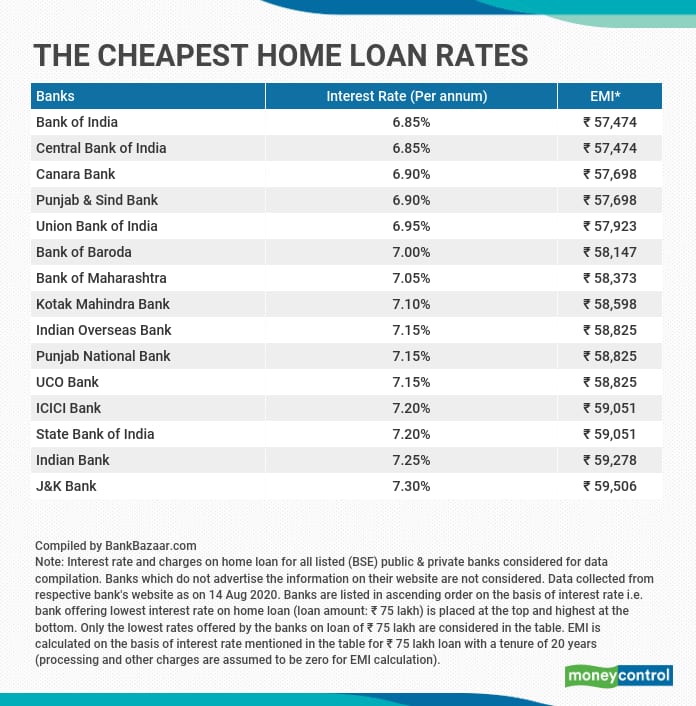
Never settle for the first loan offer you receive. Lenders have different underwriting standards, risk appetites, and pricing models, meaning the interest rate and fees they offer can vary significantly. It’s crucial to shop around and get quotes from multiple lenders—including large banks, credit unions, and online mortgage brokers. Apply for pre-approval with several institutions within a short timeframe (typically 14-45 days, depending on the credit scoring model) to minimize the impact on your credit score. This allows you to compare not just interest rates, but also APRs, origination fees, closing costs, and customer service, ensuring you get the most competitive deal tailored to your needs. A seemingly small difference in rate can save you tens of thousands of dollars over the loan term.

Understanding Rate Locks and Closing Costs
Once you receive a favorable interest rate offer, you can typically “lock” that rate with the lender. A rate lock guarantees that your interest rate will not change between the time you apply and the day you close on your loan, protecting you from market fluctuations during the underwriting process. Rate locks usually have an expiration date (e.g., 30, 45, or 60 days), so it’s important to coordinate this with your anticipated closing date. Be aware of any fees associated with rate locks, especially for longer lock periods. Additionally, scrutinize closing costs, which are fees charged by the lender and third parties for processing your loan and completing the home purchase. These can include origination fees, appraisal fees, title insurance, attorney fees, and more. While some closing costs are negotiable, understanding them is crucial, as they can significantly impact the overall cost of your loan. Sometimes, paying “points” (prepaid interest) at closing can buy down your interest rate, which might be a good strategy if you plan to stay in the home for a long time.
In conclusion, the interest rate on a home loan is a critical financial component that directly influences the affordability and long-term cost of your most significant asset. By understanding its definition, the factors that drive its fluctuations, the different types available, and strategic ways to secure a favorable rate, you empower yourself to navigate the mortgage market with confidence and make sound financial decisions that align with your homeownership dreams.
aViewFromTheCave is a participant in the Amazon Services LLC Associates Program, an affiliate advertising program designed to provide a means for sites to earn advertising fees by advertising and linking to Amazon.com. Amazon, the Amazon logo, AmazonSupply, and the AmazonSupply logo are trademarks of Amazon.com, Inc. or its affiliates. As an Amazon Associate we earn affiliate commissions from qualifying purchases.