
Securing a car loan is a rite of passage for many, a necessary step towards purchasing a vehicle that offers independence, convenience, and reliability. However, the sticker price of a car is rarely the full story. A significant component of the total cost of ownership, often overlooked or misunderstood, is the interest rate attached to your car loan. Understanding “what is the interest on car loans” is not just about crunching numbers; it’s about making informed financial decisions that can save you thousands over the life of your loan. This comprehensive guide will demystify car loan interest, exploring its nature, the factors that influence it, and strategies to secure the most favorable terms possible.

Understanding Car Loan Interest Rates
At its core, interest is the cost of borrowing money. When you take out a car loan, you’re essentially renting money from a lender to pay for your vehicle upfront. The interest rate is the percentage charged on the principal amount borrowed, reflecting the lender’s profit and compensation for the risk they undertake.
Definition and Key Components: Principal, Interest, and APR
- Principal: This is the original amount of money you borrow to purchase the car.
- Interest: This is the additional cost you pay to the lender for the privilege of borrowing the principal. It’s usually expressed as a percentage of the principal per year.
- Annual Percentage Rate (APR): While the interest rate tells you the cost of borrowing, the APR provides a more comprehensive picture. It includes the interest rate plus any additional fees or charges associated with the loan, such as origination fees or administrative costs. The APR is crucial for comparing different loan offers, as it represents the true annual cost of the loan. A lower APR generally means a cheaper loan.
Why Interest Rates Matter
A seemingly small difference in interest rates can translate into substantial savings or added costs over the loan term. For instance, on a $30,000 loan over five years, a 5% interest rate results in total interest paid of approximately $3,950. If that rate jumps to 8%, the total interest paid rockets to around $6,450 – a difference of $2,500. This is money that could have been used for other financial goals, such as saving, investing, or paying down other debts. Understanding the impact of interest rates empowers you to negotiate better terms and ultimately reduce your overall financial burden.
Fixed vs. Variable Interest Rates
Most car loans come with a fixed interest rate, meaning the rate remains constant throughout the life of the loan. This provides predictability, as your monthly payment will stay the same, making budgeting easier.
Less common, but still an option, are variable interest rates. These rates can fluctuate based on a benchmark index, such as the prime rate. While a variable rate might start lower than a fixed rate, it carries the risk of increasing over time, leading to higher monthly payments and a greater total cost. For the stability and predictability it offers, a fixed-rate car loan is almost always preferred by consumers.
Factors Influencing Car Loan Interest Rates
Many variables come into play when lenders determine the interest rate they’ll offer you. These factors collectively help lenders assess the risk associated with lending you money.
Your Credit Score (The Big One)
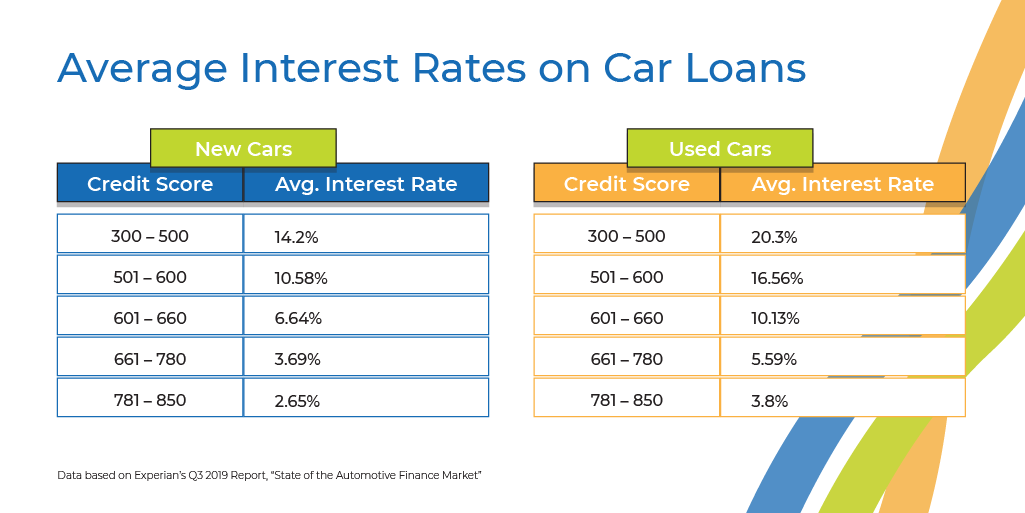
Your credit score is arguably the most significant factor influencing your car loan interest rate. It’s a numerical representation of your creditworthiness, based on your payment history, outstanding debt, length of credit history, types of credit used, and new credit applications.
- Excellent Credit (780+): Borrowers with excellent credit scores typically qualify for the lowest interest rates because they are considered low-risk.
- Good Credit (670-739): Still qualify for competitive rates, though slightly higher than those with excellent credit.
- Fair Credit (580-669): May face higher interest rates as lenders perceive a moderate risk.
- Poor Credit (Below 580): Borrowers in this category will likely be offered the highest interest rates, reflecting the higher risk of default. Some may even struggle to get approved for a loan.
Loan Term Length
The length of your loan, or its term, also plays a crucial role.
- Shorter Terms (e.g., 36 or 48 months): Often come with lower interest rates because the lender’s risk is spread over a shorter period. While monthly payments will be higher, you pay less interest overall.
- Longer Terms (e.g., 60, 72, or 84 months): Tend to have higher interest rates because the lender assumes more risk over an extended period. Although monthly payments are lower, you end up paying significantly more interest over the life of the loan.
Down Payment Amount
A larger down payment reduces the amount you need to borrow, thus decreasing the lender’s risk. Lenders often reward this lower risk with a lower interest rate. Conversely, a small or no down payment means you’re financing a larger portion of the car’s value, which can lead to a higher interest rate.
Vehicle Age and Type
The age and type of the vehicle you’re financing also matter.
- New Cars: Generally qualify for lower interest rates due to their higher resale value and perceived reliability.
- Used Cars: Typically carry higher interest rates because they depreciate faster and may have a higher risk of mechanical issues, making them a greater risk for lenders.
- Luxury Vehicles or Specialty Cars: Might also come with different interest rate structures depending on the lender’s policies and the specific market.
Market Conditions (Federal Reserve Rates)
Broader economic conditions and the prevailing interest rate environment set by central banks, like the Federal Reserve in the U.S., significantly influence car loan rates. When the Fed raises its benchmark interest rate, borrowing costs generally increase across the board, including for car loans. Conversely, when rates are lowered, car loan interest rates tend to follow suit.
Lender Type
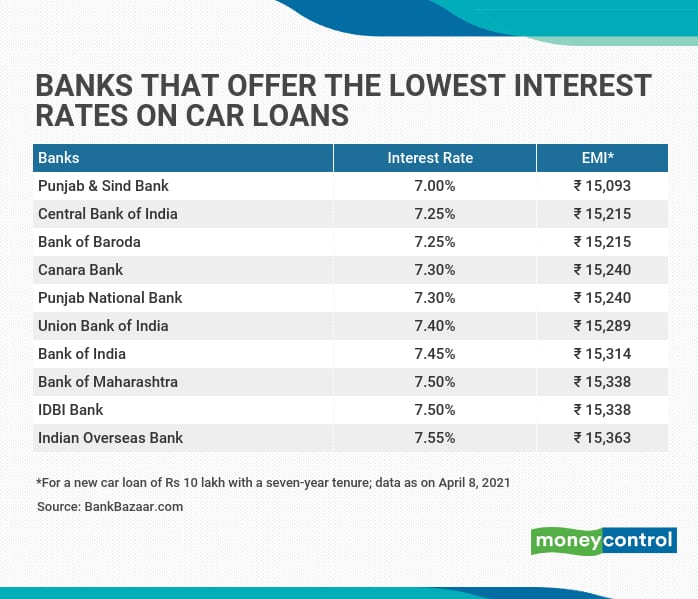
Different types of lenders have varying risk appetites and funding costs, which translate into different interest rates. Banks, credit unions, and captive finance companies (those associated with car manufacturers like Toyota Financial Services) often offer competitive rates. Online lenders and subprime lenders might cater to a broader range of credit profiles but may charge higher rates.
Types of Car Loans and Their Interest Implications
The source of your car loan can have a direct impact on the interest rate you receive and the overall loan experience.
Direct Loans (Banks, Credit Unions)
Direct loans are those you secure directly from a financial institution before you even step into a dealership.
- Banks: Offer a wide range of loan products, often competitive rates for borrowers with good credit.
- Credit Unions: Known for their member-focused approach, credit unions often provide some of the lowest interest rates, especially for members, as they are not-for-profit organizations.
- Online Lenders: Many online platforms specialize in car loans, offering quick approvals and competitive rates, often tailored to specific credit tiers.
Securing pre-approval from a direct lender gives you leverage at the dealership, allowing you to walk in with your own financing in hand and negotiate the car’s price more effectively.
Dealership Financing
This involves arranging your loan through the car dealership itself. While convenient, the dealership acts as an intermediary, often working with multiple lenders (banks, captive finance companies).
- Pros: Can be quick and convenient, sometimes offering promotional rates (especially from captive finance companies) for new cars or specific models.
- Cons: The dealership might mark up the interest rate they receive from their lending partners to earn a profit, potentially leading to a higher rate for you compared to direct financing. It can also be harder to separate the loan negotiation from the car price negotiation.
Private Party Loans
If you’re buying a car from a private seller, you’ll need a private party loan. These are typically personal loans or secured loans from banks or credit unions, specifically designed for private sales. Interest rates can vary widely depending on your creditworthiness and the lender’s policies for such loans. Some lenders may view private party loans as higher risk due to the lack of dealer warranty or inspection, potentially leading to slightly higher rates than traditional dealer-backed loans.
Refinancing Options
If you’ve already got a car loan but your credit has improved, or interest rates have dropped since you took out the loan, refinancing could be a smart move. Refinancing replaces your existing car loan with a new one, ideally at a lower interest rate, which can reduce your monthly payments or the total interest paid over the remaining term. This is an excellent way to revisit your current interest rate and ensure it’s still competitive.
Calculating and Managing Your Car Loan Interest
Understanding how interest accrues and how to manage it can significantly impact your financial health.
How Interest Accrues
Car loan interest typically accrues daily based on your outstanding principal balance. This means that at the beginning of your loan, a larger portion of your monthly payment goes towards interest, and a smaller portion goes towards reducing the principal. As the principal balance decreases over time, more of your payment is then applied to the principal. This process is known as amortization.
Understanding Amortization Schedules
An amortization schedule is a table detailing each payment over the life of your loan, showing how much goes towards interest and how much towards principal, and the remaining balance after each payment. Reviewing this schedule helps you visualize the long-term cost of your loan and understand how your payments reduce your debt. It clearly illustrates that earlier payments are interest-heavy.
The True Cost of a Car Loan
To calculate the true cost, you need to add the total interest paid over the loan’s term to the original purchase price of the car (excluding taxes, registration, etc.). An amortization calculator (readily available online) is an invaluable tool for this. Input the principal loan amount, interest rate, and loan term, and it will output your monthly payment and the total interest you’ll pay. This total interest figure, combined with the principal, is the real financial outlay for your vehicle.
Strategies to Secure a Lower Interest Rate
Being proactive and informed can significantly improve your chances of getting a lower interest rate on your car loan.
Improve Your Credit Score
Prioritize improving your credit score before applying for a car loan. Pay bills on time, reduce existing debt, avoid opening new credit accounts, and check your credit report for errors. Even a modest improvement can move you into a better rate tier.
Shop Around for Lenders
Don’t settle for the first offer. Apply for pre-approval with several different lenders – banks, credit unions, and online lenders. Compare their APRs, not just interest rates, as well as terms and conditions. Multiple applications within a short window (typically 14-45 days, depending on the scoring model) will usually only count as a single hard inquiry on your credit report, minimizing the impact.
Make a Larger Down Payment
As discussed, a larger down payment reduces the loan amount and the lender’s risk, often leading to a lower interest rate. Aim for at least 10-20% of the car’s value if possible. This also helps prevent you from being “underwater” (owing more than the car is worth) early in the loan term.
Choose a Shorter Loan Term (if feasible)
While higher monthly payments might be intimidating, choosing a shorter loan term (e.g., 36 or 48 months instead of 72 or 84) often comes with a lower interest rate and dramatically reduces the total interest you pay over time. Only opt for a shorter term if the monthly payments are comfortably within your budget.
Consider a Co-signer (Carefully)
If you have poor credit, a co-signer with excellent credit can help you qualify for a loan or a better interest rate. However, this is a significant commitment, as the co-signer is equally responsible for the debt if you default, impacting their credit if you miss payments.
Negotiate the Car Price First
When at the dealership, try to negotiate the purchase price of the car before discussing financing. If you intertwine the two, you might get a great deal on the interest rate but overpay for the car, or vice versa. By securing the best car price first, you minimize the amount you need to finance, which inherently reduces your total interest burden.
Conclusion
Understanding what constitutes interest on car loans, the multitude of factors that influence it, and the strategies available to secure a more favorable rate is fundamental to making a financially sound vehicle purchase. The interest rate isn’t just a number; it’s a critical component of your car’s true cost and your monthly budget. By diligently researching, improving your credit, shopping around for the best lenders, and strategically managing your loan, you can significantly reduce the overall expense of your car and keep more of your hard-earned money in your pocket. Always remember, knowledge is power when it comes to navigating the complexities of personal finance and securing the best deals.
aViewFromTheCave is a participant in the Amazon Services LLC Associates Program, an affiliate advertising program designed to provide a means for sites to earn advertising fees by advertising and linking to Amazon.com. Amazon, the Amazon logo, AmazonSupply, and the AmazonSupply logo are trademarks of Amazon.com, Inc. or its affiliates. As an Amazon Associate we earn affiliate commissions from qualifying purchases.