
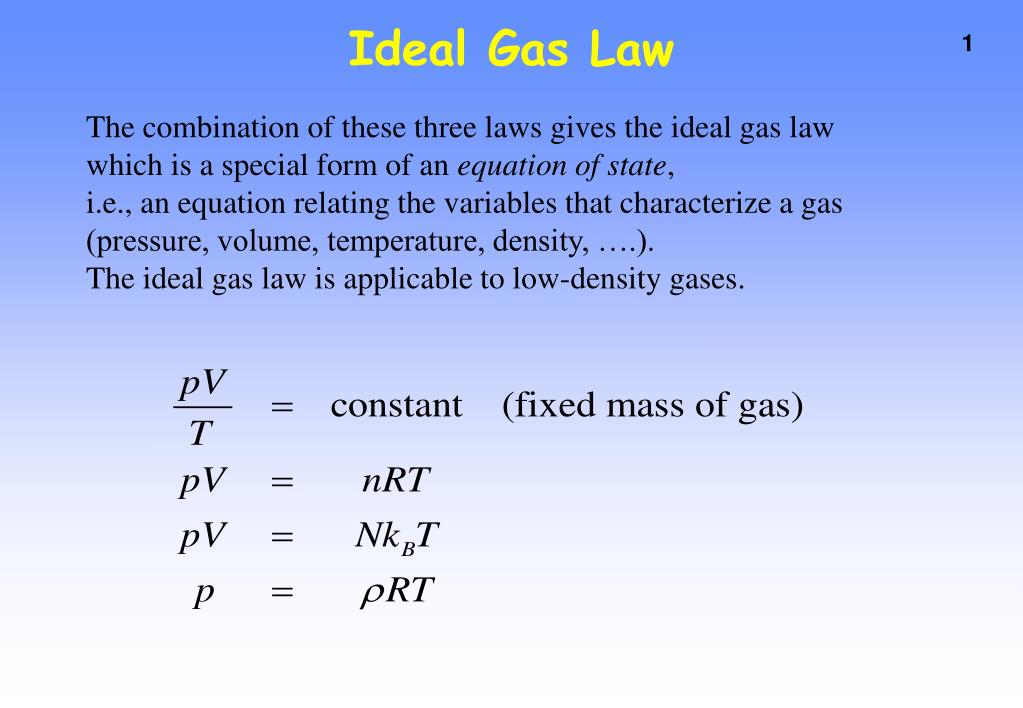
In the vast and rapidly evolving landscape of technology, innovation often appears to spring from flashes of genius or radical new concepts. Yet, beneath the surface of every groundbreaking gadget, every sophisticated software, and every intelligent algorithm lies a bedrock of fundamental scientific principles. These principles, often expressed through elegant equations, are the silent architects of our digital world. Among these, the Ideal Gas Law equation – PV=nRT – stands out as a quintessential example of how a seemingly abstract physical relationship can underpin critical technological applications and serve as a powerful metaphor for understanding the role of foundational models in engineering and software development.

While the Ideal Gas Law specifically describes the behavior of an idealized gas in terms of pressure (P), volume (V), number of moles (n), gas constant (R), and temperature (T), its significance extends far beyond chemistry labs. It represents a paradigm: a simplified model that captures essential truths about a system, allowing engineers and developers to predict behavior, design efficient systems, and troubleshoot complex problems. This article will delve into why understanding such foundational equations, exemplified by the Ideal Gas Law, is not just academic curiosity but a core competency in navigating and shaping the technological future. We will explore how these theoretical constructs transition into practical applications, how they inform the development of advanced software, and how their underlying philosophy empowers innovation across diverse tech domains.
Bridging Theory and Application: The Core Role of Fundamental Equations in Technology
At its heart, technology is applied science. The leap from a theoretical understanding of natural phenomena to a functional device or system hinges on the ability to translate abstract principles into tangible designs and operations. Fundamental equations serve as this crucial translation layer, providing a quantitative framework for predicting and controlling physical realities.
From Scientific Axioms to Engineering Blueprints
Consider the Ideal Gas Law. It’s a simplified model, assuming no intermolecular forces and negligible molecular volume, yet it provides remarkably accurate predictions for many real gases under typical conditions. For an engineer designing a pneumatic system, a refrigeration unit, or even a specialized gas sensor, having a reliable equation to calculate pressure, volume, or temperature changes is indispensable. Without it, every design would be a costly, time-consuming process of trial and error. This principle applies universally:
- Electronics: Ohm’s Law (V=IR) is fundamental to circuit design, allowing engineers to predict current flow and voltage drops.
- Mechanics: Newton’s Laws of Motion are the basis for understanding everything from robotics to aerospace engineering, guiding the design of components that withstand specific forces.
- Optics: Snell’s Law (n1sinθ1 = n2sinθ2) is critical for designing lenses, fiber optics, and display technologies.
These equations aren’t just historical relics; they are living tools, embedded in CAD software, simulation platforms, and control algorithms. They transform scientific axioms into actionable engineering blueprints, providing the critical mathematical language through which complex physical systems can be conceived, analyzed, and optimized before a single physical prototype is ever built.
The Imperative of Predictive Models
The predictive power of foundational equations is perhaps their most valuable contribution to technology. In a world increasingly reliant on precision and efficiency, the ability to anticipate how a system will behave under various conditions is paramount. For instance, in designing a microfluidic device, understanding fluid dynamics through Navier-Stokes equations allows engineers to predict flow rates and mixing efficiencies. In climate control systems, the Ideal Gas Law, coupled with principles of heat transfer, enables engineers to design energy-efficient HVAC units that maintain desired temperatures and pressures.
These models allow for “what-if” scenarios to be explored virtually, saving immense resources and accelerating the development cycle. They provide a quantitative basis for decision-making, ensuring that technological solutions are not just functional but also robust, reliable, and performant. Without these predictive models, the complexity of modern technology would be unmanageable, and innovation would grind to a halt.
Modeling Complex Systems: The Utility of Idealized Frameworks in Software Development
The transition from physical equations to software applications is where the true power of idealized frameworks, like the Ideal Gas Law, becomes vividly apparent in the tech world. Software doesn’t just manage data; it often simulates, controls, and interacts with physical realities, making the accurate representation of those realities through mathematical models indispensable.
Simulation and Digital Prototyping
One of the most significant impacts of foundational equations in software is in simulation and digital prototyping. Engineering simulation software, finite element analysis (FEA) tools, and computational fluid dynamics (CFD) packages are built upon sophisticated mathematical models derived from these fundamental laws. For example, simulating the aerodynamics of a new drone design requires implementing complex fluid dynamics equations. Similarly, predicting the thermal performance of a server rack involves integrating principles of heat transfer and, yes, even gas behavior where air circulation is crucial.
The Ideal Gas Law, in this context, might be a component of a larger simulation model for a combustion engine, an environmental chamber, or even advanced material processing where gas behavior at varying temperatures and pressures is critical. These simulations allow engineers to test thousands of design iterations virtually, identifying optimal configurations and potential failure points long before physical fabrication begins. This iterative process, driven by the underlying mathematical models, drastically reduces development costs and time-to-market.
Environmental and Thermodynamic Modeling in Software
Beyond pure engineering simulations, software plays a vital role in environmental monitoring, climate modeling, and thermodynamic process control. Consider weather forecasting applications or climate change models; these rely heavily on atmospheric physics, which includes principles of gas behavior. Understanding how temperature, pressure, and volume interact in the atmosphere is crucial for predicting weather patterns, air quality, and the spread of pollutants.
Similarly, in industrial process control software, thermodynamic models derived from fundamental equations are used to optimize energy consumption in chemical plants, power generation facilities, and refrigeration systems. These applications often involve complex multi-phase systems, where understanding the ‘ideal’ behavior provides a baseline against which real-world deviations can be measured and controlled. Software interfaces turn these complex equations into user-friendly dashboards, allowing operators to make informed decisions that impact efficiency, safety, and environmental compliance.
The Balance of Simplification and Accuracy
The Ideal Gas Law is “ideal” because it simplifies reality. In the world of software development, particularly for simulations, this concept of simplification is critical. No software can perfectly model every microscopic interaction of a real-world system. Therefore, developers and scientists must make judicious choices about which factors to include and which to idealize or ignore.
The challenge lies in striking the right balance: a model that is too simplistic may yield inaccurate results, while one that is excessively complex may be computationally intractable and too slow for practical use. Foundational equations like the Ideal Gas Law provide a robust starting point – a validated, relatively simple model that offers a good first approximation. From this “ideal” baseline, more complex, “real-gas” models or empirically derived correlations can be layered on as needed to achieve the desired level of accuracy for a specific application. This iterative refinement of models is a cornerstone of effective software-driven scientific and engineering research.
Beyond Thermodynamics: Fundamental Laws Across Diverse Tech Domains
The power of foundational equations and idealized models isn’t confined to thermodynamics or classical physics. The underlying philosophy – simplifying complexity to derive predictive relationships – is pervasive across every cutting-edge tech domain, providing the “laws” that govern software, AI, and digital infrastructure.
Algorithmic Foundations in AI and Machine Learning
In artificial intelligence and machine learning, while we often talk about neural networks and deep learning, the core principles are rooted in mathematics and statistics. Algorithms are, in essence, mathematical procedures or “laws” that dictate how data is processed, patterns are identified, and decisions are made. For example:
- Linear Regression: A foundational statistical model, an “equation” that predicts a linear relationship between variables.
- Bayes’ Theorem: A fundamental probability equation that underpins many classification algorithms and allows for probabilistic reasoning.
- Gradient Descent: A core optimization algorithm, a mathematical method for finding the minimum of a function, which is critical for training machine learning models.
These “laws” are the Ideal Gas Laws of AI – they provide the theoretical basis for understanding how intelligent systems learn and operate. Developers who grasp these fundamental mathematical and statistical equations are better equipped to design, debug, and innovate in AI, rather than simply treating machine learning models as black boxes.
Network Protocols and Information Theory
The entire internet and modern communication infrastructure are built upon a stack of protocols, which are essentially “rules” or “laws” governing data transmission. These protocols are deeply informed by information theory, a field pioneered by Claude Shannon. Shannon’s theorems, like the Nyquist-Shannon sampling theorem or the channel capacity formula, are foundational equations that define the theoretical limits of data transmission and signal processing.

Understanding these “laws” of information allows network engineers to design robust, efficient, and secure communication systems. They dictate everything from how data packets are routed (e.g., TCP/IP models) to how wireless signals are modulated and demodulated (e.g., OFDM in Wi-Fi and 5G). Just as the Ideal Gas Law provides insight into gas behavior, information theory equations provide insight into the behavior and limits of digital communication.
Material Science and Quantum Computing
Even in emerging fields like quantum computing and advanced material science, fundamental laws are paramount. Quantum mechanics, with its Schrödinger equation, is the bedrock of quantum computing. This equation, far more complex than the Ideal Gas Law, describes how quantum systems behave, enabling the theoretical design of quantum bits (qubits) and quantum gates. While still nascent, the progress in quantum computing is entirely dependent on a deep understanding and application of these foundational quantum mechanical “laws.”
Similarly, in advanced material science, understanding the physics and chemistry at the atomic and molecular level, governed by various quantum mechanical and statistical mechanics equations, is essential for designing new materials with specific properties – be it superconductors, highly efficient photovoltaics, or advanced alloys for aerospace. The future of these transformative technologies rests squarely on our ability to comprehend, model, and manipulate these deep scientific laws.
The Computational Engine: Leveraging Software and AI for Equation-Driven Innovation
The ability to harness foundational equations for technological advancement has been exponentially amplified by the advent of powerful computational tools. Software, sophisticated algorithms, and artificial intelligence are not just passive recipients of these equations; they are active engines that enable their application, exploration, and even discovery.
Advanced Simulation Software and CAD Tools
Modern computer-aided design (CAD) and simulation software packages are the primary vehicles for applying foundational equations in engineering. Whether it’s simulating aerodynamic forces on a vehicle, thermal management in electronic devices, or the structural integrity of a bridge, these tools embody complex mathematical models derived from physics and chemistry. Engineers leverage these platforms to:
- Visualize complex phenomena: See how stress distributes across a part, how fluid flows around an object, or how heat propagates through a material.
- Optimize designs: Rapidly iterate on design parameters to achieve performance targets or minimize resource usage.
- Predict failure modes: Identify potential weaknesses before costly physical prototypes are built.
These software tools democratize access to the power of foundational equations, allowing engineers to apply sophisticated physics and chemistry without needing to solve every differential equation by hand. They effectively make the “Ideal Gas Law” and countless other fundamental principles operational and accessible for design and analysis.
AI-Driven Discovery and Optimization
Artificial intelligence, particularly machine learning, is increasingly being used to assist in applying and even discovering new foundational relationships. While traditional simulations apply known equations, AI can analyze vast datasets to:
- Derive empirical models: When first-principles equations are too complex or unknown, AI can identify patterns and create predictive models from observed data. This is akin to finding an “Ideal Gas Law” for a system where the underlying physics isn’t fully understood.
- Optimize parameters: AI algorithms can explore a vast design space more efficiently than humans, finding optimal configurations for systems governed by complex sets of equations.
- Accelerate simulations: Machine learning models can be trained on outputs of traditional physics-based simulations to create “surrogate models” that run orders of magnitude faster, enabling real-time analysis where full simulations would be too slow.
This synergy between foundational equations and AI is propelling innovation, allowing us to tackle problems of unprecedented complexity, from designing new drugs to developing self-healing materials.
Data Analysis and Validation of Models
Finally, data analysis tools and methodologies are critical for validating the models derived from foundational equations. In real-world applications, ideal conditions rarely prevail. Sensors and monitoring systems collect vast amounts of data, which can then be compared against the predictions of our theoretical models.
When discrepancies arise, data analysis helps engineers and scientists:
- Refine models: Identify where the “ideal” model breaks down and where more complex factors need to be incorporated.
- Characterize real-world conditions: Understand the environmental or operational variables that cause deviations from theoretical predictions.
- Improve sensor accuracy: Ensure that the data used to validate or inform models is itself reliable.
This continuous feedback loop between theoretical models (based on equations), computational application, and data-driven validation is essential for the continuous improvement and reliability of technological systems.
Future Frontiers: Evolving Foundational Understanding for Next-Generation Technology
As technology advances, so too must our understanding and application of foundational principles. The Ideal Gas Law, while powerful, represents a starting point. The future demands more intricate models, interdisciplinary approaches, and a continuous quest to refine our understanding of the universe to unlock the next generation of technological breakthroughs.
The Quest for More Comprehensive Models
The “ideal” in Ideal Gas Law highlights its limitations. For extreme conditions (very high pressures, very low temperatures), real gases deviate significantly. Similarly, in many advanced tech applications, simple “ideal” models are insufficient. The future will see an increased emphasis on developing and leveraging more comprehensive, multi-scale, and multi-physics models that account for a wider range of variables and interactions. This includes:
- Coupled physics simulations: Combining thermal, fluid, structural, and electromagnetic analyses into a single, integrated model.
- Quantum-accurate material simulations: Moving beyond classical approximations to predict material properties at the quantum level.
- Biological system modeling: Developing foundational equations and models to understand complex biological processes, crucial for biotech and personalized medicine.
This quest for comprehensive modeling will drive innovation in computational science, requiring new algorithms, more powerful hardware, and novel methods for handling vast amounts of data.
Ethical Considerations in Model Application
As foundational equations and their derived models become more sophisticated and impactful, ethical considerations grow in importance. Models are built on assumptions, and these assumptions can carry inherent biases or limitations that, when applied in critical technologies (like AI in healthcare or autonomous systems), can have significant societal implications.
For instance, if a predictive model for a gas sensor is designed based on an idealized scenario, its failure to account for specific environmental contaminants in a real-world setting could lead to faulty readings and potentially hazardous outcomes. Developers and engineers must be acutely aware of the assumptions embedded in the foundational equations and models they employ, understanding their domains of validity and their potential for unintended consequences. Transparency, explainability, and rigorous validation of models against diverse real-world data will be paramount.
Fostering Interdisciplinary Understanding
Finally, the increasing complexity of modern technology necessitates an interdisciplinary approach to foundational principles. The Ideal Gas Law, once confined to chemistry and physics, now informs software for environmental control and engineering simulations. The boundaries between disciplines are blurring. Future innovators will need to possess not just a deep understanding of their specific domain’s “laws” but also a broad appreciation for how principles from seemingly disparate fields can cross-pollinate and drive novel solutions.
This means fostering collaboration between physicists, chemists, material scientists, computer scientists, and engineers. It means nurturing educational pathways that emphasize fundamental principles across disciplines, preparing a workforce capable of connecting the dots between an abstract equation and a tangible technological solution.
In conclusion, the Ideal Gas Law equation serves as a powerful reminder that at the core of all technological advancement lies a profound understanding of fundamental scientific principles. These equations are not just dry mathematical expressions; they are blueprints for innovation, enabling prediction, design, and optimization across every facet of the digital and physical world. By embracing and continuously refining our grasp of these foundational “laws,” and by leveraging computational tools to apply and extend them, we pave the way for a future brimming with intelligent, efficient, and transformative technologies.
aViewFromTheCave is a participant in the Amazon Services LLC Associates Program, an affiliate advertising program designed to provide a means for sites to earn advertising fees by advertising and linking to Amazon.com. Amazon, the Amazon logo, AmazonSupply, and the AmazonSupply logo are trademarks of Amazon.com, Inc. or its affiliates. As an Amazon Associate we earn affiliate commissions from qualifying purchases.