
In the lexicon of modern technology, few terms are as ubiquitous yet as multifaceted as “the hub.” At its most fundamental level, a hub represents a central point of connectivity, a junction where data, signals, or processes converge and are redistributed. However, as our digital landscape has evolved from simple local area networks to complex AI-driven ecosystems, the definition of a hub has expanded significantly.
Whether you are a software developer, a smart-home enthusiast, or an IT infrastructure specialist, understanding the role of the hub is essential for navigating today’s tech-driven world. This article explores the evolution of the hub across hardware, software, and the Internet of Things (IoT), providing a comprehensive look at how centralized architecture continues to power the digital revolution.

1. The Evolution of Hardware Hubs: Networking and Connectivity
To understand the modern technological hub, we must first look back at its origins in physical networking. In the early days of computing, the hub was the cornerstone of the Local Area Network (LAN). While its physical presence has changed, the logic of the hardware hub remains a vital component of professional and personal workstations.
The Classic Ethernet Hub: A History of Data Distribution
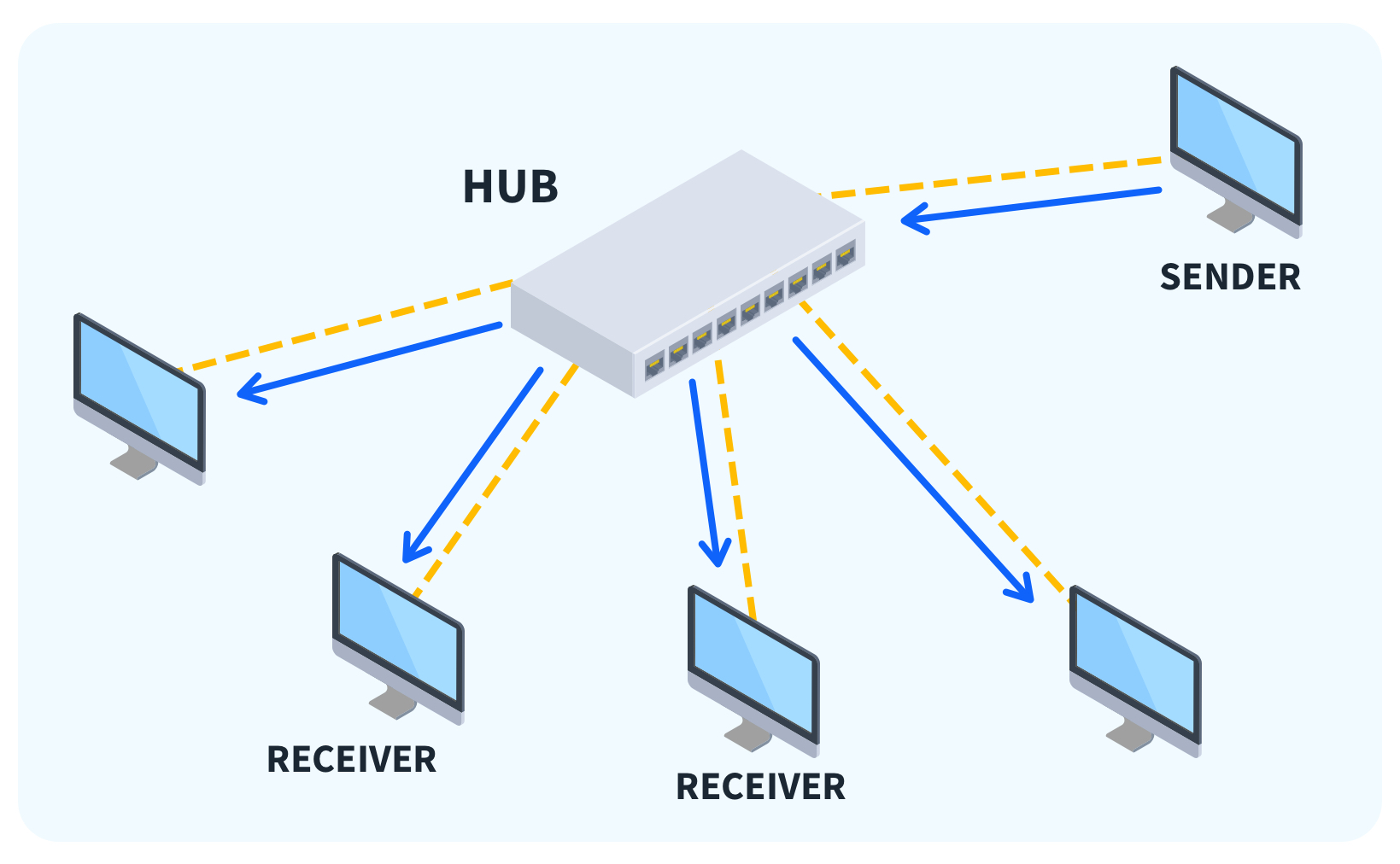
In the 1990s and early 2000s, an Ethernet hub was a standard piece of networking hardware. It operated at Layer 1 of the OSI (Open Systems Interconnection) model. Its function was simple: when a data packet arrived at one port, it was copied and “broadcast” to all other ports.
While this was effective for small groups, it was inefficient because it created significant network congestion and “collisions.” This eventually led to the rise of the “network switch,” which is essentially a “smart hub” that directs data only to the specific device that needs it. Despite the dominance of switches in high-level networking, the concept of the hub—a single point of entry for multiple devices—remains the fundamental blueprint for connectivity.
Modern USB and Thunderbolt Hubs: Expanding Professional Workstations
Today, the most common hardware hub is the USB or Thunderbolt hub. As laptops have become thinner and prioritized portability, manufacturers have stripped away legacy ports (like HDMI, SD card slots, and Ethernet).
The modern hub has transformed into a critical peripheral that restores this lost functionality. High-performance Thunderbolt 4 hubs now act as the “central nervous system” for professional setups, allowing a single cable to transmit 8K video signals, high-speed data transfers, and power delivery simultaneously. In this context, “the hub” is the bridge between a mobile device and a stationary, high-power desktop environment.
2. The Smart Home Hub: The Brain of the Internet of Things (IoT)
As we move from the office to the home, the definition of a hub shifts from a data distributor to a command center. The proliferation of smart devices—light bulbs, thermostats, security cameras, and locks—has created a fragmentation problem. Without a hub, these devices often operate in silos, requiring separate apps and failing to communicate with one another.
Why Your Smart Home Needs a Central Nervous System
A smart home hub acts as the translator for your home’s ecosystem. Devices use various communication languages. Some use Wi-Fi, which is power-hungry; others use Bluetooth, which has a short range. Many specialized sensors use low-power mesh networks like Zigbee or Z-Wave.
The hub serves as the intermediary that allows a Zigbee motion sensor to tell a Wi-Fi-connected smart bulb to turn on. By centralizing the logic of the home into one “brain,” users can create complex automations (e.g., “If the front door unlocks after 6:00 PM, turn on the hallway lights and set the thermostat to 72 degrees”). Without a hub, these cross-brand interactions would be nearly impossible to manage.
Protocols and Standards: Zigbee, Z-Wave, and Matter
The greatest challenge for smart hubs has historically been “interoperability”—the ability for different brands to work together. For years, the market was split between proprietary ecosystems. However, the tech industry is currently undergoing a massive shift with the introduction of Matter.
Matter is a new unifying standard backed by giants like Apple, Google, and Amazon. It aims to make the “hub” more of a software layer than a restrictive hardware box. In the Matter era, your Apple HomePod, Google Nest Hub, or Amazon Echo can all function as a universal controller, ensuring that any device you buy will work seamlessly within your chosen hub environment.
3. Software and Cloud Hubs: GitHub and Development Ecosystems
In the world of software engineering, “the hub” is less about wires and more about collaboration. Perhaps the most famous application of the term is GitHub, a platform that has revolutionized how the world builds software.

Version Control and Collaborative Hubs
GitHub serves as a central repository for code. Before such hubs existed, developers struggled to manage different versions of a project, often overwriting each other’s work or losing track of changes. By using Git (a version control system) and hosting it on a central “hub,” developers can branch off the main code, make changes, and then “merge” them back in after a peer review.
In this sense, the hub is a social and technical platform. It provides a “single source of truth” for a project. Whether a project has two contributors or two thousand, the hub ensures that everyone is working on the most up-to-date version of the software, fostering an environment of transparency and rapid iteration.
Integration Hubs: Connecting APIs and Microservices
Beyond code storage, the tech industry utilizes “Integration Hubs” or “iPaaS” (Integration Platform as a Service). Tools like Zapier, Make, or Microsoft Power Automate act as software hubs that connect disparate applications.
If a company uses Salesforce for CRM, Slack for communication, and Google Sheets for data tracking, an integration hub allows data to flow automatically between them. This “hub-and-spoke” model of software architecture prevents “data silos,” where information is trapped in a single application. By centralizing the workflow logic in an integration hub, businesses can automate thousands of hours of manual data entry.
4. The Future of the Hub: Edge Computing and AI Integration
As we look toward the next decade, the concept of the hub is evolving again, driven by the need for speed and the power of Artificial Intelligence. We are moving away from hubs that simply “pass information” and toward hubs that “process information.”
Moving Processing Power to the Network Edge
Traditionally, a hub or a cloud server would collect data and send it to a distant data center for processing. This creates “latency”—a delay that is unacceptable for technologies like autonomous vehicles or real-time industrial robotics.
The “Edge Hub” is the solution. These are localized hubs equipped with significant processing power that handle data analysis on-site. Instead of sending raw video footage from a security camera to the cloud to detect an intruder, an Edge Hub processes the video locally and only sends an alert to the cloud if a threat is detected. This makes the hub not just a connector, but an intelligent filter.
The Role of AI in Automated Hub Management
Artificial Intelligence is being integrated into hubs to create “self-healing” networks. In a complex enterprise environment, an AI-powered network hub can monitor traffic patterns in real-time. If it detects a surge in data or a potential security breach, it can autonomously reroute traffic or quarantine a suspicious device without human intervention.
In the consumer space, AI hubs are becoming more predictive. Instead of waiting for a user to give a command, an AI-enabled smart home hub learns the habits of the residents. It can predict when you are likely to arrive home and pre-condition the environment, transforming the hub from a reactive tool into a proactive assistant.
5. Choosing the Right Hub Strategy for Your Tech Stack
Whether you are building a home office or a corporate infrastructure, selecting the right hub strategy is a balance of security, scalability, and performance.
Security Considerations for Centralized Hubs
The primary disadvantage of a hub is that it represents a “single point of failure.” If your central hub is compromised or fails, every connected device may lose functionality. This is particularly dangerous in the context of digital security.
To mitigate this, tech-savvy users and IT professionals must prioritize hubs that offer robust encryption and local processing. For example, some smart home hubs process all commands locally rather than in the cloud, ensuring that even if the internet goes down, your home remains functional and your data stays private.
Scalability: Future-Proofing Your Digital Infrastructure
When selecting a hub—be it a physical USB-C dock or a cloud-based integration platform—you must consider your future needs. A hub that only supports four devices might be sufficient today, but as your tech ecosystem grows, you will need a solution that offers “daisy-chaining” capabilities or expandable software licenses.
In the software world, this means choosing hubs with open APIs (Application Programming Interfaces). An open hub allows you to add new tools and services as they are developed, ensuring that your central infrastructure doesn’t become obsolete as technology marches forward.
Conclusion
“The Hub” is more than just a piece of hardware or a website; it is a fundamental architectural philosophy. By centralizing connections, we create order out of chaos, allowing diverse devices and complex codebases to function as a unified whole. From the early Ethernet hubs that connected the first office computers to the AI-driven edge hubs of tomorrow, the hub remains the essential link in our increasingly connected world. As technology continues to decentralize in some areas, the need for a central point of intelligence and connectivity has never been more vital.
aViewFromTheCave is a participant in the Amazon Services LLC Associates Program, an affiliate advertising program designed to provide a means for sites to earn advertising fees by advertising and linking to Amazon.com. Amazon, the Amazon logo, AmazonSupply, and the AmazonSupply logo are trademarks of Amazon.com, Inc. or its affiliates. As an Amazon Associate we earn affiliate commissions from qualifying purchases.