
In the intricate world of Minecraft, mechanical mastery often boils down to a single question: how much damage can a player output in a single swing? While the game features a vast array of weaponry, from the humble wooden sword to the crystalline might of the Netherite blade, the Sharpness enchantment remains the primary benchmark for combat efficiency. Understanding the ceiling of this enchantment requires a deep dive into game code, version history, and the mechanics of damage scaling.
The Mechanics of Sharpness: Understanding the Math
Sharpness is a damage-boosting enchantment that can be applied to swords and axes. Its primary function is to increase the amount of base damage a weapon deals per hit. For players navigating the survival mode, knowing the specific damage output is critical for managing encounters with mobs like Endermen, Wither Skeletons, or the Ender Dragon.
Base Scaling and Damage Tiers
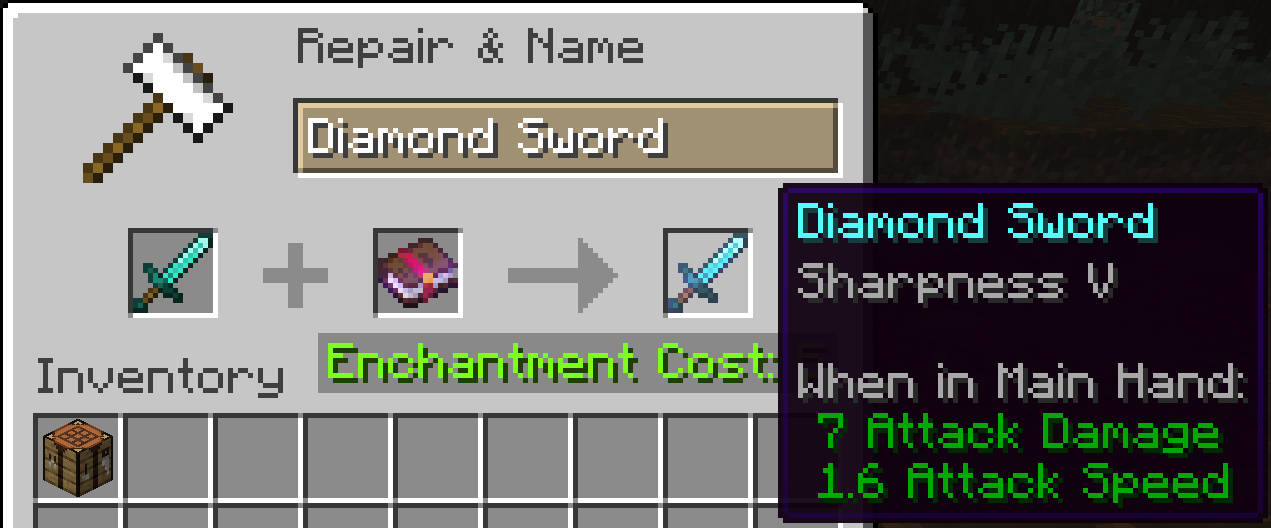
In current versions of Minecraft (Java Edition), the Sharpness enchantment follows a linear progression. Sharpness I increases damage by 1.0 plus 0.5 per additional level. Therefore:
- Sharpness I: +1.0 damage
- Sharpness II: +1.5 damage
- Sharpness III: +2.0 damage
- Sharpness IV: +2.5 damage
- Sharpness V: +3.0 damage
This math is straightforward when applied to standard weapons. For example, a Netherite sword has a base damage of 8. With Sharpness V, the total damage per hit becomes 11. However, the calculation changes significantly when considering critical hits and weapon types. A critical hit deals 150% of the base damage, meaning a Sharpness V Netherite sword can dish out 16.5 damage in a single well-timed strike.
Bedrock vs. Java Edition Discrepancies
It is vital for players to note that the damage values fluctuate between the two primary versions of the game. In Minecraft Bedrock Edition, Sharpness is calculated differently. Instead of the flat damage bonuses seen in the Java Edition, Bedrock employs a calculation that favors different weapon speeds and specific mob modifiers. Understanding these nuances is key for speedrunners and technical players who rely on “damage-per-second” (DPS) rather than damage-per-hit metrics.
The Theoretical Ceiling: Beyond Survival Limits
While the standard survival limit for Sharpness is level V, the game’s internal code—specifically the NBT (Named Binary Tag) data structure—allows for significantly higher values if accessed through creative mode or server commands. This is where the concept of “maximum sharpness” shifts from a gameplay feature to a technical software investigation.
Command Blocks and NBT Editing
Using the /give command or third-party NBT editors, players can theoretically push the Sharpness enchantment to level 255. In the Java Edition, the game’s damage calculation formula treats these levels as integers. At Sharpness 255, the weapon’s damage output becomes astronomical.
When a weapon reaches this level of enchantment, it effectively becomes a “one-shot” tool for almost every entity in the game, including bosses with massive health pools like the Wither or the Warden. From a software perspective, this demonstrates how Minecraft handles overflow; if a value is set too high, the game may struggle to render the health bar of the mob correctly, or the hit detection may fail entirely due to the extreme speed at which the mob’s health is reduced to zero.

The Logic of Damage Caps
There is a limit to how useful these extreme levels are. In the game’s source code, damage dealt is processed through a method that calculates health reduction. Even with an “infinite” sharpness level, players will eventually hit a mechanical wall where the game engine cannot subtract more health than exists, or where the “invulnerability ticks”—the short period of time after a mob takes damage during which it cannot take damage again—prevent the weapon from dealing multiple hits per swing.
Strategic Integration of Sharpness in Combat Optimization
Sharpness is not merely about increasing damage; it is a software optimization tool for combat efficiency. By maximizing the damage of a single hit, players reduce the total number of actions required to clear a room of mobs, thereby minimizing the chance of taking damage themselves.
Axe vs. Sword: The Sharpness Synergy
One of the most common debates in the technical community involves whether Sharpness is better suited for swords or axes. In recent updates, the Axe has received a significant boost in its utility against shields. However, the Axe has a lower attack speed than the sword.
When applying Sharpness V, the sword remains the superior choice for DPS due to its faster recovery time. However, if a player is focusing on “alpha strike” damage—the ability to disable a shield and deliver a massive blow simultaneously—the Sharpness V Axe becomes a formidable piece of software-optimized gear. The synergy between the attack cooldown timer and the damage modifier of Sharpness is a critical component of high-level PvE (Player vs. Environment) and PvP (Player vs. Player) strategies.
Enchantment Compatibility Constraints
A recurring point of confusion for players is the incompatibility between Sharpness and other damage-based enchantments like Smite or Bane of Arthropods. In the code of Minecraft, these are mutually exclusive. This is a deliberate design choice meant to force players into specialized builds.
If you are fighting in the Nether, Smite is technically superior to Sharpness because it deals significantly more damage to undead mobs (which make up a large portion of Nether spawns). Therefore, while “Sharpness V” is the highest damage boost for general purposes, a “Smite V” sword is actually more efficient for targeted mob farming.
The Future of Combat and Enchantment Scaling
As Mojang continues to update the game, the way players interact with enchantments is subject to change. Recent snapshots and experimental features suggest that the developers are looking at ways to balance combat further, potentially changing how Sharpness interacts with armor protection and damage reduction modifiers.
Balancing Software Performance
From a software development standpoint, allowing infinite Sharpness levels creates issues with game balance and entity processing. If a player could easily attain Sharpness X or higher without cheating, the game’s existing mob health scaling would become obsolete. The limitation of Sharpness V is a balancing mechanic that ensures players must engage with other systems—such as potions, critical strikes, and gear upgrades—to progress through the endgame content.
Conclusion: Finding the Right Balance
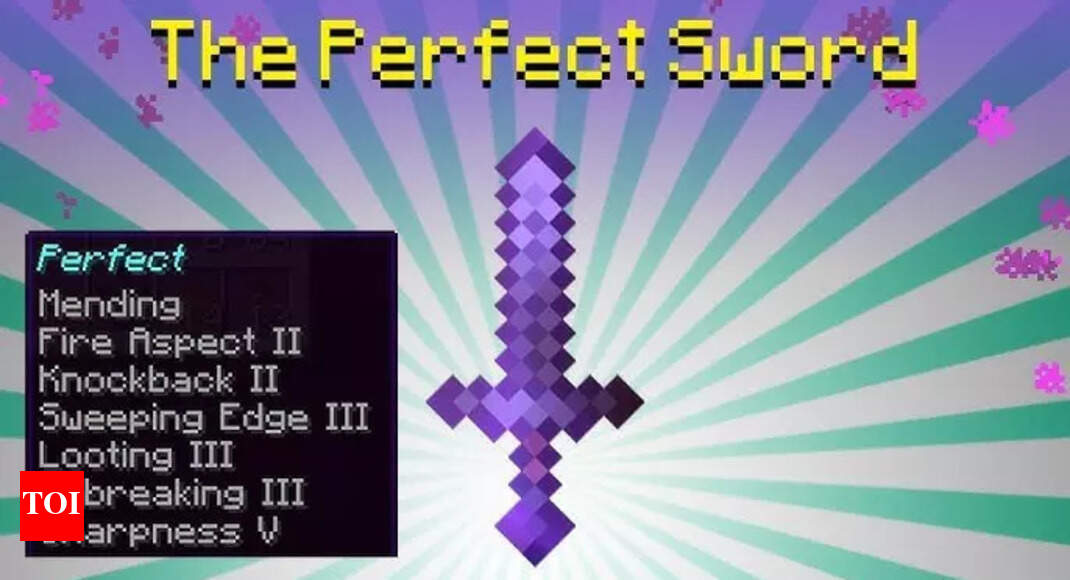
For the average player, Sharpness V is the absolute peak of power in survival mode. It represents the culmination of the enchanting system’s progression. Whether you are aiming to defeat the Ender Dragon in record time or simply looking to clear your local mob farm with minimal effort, the path to the highest sharpness is a testament to the game’s reliance on precise, rule-based mathematical scaling.
While the allure of “Sharpness 255” through console commands is undeniable for those experimenting with the game’s limits, the true depth of Minecraft lies in how these mechanical boosts are integrated into the player’s broader strategy. By mastering the interaction between weapon base stats, enchantment levels, and combat timing, players can optimize their experience to match any challenge the procedurally generated world throws their way. Understanding the highest Sharpness is, in essence, understanding the fundamental physics of the Minecraft engine.
aViewFromTheCave is a participant in the Amazon Services LLC Associates Program, an affiliate advertising program designed to provide a means for sites to earn advertising fees by advertising and linking to Amazon.com. Amazon, the Amazon logo, AmazonSupply, and the AmazonSupply logo are trademarks of Amazon.com, Inc. or its affiliates. As an Amazon Associate we earn affiliate commissions from qualifying purchases.