
The Law School Admission Test (LSAT) is a critical hurdle for aspiring legal professionals, serving as a primary gateway to competitive law school programs. While the test is designed to assess skills essential for success in law school – reading comprehension, logical reasoning, and analytical reasoning – a significant question for many test-takers revolves around the ultimate benchmark of achievement: the highest possible score. Understanding this ceiling is not just about bragging rights; it offers valuable insight into the highly selective nature of legal education and the caliber of students who typically gain admission to top-tier law schools.

This exploration delves into the mechanics of LSAT scoring, the significance of achieving a top score, and what such an accomplishment signifies within the broader landscape of legal admissions. We will dissect the scoring scale, examine the rarity of perfect scores, and discuss the strategic implications for applicants aiming for the upper echelons of law school admissions.
Understanding the LSAT Scoring Scale: From Raw Score to Scaled Score
The LSAT scoring system can initially seem complex, but breaking it down reveals a logical progression from performance on the test to the final score reported to law schools. This process ensures fairness and comparability across different test administrations.
Raw Score Calculation: Counting Correct Answers
At its most fundamental level, your LSAT performance is measured by a “raw score.” This is a straightforward count of the number of questions you answered correctly across the scored sections of the test. The LSAT typically comprises five sections: two scored Logical Reasoning sections, one scored Reading Comprehension section, one scored Analytical Reasoning (Logic Games) section, and one unscored experimental section. Additionally, there is a writing sample, which is not scored but sent to law schools.
The number of questions in each scored section can vary slightly from test to test, but the LSAT is designed so that the total number of questions in the scored sections is consistent enough for raw score calculations to be meaningful. For instance, if a particular test has a total of 100 questions across the four scored sections, and you answer 85 of them correctly, your raw score is 85.
It’s important to note that there is no penalty for guessing on the LSAT. Therefore, it is always advisable to answer every question, even if you are unsure of the correct answer. Leaving a question blank offers no possibility of earning points, while a guess still carries a chance of being correct.
Scaling the Raw Score: Equating for Difficulty
The raw score alone is not what law schools see. Instead, your raw score is converted into a “scaled score” using a process called equating. Equating is crucial because it accounts for potential variations in the difficulty of different LSAT test forms. Not all LSAT administrations are of precisely the same difficulty. Equating ensures that a score of, for example, 170 on one test administration represents the same level of ability as a 170 on another.
The scaling process involves comparing the performance of a group of test-takers on a particular test form to the performance of a large, representative group of test-takers over time. This statistical process adjusts the raw score to a scaled score that falls within the LSAT’s standardized range.
The LSAT Scaled Score Range: 120-180
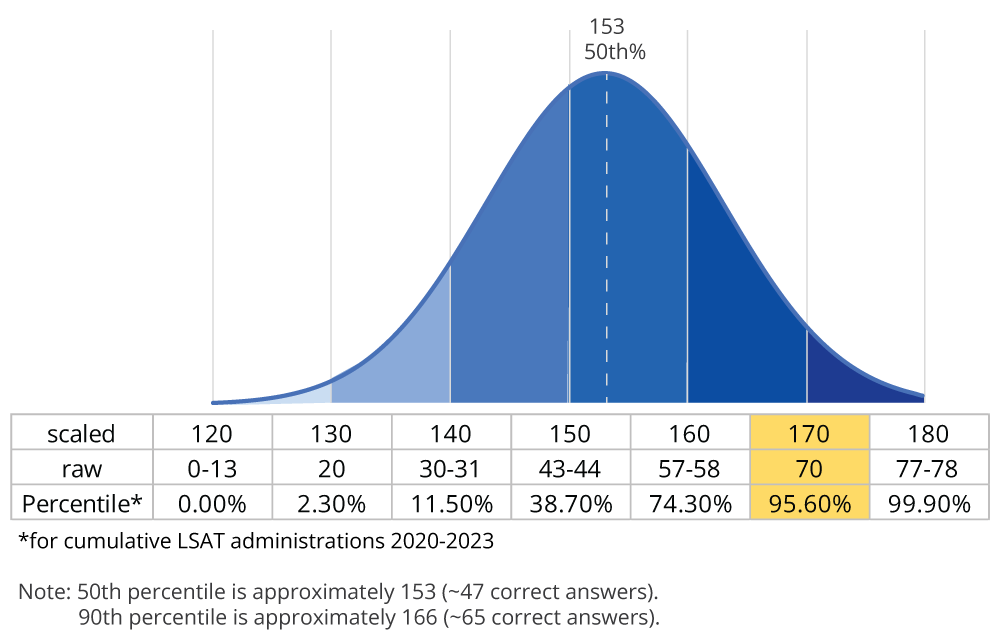
The LSAT scaled score range is from 120 to 180. This is the score that is reported to law schools and used in admissions decisions. A score of 120 represents the lowest possible scaled score, and 180 represents the highest possible scaled score. The vast majority of test-takers fall somewhere between these two extremes.
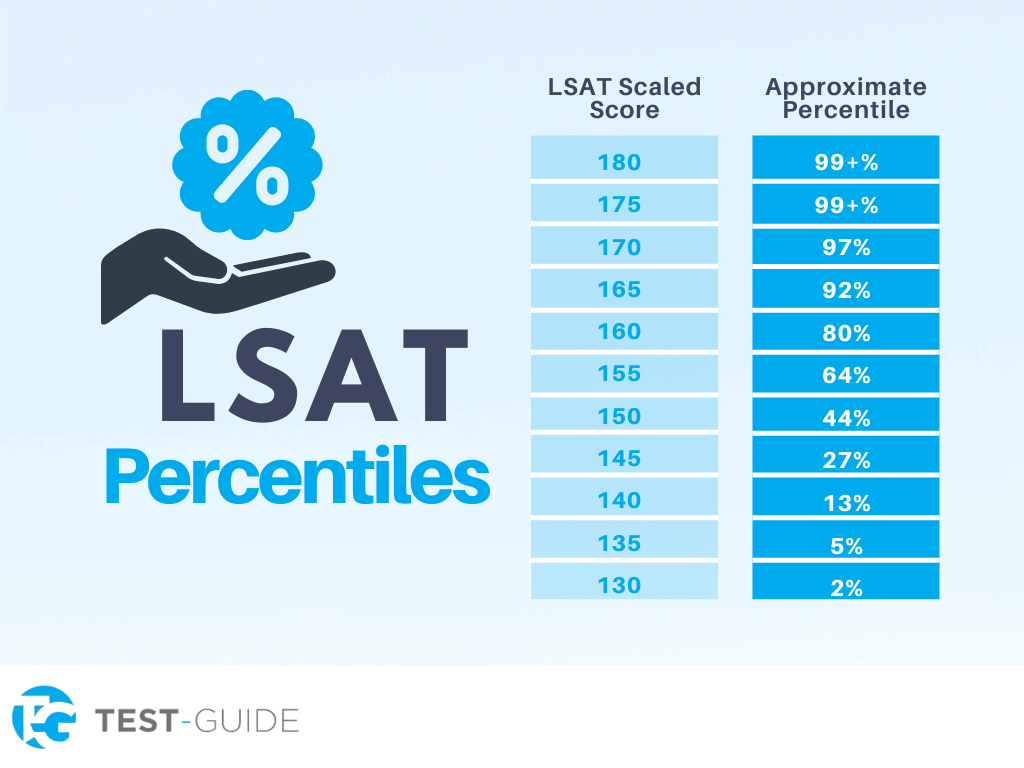
The average LSAT score typically hovers around the 150 mark. Scores in the 160s are considered strong, placing a test-taker in the upper percentile of applicants. Scores in the 170s are exceptional and are generally required for admission to the most highly selective law programs.
It’s crucial to understand that the scaled score is not a simple linear conversion of the raw score. The relationship between raw and scaled scores is determined by statistical analysis and can vary slightly between test forms. This is why LSAC (Law School Admission Council), the administrator of the LSAT, provides score conversion charts for each test administration, allowing you to see how your raw score translates to a scaled score.
The Pinnacle of Achievement: The Perfect 180 Score
Achieving a perfect score of 180 on the LSAT is an extraordinary feat, reserved for a minuscule fraction of test-takers. It signifies not just mastery of the LSAT’s content and skills but also a remarkable level of precision, endurance, and strategic execution under pressure.
The Rarity of a Perfect Score
The LSAT is designed to be a challenging examination. Even highly intelligent and well-prepared individuals often find themselves grappling with the intricacies of the logic puzzles, the density of the reading passages, and the demands of the reasoning questions. Consequently, perfect scores are exceptionally rare.
While exact statistics vary by year, it is estimated that less than 0.1% of LSAT test-takers achieve a perfect 180 score. To put this into perspective, if 100,000 people take the LSAT in a given year, only around 100 individuals would achieve this top score. This rarity underscores the significant advantage a 180 confers in the admissions process.
What a 180 Truly Signifies
A 180 score indicates that a test-taker answered every single question correctly on the scored sections of the LSAT. This means they demonstrated an unparalleled ability to:
- Comprehend complex texts with absolute accuracy: They didn’t miss nuances, misinterpret arguments, or overlook critical details in the reading passages.
- Apply logical reasoning principles flawlessly: They could identify assumptions, draw valid inferences, and evaluate arguments with perfect precision.
- Solve intricate logic games without error: They could construct accurate diagrams, derive all necessary conclusions, and avoid any deductive mistakes.
Beyond the intellectual capacity, achieving a 180 also points to exceptional test-taking skills:
- Impeccable time management: They navigated each section efficiently, ensuring they had adequate time to thoroughly review every question without rushing or leaving any unanswered.
- Strategic accuracy: They likely employed highly effective strategies for approaching different question types and managed their energy and focus throughout the entire multi-hour exam.
- Mental fortitude: They maintained peak performance under the intense pressure of a high-stakes standardized test, exhibiting remarkable concentration and resilience.
The Strategic Advantage of a Top LSAT Score
In the hyper-competitive landscape of law school admissions, a high LSAT score, particularly a perfect 180, acts as a powerful differentiator. It signals to admissions committees that an applicant possesses the foundational skills deemed essential for succeeding in a rigorous legal curriculum and, by extension, in the legal profession.
Gaining Admission to Elite Law Schools
The most sought-after law schools in the United States, often referred to as the “T14” (the top 14 ranked law schools), have extremely high LSAT score medians. For these institutions, a score of 170 and above is typically considered competitive, with a 180 effectively guaranteeing admission, assuming all other application components are also strong.
While LSAT scores are a primary component of the admissions calculus, they are not the sole determinant. Law schools consider a holistic application, including undergraduate GPA, personal essays, letters of recommendation, and relevant work experience. However, a perfect LSAT score can significantly outweigh any perceived weaknesses in other areas of the application, or it can serve as a powerful amplifier for an already strong profile. For those with slightly lower GPAs, a 180 can be the key to unlocking doors to top-tier programs that might otherwise be out of reach.
Scholarships and Financial Aid Opportunities
Beyond direct admission, exceptional LSAT scores often translate into generous scholarship offers. Law school tuition is a substantial financial undertaking, and many aspiring students rely on financial aid and scholarships to fund their education. Law schools frequently use LSAT scores as a basis for awarding merit-based scholarships, recognizing and incentivizing high academic achievement.
A perfect 180 score can make an applicant a highly attractive candidate for full-ride scholarships at many institutions. This financial advantage can significantly reduce the burden of student loan debt, a major concern for many law school graduates. Even at schools where a 180 might not cover the entire tuition, it can still secure substantial financial aid packages, making a prestigious legal education more accessible.
Setting the Stage for a Successful Legal Career
The skills tested by the LSAT – critical thinking, logical reasoning, and effective communication – are precisely the skills that form the bedrock of a successful legal career. A high LSAT score suggests that an individual is well-equipped to analyze complex legal issues, construct persuasive arguments, and understand intricate legal texts.
Law firms and judicial clerkships, particularly those that are highly selective, often look for candidates who have demonstrated a strong aptitude for analytical thinking. A top LSAT score can therefore serve as an early indicator of potential success in demanding legal roles. While experience and continued development are crucial, the LSAT score acts as a powerful initial signal of an applicant’s readiness for the intellectual challenges of the legal profession.
In conclusion, while the highest possible score for the LSAT is a definitive 180, its true significance lies not just in its numerical value but in what it represents: an exceptional command of the skills essential for legal study and practice. For aspiring lawyers, understanding the LSAT scoring scale and the profound implications of achieving a top score provides critical context for their admissions journey and illuminates the path toward their professional aspirations.
aViewFromTheCave is a participant in the Amazon Services LLC Associates Program, an affiliate advertising program designed to provide a means for sites to earn advertising fees by advertising and linking to Amazon.com. Amazon, the Amazon logo, AmazonSupply, and the AmazonSupply logo are trademarks of Amazon.com, Inc. or its affiliates. As an Amazon Associate we earn affiliate commissions from qualifying purchases.