
When it comes to the complex hardware that powers our modern world, few components are as essential—yet as frequently misunderstood—as the lead-acid or lithium-ion battery. Whether you are maintaining a high-performance vehicle, setting up a solar energy storage system, or managing an uninterruptible power supply (UPS) for a data center, the term “group size” is a critical technical specification.
At its core, the battery group size is a standardized industry code that defines the physical dimensions, terminal placement, and mounting features of a battery. This system ensures that when a piece of technology is designed, there is a consistent hardware standard that manufacturers can follow. In this guide, we will dive deep into the technical nuances of battery group sizes, the role of the Battery Council International (BCI), and how these specifications impact the performance and safety of your hardware.
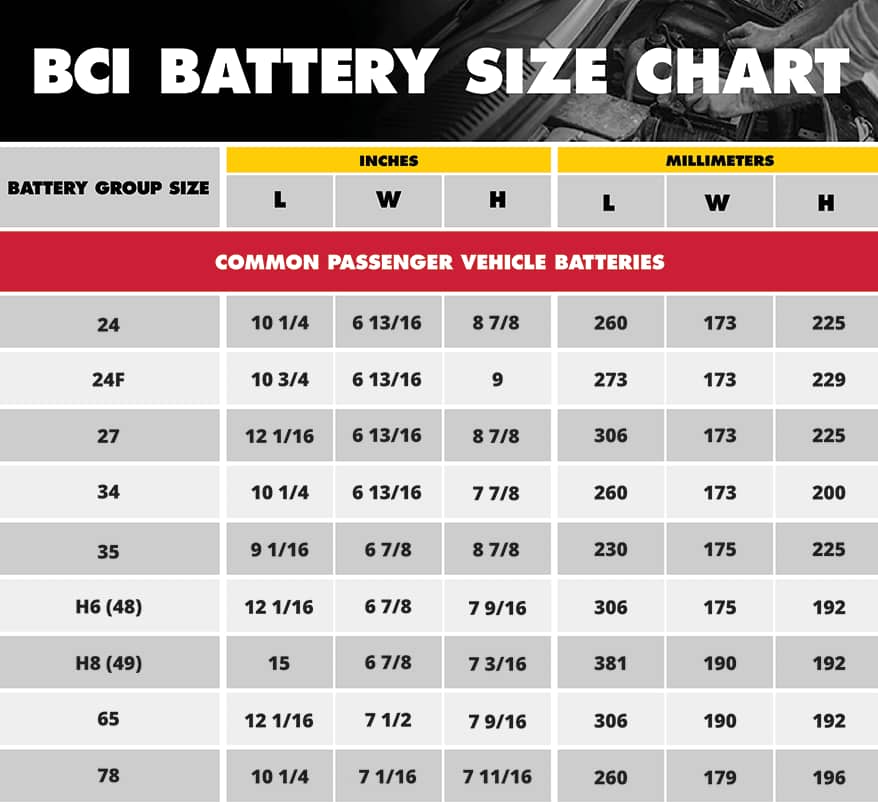
Decoding the BCI Group Size Standard
The concept of the battery group size was not an accidental development. It is a rigorous technical framework established by the Battery Council International (BCI), a non-profit organization that promotes the interests of the international lead-acid battery industry. Without these standards, the tech landscape for energy storage would be a chaotic array of incompatible shapes and sizes.
The Role of Battery Council International (BCI)
The BCI serves as the governing body that sets the “Group Size” numbers we see on labels today. By assigning specific numbers (such as Group 24, Group 35, or Group 94R), the BCI provides a shorthand for a complex set of measurements. This standardization allows hardware engineers to design engine bays and battery compartments with the certainty that a replacement component will fit perfectly. For the consumer and the technician, it eliminates the guesswork involved in hardware upgrades and maintenance.
Physical Dimensions and Engineering Tolerances
A battery group size isn’t just a rough estimate; it is a precise set of maximum physical dimensions. These include:
- Length: The longest side of the battery case.
- Width: The shorter side of the battery case.
- Height: The measurement from the base to the top of the battery (including terminals).
In the world of high-performance tech, even a few millimeters of difference can prevent a battery from being secured by its hold-down brackets. BCI standards ensure that any battery labeled with a specific group size will fit within the designated spatial envelope of the device it powers. This precision is vital for preventing mechanical stress on the battery casing and ensuring internal plates are not damaged by improper fitment.
Why Group Size is Critical for Hardware Integrity
Selecting the correct battery group size is about more than just making sure the “box” fits in the “hole.” It is a fundamental requirement for the electrical and mechanical integrity of the entire system. Using the wrong size can lead to catastrophic hardware failure or, at the very least, a significant reduction in the lifespan of the equipment.
Terminal Orientation and Polarization
One of the most overlooked aspects of the group size specification is terminal placement. The BCI code dictates exactly where the positive and negative terminals are located on the top or side of the battery.
For instance, a Group 24 battery and a Group 24F battery might have similar physical dimensions, but the “F” indicates a “reversed” terminal configuration (often found in Ford vehicles). If a technician attempts to install a standard Group 24 where a 24F is required, the cables may not reach the terminals, or worse, the user might accidentally cross-polarize the system. In modern vehicles and sensitive electronics, reversing the polarity can instantly fry the Engine Control Unit (ECU) or digital sensors, resulting in thousands of dollars in tech repairs.
Secure Mounting and Vibration Resistance
In mobile tech applications—such as automotive, marine, or robotics—vibration is the enemy of hardware longevity. Batteries are heavy, and if they are not secured tightly by the manufacturer’s original mounting hardware, internal components can shake loose.
A group size that is too small for the tray will slide around, potentially snapping cables or causing short circuits against the chassis. Conversely, a battery that is too large may be pinched by the mounting bracket, leading to a cracked casing and acid leaks. The BCI group size ensures that the base rails and top-down clamps align perfectly with the battery’s structural reinforced points.
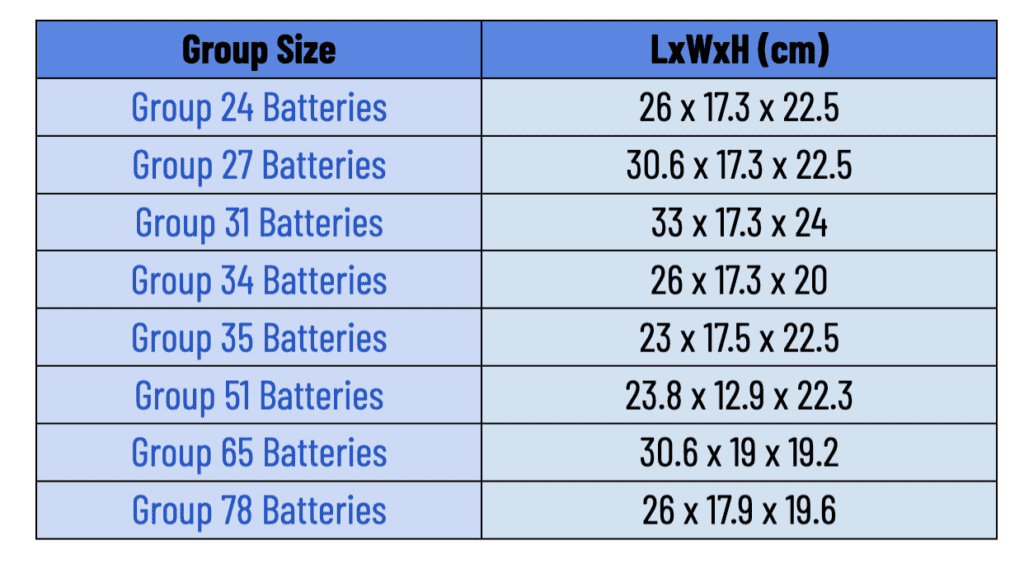
Navigating Common Group Sizes in Modern Technology
To understand how these standards apply in the real world, we must look at the specific codes that dominate the tech market. Different industries—from automotive to renewable energy—rely on different “hero” sizes to meet their power-to-weight ratios and spatial constraints.
Automotive vs. Deep-Cycle Tech Standards
In the automotive sector, common sizes include Group 35 (typical for Japanese imports), Group 65 (large domestic trucks), and Group 48/H6 (European luxury vehicles). These batteries are designed for “starting power,” providing a high burst of energy (Cold Cranking Amps) in a short duration.
In contrast, deep-cycle applications, such as those used in off-grid tech or marine electronics, often use Group 27 or Group 31 batteries. These are physically larger and heavier because they contain thicker lead plates designed for sustained energy discharge over long periods. While a Group 31 battery might physically fit in a truck designed for a Group 65, the terminal heights and mounting styles are often incompatible, illustrating why the BCI code must be followed strictly.
The Rise of “H” and “T” Designations (DIN Standards)
As technology becomes more globalized, we see an overlap between the BCI (North American) standards and the DIN (Deutsche Industrie Norm) standards used in Europe. This has led to the rise of “H” sizes, such as H5, H6, H7, and H8. These are often referred to as “L-sizes” in some technical manuals. These batteries feature a recessed terminal design and a specific bottom-ledge mounting system (B13 rail). Understanding this transition is essential for modern tech enthusiasts who are working with sophisticated European hardware or modern electric-assist vehicles.
Choosing the Right Battery Tech for Your Application
While the group size tells you the physical “envelope” of the battery, it is only one part of the technical data sheet. To ensure your hardware performs at peak efficiency, you must also consider the electrical specifications that are often tied to specific group sizes.
Balancing Dimensions with Electrical Performance
Generally, a larger physical group size allows for more internal plate surface area, which translates to higher Cold Cranking Amps (CCA) and higher Amp-Hour (Ah) ratings. However, modern technology—specifically Absorbent Glass Mat (AGM) and Lithium Iron Phosphate (LiFePO4) tech—has allowed manufacturers to pack more power into smaller group sizes.
When upgrading the battery in a tech-heavy setup, you should:
- Verify the BCI Group Size: Ensure the physical fit is exact.
- Compare the CCA/Ah Rating: Ensure the new battery meets or exceeds the original equipment manufacturer (OEM) requirements.
- Check Chemistry Compatibility: Moving from a standard flooded battery to an AGM battery within the same group size is usually an upgrade, but the charging system must be able to handle the different voltage profiles of the new tech.
Future Trends: Modular and Solid-State Dimensions
As we move toward a more electrified future, the rigid BCI group sizes of the 20th century are beginning to evolve. In the world of Electric Vehicles (EVs) and high-end home energy storage (like the Tesla Powerwall or similar tech), batteries are becoming modular. However, even in these cutting-edge fields, “form factor” standards are being developed to ensure that liquid-cooling systems and high-voltage connectors remain consistent across different hardware generations.
Maintenance and Replacement Protocols
The final piece of the battery group size puzzle is knowing how to identify and source the correct hardware when a replacement is needed. For the modern digital consumer, this process is increasingly facilitated by tech-driven databases.
Digital Look-up Tools and Tech Specs
Most major hardware retailers and automotive tech platforms now offer digital “Fitment Guides.” By inputting the year, make, model, and engine type of a vehicle, or the specific part number of a piece of industrial equipment, these databases cross-reference the OEM requirements with available BCI group sizes.
It is always recommended to visually inspect the current battery before purchasing a replacement. Look for the BCI label, which is typically found on the top or side of the battery casing. If the label is missing, measuring the length, width, and height with a digital caliper and noting the terminal positions is the most reliable technical method to determine the group size.
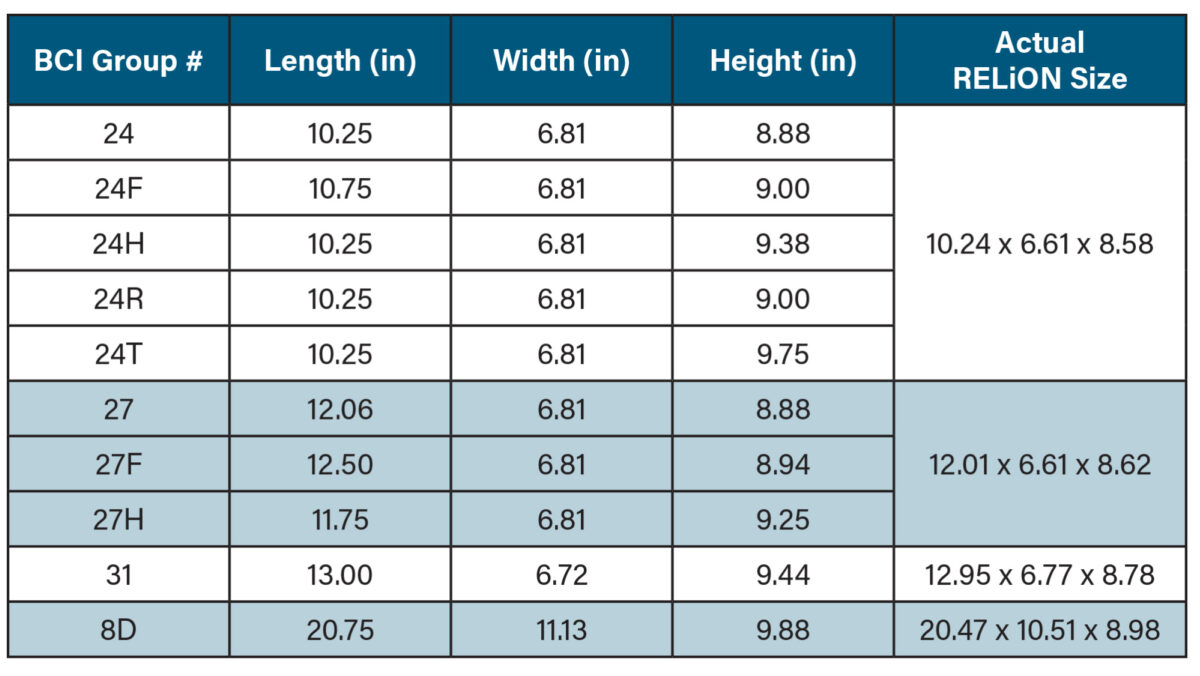
The Critical Nature of Technical Accuracy
In conclusion, “what is the group size on a battery” is a question that leads into the heart of hardware standardization. It represents a bridge between mechanical design and electrical engineering. By adhering to BCI group sizes, we ensure that our gadgets, vehicles, and power systems remain safe, efficient, and easy to maintain. Whether you are a professional technician or a tech enthusiast, respecting these dimensions is the first step toward successful hardware integration and long-term system reliability.
aViewFromTheCave is a participant in the Amazon Services LLC Associates Program, an affiliate advertising program designed to provide a means for sites to earn advertising fees by advertising and linking to Amazon.com. Amazon, the Amazon logo, AmazonSupply, and the AmazonSupply logo are trademarks of Amazon.com, Inc. or its affiliates. As an Amazon Associate we earn affiliate commissions from qualifying purchases.