
Understanding the gravity of Mars is no longer a purely academic exercise for planetary scientists. As we stand on the precipice of becoming a multi-planetary species, the specific gravitational profile of the Red Planet—approximately 3.721 m/s², or about 38% of Earth’s gravity—represents one of the most significant variables in the development of modern aerospace technology. From the precision of robotic landings to the long-term health monitoring of human pioneers, the “tech stack” required to operate in a 0.38g environment is driving a new era of innovation.

The Physics of Martian Gravity and the Tech Used to Measure It
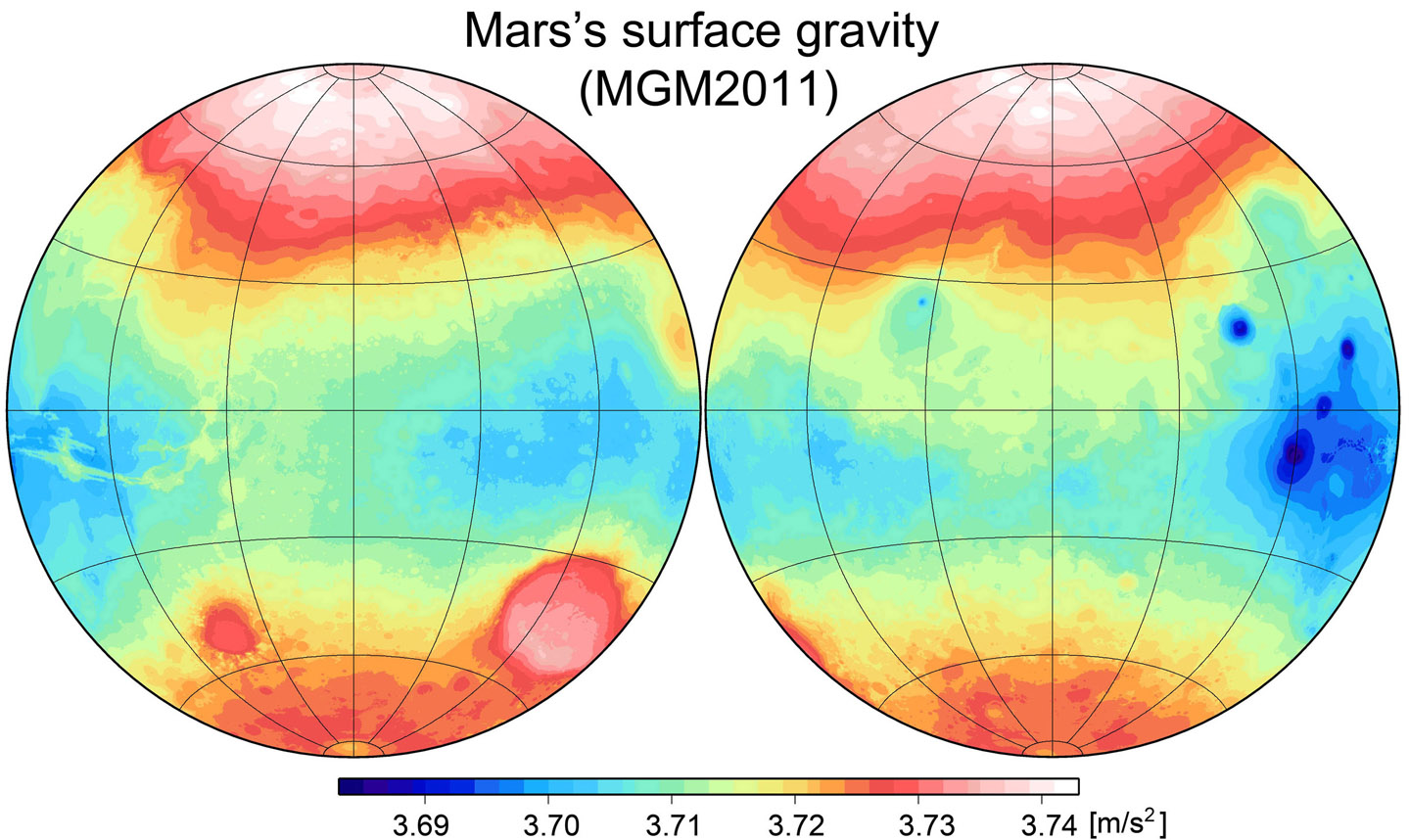
To design machines that can survive on Mars, we first had to measure its gravitational field with extreme precision. Unlike Earth, which has a relatively uniform (though not perfect) gravitational pull, Mars possesses significant gravitational anomalies caused by its crustal thickness and massive volcanic features like Olympus Mons.
Deep Space Network (DSN) and Doppler Tracking
The primary technology used to quantify Martian gravity involves the Deep Space Network (DSN). By monitoring the radio signals sent from orbiters like the Mars Reconnaissance Orbiter (MRO), engineers can detect minute changes in the spacecraft’s velocity. As an orbiter passes over a denser region of the Martian crust, the increased gravitational pull causes a slight acceleration. This shift is captured via the Doppler effect in the radio frequency. The tech required to process these signals must account for the rotation of the Earth, atmospheric interference, and the relativistic effects of space-time, requiring immense computational power.
High-Resolution Gravity Mapping via Orbiters
Modern gravimetry on Mars utilizes specialized sensors and laser altimeters. By combining data from the Mars Global Surveyor (MGS) and the MRO, scientists have developed high-resolution gravity maps. These maps are digital assets used by navigation software to predict orbital decay and to plan descent trajectories. Without this “gravity tech,” the precision required for missions like the Perseverance rover—which landed within a specific 7.7 by 6.6-kilometer ellipse—would be impossible.
Landing on the Red Planet: The EDL Technology Challenge
In the tech world, the “Entry, Descent, and Landing” (EDL) phase is famously known as the “Seven Minutes of Terror.” The gravity of Mars complicates this process because it is high enough to accelerate a spacecraft to lethal speeds, yet the atmosphere is too thin (1% of Earth’s) to provide effective aerodynamic braking.
Supersonic Parachutes and Retro-propulsion
To counteract Mars’ gravity, engineers have developed the world’s most advanced parachute systems. These are not standard nylon chutes; they are constructed from high-strength Technora and Kevlar, designed to deploy at Mach 2. However, because 0.38g is still significant, parachutes alone cannot slow a heavy rover enough for a safe landing. This has led to the development of “Skycrane” technology—a retro-rocket powered platform that lowers the rover via tether. The software governing this maneuver must perform thousands of calculations per second to balance thrust against the Martian gravitational pull in real-time.
Autonomous Navigation and Terrain-Relative Navigation (TRN)
One of the most recent breakthroughs in Mars tech is Terrain-Relative Navigation (TRN). During descent, an on-board computer takes rapid-fire photos of the surface and compares them to the gravity-mapped digital surveys stored in its memory. If the gravity-driven descent path leads toward a boulder or a crater, the AI autonomously adjusts the thrusters to steer the craft to safety. This represents a pinnacle of edge computing, where high-stakes decisions are made locally without any input from Earth.
Living and Working in 0.38g: Health-Tech and Habitat Engineering
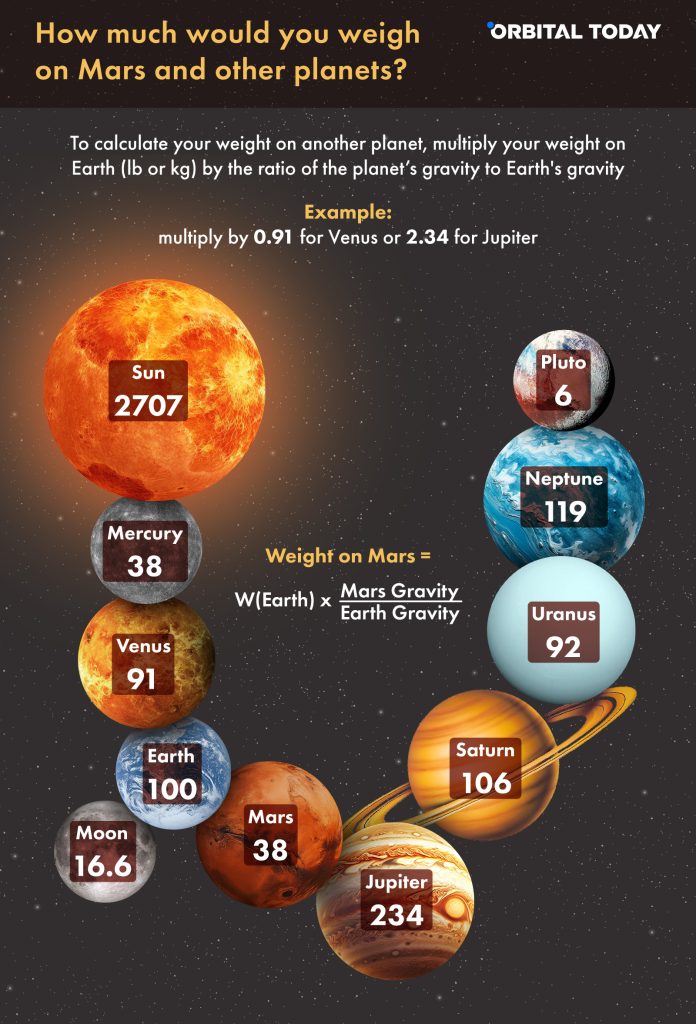
Once we move beyond robotic exploration, the focus shifts to human-centric technology. The human body evolved in 1.0g; living in the 0.38g environment of Mars poses radical biological challenges that require technological interventions.
Wearable Bio-Sensors and Musculoskeletal Monitoring
Long-term exposure to reduced gravity leads to bone density loss and muscle atrophy. To combat this, tech firms are developing advanced wearable sensors that monitor a Martian colonist’s physiological data in real-time. These devices use AI to track gait, muscle tension, and bone mineral density changes. The data is then fed into personalized “smart gym” equipment that uses electromagnetic resistance to simulate Earth’s gravity, ensuring that astronauts maintain the physical strength necessary for their eventual return to Earth.
Structural Integrity and Material Science in Lower Gravity
From an architectural tech perspective, Martian gravity offers some advantages. Structures can be larger and lighter than those on Earth. However, the internal pressure required for human survival creates a significant pressure differential with the Martian vacuum. Engineering software specifically tuned for Martian gravity allows architects to design 3D-printed habitats using “regolith-concrete.” These software tools simulate the load-bearing stresses of 0.38g, allowing for the design of pressurized domes that would collapse under their own weight on Earth but remain perfectly stable on the Red Planet.
The Role of AI and Digital Twins in Simulating Martian Gravity
Because we cannot easily replicate 0.38g for extended periods on Earth, the tech industry relies heavily on digital simulations. This is where AI and “Digital Twin” technology become indispensable.
Machine Learning for Trajectory Correction
Every launch from Earth to Mars involves a complex “gravitational dance.” AI algorithms are used to calculate the most fuel-efficient trajectories, taking into account the shifting positions of both planets and the gravitational influence of the Sun. Machine learning models analyze historical mission data to predict how Martian gravity will affect a spacecraft’s approach, allowing for mid-course corrections that save millions of dollars in fuel costs.
Digital Twin Technology for Habitat Stress Testing
A “Digital Twin” is a virtual replica of a physical asset. NASA and private tech companies create digital twins of Mars rovers and future habitats. By running these twins through high-fidelity physics engines that simulate Martian gravity, engineers can predict wear and tear on mechanical joints and electronic components. This predictive maintenance tech ensures that if a component is likely to fail due to the unique stresses of Martian gravity, it can be redesigned or reinforced before the physical mission even launches.
Future Propulsion: Technology to Overcome the Martian Gravity Well
While Mars has less gravity than Earth, “getting off” the planet still requires a massive amount of energy. The technology required to overcome the Martian gravity well for a return trip is the current “Holy Grail” of aerospace engineering.
In-Situ Resource Utilization (ISRU) for Fuel Production
The most efficient way to deal with the gravity of Mars is to use the planet itself to provide the solution. ISRU technology involves robotic chemical plants that harvest carbon dioxide from the Martian atmosphere and hydrogen from subsurface ice to create liquid oxygen and methane. This tech essentially turns Mars into a gas station. By producing fuel on the surface, we reduce the mass that needs to be lifted off Earth, making the entire “gravity equation” of the mission more manageable.
Nuclear Thermal Propulsion (NTP)
Looking further ahead, the tech industry is revisiting Nuclear Thermal Propulsion. NTP engines could provide twice the efficiency of traditional chemical rockets. This increased “Specific Impulse” would allow spacecraft to break free of Martian gravity with much larger payloads, facilitating the transport of heavy industrial equipment or large groups of people. The development of compact, space-hardened nuclear reactors is a burgeoning field of tech that will eventually make the transit between different gravitational wells a routine occurrence.
In conclusion, the gravity of Mars is a fundamental constant that dictates the design, software, and hardware of the entire space exploration industry. From the precision sensors that map the Martian crust to the AI that steers a lander through the thin atmosphere, every piece of technology is a response to that 3.721 m/s² reality. As we continue to innovate, our ability to master this gravitational environment will determine our success as a spacefaring civilization.
aViewFromTheCave is a participant in the Amazon Services LLC Associates Program, an affiliate advertising program designed to provide a means for sites to earn advertising fees by advertising and linking to Amazon.com. Amazon, the Amazon logo, AmazonSupply, and the AmazonSupply logo are trademarks of Amazon.com, Inc. or its affiliates. As an Amazon Associate we earn affiliate commissions from qualifying purchases.