
In the landscape of modern technology, few components have undergone a transformation as radical as the Graphics Processing Unit, or GPU. Once a niche hardware component relegated to the specialized task of rendering 2D and 3D images for video games, the GPU has evolved into the foundational engine of the digital age. Today, it powers everything from the high-end visual effects in cinematic masterpieces to the complex neural networks that drive generative artificial intelligence.
To understand the modern tech ecosystem, one must understand the GPU. It is no longer just a “graphics card”; it is a massive parallel processor that has redefined the boundaries of computational speed and efficiency.
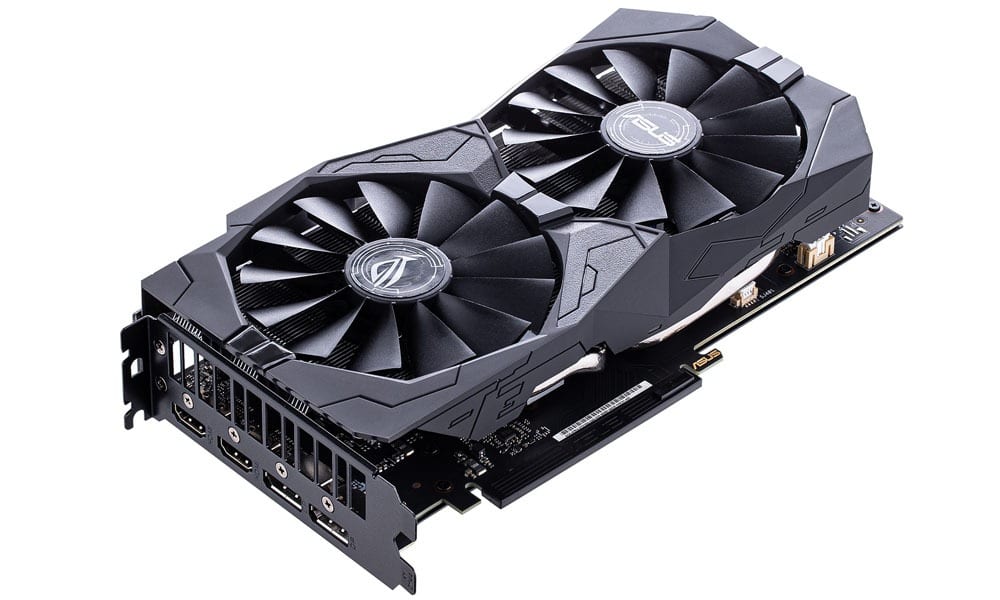
Understanding the Architecture: CPU vs. GPU
To grasp what a GPU is, it is essential to contrast it with its better-known sibling, the Central Processing Unit (CPU). While both are silicon-based microprocessors, they are designed with fundamentally different philosophies to solve different types of problems.
Serial vs. Parallel Processing
The CPU is often described as the “brain” of the computer. It is designed for versatility and speed in executing complex logic. A typical modern CPU has a handful of powerful cores (usually between 4 and 16) optimized for serial processing. This means it excels at taking a single stream of instructions and executing them one after another with very low latency. It handles the operating system, background tasks, and the intricate “if-then” logic required by most software.
In contrast, the GPU is built for parallel processing. Instead of a few powerful cores, a GPU contains thousands of smaller, more specialized cores. While an individual GPU core is significantly slower and less versatile than a CPU core, the sheer volume allows the GPU to handle thousands of simple mathematical tasks simultaneously.
Why Throughput Matters
The difference between these two architectures is best understood through the lens of throughput. If you need to solve a complex mathematical equation with many steps, you want a CPU. However, if you need to calculate the color and position of two million individual pixels on a screen 60 times per second, the GPU is the superior tool. Because each pixel can be calculated independently of the others, the GPU’s massive parallelism allows it to “brute force” the task in a fraction of the time a CPU would take.
The Evolution of the GPU: From Pixels to Neural Networks
The history of the GPU is a journey from specialized hardware to a general-purpose powerhouse. This evolution has been driven by the increasing demand for realism in media and the sudden explosion of data science.
The Origins of 3D Rendering
In the 1990s, the primary bottleneck for computers was displaying 3D graphics. Early computers relied on the CPU to “draw” images, which was incredibly inefficient. This led to the creation of the dedicated graphics accelerator. In 1999, NVIDIA released the GeForce 256, marketed as the world’s first “GPU.” It moved the “Transform and Lighting” calculations away from the CPU, allowing for much more complex visual environments. For the next decade, the GPU’s primary role was to support the gaming and professional design industries (CAD).
General-Purpose GPU (GPGPU) Computing
In the mid-2000s, researchers realized that the math required for 3D graphics—matrix multiplication and vector calculus—was the same math required for complex scientific simulations. This realization birthed the era of General-Purpose Computing on Graphics Processing Units (GPGPU).
NVIDIA introduced CUDA (Compute Unified Device Architecture), a parallel computing platform and programming model that allowed developers to use the GPU’s power for non-graphical tasks. This shift transformed the GPU from a gaming accessory into a vital tool for weather forecasting, molecular modeling, and fluid dynamics.
Key Components and How They Work
A modern GPU is a sophisticated ecosystem of specialized hardware designed to move and process data at blistering speeds. Understanding these components is key to evaluating hardware performance.
VRAM and Memory Bandwidth
Video Random Access Memory (VRAM) is the GPU’s dedicated memory. Unlike system RAM, which stores general data for the CPU, VRAM is designed for high-speed access to textures, shaders, and the massive datasets used in AI training.
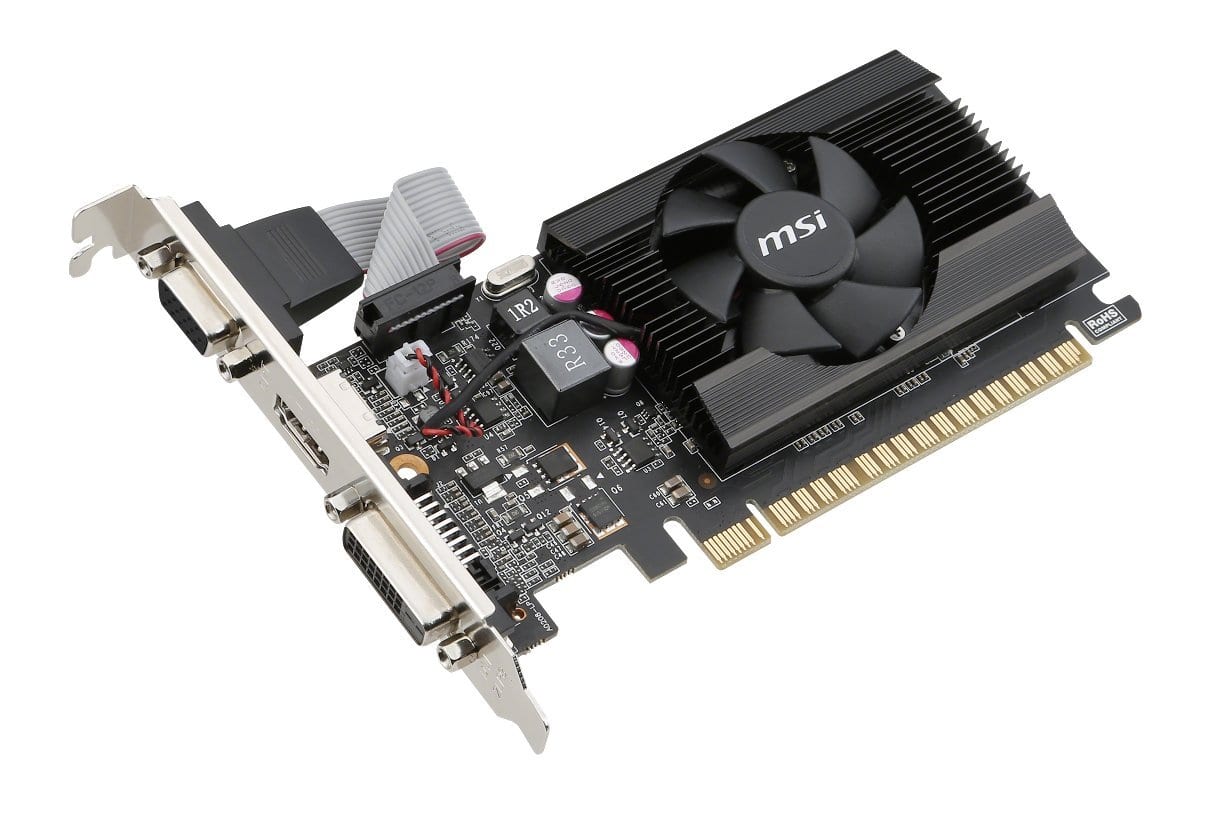
Memory bandwidth is often more important than the amount of VRAM. It dictates how much data the GPU can move in and out of its memory per second. High-bandwidth memory (such as GDDR6X or HBM3) ensures that the thousands of cores are not “starved” for data, which would create a bottleneck in performance.
CUDA Cores and Stream Processors
The “cores” of a GPU are the units that perform the actual calculations. NVIDIA refers to these as CUDA cores, while AMD calls them Stream Processors. While you cannot compare them one-to-one across different brands, the general rule is that more cores lead to higher parallel processing power.
In recent years, “specialized” cores have also appeared:
- Tensor Cores: Designed specifically for the deep learning operations used in AI.
- RT (Ray Tracing) Cores: Dedicated hardware meant to calculate the physics of light in real-time, allowing for realistic reflections and shadows in games and architectural visualizations.
The Role of GPUs in Modern Tech Trends
The current technological landscape is being shaped by the GPU more than any other piece of hardware. From the apps on your phone to the security of your bank account, the GPU’s influence is ubiquitous.
Accelerating Artificial Intelligence and Machine Learning
The “AI Revolution” of the 2020s would be impossible without the GPU. Large Language Models (LLMs) like GPT-4 require trillions of mathematical operations to train and run. Because training a neural network involves adjusting millions of weights across a massive matrix of data, it is a task perfectly suited for the GPU’s parallel architecture.
Today, massive data centers—often called “AI Factories”—house thousands of interconnected GPUs (like the NVIDIA H100). These clusters act as a single, giant supercomputer, processing the data necessary to teach machines how to recognize images, translate languages, and write code.
The Impact on Cybersecurity and Cryptography
The GPU’s ability to process data in parallel has significant implications for digital security. In the realm of cryptography, GPUs can be used to “brute force” passwords by trying millions of combinations per second—far faster than a CPU could ever manage.
On the defensive side, GPUs are used in modern cybersecurity tools to analyze network traffic patterns in real-time. By processing massive amounts of data as it flows, these systems can identify the “fingerprints” of a cyberattack or malware injection before it can breach a system. Furthermore, the blockchain technology that powers cryptocurrencies relies heavily on the GPU’s ability to perform the complex hashing algorithms required for “mining” and transaction verification.
Choosing the Right GPU for Your Needs
In the current market, GPUs are divided into two main categories, and choosing the right one depends entirely on the workload.
Integrated vs. Dedicated Graphics
Integrated GPUs (iGPUs) are built directly into the same chip as the CPU. They share the system’s RAM and are designed for power efficiency. For the average user—someone who browses the web, streams 4K video, or does basic office work—an iGPU is more than sufficient. Modern integrated graphics, like those found in Apple’s M-series chips or Intel’s Iris Xe, are surprisingly capable.
Dedicated GPUs (dGPUs) are separate hardware units with their own cooling systems and VRAM. These are essential for professionals in video editing, 3D modeling, and software development, as well as for gamers who demand high frame rates and resolution. A dGPU is a necessity if you intend to run local AI models or engage in heavy data processing.

Future-Proofing Your Hardware
When looking at the future of tech, “future-proofing” a system often means investing in a GPU with specialized hardware. As software becomes more reliant on AI-assisted features—such as DLSS (Deep Learning Super Sampling) which uses AI to upscale images—the importance of Tensor cores and high VRAM capacity will only grow.
Even for non-gamers, the trend toward “GPU acceleration” in creative suites (like Adobe Creative Cloud) and web browsers means that a capable GPU will extend the functional life of any computer. We are moving toward a world where the GPU is not just an “extra” component, but the primary driver of the user experience.
In conclusion, the GPU has transitioned from a specialized tool for rendering triangles into the most versatile and powerful processor in the modern tech stack. Whether it is driving the visuals of a virtual world or calculating the next breakthrough in medical research, the GPU remains at the heart of innovation. Understanding its power and architecture is no longer just for enthusiasts; it is essential for anyone navigating the high-tech reality of the 21st century.
aViewFromTheCave is a participant in the Amazon Services LLC Associates Program, an affiliate advertising program designed to provide a means for sites to earn advertising fees by advertising and linking to Amazon.com. Amazon, the Amazon logo, AmazonSupply, and the AmazonSupply logo are trademarks of Amazon.com, Inc. or its affiliates. As an Amazon Associate we earn affiliate commissions from qualifying purchases.