
In the competitive landscape of modern branding, visual storytelling is the bridge between a company’s values and its audience’s perception. While many brand managers focus on color palettes and typography, the structural foundation of an image—its composition—often dictates whether a viewer lingers or scrolls past. Among the most powerful tools in a creator’s arsenal is the Golden Ratio. Often referred to as “nature’s secret code,” the Golden Ratio in photography is more than just a technical guideline; it is a strategic framework for achieving the perfect balance and aesthetic harmony that defines premium brand identities.
The Mathematical Foundation of Iconic Branding
To understand the Golden Ratio, one must look beyond the camera lens and into the mathematical proportions that govern the natural world. This ratio, approximately 1.618 to 1, is represented by the Greek letter Phi. It is a mathematical constant found in everything from the spiral of galaxies and the arrangement of sunflower seeds to the proportions of the human face. Because of its prevalence in nature, the human brain is evolutionarily hardwired to perceive this ratio as inherently beautiful, trustworthy, and “right.”
Defining the Golden Ratio and Phi
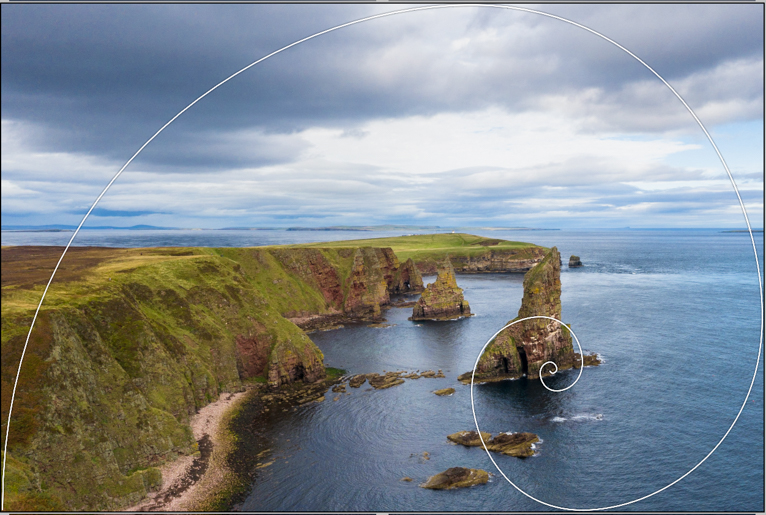
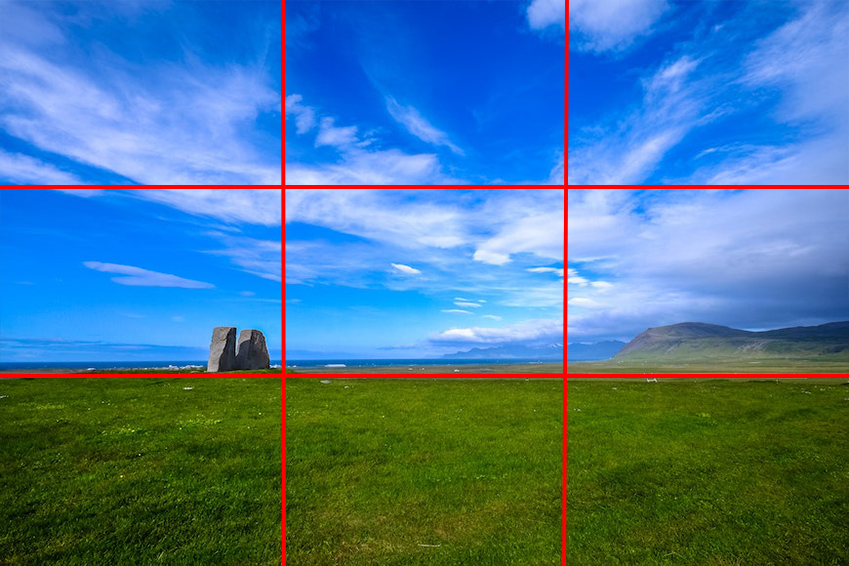
In photography and design, the Golden Ratio is a compositional tool that guides the viewer’s eye through an image in a way that feels organic. Unlike the more common Rule of Thirds, which divides a frame into nine equal rectangles, the Golden Ratio uses a more complex system of proportions. When applied to a rectangular frame, it creates a “Golden Rectangle,” which can be further subdivided into a series of squares. When you connect the opposite corners of these squares with a circular arc, you produce the “Golden Spiral.”
For a brand, utilizing this ratio means tapping into a universal standard of beauty. Whether you are capturing a product shot for a flagship launch or a lifestyle image for a social media campaign, aligning your elements with Phi ensures that the composition feels balanced rather than forced.
The Fibonacci Sequence in Visual Design
Closely related to the Golden Ratio is the Fibonacci Sequence—a series of numbers where each number is the sum of the two preceding ones (1, 1, 2, 3, 5, 8, 13, and so on). As the numbers increase, the ratio between them gets closer and closer to 1.618.
When brand photographers apply these sequences to their work, they are creating a sense of growth and progression within the frame. This is particularly effective for corporate identity projects where the goal is to project stability, evolution, and perfection. Iconic logos, such as those of Apple, Twitter (now X), and National Geographic, have all utilized these mathematical proportions to ensure their brand marks are instantly recognizable and aesthetically pleasing.
Applying the Golden Ratio to Brand Photography
In a world saturated with amateur content, professional brand photography must stand out by demonstrating a higher level of intentionality. Using the Golden Ratio allows a brand to move away from “centered” or “static” shots toward a dynamic composition that guides the viewer’s narrative journey.
Creating Focal Points that Drive Engagement
The primary goal of brand photography is to lead the consumer’s eye to a specific call to action or a key brand element. The Golden Spiral is particularly effective for this. By placing the most detailed or important part of the image (such as a product or a human face) at the smallest part of the spiral, the photographer creates a natural “pathway.”
The eye follows the broad curve of the spiral and terminates at the focal point. This creates a sense of discovery. For a luxury brand, this subtle movement makes the product feel like a destination. It prevents the image from feeling cluttered, even if there are multiple elements in the frame, because every element is placed in relation to the primary focal point according to a natural flow.
Balancing Negative Space for Premium Identity
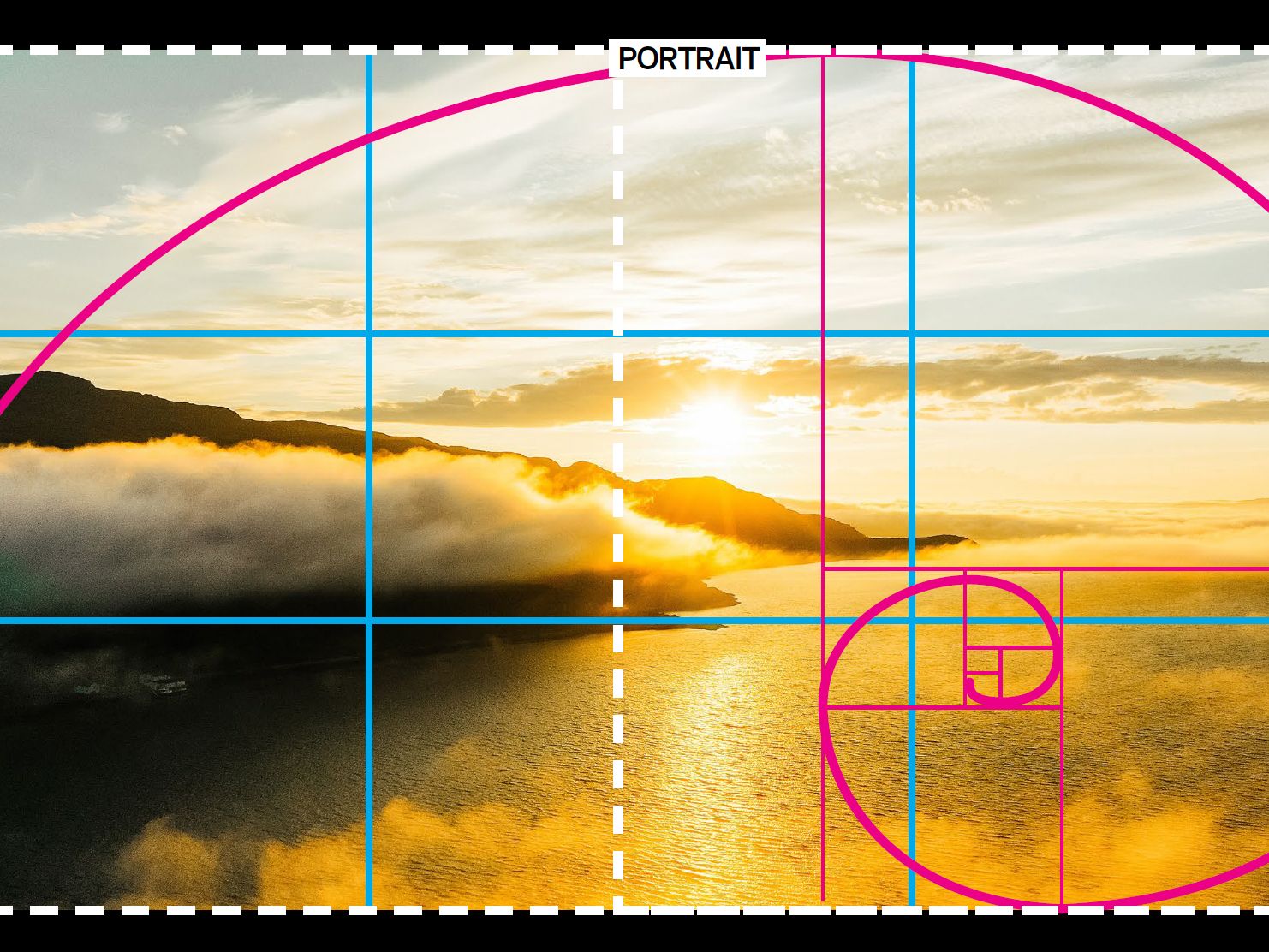
One of the hallmarks of premium branding is the sophisticated use of negative space. The Golden Ratio inherently encourages a balanced distribution of space. Instead of filling the frame, photographers can use the Phi Grid—a variation of the Rule of Thirds that uses the ratio 1:0.618:1 instead of 1:1:1—to create more centralized, compact intersections.
The result is a composition where the subject is surrounded by “breathing room” that feels intentional rather than empty. For high-end fashion or architectural branding, this use of space signals exclusivity and calm. It tells the audience that the brand is confident enough not to scream for attention, allowing the viewer to appreciate the details in a measured, rhythmic way.
Moving Beyond the Rule of Thirds
While the Rule of Thirds is the first lesson most photographers learn, it can sometimes produce images that feel “mechanical” or overly predictable. The Golden Ratio is the “pro-level” alternative. Because the intersections in a Phi Grid are closer to the center of the frame than in the Rule of Thirds, the resulting images feel more natural and less staged. For a personal brand looking to appear authentic and approachable, this subtle shift can make a significant difference in how the audience perceives the individual’s personality.
Strategic Implementation: From Social Media to Corporate Identity
A brand’s visual identity must be consistent across multiple touchpoints. The Golden Ratio provides a universal template that works regardless of the medium, from the hero image of a website to the tiny thumbnail of a mobile app.
Product Photography and the Phi Grid
In product photography, especially for e-commerce and catalogs, the Phi Grid is a vital tool. When multiple products are featured, the grid helps the photographer place them in a way that creates a “visual hierarchy.” By aligning the most important product with one of the vertical lines of the Phi Grid, the photographer ensures that it remains the anchor of the image, while secondary items provide context without distracting the viewer. This hierarchy is essential for driving conversions, as it simplifies the decision-making process for the consumer.
Portraiture and the Golden Spiral
For personal branding and “meet the team” pages, portraiture is the primary vehicle for building trust. Using the Golden Spiral in portraiture involves aligning the subject’s eyes—the most communicative part of the human face—with the center of the spiral. The curve of the spiral can then be used to frame the subject’s shoulders or the environment around them.
This technique creates a sense of “movement” within a static portrait, making the subject appear more dynamic and engaged. It moves the portrait from a simple headshot to a piece of brand art that tells a story about leadership and vision.
The Psychological Impact of Proportion on Brand Perception
The effectiveness of the Golden Ratio isn’t just an artistic theory; it is grounded in psychology. Brands that master these proportions are essentially speaking the “native language” of the human brain.
Why the Human Brain Craves Symmetry and Flow
Neuro-aesthetics is a field of study that explores how the brain processes beauty. Research suggests that the brain can process images that follow the Golden Ratio much faster than those that don’t. When a brand uses these proportions, it reduces the “cognitive load” on the viewer.
If an image is easy to process, the brain associates that ease with a positive emotion. In a branding context, this means the viewer is more likely to associate your brand with feelings of clarity, efficiency, and pleasure. Conversely, chaotic or poorly composed images can create a subconscious sense of “friction,” which can lead to negative brand associations.
Building Trust through Visual Consistency
Trust is the currency of branding. One of the easiest ways to lose trust is through inconsistency. By adopting the Golden Ratio as a standard for all brand imagery, a company creates a “visual rhythm.” Even if the subject matter changes—from an office interior to a customer testimonial—the underlying structure remains the same. This consistency signals to the audience that the brand is disciplined, detail-oriented, and reliable. It suggests a level of craftsmanship that extends beyond the visuals and into the products or services themselves.
Integrating the Golden Ratio into Your Visual Style Guide
For a brand to truly benefit from the Golden Ratio, it must be integrated into the brand’s visual style guide. It shouldn’t be a happy accident; it should be a requirement.
Training Your Creative Team
Brand managers should ensure that their photographers, videographers, and graphic designers are not only aware of the Golden Ratio but are actively using it. This involves:
- Setting Composition Standards: Define when to use the Phi Grid versus the Golden Spiral based on the content type.
- Using Overlays in Post-Production: Modern editing software like Adobe Lightroom and Photoshop allows for Golden Ratio overlays. These should be used during the cropping phase to ensure final assets meet the brand’s structural standards.
- Auditing Visual Assets: Periodically review the brand’s social media feeds and marketing materials to ensure they adhere to these harmonic principles.
The Longevity of Mathematical Beauty
Trends in photography—such as specific filters, high-contrast lighting, or “lo-fi” aesthetics—come and go. However, the Golden Ratio is timeless. By anchoring a brand’s visual strategy in mathematical truth, a brand ensures that its imagery will not look dated in five or ten years. This longevity is crucial for corporate identity, where the goal is to build a legacy.
Mastering the Golden Ratio in photography is about more than just taking “pretty” pictures. It is about the strategic application of geometry to influence human emotion and perception. For the modern brand, it is a tool for cutting through the noise, creating a sense of order in a chaotic digital world, and establishing a visual presence that feels both natural and extraordinary. By aligning your brand’s vision with the proportions of the universe, you create a visual narrative that is not only seen but felt.
aViewFromTheCave is a participant in the Amazon Services LLC Associates Program, an affiliate advertising program designed to provide a means for sites to earn advertising fees by advertising and linking to Amazon.com. Amazon, the Amazon logo, AmazonSupply, and the AmazonSupply logo are trademarks of Amazon.com, Inc. or its affiliates. As an Amazon Associate we earn affiliate commissions from qualifying purchases.