
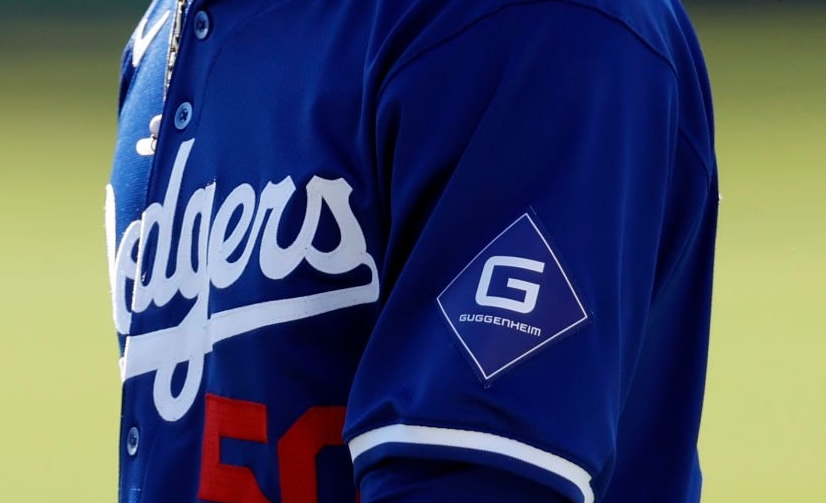
For decades, the Los Angeles Dodgers uniform remained one of the most sacred canvases in professional sports. The iconic “Dodger Blue” script, the red numerals on the front, and the interlocking “LA” on the cap formed a brand identity that was synonymous with tradition, elegance, and historical weight. However, viewers recently noticed a subtle yet significant addition to the sleeve: a stylized, circular “G” logo.
This “G” represents Guggenheim Baseball Management, the ownership group that acquired the team in 2012. While it may seem like a simple patch, its presence on the uniform is a masterclass in brand strategy, corporate identity, and the evolving philosophy of sports marketing. It signals a shift from the jersey as a mere athletic garment to a high-value piece of real estate for corporate storytelling.
The Evolution of the Major League Baseball Uniform as a Branding Asset
The arrival of the “G” on the Dodgers’ sleeve is part of a broader movement within Major League Baseball (MLB) to monetize jersey space, but the strategy behind the Dodgers’ choice is uniquely tied to corporate identity rather than traditional third-party sponsorship.
From Tradition to Commercialization
Historically, MLB was the most conservative of the “Big Four” American sports leagues regarding uniform modifications. While European soccer jerseys have long been dominated by “kit sponsors,” American baseball held onto a “clean” aesthetic for over a century. The introduction of the Nike “Swoosh” to the front of the jersey in 2020 was the first major crack in the dam. This was followed by the 2023 CBA (Collective Bargaining Agreement), which officially allowed teams to sell “jersey patches.”
For a brand like the Dodgers, whose identity is worth billions, adding any external element to the uniform is a high-stakes decision. The “G” patch represents the first time a corporate entity has shared the visual space of the Dodgers’ jersey in such a permanent, prominent way.
The Psychology of the Jersey Patch
In brand strategy, the location of a logo dictates its perceived value. The sleeve of a baseball jersey is one of the most photographed and televised spots in sports. Every time a pitcher winds up or a batter adjusts their stance, the sleeve is in the frame. By placing the Guggenheim “G” here, the organization ensures that the ownership group’s brand is inextricably linked with the players’ performance. This creates a “halo effect,” where the success, prestige, and history of the Dodgers brand are transferred to the Guggenheim corporate identity.
Unpacking the “G”: Guggenheim Baseball Management and Corporate Presence
To understand the branding significance of the “G,” one must understand what Guggenheim Baseball Management represents. Unlike other teams that have sold their sleeve space to insurance companies or mobile carriers, the Dodgers chose to highlight their own architectural foundation.
Who is the Guggenheim Group?
Guggenheim Baseball Management is an investment group that includes high-profile figures like Mark Walter, Stan Kasten, and Magic Johnson. When they purchased the Dodgers for $2.15 billion—a record at the time—they didn’t just buy a team; they bought a global brand. The “G” logo is an extension of Guggenheim Partners, a global investment and advisory firm.
From a brand strategy perspective, the “G” serves as a “seal of ownership.” It communicates stability and deep pockets. In a sport where fan anxiety often centers on a team’s willingness to spend on talent, the “G” acts as a brand promise of financial power and competitive ambition.
Why the Shift from Product Sponsors to Ownership Branding?
Most MLB teams use the sleeve patch for “Foundational Partnerships”—selling the space to a local or national corporation (e.g., the Padres with Motorola or the Red Sox with MassMutual). The Dodgers’ decision to use the “G” logo is a “House of Brands” versus “Branded House” strategy.
By utilizing their own corporate logo, Guggenheim is reinforcing the internal brand architecture. They are not just the “owners” in the background; they are the “brand behind the brand.” This elevates the Guggenheim name from the financial sector into the cultural zeitgeist. Every time Shohei Ohtani or Mookie Betts rounds the bases, the Guggenheim “G” is part of the highlight reel, gaining a level of brand awareness that traditional financial marketing could never achieve.
The Aesthetics of Integration: Design Consistency in High-Value Branding

One of the biggest risks in corporate branding is “logo clutter”—the point where a secondary brand clashes so harshly with the primary brand that it creates visual friction. The Dodgers’ “G” patch is a study in how to execute corporate integration without compromising heritage.
Visual Harmony vs. Commercial Intrusion
The “G” patch is designed with a minimalist aesthetic. It typically utilizes the team’s color palette (blue and white), which allows it to blend into the uniform rather than standing out as an eyesore. In brand design, this is known as “symbiotic iconography.” If the patch were a neon green or a clashing red, it would be perceived as an intrusion. By matching the Dodgers’ visual language, the “G” is coded by the brain as a natural component of the uniform.
This design choice respects the “brand equity” of the Dodgers. Fans are famously protective of the team’s look. A jarring, brightly colored corporate logo would likely face backlash. The “G,” however, feels like a badge of rank—a subtle mark of quality that fits the “Dodger Way.”
Maintaining the Dodgers’ Heritage
The Dodgers’ brand is built on the concept of “Timelessness.” Unlike teams that frequently change their logos or colors to chase trends, the Dodgers have remained remarkably consistent since their move from Brooklyn in 1958.
The strategy behind the “G” patch had to account for this. The logo is circular, mirroring the shape of traditional baseball patches and world series insignias. This choice leverages the “familiarity heuristic”—a psychological shortcut where people prefer things that feel familiar. Because the “G” follows the form factor of historical patches, it is more easily accepted into the Dodgers’ visual canon.
The Strategic Impact of On-Field Branding on Global Recognition
The Dodgers are no longer just a Los Angeles team; they are a global lifestyle brand. The “G” patch plays a crucial role in the organization’s international market positioning, particularly in Asia and Latin America.
Media Impressions and the Power of TV Exposure
In the digital age, brand impressions are everything. A three-hour baseball game provides thousands of opportunities for a logo to be seen. Unlike a 30-second commercial that viewers might skip, the sleeve patch is “un-skippable” content. It is embedded in the action.
For Guggenheim, this represents a massive increase in “earned media” value. Every time a Dodgers game is broadcast in Japan or Korea, the Guggenheim brand receives international exposure. This is a deliberate brand-building exercise intended to position Guggenheim not just as a domestic investment firm, but as a global powerhouse capable of managing the world’s most valuable sports assets.
Synergizing Local Identity with Global Corporate Reach
The Dodgers represent the city of Los Angeles—a hub of glamour, entertainment, and success. By placing the “G” on the uniform, Guggenheim hitches its corporate wagon to the “L.A. Brand.” This is a strategic move to humanize a financial entity. Financial firms are often seen as cold or detached; sports branding allows them to tap into the emotional loyalty of a fanbase. The “G” becomes associated with the “Boys in Blue,” the roar of the crowd, and the nostalgia of a night at the ballpark. This emotional resonance is the holy grail of brand strategy.
The Future of Corporate Identity in Professional Sports
The “G” on the Dodgers uniform is a harbinger of the future of sports marketing. We are entering an era where the lines between the team, the owners, and the sponsors are increasingly blurred.
Beyond the Patch: Immersive Branding Experiences
As corporate identity becomes more integrated into the “field of play,” we can expect to see brands looking for ways to go beyond the patch. The Dodgers’ use of the “G” is a first step toward a more holistic corporate-athletic identity. We may see future brand strategies where the stadium architecture, the digital overlays on broadcasts, and the physical uniforms all share a unified corporate design language.
Conclusion: The “G” as a Symbol of Modern Brand Management
The “G” on the Dodgers uniform is more than just a letter; it is a symbol of the intersection of high finance and cultural heritage. It represents a shift in how sports franchises are managed—not just as teams, but as sophisticated corporate entities that understand the power of visual identity.
Through careful design, strategic placement, and a deep understanding of brand equity, Guggenheim has managed to place its stamp on a legendary franchise without diminishing the team’s historic appeal. The “G” is a reminder that in the modern world, every inch of space is a storytelling opportunity, and the strongest brands are those that can weave their narrative into the fabric of our most beloved traditions.
aViewFromTheCave is a participant in the Amazon Services LLC Associates Program, an affiliate advertising program designed to provide a means for sites to earn advertising fees by advertising and linking to Amazon.com. Amazon, the Amazon logo, AmazonSupply, and the AmazonSupply logo are trademarks of Amazon.com, Inc. or its affiliates. As an Amazon Associate we earn affiliate commissions from qualifying purchases.