
In an era defined by artificial intelligence, cloud computing, and immersive digital experiences, it might seem anachronistic to ponder the formula for the area of a trapezoid. Yet, beneath the sleek interfaces and complex algorithms of modern technology lies a bedrock of fundamental mathematical principles. The seemingly simple formula for a trapezoid’s area—A = ½ (b1 + b2) h—is far more than a relic of geometry class; it’s a foundational concept that quietly underpins a vast array of technological applications, from computer graphics to advanced engineering simulations and even aspects of machine learning.
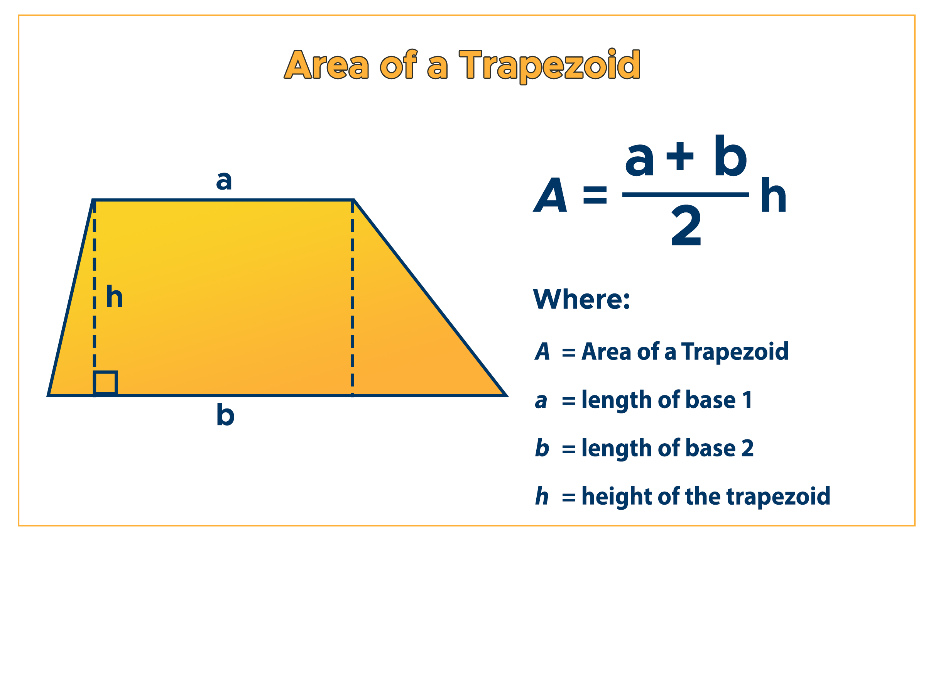
Understanding this formula, where ‘A’ is the area, ‘b1’ and ‘b2’ are the lengths of the parallel bases, and ‘h’ is the perpendicular height between them, is not just about calculating space. It’s about grasping how elementary geometric insights translate into computational power, enabling the creation of the digital world we inhabit. This article delves into why such a basic geometric concept remains critically relevant in the sophisticated landscape of modern technology, exploring its diverse applications and the tools that leverage it.
Deconstructing the Trapezoid Formula: The Digital Perspective
To fully appreciate the technological significance of the trapezoid, we must first firmly grasp its mathematical essence and then understand why such a seemingly simple geometric shape holds such sway in complex digital systems.
The Fundamental Equation
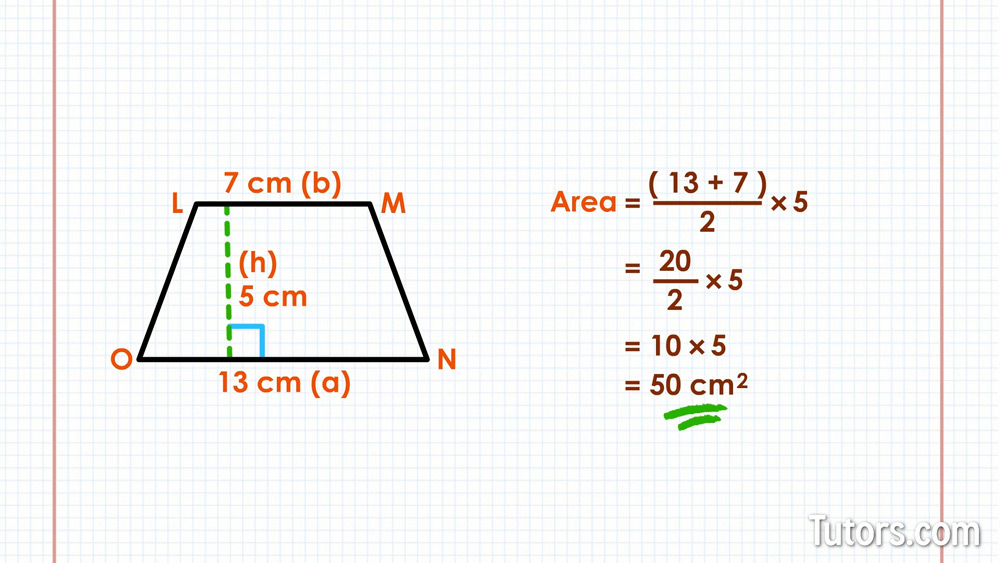
The formula A = ½ (b1 + b2) h is elegantly straightforward. It tells us that to find the area of a trapezoid, you average the lengths of its two parallel bases (b1 and b2) and multiply that average by its height (h). This formula is derived from the idea that a trapezoid can be transformed into a rectangle by rearranging its parts, or by decomposing it into a rectangle and two triangles. Its simplicity, however, belies its profound utility. In the digital realm, such clear, unambiguous mathematical expressions are the backbone of efficient computation. Every variable is quantifiable, and every operation is deterministic, making it perfectly suited for algorithmic processing.
Why Geometry Matters in Software Development
The digital world is built on algorithms that process data, and much of that data, directly or indirectly, relates to spatial information. Geometric shapes are the fundamental building blocks of digital representation. From the pixels on your screen to the polygons that form 3D models, geometry is pervasive. Understanding shapes like the trapezoid is crucial for several reasons in software development:
-
Building Blocks: Complex shapes and structures in software (e.g., a car in a video game, a building in architectural software) are often decomposed into simpler geometric primitives like triangles, rectangles, and yes, trapezoids. An efficient algorithm for calculating the area of a trapezoid contributes to the overall efficiency of processing more complex geometries.
-
Precision and Accuracy: In engineering and scientific computing, precision is paramount. Knowing how to correctly calculate areas allows for accurate simulations, resource allocation, and design specifications. Errors in fundamental geometric calculations can cascade into significant flaws in larger systems.
-
Optimization: When software needs to render scenes, perform physics simulations, or analyze data, minimizing computational load is key. Efficient geometric algorithms, derived from foundational formulas, contribute directly to faster processing times and smoother user experiences.
Trapezoids in Action: Real-World Tech Implementations
The abstract concept of a trapezoid’s area finds concrete application across numerous technological domains, proving that foundational mathematics is continuously repurposed and integrated into cutting-edge solutions.
Computer Graphics and Game Development
In the vibrant and dynamic world of computer graphics and game development, geometry is the invisible skeleton upon which everything is built. While triangles are often cited as the primary primitive for 3D rendering due to their planar nature, other shapes, including trapezoids, emerge in various contexts:
-
Mesh Generation and Modeling: 3D models are constructed from meshes of polygons. While triangles are most common for rendering (being inherently planar), quadrilaterals (quads) are often preferred during the modeling phase for easier manipulation and subdivision. A trapezoid is a specific type of quadrilateral, and understanding its properties, including area, is vital for tasks like texture mapping, light calculation, and collision detection. For instance, calculating the surface area of complex, irregularly shaped objects composed of many trapezoidal elements might be needed for realistic material application or fluid simulations.
-
Terrain Generation and LOD: When generating terrains for games or simulations, irregular shapes often appear. A trapezoid can represent a section of a sloping hill, a riverbed, or a part of an architectural façade. Calculating the area of such sections can be crucial for level-of-detail (LOD) systems, where objects far from the camera are simplified, or for environmental analysis, such as calculating water flow over a surface.
-
Collision Detection: In game physics, collision detection often involves checking for overlaps between bounding volumes, which can sometimes be simplified trapezoidal prisms or irregular shapes approximated by combinations of polygons. Calculating the area of overlap, or the potential contact surface, can be essential for realistic interaction.
Engineering and CAD Software
Computer-Aided Design (CAD) software is the bedrock of modern engineering, transforming abstract ideas into tangible designs. Here, geometric formulas like the trapezoid area are indispensable for precise design, analysis, and manufacturing.
-
Structural Analysis: Engineers use CAD to design everything from bridges to microchips. The cross-sectional areas of beams, columns, or other structural elements are critical for calculating stress, strain, and load-bearing capacity. If a structural component has a trapezoidal cross-section (e.g., a specific type of I-beam or a retaining wall), accurately calculating its area is a fundamental step in ensuring safety and efficiency.
-
Fluid Dynamics and Aerodynamics: In computational fluid dynamics (CFD), engineers simulate how fluids (liquids or gases) interact with surfaces. The flow channels, nozzles, or wing profiles often involve trapezoidal or similar irregular cross-sections. Calculating these areas is crucial for determining flow rates, pressure drops, and aerodynamic lift or drag.
-
Material Estimation and Manufacturing: For manufacturing processes, accurately estimating the material required for a component is vital for cost control and waste reduction. If a component’s design involves flat, two-dimensional shapes that are trapezoidal, CAD software uses the area formula to determine the amount of sheet metal, plastic, or other material needed for cutting or molding.
-
Geospatial and Civil Engineering: In GIS (Geographic Information Systems) and civil engineering, land plots, road sections, or water retention areas can frequently be irregular polygons. While these are often broken down into triangles, trapezoids are a natural fit for approximating or calculating areas of land parcels, especially along property lines or contoured terrains.
Data Visualization and AI
Even in seemingly abstract fields like data visualization and artificial intelligence, geometric principles, including the understanding of areas, play a subtle yet significant role.
-
Area Under the Curve (AUC) in Machine Learning: In machine learning, especially for classification problems, the Receiver Operating Characteristic (ROC) curve is a common tool to evaluate model performance. The Area Under the Curve (AUC) is a critical metric derived by integrating or approximating the area beneath this curve. Numerical integration methods, such as the trapezoidal rule, are commonly used to calculate this area. This directly applies the trapezoid area concept to quantify a model’s ability to distinguish between classes.
-
Image Processing and Computer Vision: When AI systems analyze images, they often perform segmentation, object detection, and feature extraction. Identifying and quantifying regions of interest (ROIs) that might have irregular, trapezoidal-like shapes is common. For instance, measuring the area of a detected object on a slanted surface, or analyzing agricultural fields from satellite imagery where parcels might be trapezoidal, requires geometric calculations.
-
Data Density Visualization: Heatmaps and other data density visualizations sometimes use area to represent magnitudes. While not directly calculating trapezoid areas, the underlying principle of associating a quantitative value with a visual area is a fundamental geometric concept.
Automation and Precision: How Tech Handles Trapezoid Calculations
The power of technology lies not just in its ability to apply these formulas but to do so with unparalleled speed, precision, and at scale, far exceeding manual calculation capabilities.
The Role of Programming Languages and Libraries
Modern programming languages and specialized libraries are engineered to handle geometric calculations efficiently. Developers rarely manually type A = 0.5 * (b1 + b2) * h for every trapezoid. Instead:
-
Built-in Functions and Libraries: Languages like Python (with NumPy, SciPy for scientific computing), C++ (often with custom geometry classes or specialized libraries like Boost.Geometry), and Java (with its AWT/JavaFX graphics libraries) provide powerful tools. These libraries offer functions for creating geometric objects, performing transformations, and calculating properties like area and perimeter for various polygons, including trapezoids.
-
Computational Efficiency: These implementations are highly optimized for performance. When dealing with millions of polygons in a 3D scene or thousands of data points for an AUC calculation, efficiency is paramount. Optimized libraries leverage low-level machine instructions to perform these calculations rapidly, enabling real-time graphics and complex simulations.
AI and Machine Learning in Geometric Analysis
While the trapezoid formula itself is simple arithmetic, AI and machine learning play a crucial role in the application of such formulas in complex scenarios:
-
Automated Shape Recognition: Deep learning models, particularly convolutional neural networks (CNNs), excel at identifying and classifying geometric shapes, even irregular ones, within images or sensor data. An AI system might be trained to detect trapezoidal patterns in architectural blueprints, manufacturing defects, or even cancerous cells in medical scans. Once identified, the system can then apply the area formula automatically.
-
Parameter Extraction: AI can automatically extract the necessary parameters (b1, b2, h) from complex visual data. For instance, an AI-powered drone might survey a field, automatically identify trapezoidal sections, measure their dimensions, and then calculate their areas to estimate crop yield or assess land usage.
-
Generative Design and Optimization: AI algorithms are increasingly used in generative design, where they explore vast design spaces to find optimal solutions. These algorithms often manipulate geometric shapes, evaluating their properties (like area or volume) to meet specific criteria. For example, an AI might design an aircraft wing’s cross-section, which could include trapezoidal elements, by optimizing its surface area for lift and drag.
Digital Tools and Applications
Beyond hardcore programming, numerous user-friendly digital tools leverage these foundational geometric calculations, making them accessible to a wider audience:
-
Online Calculators and Geometry Software: Websites and applications like GeoGebra or specific geometry calculators allow users to input dimensions and instantly get the area, visualizing the concept. These tools simplify complex tasks for students, educators, and professionals.
-
Spreadsheet Software: Programs like Microsoft Excel or Google Sheets allow users to input formulas directly, effectively creating their own area calculators for lists of trapezoidal data.
-
Specialized Engineering Apps: Many industry-specific applications, particularly in surveying, architecture, and mechanical engineering, incorporate built-in functions for calculating areas of various geometric figures, including trapezoids, streamlining design and analysis workflows.
The Future of Geometric Computing: Beyond the Trapezoid
While the trapezoid formula is fundamental, the field of geometric computing is constantly evolving, building upon these basics to tackle ever more complex challenges and create more immersive digital realities.
Advanced Geometry and Topology
The principles learned from simple shapes extend to advanced geometric concepts crucial for future tech:
-
NURBS and Bezier Curves: These mathematical representations are essential for smooth, complex curves and surfaces in industrial design, animation, and virtual reality, allowing for highly realistic and flexible modeling beyond simple polygons.
-
Topological Data Analysis (TDA): This emerging field uses concepts from topology to find hidden structures in high-dimensional data, often represented as geometric shapes or networks. Understanding the ‘holes’ or ‘components’ of these abstract shapes provides profound insights into complex datasets.
-
Volumetric Rendering and Voxels: Moving beyond surface areas, technologies for medical imaging, scientific visualization, and some game engines increasingly rely on volumetric data (voxels) where geometry extends into three dimensions, requiring more complex integration techniques that still trace back to basic area/volume calculations.
Quantum Computing and Geometric Challenges
Though still in its nascent stages, quantum computing holds promise for revolutionizing geometric calculations. Imagine tackling incredibly complex optimization problems involving millions of interacting geometric shapes or simulating materials at the atomic level, where quantum algorithms might offer exponential speedups. While directly calculating a trapezoid’s area won’t be a quantum leap, solving problems that depend on vast numbers of such calculations could be.

Educational Tech and Interactive Learning
The future of learning geometry, and by extension, its application in tech, will be increasingly interactive. Augmented reality (AR) and virtual reality (VR) are transforming how students visualize and interact with mathematical concepts. Imagine manipulating a virtual trapezoid in 3D space, changing its dimensions, and instantly seeing its area update, bridging the gap between abstract formula and tangible understanding. Such immersive tools will foster a deeper intuition for geometry, cultivating the next generation of innovators who can apply these foundational principles to even more sophisticated technological challenges.
In conclusion, the formula for the area of a trapezoid, A = ½ (b1 + b2) h, is far from a mere academic exercise. It is a vital building block in the vast and intricate edifice of modern technology. From rendering lifelike graphics and designing resilient engineering marvels to enabling intelligent data analysis and powering sophisticated AI, the trapezoid, and the fundamental geometric understanding it represents, remains an indispensable tool. As technology continues to advance, the appreciation for these foundational mathematical truths will only deepen, underscoring that the simplest equations often hold the greatest power to shape our complex digital future.
aViewFromTheCave is a participant in the Amazon Services LLC Associates Program, an affiliate advertising program designed to provide a means for sites to earn advertising fees by advertising and linking to Amazon.com. Amazon, the Amazon logo, AmazonSupply, and the AmazonSupply logo are trademarks of Amazon.com, Inc. or its affiliates. As an Amazon Associate we earn affiliate commissions from qualifying purchases.