
Understanding the formula for interest is more than just a mathematical exercise; it is a foundational pillar of financial literacy. Whether you are looking to grow your savings, invest in the stock market, or take out a mortgage, interest is the primary mechanism that determines the cost of borrowing and the reward for saving. At its core, interest is the price paid for the use of money over time. However, the way that price is calculated can vary significantly depending on the financial instrument in question.
In the world of personal and business finance, interest generally falls into two major categories: simple interest and compound interest. Mastering these formulas allows you to project your future net worth, evaluate the true cost of a loan, and make informed decisions that align with your long-term wealth-building goals.
The Foundation: Simple Interest Formula
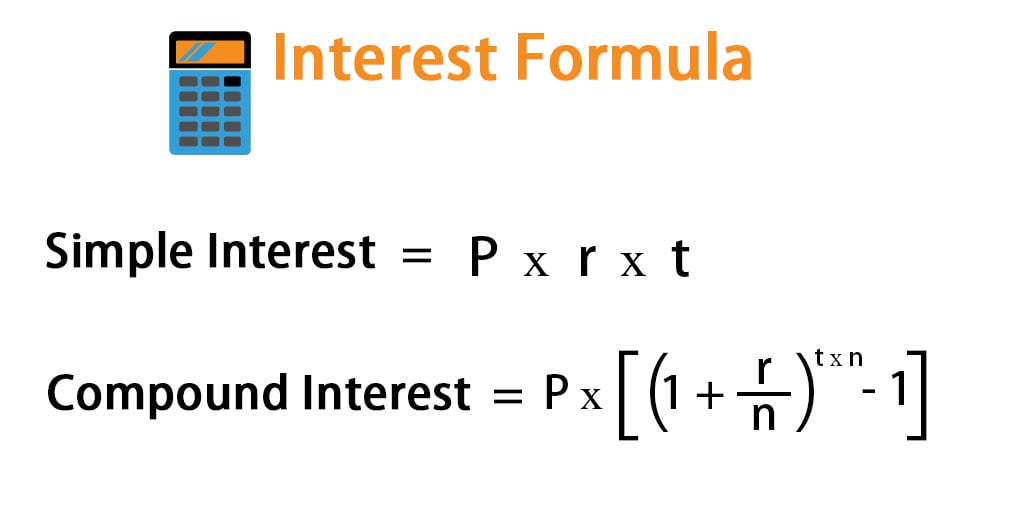
Simple interest is the most straightforward way to calculate the cost of a loan or the growth of an investment. It is calculated solely on the principal amount—the original sum of money borrowed or invested—and does not account for interest earned in previous periods. While simple interest is less common in modern consumer banking for long-term products, it remains a vital component for short-term loans, certain types of bonds, and private lending agreements.
The Mathematical Breakdown
The formula for simple interest is expressed as:
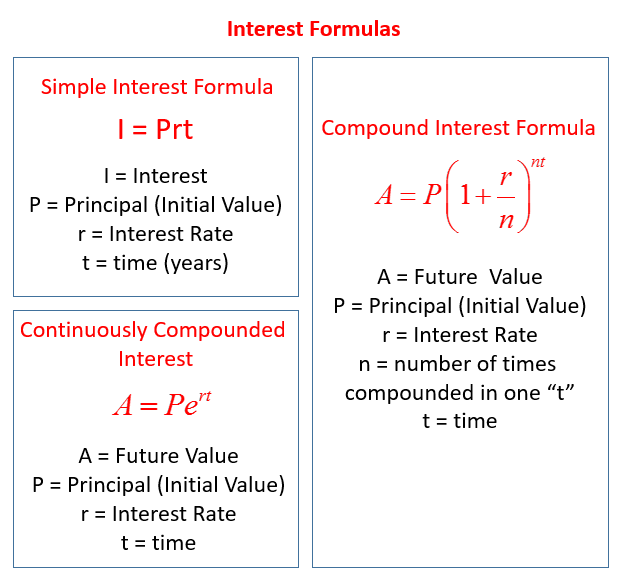
I = P × r × t
Where:
-
I represents the total amount of interest earned or paid.
-
P (Principal) is the starting amount of money.
-
r (Annual Interest Rate) is the rate expressed as a decimal (for example, 5% becomes 0.05).
-
t (Time) is the duration of the loan or investment, usually expressed in years.
To find the total value of the account or the total amount to be repaid (the Maturity Value), you add the interest to the principal (A = P + I).
Simple Interest in Practice
Imagine you lend a business partner $10,000 at a simple interest rate of 6% for three years. Using the formula:
I = $10,000 × 0.06 × 3 = $1,800.
By the end of the three-year term, the borrower owes you $11,800. The simplicity of this calculation is its primary advantage; there are no fluctuating variables or complex recalculations based on time intervals. However, for investors, simple interest is often less desirable because it does not allow your money to grow exponentially.
The Power of Wealth Building: Compound Interest Formula
If simple interest is a linear progression, compound interest is a geometric one. Albert Einstein famously referred to compound interest as the “eighth wonder of the world,” noting that those who understand it earn it, while those who don’t, pay it. Compound interest is calculated on the initial principal and also on the accumulated interest of previous periods. This “interest on interest” effect is the primary engine behind long-term wealth creation.
The Compound Interest Formula
The formula for compound interest is slightly more complex:
A = P(1 + r/n)^(nt)
Where:
-
A is the final amount (Principal + Interest).
-
P is the initial principal balance.
-
r is the annual interest rate (decimal).
-
n is the number of times interest is compounded per year.
-
t is the number of years the money is invested or borrowed.
To find just the interest earned, you subtract the principal from the final amount (Interest = A – P).
The Role of Compounding Frequency
The variable n is the secret sauce of the compound interest formula. The more frequently interest is compounded—whether annually, quarterly, monthly, or daily—the faster the total amount grows.
For instance, if you invest $5,000 at a 10% interest rate for 10 years:
-
Compounded Annually (n=1): $12,968.71
-
Compounded Monthly (n=12): $13,535.21
-
Compounded Daily (n=365): $13,589.55
While the difference between monthly and daily compounding might seem negligible in the short term, over decades and with larger sums of money, these nuances can result in tens of thousands of dollars in additional wealth. This is why savvy investors prioritize high-yield savings accounts (HYSAs) or dividend-reinvestment plans (DRIPs) that compound frequently.
The Rule of 72: A Shortcut for Investors
For those who want to calculate the impact of interest without a calculator, the “Rule of 72” is an essential tool. It allows you to estimate how long it will take to double your money at a fixed annual rate of interest. You simply divide 72 by the annual interest rate. If you earn a 7% return, your money will double in approximately 10.2 years (72 / 7 = 10.2). This highlights the necessity of seeking higher rates of return to combat the eroding effects of inflation.
Interest from the Borrower’s Perspective: APR and Amortization
While interest is a tool for growth for the investor, it is a cost for the borrower. When dealing with mortgages, auto loans, or credit cards, the formulas shift slightly to account for repayment schedules and fees. In this context, two terms are critical: Annual Percentage Rate (APR) and Amortization.
Understanding APR vs. Nominal Rate
The nominal interest rate is the “sticker price” of a loan, but the APR provides a more accurate picture of the cost. The APR formula incorporates the interest rate plus any additional fees (such as origination fees or closing costs) spread over the life of the loan. This allows consumers to make an “apples-to-apples” comparison between different lenders. When you see a low interest rate advertised, always check the APR to ensure the lender isn’t hiding the true cost in the fine print.
Amortization: How Interest is Structured
Most consumer loans (like home mortgages) use an amortization formula. Unlike simple interest, where payments might be equal portions of principal and interest, amortized loans are front-loaded with interest.
In the early years of a 30-year mortgage, the majority of your monthly payment goes toward the interest, with very little reducing the principal balance. As the principal decreases over time, the interest portion of the payment also decreases, and more of your money goes toward building equity. Understanding this formula is vital for homeowners who are considering extra principal payments. By paying more than the monthly requirement early in the loan term, you effectively bypass the interest formula, potentially saving yourself thousands of dollars and shaving years off the loan.
Strategic Financial Management: Optimizing Interest Rates
In a professional financial strategy, the goal is to maximize the interest you receive and minimize the interest you pay. Achieving this requires a deep understanding of how interest rates interact with the broader economy.
The Impact of Inflation on “Real” Interest
When calculating the effectiveness of an interest rate, one must consider the “Real Interest Rate.” The formula is:
Real Interest Rate = Nominal Interest Rate – Inflation Rate
If your savings account offers a 4% interest rate but inflation is running at 5%, your “real” return is -1%. In this scenario, despite the numerical growth in your account, your purchasing power is actually decreasing. Investors must seek assets that historically outpace inflation—such as equities or real estate—rather than relying solely on fixed-interest cash accounts.
Debt Management: The Interest Rate Hierarchy
From a business and personal finance perspective, the formula for interest dictates the order in which you should manage your liabilities. High-interest debt, such as credit card balances (which often have APRs exceeding 20%), should be the first priority for repayment. The “interest on interest” works against you here, creating a debt spiral that is difficult to escape.
Conversely, low-interest debt (such as a mortgage at 3% or 4%) might be considered “good debt” if you can invest your capital elsewhere and earn a higher rate of return than the cost of the debt. This concept, known as “leverage,” is a cornerstone of corporate finance and sophisticated personal investing.

Conclusion: Mastering the Variables of Wealth
The formula for interest—whether simple or compound—is the heartbeat of the global financial system. By understanding the variables of Principal, Rate, Time, and Compounding Frequency, you gain the power to predict your financial future.
For the borrower, understanding these formulas provides a shield against predatory lending and excessive costs. For the investor, it provides a roadmap for exponential growth. In the end, the most important variable in any interest formula is Time. The sooner you apply these formulas to your own financial life—by paying down high-interest debt or starting a compound-interest investment account—the more effectively you can harness the power of mathematics to secure your financial freedom. Interest is not just a fee or a reward; it is the fundamental tool that dictates how money moves through the world. Mastering it is the first step toward true financial mastery.
aViewFromTheCave is a participant in the Amazon Services LLC Associates Program, an affiliate advertising program designed to provide a means for sites to earn advertising fees by advertising and linking to Amazon.com. Amazon, the Amazon logo, AmazonSupply, and the AmazonSupply logo are trademarks of Amazon.com, Inc. or its affiliates. As an Amazon Associate we earn affiliate commissions from qualifying purchases.