
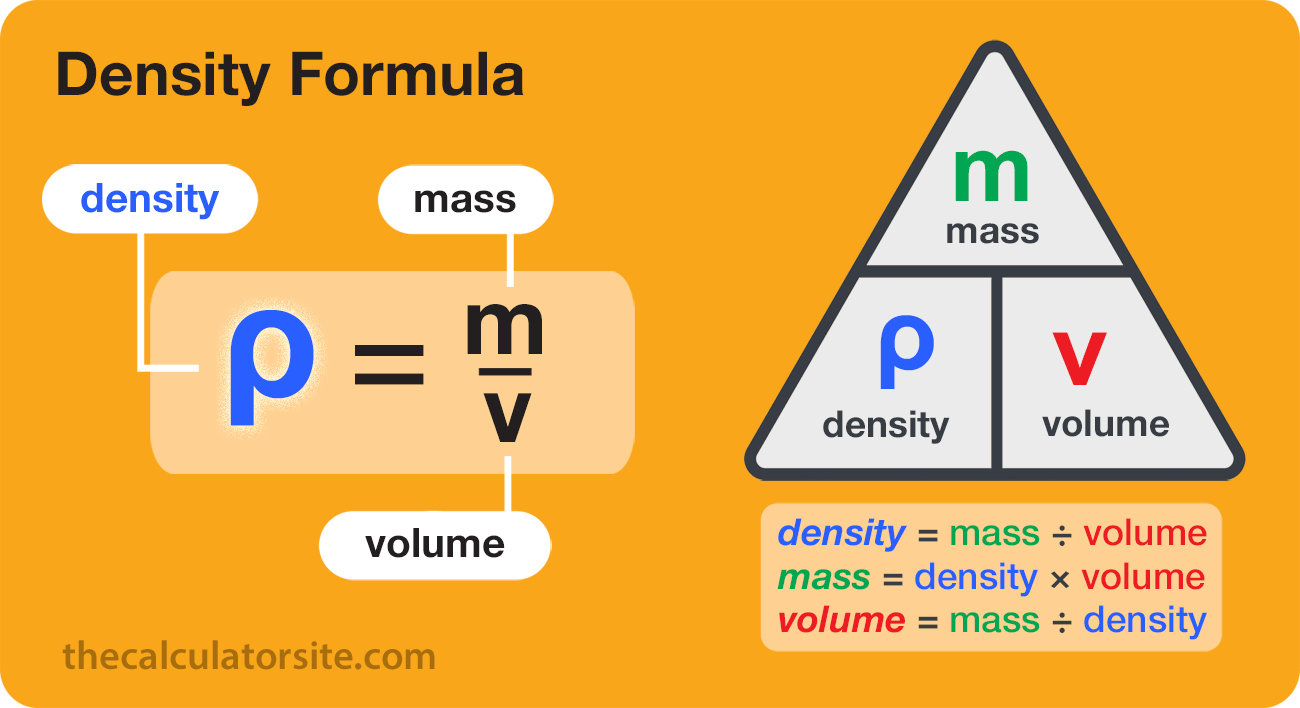
In the realm of physics, density is a straightforward calculation of mass per unit volume. However, in the rapidly evolving landscape of technology, the concept of “density” has morphed into one of the most critical KPIs for engineers, developers, and hardware architects. Whether we are discussing the number of transistors on a microchip, the amount of data stored on a platter, or the processing power packed into a server rack, density is the yardstick by which we measure progress.
As we transition into an era dominated by Artificial Intelligence (AI) and Big Data, understanding the formula for calculating density—and more importantly, how to optimize it—is essential for anyone looking to master modern tech infrastructure. This article explores the multifaceted formulas of density within the tech niche, from hardware storage to compute efficiency and user interface design.
Understanding Data Storage Density: The Evolution of Bits and Bytes
When we ask about the density of technology, the most common starting point is storage. For decades, the tech industry has been obsessed with fitting more data into smaller physical footprints. This is primarily measured through “Areal Density.”
Bits per Square Inch: The Areal Density Formula
Areal density is the measure of the quantity of information bits that can be stored on a given area of magnetic storage surface. The basic formula for calculating storage density is:
Density = Total Capacity / Physical Surface Area
In practical engineering, this is usually expressed as Gigabits per square inch (Gb/in²). To calculate this, engineers look at two specific components:
-
Bit Density (BPI): How many bits are recorded along a single track.
-
Track Density (TPI): How many tracks are packed into one inch of the disk’s radius.
By multiplying BPI by TPI, we arrive at the Areal Density. As this number increases, the cost per gigabyte drops, and the physical size of our devices shrinks. We have moved from the massive IBM 350 disk storage unit of 1956, which had a density of about 2,000 bits per square inch, to modern drives exceeding 1.5 Terabits per square inch.
Why Storage Density Matters for Enterprise Solutions
For data centers and enterprise-level tech, density isn’t just a technical achievement; it is a financial necessity. High-density storage reduces the “Data Center Footprint,” meaning companies can store petabytes of data in fewer square feet. This leads to a direct reduction in overhead costs, including real estate, cooling, and electricity. Current innovations like HAMR (Heat-Assisted Magnetic Recording) and MAMR (Microwave-Assisted Magnetic Recording) are pushing the limits of the density formula, allowing for storage capacities that were unthinkable a decade ago.
Compute Density in the Age of AI and Edge Computing
As we move from storage to processing, the formula for density changes. In the world of high-performance computing (HPC) and AI, we focus on “Compute Density.” This refers to the amount of processing power available within a specific physical volume or power envelope.
Calculating FLOPS per Rack Unit
In a modern data center, the density of a server rack is often calculated by its computational output relative to its size. The formula can be expressed as:
Compute Density = Total FLOPS (Floating Point Operations Per Second) / Total Rack Units (U)
For an AI startup or a cloud provider, maximizing this formula is the key to scalability. With the rise of GPU-accelerated computing (using hardware like the NVIDIA H100), the density of compute has skyrocketed. However, this brings us to a secondary, equally important calculation: Power Density.
Thermal Design Power (TDP) and Energy Density
High compute density creates immense heat. Therefore, engineers must calculate the “Power Density” to ensure the facility can handle the load. The formula is:
Power Density = Total Watts / Square Footage (or Rack Volume)
As we pack more AI chips into a single server, the power density can exceed 30kW to 50kW per rack. This has forced a shift in tech infrastructure from traditional air cooling to liquid cooling solutions. Understanding this formula is vital for digital architects who must balance the desire for raw power with the physical limitations of thermodynamics and energy consumption.

Pixel Density and Display Engineering
Density isn’t only found in the backend of servers; it is also a defining factor in how we interact with technology through screens. Whether it’s a smartphone, a high-end monitor, or a VR headset, “Pixel Density” determines the visual fidelity of the device.
The PPI Formula: Calculating Visual Fidelity
The standard formula for calculating pixel density is PPI (Pixels Per Inch). This is derived using the Pythagorean theorem to find the diagonal resolution in pixels and then dividing it by the diagonal screen size in inches.
The PPI Formula:
-
Square the horizontal pixel count.
-
Square the vertical pixel count.
-
Add the two squares together.
-
Take the square root of the sum.
-
Divide the result by the diagonal screen size in inches.
Example: For a 1920×1080 screen that is 5 inches diagonally:
- √(1920² + 1080²) / 5 = 440.58 PPI.
Impact on User Experience and App Development
For software developers and UI/UX designers, knowing the density of the target hardware is crucial. High-density displays (like Apple’s Retina or Samsung’s AMOLED screens) require “Asset Density” scaling. If an app icon is designed for a low-density screen and displayed on a high-density one, it will appear blurry. Consequently, modern tech stacks use vector graphics or multi-resolution image sets to ensure that the visual density of the software matches the physical density of the hardware.
Information Density in Software Architecture and UI/UX
Beyond the physical world of hardware, “density” is a core concept in software engineering and interface design. In this context, we refer to “Information Density”—the amount of functional information or data points presented to a user or processed by an API within a single view or transaction.
Reducing Cognitive Load through Design Density
In UI/UX design, the formula for density is often a qualitative balance between “White Space” and “Functional Elements.”
-
High Information Density: Common in professional tools like Bloomberg Terminals, IDEs (Integrated Development Environments), or CRM dashboards. The goal is to provide maximum data at a glance.
-
Low Information Density: Preferred for consumer apps (like Instagram or Airbnb) to reduce cognitive load and focus the user’s attention on a single action.
Calculating the optimal density for a software interface involves measuring the Signal-to-Noise Ratio. A tech product succeeds when the “Signal” (useful information) is maximized while the “Noise” (irrelevant clutter) is minimized.
Optimizing API Payloads for Network Efficiency
In backend development, density refers to the efficiency of data transmission. When an app requests data from a server, the “Payload Density” is a measure of how much useful information is contained within the JSON or XML file compared to the metadata and overhead.
Payload Efficiency = Useful Data (bytes) / Total Packet Size (bytes)
Developers optimize this density through techniques like minification, compression (Gzip/Brotli), and the use of binary formats like Protocol Buffers (protobuf). In a world where mobile users may have limited bandwidth, increasing the density of the data payload is a critical technical requirement for high-performance apps.
The Future of Density: Quantum and Beyond
As we look toward the future, the formulas for density are moving into the quantum realm. We are approaching the physical limits of silicon, leading to the exploration of “Volumetric Efficiency” in 3D chip stacking and “Quantum Bit (Qubit) Density.”
In quantum computing, the goal is not just how many qubits we can fit on a chip, but the “Quantum Volume”—a metric that accounts for both the number of qubits and their error rates (gate fidelity). This is the ultimate density formula for the next generation of tech: it combines quantity with quality.

Conclusion: Why the Density Formula is the North Star of Tech
Whether you are a hardware engineer calculating Areal Density, a data center manager monitoring Power Density, or a software developer optimizing PPI and API payloads, the concept of density remains the same: maximizing value within a limited resource.
Technology thrives on the optimization of these formulas. By squeezing more bits into a square inch, more flops into a rack, and more pixels into a display, we create the “magic” of modern digital life. As AI continues to demand more compute and storage than ever before, the quest for higher density will remain the primary driver of innovation in the tech industry for decades to come. Understanding these formulas isn’t just a mathematical exercise—it’s a roadmap for the future of digital transformation.
aViewFromTheCave is a participant in the Amazon Services LLC Associates Program, an affiliate advertising program designed to provide a means for sites to earn advertising fees by advertising and linking to Amazon.com. Amazon, the Amazon logo, AmazonSupply, and the AmazonSupply logo are trademarks of Amazon.com, Inc. or its affiliates. As an Amazon Associate we earn affiliate commissions from qualifying purchases.