
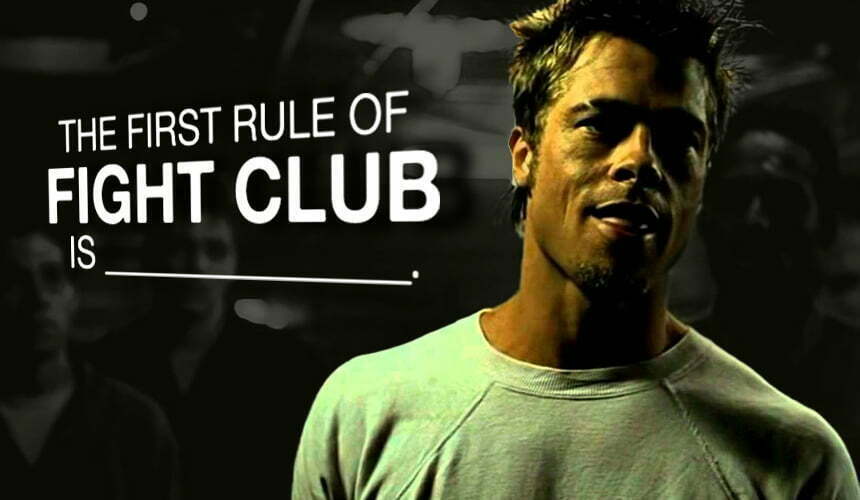
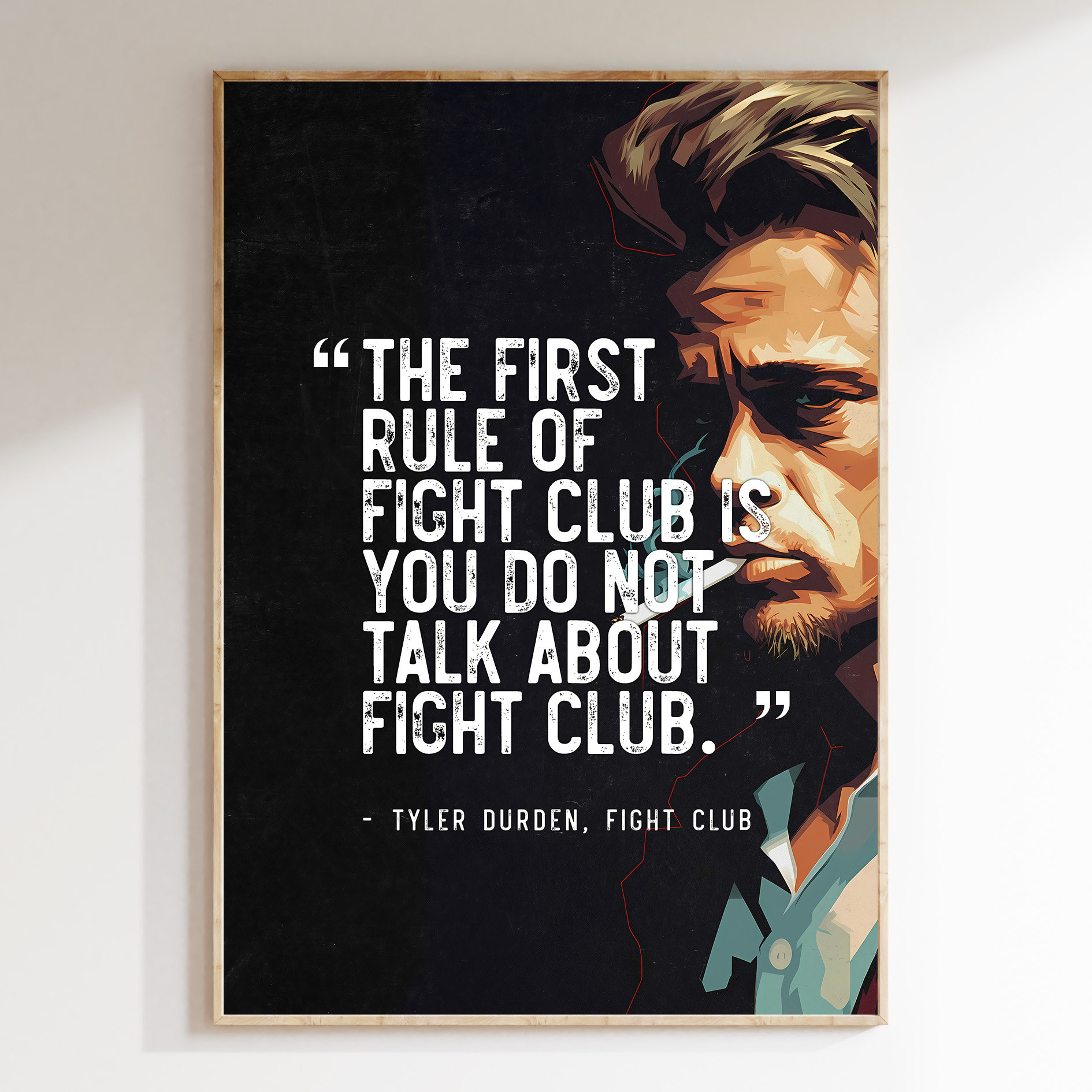
In Chuck Palahniuk’s seminal novel and the subsequent cult-classic film, the first rule of Fight Club is famously: “You do not talk about Fight Club.” On the surface, this appears to be a directive for secrecy—a way to protect an underground society from the eyes of the law. However, from a brand strategy perspective, it is one of the most brilliant psychological maneuvers ever conceived. By forbidding members from talking about the club, the brand (Project Mayhem/Fight Club) essentially guaranteed that it would be the only thing anyone wanted to talk about.
In the modern marketplace, where consumers are bombarded by over 5,000 advertisements a day, the “Fight Club” approach to branding offers a radical alternative. It shifts the focus from shouting for attention to earning it through exclusivity, identity, and the power of the “un-brand.” This article explores how modern businesses can apply the philosophy behind the first rule of Fight Club to build unstoppable brand equity and cult-like loyalty.
1. The Psychology of Exclusion and Scarcity
The most potent tool in the Fight Club arsenal is the psychological principle of “reactance.” When humans are told they cannot have something or are forbidden from doing something, their desire for that object or action increases exponentially. In branding, this is the foundation of exclusivity. When a brand tells the public, “This isn’t for everyone,” or “You have to be invited,” it creates a vacuum that consumers are desperate to fill.
The Allure of the Inner Circle
The “First Rule” works because it creates a clear distinction between the “In-Group” and the “Out-Group.” In brand strategy, this is known as tribalism. When a brand successfully builds an inner circle, the members feel a sense of elite status. This isn’t just about luxury; it’s about access. Brands like Supreme or early-stage Gmail used invitation-only models or hyper-limited “drops” to ensure that the brand was something you had to earn your way into. By not talking to everyone, you make the people you do talk to feel extraordinarily special.
Scarcity as a Value Driver
If Fight Club were a fitness franchise advertised on every billboard, its perceived value would plummet. Its value was derived from the fact that it was hard to find and even harder to join. Modern brands use “artificial scarcity” to drive the same emotional response. Whether it is a limited-edition sneaker release or a “members-only” digital community, scarcity signals high quality and social status. The lesson for brand strategists is clear: ubiquity is often the enemy of prestige.
2. Transforming Silence into Viral Word-of-Mouth
The ultimate irony of the first rule of Fight Club is that it is designed to be broken. The protagonist’s organization grew into a nationwide movement precisely because people did talk about it. However, because they were “breaking a rule” to share the secret, the quality of that word-of-mouth (WOM) communication was significantly higher than traditional advertising.
Social Currency and the “Secret” Brand
In his book Contagious, Jonah Berger discusses “social currency.” People share things that make them look good—smart, cool, or “in the know.” When a brand operates under a “Fight Club” ethos, sharing that brand becomes a form of social currency. Telling a friend about a hidden speakeasy or a “secret” software beta makes the sharer look like an insider. This is far more effective than a sponsored Instagram post because it carries the weight of a personal recommendation and the thrill of sharing a secret.
The Death of the Hard Sell
We are living in an era of “ad blindness.” Consumers have become experts at filtering out traditional marketing messages. The “First Rule” strategy bypasses this filter by removing the “sell.” When a brand focuses on its core mission and its existing community rather than chasing new leads with aggressive ads, it creates an aura of authenticity. Brands like Patagonia or Tesla have historically spent very little on traditional advertising compared to their competitors. Instead, they focused on their “rules”—their core values—and let the community do the talking.

3. Building a Cult Following: Identity and Shared Mission
The men in Fight Club didn’t join just to fight; they joined to find a sense of identity that the consumerist world had stripped away from them. A strong brand strategy doesn’t just sell a product; it provides a framework for how a customer views themselves. To implement the “First Rule” strategy, a brand must stand for something so specific that it becomes part of the consumer’s identity.
Selling a Philosophy, Not a Product
The most successful brands in the world are those that have moved beyond the “Feature-Benefit” model of marketing. Apple doesn’t just sell computers; it sells the idea of “Thinking Different.” Harley-Davidson doesn’t just sell motorcycles; it sells “Freedom.” When you follow the First Rule, your marketing focuses entirely on the philosophy. The product becomes the “uniform” of the movement. If your brand disappeared tomorrow, would your customers lose a tool, or would they lose a part of their identity?
Community Governance and Loyalty
In the narrative of Fight Club, the rules were what held the community together. In branding, these “rules” are your brand values and your community standards. Engaging your most loyal customers by giving them a “peek behind the curtain” or allowing them to influence the brand’s direction fosters a level of loyalty that no discount code can buy. This is the transition from a “customer base” to a “community.” A community defends the brand, recruits for the brand, and lives by the brand’s “rules.”
4. Implementing the “Fight Club” Strategy in a Digital Age
While the world is more connected than ever, the principles of the “First Rule” are more relevant than they were in the 1990s. Digital platforms allow for the creation of “digital campfires”—private, intimate spaces where brands can interact with their core audience away from the noise of the open internet.
Leveraging Niche Platforms
The modern “Fight Club” doesn’t happen on a public Facebook page; it happens in Discord servers, private Slack channels, and “Close Friends” lists on Instagram. To build a brand with this level of intrigue, companies must be willing to go where the conversation is “unlisted.” By nurturing these niche spaces, brands can create a sense of belonging that is impossible to achieve on a mass-market scale. It allows for a deeper level of storytelling and a more authentic connection with the “true fans.”
The Paradox of Visibility
The final lesson of the First Rule of Fight Club is understanding the balance between being “known” and being “available.” In the digital age, everyone is trying to be visible. The “Fight Club” brand strategy suggests that there is more power in being “sought after.” This requires a shift in metrics. Instead of focusing on “Reach” and “Impressions,” brands should focus on “Engagement” and “Retention.” It is better to have 1,000 people who are obsessed with your “rules” than 1,000,000 people who vaguely recognize your logo.
Conclusion: The New Rules of Branding
The first rule of Fight Club was never truly about silence; it was about the sanctity of the brand. It was about ensuring that every member who joined did so because they believed in the mission, not because they saw a commercial.
For modern brand strategists, the “First Rule” serves as a reminder that the most powerful marketing is often what you don’t say. It is the art of creating a brand so compelling, so exclusionary, and so rooted in identity that your customers feel compelled to whisper about it in the dark. In a world of noise, silence isn’t just golden—it’s the ultimate competitive advantage. By defining your rules, protecting your “club,” and focusing on the core tribe, you create a brand that doesn’t just survive the market—it defines it.
aViewFromTheCave is a participant in the Amazon Services LLC Associates Program, an affiliate advertising program designed to provide a means for sites to earn advertising fees by advertising and linking to Amazon.com. Amazon, the Amazon logo, AmazonSupply, and the AmazonSupply logo are trademarks of Amazon.com, Inc. or its affiliates. As an Amazon Associate we earn affiliate commissions from qualifying purchases.